A Vision of Eternal Splendor
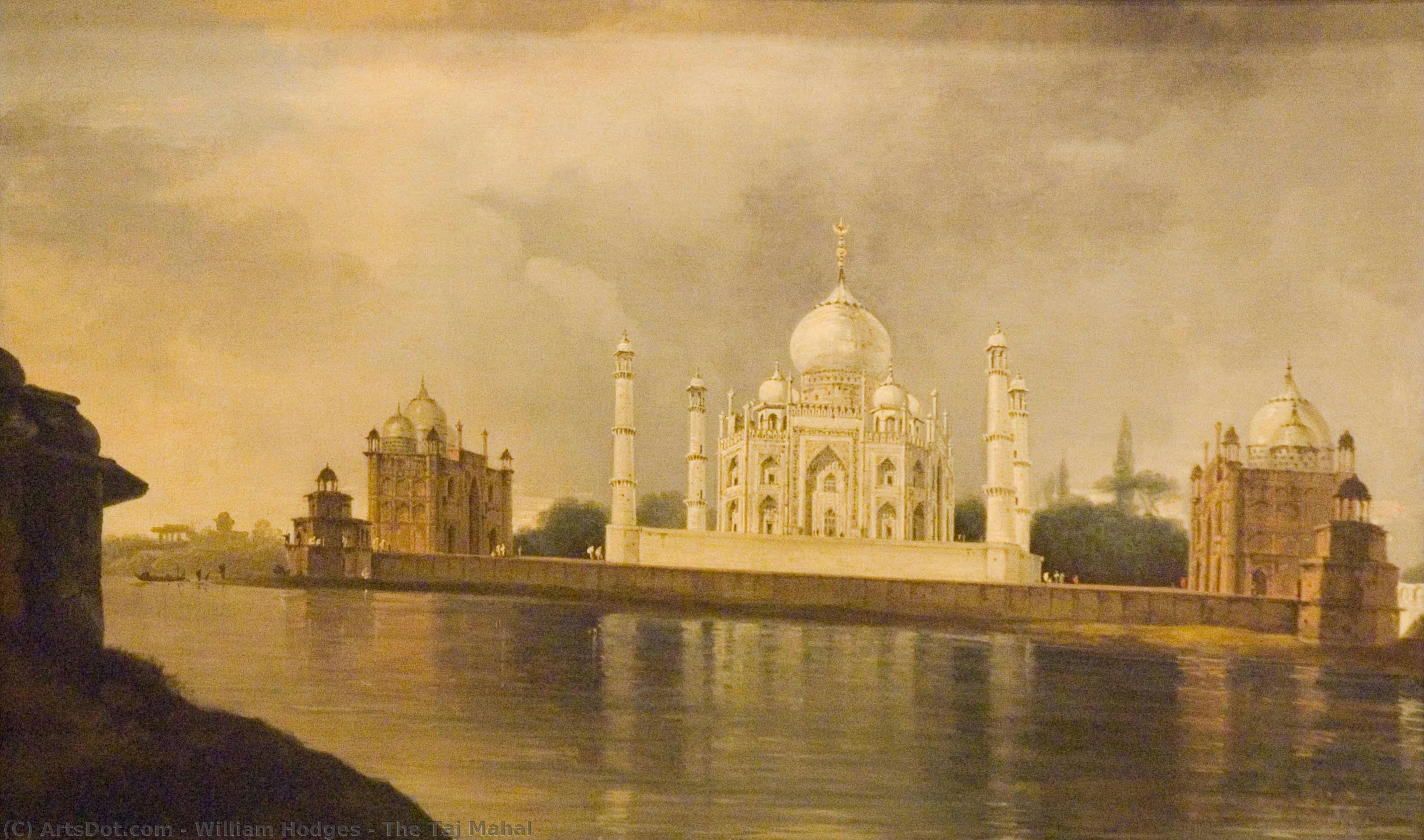
In the soft, luminous glow of the late eighteenth century, few images captured the romantic imagination of the West quite like the architectural marvels of India. William Hodges, a pioneer among British artists to traverse the subcontinent, achieved something truly transcendent in his masterpiece, The Taj Mahal. This painting is not merely a topographical record of a monument; it is an ethereal window into a lost era of sublime tranquility. As the viewer’s eye wanders across the expansive vista, they are met with a scene that feels less like a physical location and more like a dream etched in oil. The composition breathes with the quiet majesty of the Yamuna River, its gentle currents reflecting the light of an age where the boundaries between reality and poetry were beautifully blurred.
The technique employed by Hodges reflects his profound fascination with the interplay of light and atmosphere. Through delicate brushwork and a masterful command of tone, he captures what he famously described as “a most perfect pearl set on an azure ground.” The architecture of the Taj Mahal emerges from the landscape with an intricate, ornate grace, its white marble surfaces catching the subtle shifts of the sky. By integrating small, human elements—the distant figures and the rhythmic presence of boats upon the water—Hodges provides a sense of scale that emphasizes the monumental nature of the tomb while simultaneously grounding the scene in a lived, breathing reality. The river acts as a mirror to the soul of the painting, adding a layer of serenity that invites the observer into a state of quiet contemplation.
Historical Resonance and Artistic Legacy
To understand the depth of this work, one must consider the historical context of Hodges’ journey. Traveling through India in the early 1780s, Hodges was part of a movement of artists seeking to document the exoticism and grandeur of the Mughal Empire through a lens of Romanticism. His ability to translate the architectural precision of Islamic design into the fluid language of European oil painting created a bridge between cultures. This piece serves as a testament to the era's fascination with the "sublime"—that specific aesthetic emotion where beauty meets a sense of overwhelming greatness. For the modern collector, this painting offers more than just visual appeal; it offers a connection to the historical spirit of discovery and the enduring human desire to find perfection in the world around us.
For interior designers and connoisseurs of fine art, The Taj Mahal represents a sophisticated centerpiece capable of transforming any space. Its expansive scale and tranquil color palette make it an ideal choice for creating a focal point of elegance and calm in grand halls or curated galleries. Whether placed in a sun-drenched study or a formal living area, the painting’s ability to evoke nostalgia and wonder remains undiminished by time. Owning a high-quality reproduction of this work is an invitation to surround oneself with the timeless beauty of history, bringing the quiet, majestic pulse of the eighteenth century into the contemporary home.



 Print kopen
 Verstuur
 Delen
Delen
 Details

 Download
 Vergelijkbare werken
 Röntgenfoto
 Diavoorstelling


 Lees meer






































 De optie voor glas is alleen beschikbaar bij een formaat kleiner dan 110 cm.





