

Giclée- of canvasafdruk van museumkwaliteit met een snelle productie en flexibele afwerkingsmogelijkheden. ( Bestel handgeschilderde reproductie Schakel over naar digitale afbeeldingen)





























Kies uit onze vooraf ingestelde maten die overeenkomen met de originele verhoudingen van het kunstwerk.

Voer de gewenste breedte en hoogte in, passend bij uw lijst of muur. Een afdruk kan alleen worden ingekort en nooit groter worden gemaakt dan het origineel; een formaat met andere verhoudingen zal daarom een deel van de afbeelding verliezen. Wij sturen u een digitaal mockup ter goedkeuring voordat we tot drukwerk overgaan. De afbeelding op deze pagina toont niet de werkelijke uitsnede — dit is alleen te zien op het mockup.
Wereldwijde levering () binnen 2 weken in plaats van de standaard 4/5 weken. (10 november)
Wilson Lowry
Afmetingen reproductie
William Blake’s monochrome engraving, “Wilson Lowry,” is more than just a portrait; it's a meticulously crafted study of human form and the power of line. Created around 1825, this piece offers a rare glimpse into the world of 18th-century London through the discerning eye of one of history’s most visionary artists. The subject, Wilson Lowry himself – an engraver and illustrator – is presented in profile within a restrained oval frame, immediately establishing a formal yet intimate connection with the viewer. Blake's genius lies not merely in depicting a man, but in capturing his essence through the deliberate manipulation of line density, creating a remarkably textured surface that mimics hair, fabric folds, and the subtle contours of face and body.

Blake’s technique is a testament to his mastery of engraving. He eschewed the use of shading through hatching or cross-hatching, instead relying entirely on varying line weight – thicker lines representing darker areas, while thinner lines delineate lighter tones. This approach creates an astonishingly rich and dynamic surface, imbuing the portrait with a sense of depth and volume. The meticulous detail evident in every stroke speaks to Blake’s dedication and precision, reflecting his deep understanding of printmaking principles. Notably, this engraving was produced as part of a series, suggesting a deliberate consideration of composition and visual harmony. It's a remarkable demonstration of how seemingly simple lines can convey complex emotions and narratives.
“Wilson Lowry” is firmly rooted in the late 18th and early 19th centuries, a period of dramatic social and artistic change. William Blake’s work emerged during the Romantic Age, a time characterized by a renewed interest in emotion, imagination, and the sublime. The portrait reflects the prevailing neoclassical ideals of formality and dignity, while simultaneously hinting at Blake's own unique and often unconventional worldview. Considering that Blake was largely self-taught, his technical skill is all the more impressive. The engraving’s creation coincided with the rise of industrialization and a growing sense of social unrest – themes that would later permeate Blake’s prophetic poetry.
While seemingly straightforward in its depiction, “Wilson Lowry” is rich in symbolic potential. The formal pose and dignified expression suggest respect for the subject, but also a subtle sense of melancholy or introspection. Blake frequently imbued his works with layers of meaning, drawing upon biblical imagery, mythology, and personal spiritual beliefs. It’s important to note that this engraving was created as part of a larger series, and its placement within the context of Blake's broader artistic output reveals deeper thematic connections. The portrait serves not just as a likeness but as a window into the artist’s complex inner world.
WahooArt offers meticulously crafted, hand-painted reproductions of “Wilson Lowry” that capture the essence of this iconic artwork. Our skilled artists replicate Blake's intricate line work and subtle tonal variations with exceptional precision, ensuring a faithful representation of his original vision. Whether you’re an art enthusiast, collector, or seeking to add a touch of timeless elegance to your interior space, our reproductions provide a beautiful and authentic way to experience the enduring power of William Blake’s “Wilson Lowry.” Explore the full artwork details on our website: https://www.WahooArt.com/en/art/william-blake-wilson-lowry-8EWSFG-en/
"Wilson Lowry" door William Blake vertoont een Unified Palette kleurharmonie.
Om een digitale afbeelding van "Wilson Lowry" door William Blake te verkrijgen, kunt u een digitale afbeelding in hoge resolutie om te downloaden bestellen op de Digitale afbeelding pagina.
Met zijn Romantic karakter is "Wilson Lowry" een aanrader voor de Living Room.

William Blake werd geboren op 28 november 1757 in Londen, Engeland. Hij groeide op in een huishouden boven de zijden- en linnenwinkel van zijn vader aan Broad Street 28. Zijn ouders, James Blake en Catherine Wright Armitage Blake, boden hem een stabiele omgeving tijdens een periode van enorme sociale verandering in de stad. Hoewel zijn opvoeding werd gekenmerkt door de bescheiden middelen van een ambachtelijk gezin, werden zijn vroege jaren gedefinieerd door een unieke, intense verbeeldingskracht. Deze uitte zich vaak in visioenen, zoals het zien van engelen in de takken van een boom tijdens wandelingen in zijn kindertijd.
Zijn formele training begon op tienjarige leeftijd, toen hij werd ingeschreven op de tekenacademie van Henry Pars. Deze vroege instructie legde de technische basis voor een carrière die uiteindelijk veel verder zou reiken dan eenvoudige schetsen. Op dertienjarige leeftijd leidde de noodzaak van praktisch werk hem naar een zevenjarige leertijd bij de graveur James Basire. Deze periode was essentieel voor zijn ontwikkeling, omdat het hem introduceerde in de rigoureuze mechanica van de prentkunst en de fysieke eigenschappen van metaal en zuur.
Tijdens zijn leertijd bracht Blake veel tijd door met het schetsen van de graven in Westminster Abbey. De gotische architectuur en de verweerde steen van deze monumenten lieten een blijvende indruk achter op zijn esthetische gevoel. Deze studies stelden hem in staat om de vormen uit het verleden te internaliseren, die hij later via zijn eigen, unieke lens zou herinterpreteren. Zijn opleiding was niet louter een streven naar vakmanschap, maar een diepe onderdompeling in de visuele taal van geschiedenis en structuur.
Het creatieve proces van William Blake werd gedreven door een rusteloze drang om het geschreven woord te versmelten met het visuele beeld. Hij ging veel verder dan de standaard commerciële gravures van zijn tijd door een unieke methode van diepdruk te ontwikkelen voor zijn geïllumineerde boeken. Deze techniek, bekend als reliëfetsen, hield in dat hij een zuurbestendige vernis op koperplaten aanbracht, waardoor hij zowel tekst als illustratie in één enkele, geïntegreerde vorm kon etsen. Deze methode was niet louter een technische keuze, maar een spirituele; hij beweerde dat dit proces aan hem was geopenbaard via een visionaire ervaring na de dood van zijn broer, Robert. Samen met zijn echtgenote Catherine, die hem hielp bij het drukken en inkleuren, beheerde hij de gehele productie, van de eerste etsing tot het uiteindelijke inbinden van de boeken.
Zijn esthetiek was een bewuste breuk met de rigide regels van zijn tijdgenoten. Hij verwierp het traditionele gebruik van lineair perspectief, dat streefde naar een nabootsing van de fysieke wereld, en koos in plaats daarvan voor een meer emotionele en symbolische weergave van de ruimte. Deze vervlakking van het visuele veld stelde hem in staat om de interne logica van zijn visioenen prioriteit te geven boven de beperkingen van het naturalisme. Om deze visioenen tot leven te wekken, maakte hij veelvuldig gebruik van aquarel en tempera, waarbij hij de kleur met de hand op de gedrukte vellen aanbracht om een specifieke, persoonlijke textuur te verkrijgen. Zijn werk was een inspanning van zowel hand als geest, vaak vervaardigd in de stilte van zijn woning in Londen.
De vroege fase van zijn carrière begon met de publicatie van Poetical Sketches in 1783. Deze eerste verzameling verzen werd gevolgd door zijn meest erkende lyrische meesterwerken: Songs of Innocence in 1789 en Songs of Experience in 1794. Deze werken introduceerden een terugkerende spanning in zijn schrijven, waarbij hij de scherpe contrasten verkende tussen de onbevlekte staat van de kindertijd en de corruptie van de volwassen realiteit. Tussen 1790 en 1793 creëerde hij The Marriage of Heaven and Hell, een provocerend werk dat door middel van zowel proza als vers de gevestigde morele en religieuze doctrines uitdaagde.
Zijn betrokkenheid bij de politieke turbulentie van zijn tijd vond een krachtige expressie in zijn profetische boeken. Hij produceerde America, a Prophecy in 1793 en Europe, a Prophecy in 1794, werken die de revolutionaire geest van die tijd weerspiegelden. Deze publicaties waren niet louter teksten, maar geïntegreerde visioenen waarin de geëtste afbeelding en het geschreven woord als één enkel wezen functioneerden. Zijn latere jaren werden gekenmerkt door expansieve, complexe projecten die jarenlange, onvermoeibare toewijding vereisten.
In de laatste levensfase ontwikkelde hij monumentale, ingewikkelde cycli. Hij werkte aan de Milton-serie tussen 1804 en 1808, en zijn laatste grote onderneming, Jerusalem, bezighield hem van 1804 tot 1820. Deze werken vormen het hoogtepunt van zijn levenslange poging om een eigen, private mythologie te construeren; een universum dat streefde naar de verzoening van de menselijke geest met het goddelijke, vertaald door een diep persoonlijk en symbolisch idioom.
De financiële realiteit van het leven van William Blake was vaak een voortdurende strijd om stabiliteit. Gedurende een groot deel van zijn carrière verdiende hij zijn brood als een rondtrekkende graveur, waarbij hij commercieel werk aannam om in zijn levensonderhoud te voorzien. Rond 1784 probeerde hij een meer permanente professionele basis te leggen door samen met James Parker, een vriend en voormalige leerling, een drukkerij op te richten. Dit onderneming bood hem echter niet de blijvende zekerheid die hij zo hard nodig had. In plaats daarvan was zijn levensonderhoud vaak afhankelijk van de constante steun van een handvol toegewijde beschermheren, waarvan Thomas Butts de meest prominente was; zijn mecenaat bood een vitale levenslijn voor de meer persoonlijke en spirituele zoektochten van de kunstenaar.
Zijn professionele horizon verschoof naarmate zijn omstandigheden veranderden. Tussen 1800 en 1803 verhuisde Blake naar het kustplaatsje Felpham. Tijdens deze periode leefde en werkte hij onder de bescherming van William Hayley. Deze tijd in Felpham bood een tijdelijke adempauze van de stedelijke druk van Londen, waardoor hij zich kon concentreren op zijn complexe en uitgestilde series werken. Zelfs terwijl hij navigeerde tussen de eisen van diverse opdrachten, bleef zijn werk diep geworteld in de specifieke behoeften van degenen die zijn visie ondersteunden. Hij balanceerde voortdurend tussen de praktische vereisten van het graveren voor anderen en het private, bijna heilige werk aan zijn eigen geïllumineerde drukken.
Gedurende zijn leven werd de visie van William Blake vaak begrepen door een sluier van onbegrip; zijn werk werd regelmatig afgedaan als het product van een excentrieke of instabiele geest. Hij leidde een leven van relatieve onbekendheid en worstelde vaak voor financiële stabiliteit terwijl hij als graveur werkte. Toch waren het juist die eigenschappen die hem in de vroege negentiende eeuw aan de zijlijn plaatsten, die uiteindelijk zijn plek veiligstelden als een cruciale figuur binnen de Romantiek. Zijn onverzettelijke geloof in de superioriteit van de verbeelding boven de beperkingen van de rede bood een blauwdruk voor degenen die later de breuk met traditionele academische structuren zouden zoeken.
De impact van zijn unieke stijl reikte uiteindelijk veel verder dan zijn directe kring. De Prerafaëlieten omarmden hem als een verwante geest, aangezien zij een gemeenschappelijke grond vonden in zijn verwerping van neoclassicistische conventies. Naarmate de decennia verstreken, stroomde zijn invloed door de symbolistische en modernistische bewegingen heen, waar hij resonantie vond in hun gedeelde interesse in subjectieve ervaring en spirituele diepgang. Hij illustreerde niet louter gedichten; hij construeerde een persoonlijke mythologie die tot op de dag van vandaag een bron van inspiratie vormt voor dichters, schilders en denkers in diverse disciplines.
De fysieke overblijfselen van de visioenen van William Blake zijn verspreid over verschillende vooraanstaande instellingen, wat de wereldwijde reikwijdte van zijn invloed weerspiegelt. In Londen herbergt de Tate Gallery zes van zijn werken, waaronder de betekenisvolle voorstelling van Isaac Newton uit 1795. Deze collectie biedt een diepgaand inzicht in de technische precisie die hij toepaste op zijn gravures en de wijze waarop hij complexe spirituele concepten vertaalde naar een visuele vorm.
Aan de andere kant van de Atlantische Oceaan is zijn aanwezigheid voelbaar in diverse prominente Amerikaanse collecties. Het Yale Center for British Art in New Haven beheert vier werken, zoals de prent uit 1804 van Los Entering the Grave. Ondertussen bezit het Museum of Fine Arts in Boston eveneens vier stukken, waaronder zijn studie uit 1808 van Adam and Eve Sleeping. Deze collecties maken een vergelijkende studie mogelijk van zijn ontwikkeling van een commercieel graveur naar een schepper van onafhankelijke, geïllumineerde volumes.
Zijn invloed reikt zelfs tot in het zuidelijk halfrond. De National Gallery of Victoria in Melbourne bevat één werk, een stuk uit 1827 met de titel Antaeus setting down Dante and Virgil in the last circle of hell. Deze enkele aanwezigheid in Australië onderstreept de blijvende internationale belangstelling voor zijn eigenzinnige, diep persoonlijke mythologie.

1757 - 1827 , Verenigd Koninkrijk
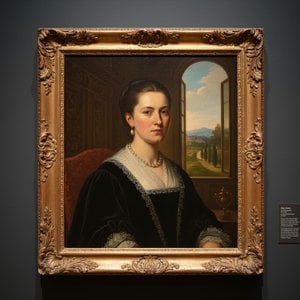
Explore the profound legacy of classical portraiture. From the dramatic chiaroscuro of the Old Masters to exquisite hand-painted oil reproductions, discover how timeless elegance and masterful technique continue to inspire collectors and art enthusiasts worldwide.

Explore the profound mastery of engraving and intaglio printmaking. Delve into the rich history, technical precision of the burin, and the enduring legacy of fine art techniques that shaped the world's most iconic masterpieces.
 Voorvertoning
 Verstuur
 Delen
Delen
 Details bekijken
 Gids
Gids

 Download
 Vergelijkbare items
 Röntgenonderzoek
 Diavoorstelling
 Vraag & antwoord
 Statistieken

 Lees meer









 De optie voor glas is alleen beschikbaar bij een formaat kleiner dan 110 cm.


