GRATIS KUNSTADVIES

x
Bestel schilderij Bestel schilderijKoop afbeelding in hoge resolutie Koop afbeelding in hoge resolutie VerstuurVerstuur
DetailsDetails Toevoegen aan favorieten Toevoegen aan favorieten DownloadDownload Vergelijkbare werkenVergelijkbare werken RöntgenfotoRöntgenfoto DiavoorstellingDiavoorstelling

Untitled 6

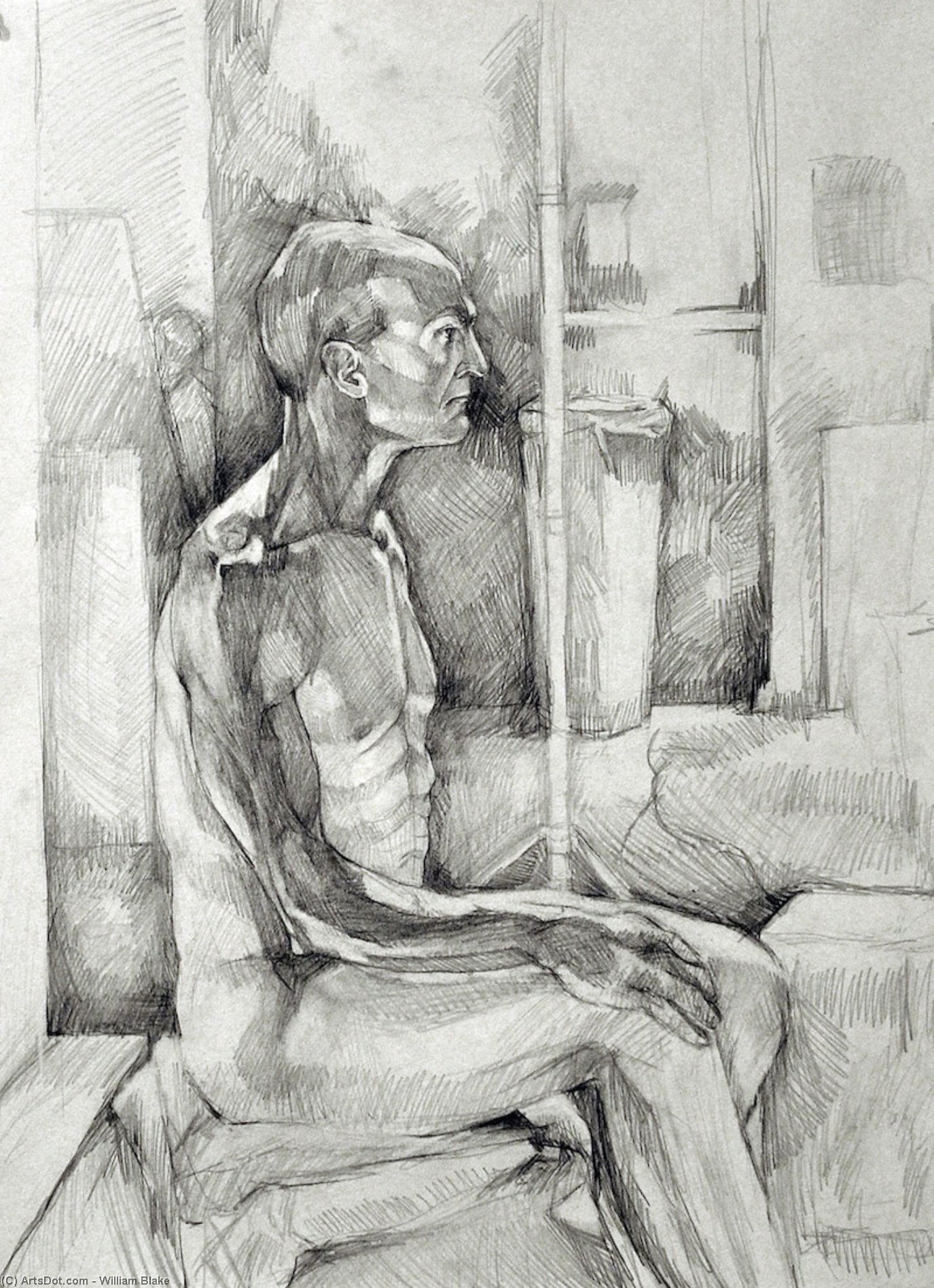
This graphite drawing depicts a seated male figure against a simple wall backdrop, illuminated by diffused light. Executed in grayscale, it showcases Blake's signature academic style, utilizing hatching and crosshatching to build up tonal values and convey texture – mirroring the solemn contemplation of his subject matter.

Een krachtige tekening van William Blake, *De Grote Draak en de vrouw gekleed in het zonlicht*, illustreert Revelatie 12 en symboliseert een kosmische strijd tussen goed en kwaad met een prachtige stijl.

Giclée / Kunstafdruk

Giclée- of canvasafdruk van museumkwaliteit met snelle productie en flexibele afwerkingsopties.

P118B $10
P118H $10
P118W $10
P438Z $10
P508JH $12
P508YH $12
P805H $10
P805Z $10
P919BZ $10
P919G $10
P919XJ $10
P959ZH $10
P968JZ $12
W106C $8
W218G $10
W218JH $8
W218Y $10
W307PJ $10
W316G $10
W316PJ $8
W316Y $10
W398PJ $8
W4111J $10
W500HY $15
W500JH $15
W692G $12
W849H $8
W940BG $15
W953PJ $8

Standard
custom
CM
INCH

Kies uit onze vooraf ingestelde maten die overeenkomen met de originele verhoudingen van het kunstwerk.

breedte
hoogte

U kunt uw eigen afmetingen opgeven om in een specifieke lijst of ruimte te passen. Als de door u gekozen maat niet overeenkomt met de proporties van het originele kunstwerk, zullen wij de afbeelding bijsnijden of uitbreiden met een gespiegelde of effen rand. Een digitaal mockup wordt ter goedkeuring naar u verzonden voordat de productie begint.
Houd er rekening mee dat de preview op het scherm de werkelijke bijsneding of uitbreiding niet weergeeft. Alleen de mockup toont de uiteindelijke compositie nauwkeurig.
Hoewel aangepaste maten beschikbaar zijn, raden wij aan een afmeting uit de vooraf bepaalde lijst te kiezen om de originele proporties te behouden.

Wereldwijde levering () binnen 2 weken in plaats van de standaard 4/5 weken. (2 juli)

why_choose_icon
Gratis wereldwijde expressverzending
why_choose_icon
Hoogwaardig linnen canvas
why_choose_icon
Volledige verzendverzekering
why_choose_icon
Garantie op terugbetaling van invoerrechten
why_choose_icon
Garantie op exacte kleurweergave
why_choose_icon
60 dagen retourbeleid (alleen bij defecten)
why_choose_icon
100% Geld-terug-garantie
why_choose_icon
Korting bij meerdere afnames

Totaalprijs

-

reproduction

Untitled 6

Giclée / Kunstafdruk

Afmetingen reproductie

-

Eindtotaal

-

Snelle feiten

  • Medium: Graphite pencil on paper
  • Artistic style: Academic draftsmanship; Realistic depiction
  • Subject or theme: Male figure study; Biblical crucifixion scene
  • Artist: William Blake
  • Notable elements or techniques: Detailed hatching & shading; Anatomical realism.
  • Location: Private Collection

Beschrijving verzamelobject

A Study in Quiet Contemplation: William Blake’s “Untitled 6”

William Blake's "Untitled 6" stands as a testament to the Romantic spirit—a deceptively simple pencil drawing brimming with profound observation and imbued with an atmosphere of solemn contemplation. Executed sometime around 1820, this piece exemplifies Blake’s distinctive approach to artistic representation: prioritizing psychological depth over mere visual accuracy. It's not merely a depiction of a seated male figure; it’s a distillation of emotion and intellect captured in meticulous detail.
  • Subject Matter: The drawing portrays a solitary man, positioned centrally within the frame, facing left. His gaze directs outwards, suggesting an engagement with something beyond the immediate visual field—perhaps a reflection on faith or mortality.
  • Style & Technique: Blake’s style leans heavily into academic draftsmanship, characterized by a commitment to precise proportions and tonal values achieved through painstaking pencil rendering. The technique utilizes hatching and cross-hatching extensively to build up shading, creating textures that mimic skin, fabric, and the wood of easels positioned behind him—a subtle nod to his artistic milieu.
  • Composition: The composition is carefully balanced, emphasizing the figure’s stillness and isolation. Two easels serve as grounding elements, anchoring the scene in an environment conducive to creative thought.

Light & Texture: Capturing Essence Through Pencil Rendering

Blake skillfully employs diffused lighting from the right side, casting shadows that delineate contours and highlighting areas of facial prominence—a technique designed to convey not just form but also mood. The artist’s masterful use of hatching creates a palpable textural quality; varying densities of lines simulate the surface appearance of materials, fostering an immersive experience for the viewer. This deliberate layering of tonal values underscores Blake's belief that art should strive to capture the inner spirit as much as it portrays external reality.

Symbolism & Emotional Resonance: A Moment Frozen in Time

Beyond its technical prowess, “Untitled 6” resonates with symbolic significance. The solitary figure embodies introspection and contemplation—a characteristic theme within Blake’s oeuvre. The drawing captures a fleeting moment of stillness, inviting viewers to consider the complexities of human experience and the pursuit of spiritual understanding. It speaks to the Romantic preoccupation with emotion and imagination as pathways to truth.

Historical Context & Legacy

Created during Blake's prolific period—a time marked by intense artistic experimentation and philosophical inquiry—this drawing reflects the broader intellectual currents of the Romantic Age. Blake’s unwavering conviction that “the imagination is the body of God” informs his entire artistic practice, prioritizing symbolic representation over literal depiction. Like many of his works, "Untitled 6" continues to inspire artists and scholars alike, cementing Blake's enduring legacy as a visionary artist who challenged conventional notions of beauty and truth.

Biografie van de kunstenaar

A Visionary’s Journey: The Life and Art of William Blake

William Blake, born in London on November 28, 1757, was a figure perpetually out of step with his time, yet destined to become one of the most celebrated artists and poets of the Romantic Age. His life unfolded against the backdrop of a rapidly changing England—a world grappling with industrialization, political upheaval, and shifting spiritual beliefs. From humble beginnings as the son of a hosier, Blake’s early years were marked by an intensely vivid imagination and a propensity for visionary experiences that would profoundly shape his artistic trajectory. Though largely self-taught in formal academics, he received drawing instruction at a young age, quickly revealing a talent that hinted at the extraordinary path ahead. His apprenticeship with engraver James Basire proved pivotal, providing him not only with technical mastery but also an understanding of printmaking techniques he would later revolutionize. These early influences—the Gothic grandeur of Westminster Abbey, the classical forms of Raphael and Michelangelo—served as foundational elements in his developing aesthetic, though Blake was never one to remain bound by convention.

The Illuminated World: Technique and Innovation

Blake’s artistic innovation wasn't merely about subject matter; it resided fundamentally in *how* he created. Dissatisfied with conventional engraving methods, he developed a unique process known as “illuminated printing.” This involved etching both text and illustrations onto copper plates, then hand-coloring the resulting prints—a laborious but deeply personal approach that allowed for complete artistic control. This wasn’t simply illustration accompanying poetry; it was an integrated art form where image and verse were inextricably linked, each enhancing the meaning of the other. His relief etching technique, born from a claimed visionary experience following his brother's death, further distinguished his work, granting it
  • A distinctive textural quality
  • Greater artistic freedom than traditional methods
Beyond printmaking, Blake also worked with watercolors and tempera paints, often depicting biblical scenes or fantastical subjects imbued with symbolic weight. A key characteristic of his style was a deliberate rejection of linear perspective in favor of a more emotive, symbolic representation—a flattening of space that drew the viewer into the heart of his visionary world. He believed that true artistic expression demanded an abandonment of rational constraints and embraced instead the realm of dreams and intuition.

Themes of Innocence, Experience, and Rebellion

The core of Blake’s artistic output lies in its exploration of profound themes: the duality of innocence and experience, the constraints of reason versus the liberating power of imagination, and a fierce critique of societal norms.
  • Songs of Innocence and of Experience (1794), perhaps his most accessible work, presents a contrasting vision of childhood—one idyllic and untainted, the other marked by hardship and corruption.
  • The Marriage of Heaven & Hell (1793) is a provocative prose poem that challenges conventional morality, celebrating energy, desire, and rebellion against restrictive doctrines.
  • His illustrations for Dante’s *Divine Comedy* showcase his dramatic vision and ability to translate complex narratives into powerful visual imagery.
Blake's symbolism is intensely personal yet universally resonant. The tiger, in his famous poem, embodies both the awe-inspiring beauty and terrifying power of creation. Jerusalem, a sprawling epic poem that occupied him for years, reflects his spiritual and political beliefs—a vision of a renewed Albion (ancient name for Britain) free from oppression. He wasn’t merely depicting stories; he was constructing an entire mythology, populated with archetypal figures representing states of mind, forces of nature, and the eternal struggle between good and evil.

A Legacy Rediscovered: Blake's Enduring Influence

During his lifetime, William Blake remained largely marginalized, misunderstood by many of his contemporaries. His work was often dismissed as eccentric or even mad. He struggled financially throughout much of his life, relying on commissions and the support of a small circle of patrons like Thomas Butts. However, in the decades following his death on August 12, 1827, Blake’s reputation began to grow steadily. The Pre-Raphaelites, captivated by his visionary style and symbolic imagery, embraced him as a kindred spirit. Later movements—Symbolism and Modernism—found resonance in his emphasis on imagination, subjective experience, and spiritual themes. Blake's influence extends far beyond the realm of art; he inspired writers like Dylan Thomas and poets such as Ted Hughes. Today, William Blake is recognized as a pivotal figure in the Romantic movement, an artist whose work continues to provoke contemplation and inspire creativity—a testament to the enduring power of visionary imagination in confronting societal conventions and exploring the deepest recesses of human consciousness. His unwavering commitment to artistic freedom cemented his place as one of the most original voices of his era.
William Blake

William Blake

1757 - 1827 , Verenigd Koninkrijk

Belangrijkste feiten

  • Artistic Movement Or Style: Romantiek
  • Artists Who Influenced This Artist:
    • Raphael
    • Michelangelo
  • Date Of Birth: November 28, 1757
  • Date Of Death: August 12, 1827
  • Full Name: William Blake
  • Nationality: Britse kunstenaar
  • Notable Artworks:
    • Songs of Innocence & Exp.
    • The Tyger
    • Jerusalem
  • Place Of Birth: London, UK
Ontdek kunstwerken georganiseerd op thema's, stijlen en kenmerken.