De kunstwerken die op deze pagina worden weergegeven, zijn beschermd door de auteursrechtwetgeving, wat betekent dat het ons wettelijk niet is toegestaan om identieke reproducties te maken of te verkopen. Deze bescherming wordt gehandhaafd onder internationale overeenkomsten zoals de Conventie van Bern en door nationale wetgeving, waaronder de bepalingen van de Amerikaanse auteurswet - Titel 17. Alle rechten voorbehouden. Reproduceren of distribueren van afbeeldingen is niet toegestaan zonder uitdrukkelijke schriftelijke toestemming van WahooArt.com en de rechthebbenden.
Deze methode voldoet volledig aan de auteursrechtwetgeving, omdat het niet gaat om het kopiëren of dupliceren van het beschermde kunstwerk. In plaats daarvan is er sprake van een creatieve herinterpretatie — een nieuw schilderij dat door het origineel wordt geïnspireerd, maar er niet identiek aan is.
Giclée- of canvasafdruk van museumkwaliteit met een snelle productie en flexibele afwerkingsmogelijkheden. ( Bestel handgeschilderde reproductie Schakel over naar digitale afbeeldingen)





























Kies uit onze vooraf ingestelde maten die overeenkomen met de originele verhoudingen van het kunstwerk.

Voer de gewenste breedte en hoogte in, passend bij uw lijst of muur. Een afdruk kan alleen worden ingekort en nooit groter worden gemaakt dan het origineel; een formaat met andere verhoudingen zal daarom een deel van de afbeelding verliezen. Wij sturen u een digitaal mockup ter goedkeuring voordat we tot drukwerk overgaan. De afbeelding op deze pagina toont niet de werkelijke uitsnede — dit is alleen te zien op het mockup.
Wereldwijde levering () binnen 2 weken in plaats van de standaard 4/5 weken. (9 november)
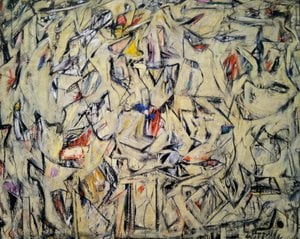
Devil at the Keyboard
Afmetingen reproductie
To stand before Willem de Kooning’s Devil at the Keyboard is not merely to observe paint on canvas; it is to confront a raw, untamed outpouring of human emotion. This piece, dating from 1976, pulses with the unmistakable vitality of Abstract Expressionism. De Kooning’s signature style refuses polite categorization, instead inviting the viewer into a dynamic, almost chaotic conversation between form and gesture. The surface itself seems agitated, built up through layers of paint that speak to the artist's physical engagement with his medium. It is a work that demands proximity, rewarding closer inspection with glimpses of structure beneath the exhilarating frenzy.
While the overall composition screams abstraction—a riot of color and energetic strokes—the eye is immediately drawn to the central figure: a man sporting a mustache, poised dramatically with a pitchfork. This juxtaposition of recognizable, almost portrait-like elements against the backdrop of pure abstraction creates profound tension. The inclusion of details, such as the tie worn by this commanding figure, anchors the chaos in a semblance of narrative reality. Yet, these figures are never static; they writhe within the composition alongside other less defined forms scattered across the canvas. It suggests a gathering, a moment charged with unspoken drama, where the mundane accoutrements of modern life clash violently with primal artistic impulse.
De Kooning’s technique here is masterful in its apparent carelessness. The paint application is thick, visceral, and immediate—a testament to his belief in painting as an act of physical wrestling with the material. One can almost hear the scrape of the palette knife or the aggressive sweep of the brush. Symbolically, the devil motif combined with the keyboard suggests a complex negotiation between creation and transgression; perhaps the very act of artistic genius is inherently fraught with struggle. The pitchfork itself acts as an extension of this tension—a tool both agricultural and confrontational. For the collector or designer, understanding this underlying symbolic weight elevates the piece from mere decoration to profound cultural artifact.
Owning a reproduction of Devil at the Keyboard is choosing to infuse a space with undeniable life force. This painting does not whisper; it declares. Its vibrant, complex palette and restless energy make it an unparalleled focal point in any room—be it a gallery wall or a sophisticated living area that craves artistic grit. It speaks to a modern sensibility that values process over polish, embracing the beautiful messiness of human experience. It is art for those who appreciate depth, history, and the sheer, exhilarating power of paint applied with uncompromising conviction.
Met zijn Neutrals palet wordt "Devil at the Keyboard" door Willem de Kooning aanbevolen voor een Living Room. De kleuren zijn een van de redenen voor dit advies.
Het formaat van "Devil at the Keyboard" is Portrait. Dit is handig bij het plannen van de plek waar een reproductie zal worden geplaatst.
"Devil at the Keyboard" werd gemaakt in 1976, in Acrylic On Canvas.


1904 - 1997 , Nederland

Explore the profound elegance of De Stijl. Discover how Piet Mondrian and the masters of Neoplasticism utilized geometric harmony and primary colors to redefine modern abstraction. An authoritative guide for the discerning collector seeking timeless, structured beauty.
 Voorvertoning
 Verstuur
 Delen
Delen
 Details bekijken
 Gids
Gids

 Download
 Vergelijkbare items
 Röntgenonderzoek
 Diavoorstelling
 Vraag & antwoord
 Statistieken

 Lees meer









 De optie voor glas is alleen beschikbaar bij een formaat kleiner dan 110 cm.