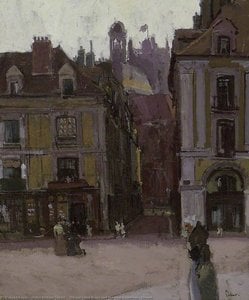
Walter Richard Sickert: Een Schaduw en Licht in de Kunst
Walter Richard Sickert, geboren in München in 1860, was een figuur die voortdurend tussen werelden leek te zweven – Duits door geboorte, Brits door adoptie, en een kunstenaar die onophoudelijk oscilleerde tussen de gevestigde tradities van schilderkunst en de opkomende stromingen van modernisme. Zijn vroege leven was gekenmerkt door beweging; de verhuizing van het gezin naar Engeland in 1868, aangemoedigd door politieke verschuivingen in Europa, stelde hem in staat een gevoel van vervreemding te ontwikkelen dat mogelijk zijn hele leven zijn fascinatie met buitenstaanders en gemarginaliseerde figuren voedde. Hoewel afkomstig uit een familie met een artistieke traditie – zijn vader, Oswald Sickert, was een Deense schilder – had jonge Walter aanvankelijk ambitieën voor het toneel, waar hij kortstondig als acteur optrad naast de beroemde Sir Henry Irving. Deze vroege ervaring met prestatie, met de kunst van illusie en karakter, zou zijn artistieke visie diepgaand beïnvloeden, een theatraliteit en psychologische diepte in zijn schilderijen leggen die hem onderscheidden van zijn tijdgenoten. Echter, de aantrekkingskracht van visuele expressie bleek sterker, waardoor hij zich in 1881 inschreef op de Slade School en vervolgens toegewijd pupil werd van James Abbott McNeill Whistler. Deze begeleiding was vormend, instillerend in Sickert een voorkeur voor tonale studies geschilderd *alla prima*, direct vanuit de natuur, en een verfijnde esthetische gevoeligheid die zijn vroege werk onderbouwde. De invloed van Whistler was niet alleen technisch; het bevorderde een waardering voor artistieke onafhankelijkheid en een bereidheid om conventies uit te dagen.
De Onderwereld van Londen en de Allure van Modern Leven
Sickert’s artistieke kompas keerde snel af naar de levendige, vaak roestige realiteiten van Londens leven. Hij werd gefascineerd door de sfeer van de stad’s muziekzalen – ruimtes vol energie, spektakel en een diverse groep mensen. Zijn schilderijen uit deze periode, zoals
Katie Lawrence at Gatti's, zijn opmerkelijk voor hun onverbloemelijke weergave van deze omgevingen en hun inwoners. Ze waren niet alleen representaties; ze waren verkennende verkenningen van moderne stedelijke existentie, vastleggend de vluchtige momenten en rauwe emoties die in die muren werden ervaren. Hij streefde ernaar om het leven te schilderen zoals het werd geleefd, niet zoals het werd geïdealiseerd, een radicaal afwijzing van Victoriaanse artistieke conventies. Deze toewijding aan realisme veroorzaakte controverse. Critici beschouwden zijn onderwerpen als “lelijk” en “vuil”, uitdaagend tegen gevoeligheden die de voorkeur gaven aan geïdealiseerde representaties. Sickert’s bereidheid om gewone mensen, met name vrouwelijke artiesten, eerlijk en zonder romantiek te portretteren was een provocerende daad, foreshadowing de verschuiving naar sociaal realisme in de kunst van de 20e eeuw. Zijn tijd doorgebracht in Dieppe, Frankrijk, vanaf 1894, bood ook nieuwe perspectieven op licht, kleur en compositie, terwijl zijn latere bezoeken aan Venetië zijn benadering van het schilderen van interieurs en complexe arrangementen van figuren verder verfijnde. Hij was niet alleen het vastleggen wat hij zag; hij interpreteerde het door een duidelijk persoonlijke lens, waardoor zelfs de meest alledaagse scènes een gevoel van mysterie en psychologische spanning overdroeg.
Een Katalysator voor Verandering: De Camden Town Group en verder
Naarmate de 20e eeuw begon, werd Sickert een centrale figuur in de opkomende Britse avant-garde beweging. Hij sloot zich in 1888 aan bij het New English Art Club, waarbij hij zich allinieerde met kunstenaars die Franse Impressionistische principes omarmden. Later speelde hij een sleutelrol bij het oprichten van de Camden Town Group in 1911 – een collectief van kunstenaars dat toegewijd was aan het portretteren van modern leven met onverbloemelijke eerlijkheid en stijlinnovatie. Sickert’s invloed op deze groep was aanzienlijk, waarbij hij hen aanmoedigde om traditionele academische beperkingen te doorbreken en nieuwe vormen van expressie te verkennen. Hij pleitte voor een onromantiseerde visie op het stedelijke landschap, gericht op alledaagse scènes en gewone mensen. Zijn schilderijen uit deze periode toonden vaak verontrustende onderwerpen, zoals zijn
Camden Town Murder-serie, die een groeiende fascinatie met misdaad en psychologische spanning weerspiegelden. Deze bereidheid om moeilijke thema’s aan te pakken cementeerde zijn reputatie als een provocerende en uitdagende kunstenaar. Hij was niet alleen geïnteresseerd in het vastleggen van de oppervlakte van dingen; hij wilde dieper duiken in de donkere hoeken van de menselijke psyche, thema's van vervreemding, angst en morele ambiguïteit verkennen.
Erfgoed en Aanhoudende Mysterieën
Walter Richard Sickert’s nalatenschap strekt zich verder uit dan zijn productieve output. Hij was een katalysator voor verandering in de Britse kunst, waardoor toekomstige generaties van kunstenaars het pad volgden om modernisme te omarmen en nieuwe vormen van expressie te verkennen. Zijn invloed is zichtbaar in het werk van vele kunstenaars die hem hebben gevolgd, met name die verbonden zijn aan de Camden Town Group en andere avant-garde bewegingen. Sickert’s pioniersgeest, zijn toewijding aan realisme en zijn bereidheid om conventies uit te dagen, resoneren nog steeds met kunstenaars vandaag de dag. Hoewel controverses rondom zijn leven – waaronder speculatie over zijn mogelijke betrokkenheid bij de Jack the Ripper moorden – lagen van intrige toe voegen aan zijn verhaal, doen ze geen afbreuk aan zijn artistieke prestaties. Zijn schilderijen blijven krachtige getuigenissen van een veranderende wereld, bieden glimpen in het leven en de ervaringen van mensen die door traditionele kunstgeschiedenis vaak werden overzien. *Hij was een kunstenaar die durfde te kijken voorbij het oppervlak, om de ongemakkelijke waarheid van het moderne leven aan te pakken en deze vast te leggen op doek.*
Belangrijke Details & Invloeden
- Geboren: 31 mei 1860, München
- Gestorven: 22 januari 1942, Bathampton, Engeland
- Kerninvloeden: James Abbott McNeill Whistler, Edgar Degas
- Verbonden groepen: New English Art Club, Camden Town Group
Sickert’s werk is te vinden in belangrijke musea wereldwijd, waardoor zijn visie voor toekomstige generaties blijft inspireren en provoceren. Hij blijft een cruciale figuur in de geschiedenis van de Britse kunst, een kunstenaar die durfde conventies uit te dagen en de wereld vast te leggen zoals hij hem zag – in al zijn schoonheid, lelijkheid en complexiteit.



 Bekijk op ware grootte
 Schakel over naar print
 Verstuur
 Delen
Delen
 Details bekijken
 Gids
Gids

 Download
 Vergelijkbare items
 Röntgenonderzoek
 Diavoorstelling
 Statistieken


 Lees meer






































 De optie voor glas is alleen beschikbaar bij een formaat kleiner dan 110 cm.