GRATIS KUNSTADVIES

x
Bestel schilderij Bestel schilderijKoop afbeelding in hoge resolutie Koop afbeelding in hoge resolutie VerstuurVerstuur
DetailsDetails Toevoegen aan favorieten Toevoegen aan favorieten DownloadDownload Vergelijkbare werkenVergelijkbare werken RöntgenfotoRöntgenfoto DiavoorstellingDiavoorstelling

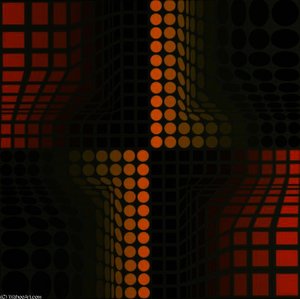
Abstract Composition 13

Explore Victor Vasarely's 'Abstract Composition 13,' a vibrant Op Art masterpiece! Dive into its geometric shapes, dynamic colors & lasting influence on modern art.

Ontdek Victor Vasarely (1906-1997), de pionier van Op Art! Bewonder zijn geometrische abstracties, optische illusies & een blijvende invloed op moderne kunst en design.

Giclée / Kunstafdruk

Giclée- of canvasafdruk van museumkwaliteit met snelle productie en flexibele afwerkingsopties.

P118B $10
P118H $10
P118W $10
P438Z $10
P508JH $12
P508YH $12
P805H $10
P805Z $10
P919BZ $10
P919G $10
P919XJ $10
P959ZH $10
P968JZ $12
W106C $8
W218G $10
W218JH $8
W218Y $10
W307PJ $10
W316G $10
W316PJ $8
W316Y $10
W398PJ $8
W4111J $10
W500HY $15
W500JH $15
W692G $12
W849H $8
W940BG $15
W953PJ $8

Standard
custom
CM
INCH

Kies uit onze vooraf ingestelde maten die overeenkomen met de originele verhoudingen van het kunstwerk.

breedte
hoogte

U kunt uw eigen afmetingen opgeven om in een specifieke lijst of ruimte te passen. Als de door u gekozen maat niet overeenkomt met de proporties van het originele kunstwerk, zullen wij de afbeelding bijsnijden of uitbreiden met een gespiegelde of effen rand. Een digitaal mockup wordt ter goedkeuring naar u verzonden voordat de productie begint.
Houd er rekening mee dat de preview op het scherm de werkelijke bijsneding of uitbreiding niet weergeeft. Alleen de mockup toont de uiteindelijke compositie nauwkeurig.
Hoewel aangepaste maten beschikbaar zijn, raden wij aan een afmeting uit de vooraf bepaalde lijst te kiezen om de originele proporties te behouden.

Wereldwijde levering () binnen 2 weken in plaats van de standaard 4/5 weken. (6 juli)

why_choose_icon
Gratis wereldwijde expressverzending
why_choose_icon
Hoogwaardig linnen canvas
why_choose_icon
Volledige verzendverzekering
why_choose_icon
Garantie op terugbetaling van invoerrechten
why_choose_icon
Garantie op exacte kleurweergave
why_choose_icon
60 dagen retourbeleid (alleen bij defecten)
why_choose_icon
100% Geld-terug-garantie
why_choose_icon
Korting bij meerdere afnames

Totaalprijs

-

reproduction

Abstract Composition 13

Giclée / Kunstafdruk

Afmetingen reproductie

-

Eindtotaal

-

Snelle feiten

  • Artist: Victor Vasarely
  • Movement: Op Art
  • Artistic style: Geometric abstraction
  • Title: Abstract Composition 13
  • Influences: Bauhaus movement

Beschrijving verzamelobject

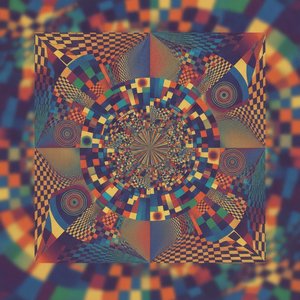
A Dance of Geometry and Color: Exploring Victor Vasarely's "Abstract Composition 13"

Victor Vasarely, a name synonymous with Op Art and kinetic art, gifted the world a visual language rooted in geometry and vibrant color. His work transcends mere decoration; it’s an exploration of perception, a challenge to our understanding of space and form. “Abstract Composition 13,” exemplifies this perfectly – a dynamic interplay of shapes that seems to shimmer and move before your eyes. This isn't simply a painting; it is an experience, a carefully orchestrated illusion designed to engage the viewer on a deeply sensory level. The piece invites us into a world where logic and emotion intertwine, where the precision of mathematical principles gives rise to a surprisingly organic and captivating aesthetic.

The Genesis of Op Art: Vasarely's Vision

To truly appreciate "Abstract Composition 13," one must understand its historical context. Born in Hungary in 1906, Vasarely’s journey was far from conventional. Initially studying medicine, he abandoned it to pursue his artistic calling, immersing himself in the burgeoning world of modern art. The influence of Bauhaus principles – a focus on functional design and geometric abstraction – is undeniable in his work. However, Vasarely didn't merely replicate these influences; he synthesized them into something entirely new. He sought to create an art that was accessible, democratic, and capable of transforming the everyday environment. This ambition led him to develop Op Art (Optical Art), a movement characterized by its use of optical illusions and dynamic visual effects. "Abstract Composition 13," created during this pivotal period, stands as a testament to Vasarely’s pioneering spirit and his unwavering commitment to pushing the boundaries of artistic expression. It was a time when artists were questioning traditional representation, seeking new ways to engage with the viewer and explore the very nature of perception.

A Symphony of Shapes: Technique and Composition

The visual impact of "Abstract Composition 13" stems from Vasarely’s masterful manipulation of geometric forms – triangles, circles, squares, and lines – arranged in a complex yet harmonious composition. The colors are equally crucial; blues, greens, purples, yellows, oranges, and blacks collide and interact, creating a sense of depth and movement. Notice how the shapes overlap and intersect, generating optical vibrations that seem to pulse with energy. Vasarely’s technique involved meticulous planning and precise execution. He often began with small-scale studies, carefully calculating the placement of each element before transferring his design to larger canvases. This methodical approach belies the seemingly spontaneous nature of the final result. The "all-over" composition – where no single area dominates – is a hallmark of Vasarely’s style, ensuring that the viewer's eye is constantly drawn across the surface, exploring the intricate network of shapes and colors. He wasn't interested in creating a focal point; instead, he aimed to create an immersive visual experience.

Beyond Illusion: Symbolism and Emotional Resonance

While "Abstract Composition 13" may appear purely decorative at first glance, deeper contemplation reveals layers of symbolic meaning. Vasarely believed that art should be accessible to everyone, transcending the elitism often associated with traditional fine art. His geometric abstractions can be interpreted as representations of universal patterns – the underlying structures that govern our world. The repetition of shapes and colors evokes a sense of order and harmony, while the dynamic interplay creates a feeling of energy and vitality. The emotional impact is subtle yet profound. There's a sense of optimism and forward momentum, a celebration of human ingenuity and creativity. It’s not an artwork that demands a specific interpretation; rather, it invites viewers to project their own emotions and experiences onto its surface. The vibrant colors evoke feelings of joy and excitement, while the precise geometry provides a grounding sense of stability. Ultimately, "Abstract Composition 13" is a testament to the power of abstraction to communicate complex ideas and evoke profound emotional responses without relying on representational imagery. It’s an invitation to see the world in new ways – to appreciate the beauty of order, the dynamism of change, and the endless possibilities of human imagination.

Vergelijkbare kunstwerken


Biografie van de kunstenaar

A Life Forged in Geometry: The World of Victor Vasarely

Victor Vasarely’s journey to becoming a pioneer of Op Art and kinetic art was anything but predetermined. Born Károly Vaszary in 1906 in Pécs, a city then nestled within Austria-Hungary (now Croatia), his early life hinted at a path far removed from the canvas. Initially pursuing medical studies at Eötvös Loránd University in Budapest, he abruptly abandoned this ambition for the world of painting in 1927, enrolling at the Podolini-Volkmann Academy. This decision wasn’t merely a career shift; it represented a lifelong dedication to exploring the fundamental principles governing perception and form – a quest rooted in logic and precision. A pivotal moment arrived with his enrollment in Sándor Bortnyik’s workshop – Műhely – a school deeply influenced by the Bauhaus movement. Here, Vasarely absorbed the tenets of functional design and geometric abstraction, seeds that would blossom into his signature style. These formative years weren't simply about acquiring technique; they were about dismantling traditional artistic conventions and embracing a new visual language, one designed to actively engage the viewer’s perception.

From Early Abstraction to the Dawn of Op Art

The late 1920s and early 1930s witnessed Vasarely's gradual departure from representational art, as he delved deeper into the realm of geometric abstraction. Works like “Blue Study” and “Green Study,” created in 1929, exemplify this transition – a deliberate shedding of narrative content in favor of pure form and color relationships. He was profoundly influenced by masters such as Piet Mondrian and Kazimir Malevich, yet he wasn’t content to simply emulate their styles. Vasarely sought to transcend the static compositions of his predecessors, aiming for a dynamism that would actively engage the viewer's perception. This quest led him to Paris in 1930, where he established himself as a graphic designer and advertising artist, honing his skills while continuing to develop his unique artistic vision. It was during this period that he began experimenting with techniques that would later become hallmarks of Op Art – manipulating shapes and colors to create illusions of movement and depth. The seeds were sown for a revolution in visual experience.

The Systematic Illusion: Defining a Movement

By the 1960s, Victor Vasarely had fully emerged as a leading figure in the burgeoning Op Art movement. Unlike many artists who relied on intuition and spontaneous expression, Vasarely approached his work with a distinctly systematic methodology. He employed grids and mathematical principles to generate patterns that created powerful optical illusions – visual vibrations, swirling effects, and sensations of depth where none physically existed. This wasn’t about trickery; it was about revealing the inherent dynamism within perception itself. He believed in reproducibility and mass appeal, aiming to democratize art by making it accessible beyond the confines of galleries and museums. His work challenged viewers to question their own visual experience, forcing them to actively participate in the creation of meaning. This deliberate engagement with perception set Op Art apart and cemented Vasarely’s place at its forefront. He wasn't merely painting pictures; he was constructing experiences.

Historical Significance

Vasarely’s contribution to art history is multifaceted. He moved beyond traditional painting techniques to create works that actively engage the viewer’s perception. His systematic approach challenged conventional notions of artistic creativity and paved the way for computer-generated art and digital design. By embracing reproducibility and commercial applications, Vasarely blurred the boundaries between fine art and popular culture, leaving an enduring mark on both. He wasn't simply creating aesthetically pleasing objects; he was conducting visual experiments that revealed fundamental truths about how we see the world. His work continues to resonate today, reminding us of the power of abstraction, the beauty of geometry, and the endless possibilities of human creativity.

Beyond the Canvas: Kinetic Exploration and a Lasting Legacy

Vasarely’s artistic exploration didn't stop at static illusions. He increasingly ventured into kinetic art, creating works that incorporated actual movement or appeared to move through carefully orchestrated visual effects. “Georges Pompidou” (1976), a large kinematic object installed at the Centre Pompidou in Paris, stands as a testament to this ambition – an integration of art with architecture and urban design on a grand scale. He also demonstrated remarkable innovation by applying his designs to commercial products, most notably through his collaboration with Rosenthal porcelain, resulting in the iconic “Suomi” tableware series. This willingness to blur the boundaries between fine art and functional objects further underscored his belief in art’s potential to permeate everyday life. The establishment of the Fondation Vasarely in Aix-en-Provence ensured the preservation and promotion of his extensive body of work, while a remarkable event – the inclusion of serigraphs aboard the French-Soviet spacecraft Salyut 7 in 1982 – symbolized the global recognition of his art and its connection to the broader human endeavor of exploration. Victor Vasarely’s legacy extends far beyond the realm of painting; he profoundly influenced graphic design, fashion, interior design, and even early computer graphics, inspiring generations with his innovative vision and unwavering commitment to exploring the possibilities of perception. He remains a pivotal figure in modern art history, a true visionary who dared to challenge our understanding of what art could be.
Victor Vasarely

Victor Vasarely

1906 - 1997 , Kroatië

Belangrijkste feiten

  • Artistic Movement Or Style: Op Art, Kinetic Art
  • Artists Or Movements Influenced By This Artist:
    • Graphic design
    • Interieurdesign
  • Artists Who Influenced This Artist:
    • Piet Mondrian
    • Kazimir Malevich
  • Date Of Birth: 9 april 1906
  • Date Of Death: 15 maart 1997
  • Full Name: Victor Vasarely
  • Nationality: Hongaars-Frans
  • Notable Artworks:
    • Blue Study
    • Green Study
    • Zebra
  • Place Of Birth: Pécs, Kroatië
Ontdek kunstwerken georganiseerd op thema's, stijlen en kenmerken.