GRATIS KUNSTADVIES

x
Bestel schilderij Bestel schilderijKoop afbeelding in hoge resolutie Koop afbeelding in hoge resolutie VerstuurVerstuur
DetailsDetails Toevoegen aan favorieten Toevoegen aan favorieten DownloadDownload Vergelijkbare werkenVergelijkbare werken RöntgenfotoRöntgenfoto DiavoorstellingDiavoorstelling

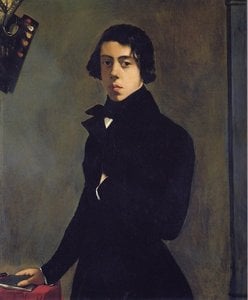
Self-Portrait

Explore Théodore Chassériau's 'Self-Portrait,' a captivating 1835 oil painting showcasing the artist’s restrained elegance and introspective style, housed in the Louvre.

Ontdek Théodore Chassériau (1819–1856), een Franse Romantische schilder die Ingres & Delacroix verbond. Bekijk zijn levendige portretten, oriëntaalse scènes en Algerijnse kunst.

Giclée / Kunstafdruk

Giclée- of canvasafdruk van museumkwaliteit met snelle productie en flexibele afwerkingsopties.

P118B $10
P118H $10
P118W $10
P438Z $10
P508JH $12
P508YH $12
P805H $10
P805Z $10
P919BZ $10
P919G $10
P919XJ $10
P959ZH $10
P968JZ $12
W106C $8
W218G $10
W218JH $8
W218Y $10
W307PJ $10
W316G $10
W316PJ $8
W316Y $10
W398PJ $8
W4111J $10
W500HY $15
W500JH $15
W692G $12
W849H $8
W940BG $15
W953PJ $8

Standard
custom
CM
INCH

Kies uit onze vooraf ingestelde maten die overeenkomen met de originele verhoudingen van het kunstwerk.

breedte
hoogte

U kunt uw eigen afmetingen opgeven om in een specifieke lijst of ruimte te passen. Als de door u gekozen maat niet overeenkomt met de proporties van het originele kunstwerk, zullen wij de afbeelding bijsnijden of uitbreiden met een gespiegelde of effen rand. Een digitaal mockup wordt ter goedkeuring naar u verzonden voordat de productie begint.
Houd er rekening mee dat de preview op het scherm de werkelijke bijsneding of uitbreiding niet weergeeft. Alleen de mockup toont de uiteindelijke compositie nauwkeurig.
Hoewel aangepaste maten beschikbaar zijn, raden wij aan een afmeting uit de vooraf bepaalde lijst te kiezen om de originele proporties te behouden.

Wereldwijde levering () binnen 2 weken in plaats van de standaard 4/5 weken. (5 juli)

why_choose_icon
Gratis wereldwijde expressverzending
why_choose_icon
Hoogwaardig linnen canvas
why_choose_icon
Volledige verzendverzekering
why_choose_icon
Garantie op terugbetaling van invoerrechten
why_choose_icon
Garantie op exacte kleurweergave
why_choose_icon
60 dagen retourbeleid (alleen bij defecten)
why_choose_icon
100% Geld-terug-garantie
why_choose_icon
Korting bij meerdere afnames

Totaalprijs

-

reproduction

Self-Portrait

Giclée / Kunstafdruk

Afmetingen reproductie

-

Eindtotaal

-

Snelle feiten

  • Influences:
    • Ingres
    • Delacroix
  • Movement: Romanticism
  • Artist: Théodore Chassériau
  • Dimensions: 99 x 82 cm
  • Year: 1835
  • Location: Louvre, Paris
  • Artistic style: 19th-century

Kunstquiz

Er is slechts één correct antwoord op elke vraag.

Vraag 1:
What artistic movement is most closely associated with Théodore Chassériau’s ‘Self-Portrait’?
Vraag 2:
The microphone stand visible in the painting 'Self-Portrait' suggests which of the following?
Vraag 3:
What is the predominant color palette used in ‘Self-Portrait’?
Vraag 4:
According to the description, what is a key characteristic of Chassériau’s technique in this painting?
Vraag 5:
Théodore Chassériau was born in which country?

Beschrijving verzamelobject

The Enigmatic Self: Théodore Chassériau’s “Self-Portrait in a Redingote”

Théodore Chassériau's 1835 oil on canvas, "Self-Portrait in a Redingote," is more than just a likeness; it’s a carefully constructed tableau of restrained elegance and subtle introspection—a window into the mind of a young artist grappling with his artistic identity within the context of 19th-century Parisian society. Housed within the prestigious Musée du Louvre, this painting immediately draws the viewer in with its dark palette and the commanding presence of the subject, a young man radiating an almost melancholic intensity.

The work firmly anchors itself within the Romantic movement, yet it subtly resists simple categorization. While undeniably influenced by the dramatic flair of Eugène Delacroix – particularly evident in the dynamic lighting and the suggestion of movement – Chassériau retains a core Neoclassical discipline, meticulously rendered lines defining the sharp angles of his suit jacket and the precise contours of his face. This duality reflects the artist’s own journey: initially trained under the rigorous tutelage of Jean-Auguste-Dominique Ingres, he ultimately forged his own path, embracing a more expressive and emotionally charged style.

A Study in Light and Shadow – Technique and Composition

Chassériau's masterful technique is immediately apparent. The painting’s composition centers around the subject, occupying nearly the entire frame, creating an intimate and almost claustrophobic effect. He stands in a three-quarter pose, his gaze directed slightly to the left, inviting the viewer into his world. A subtle yet significant detail—a microphone stand discreetly positioned behind him on the left – hints at a performance context, perhaps suggesting Chassériau’s burgeoning career as a stage designer or illustrator, alongside his painting endeavors. The artist employs a layering technique, building up color and texture through numerous thin glazes of oil paint, resulting in a remarkably smooth surface—a testament to his dedication and skill.

The lighting is particularly noteworthy. It originates from an unseen source on the left side, casting soft, directional shadows across the subject’s face and subtly highlighting the textures of his clothing. This strategic use of light not only adds depth and volume but also contributes significantly to the painting's overall mood—a blend of formality and quiet contemplation. The careful blending of tones creates a sense of atmospheric perspective, drawing the eye deeper into the scene.

Symbolism and Emotional Resonance

Beyond its technical brilliance, “Self-Portrait in a Redingote” is rich in symbolic meaning. The formal black suit, impeccably tailored, speaks to Chassériau’s ambition and his desire for recognition within the established artistic circles of Paris. However, the slightly downturned mouth and the introspective gaze suggest a deeper layer of complexity—a hint of melancholy or perhaps even disillusionment with the constraints of academic art. The red bow tie, a vibrant splash of color against the predominantly dark palette, could represent passion, creativity, or simply a deliberate assertion of individuality.

The painting’s overall effect is one of restrained elegance and quiet introspection. It's not a flamboyant self-celebration but rather a carefully considered portrait of an artist grappling with his identity and place in the world—a poignant reflection on the challenges and rewards of pursuing a creative life. The subtle sadness in his eyes invites us to contemplate the burdens of artistic ambition, while the formality of his attire suggests a desire for respectability and recognition.

A Legacy of Romanticism – Historical Context

Created during a period of significant social and political upheaval—the aftermath of the Napoleonic Wars and the rise of Romanticism—Chassériau’s work reflects the movement's emphasis on emotion, individualism, and the sublime. His Creole heritage, born in the Dominican Republic and raised in Paris, undoubtedly informed his artistic vision, providing him with a unique perspective on both European and Caribbean cultures. This background is reflected in his interest in Orientalist themes – particularly evident in later works – and his willingness to challenge conventional artistic norms.

Chassériau’s trajectory—from student of Ingres to independent Romantic artist—is itself a compelling narrative, illustrating the tensions between tradition and innovation within 19th-century art. “Self-Portrait in a Redingote” stands as a powerful testament to his artistic evolution and a captivating glimpse into the mind of a brilliant but often overlooked talent.

Vergelijkbare kunstwerken


Biografie van de kunstenaar

Théodore Chassériau (1819–1856) – Een Brug tussen Neoclassicisme en Romantiek

Théodore Chassériau, geboren op 20 september 1819 in Sainte-Barbe de Samano, Santo Domingo (nu Dominicaanse Republiek), was een Franse kunstschilder uit de Romantiek. Hij staat bekend om zijn prachtige portretten en historische schilderijen, vaak gekenmerkt door een combinatie van klassieke precisie en emotionele expressie. Zijn leven werd gevormd door zijn Creole achtergrond – zijn vader een Frans diplomaat en zijn moeder een vrouw met afkomst uit Haiti en Frankrijk – wat hem een uniek perspectief gaf op zowel kunst als geschiedenis. Hij begon zijn artistieke opleiding onder de begeleiding van Jean Auguste Dominique Ingres, een titan van het neoclassicisme, en werd daarvoor aangemoedigd door zijn uitzonderlijke tekenvaardigheid al op jonge leeftijd. Deze combinatie zou hem tot een belangrijke figuur maken in de kunstgeschiedenis van de 19e eeuw. ### Een Leerling van Ingres en Zijn Neoclassieke Beginnen Ingres erkende Chassériau’s talent meteen en nam hem aan als zijn persoonlijke leerling, wat leidde tot een diepe invloed van Ingres’ stijl op het werk van de jonge kunstenaar. Samen verkenden ze Rome in 1834, waar Chassériau zich volledig onderwierp aan Ingres’ strenge eisen voor klassieke compositie en lijntekening. Deze periode zag hem werken aan prachtige nude afbeeldingen en andere werken die een gevoel voor klassieke schoonheid en harmonie uitdrukten. Zijn stijl werd sterk bepaald door Ingres' aandacht voor detail en zijn beheersing van de technische kunstvorm, wat zou terugkomen in zijn latere werk. Een anekdote verkondert dat Ingres beweerde: “Kom jongens, kom kijken! Dit kind zal Napoleon van schilderkunst worden.” Een bewijs van zijn uitzonderlijke talent en een prachtige illustratie van het belang van een goede opleiding. ### De Romantische Invloed en Delacroix’s Inspiratie Maar Chassériau’s artistieke reis werd niet alleen gedreven door Ingres; hij werd ook aangetrokken door de opkomst van het romantisme, dat een andere stijl bood – een stijl gekenmerkt door kleurrijke emoties en dramatische composities. Eugène Delacroix, een andere grote kunstenaar van zijn tijd, oefende een enorme invloed uit op Chassériau’s denken en werk. Delacroix’ gebruik van dynamische kleuren en beweging inspireerde Chassériau om zijn stijl te ontwikkelen en nieuwe thema's te verkennen die buiten de grenzen van het neoclassicisme lagen. Hij begon experimenteel met losse penseelstreken en rijke kleuren, waardoor hij een unieke kunsttaal kon creëren die zowel technische briljantie als emotionele diepgang konden combineren. Zijn werk werd een prachtige brug tussen twee belangrijke kunststromingen. ### Een Diverse Oeuvre: Portretten, Historische Schilderijen en Oriëntalisme Chassériau’s kunstenaarschap omvatte een breed scala aan genres, waaronder prachtige portretten die het karakter van zijn onderwerpen konden vastleggen met een ongeëvenaarde gevoeligheid. Hij schilderde historische scènes die belangrijke gebeurtenissen uit de geschiedenis weergaverden en liet zich inspireren door zowel klassieke als romantische thema’s. Maar hij staat vooral bekend om zijn oriëntalistische werk, dat voortkwam uit zijn reis naar Algerije in 1846. Hij verkende exotische landschappen en culturen met een prachtige aandacht voor detail en kleur, waardoor hij een belangrijke bijdrage leverde aan de kunst van zijn tijd. Zijn werken zoals *Desdemona* en *Scène dans le quartier juif de Constantine* laten zien hoe hij klassieke stijl wist te combineren met romantische emotie. ### Een Laatste Inspiratie en Een Vermogen tot Synthese Théodore Chassériau stierf jong op 8 oktober 1856, slechts 37 jaar oud, waardoor zijn veelbelovende carrière abrupt werd afgebroken. Ondanks zijn korte leven liet hij een belangrijke nalatenschap achter in de kunstgeschiedenis van Frankrijk en verder. Hij wordt beschouwd als een essentiële brug tussen neoclassicisme en romantiek, die het belang van technische vaardigheid en emotionele expressie onderstreept. Zijn stijl werd beïnvloed door zowel Ingres als Delacroix, maar hij wist zijn eigen kunsttaal te ontwikkelen – een kunsttaal die voortdurend wordt bewonderd en geïnspireerd door kunstenaars en liefhebbers wereldwijd. Hij bleef een kunstenaar die durfde voorbij de conventies van zijn tijd te kijken, waarbij hij zowel klassieke traditie als nieuwe innovatie omarmde. Zijn werk blijft een prachtige illustratie van het vermogen van kunst om grenzen te overschrijden en ons te verbinden met de universiteit van menselijke ervaringen.
Théodore Chassériau

Théodore Chassériau

1819 - 1856 , Dominicaanse Republiek

Belangrijkste feiten

  • Artistic Movement Or Style: Romantiek en Neoclassicisme
  • Artists Or Movements Influenced By This Artist: ['Eugène Delacroix']
  • Artists Who Influenced This Artist: ['Jean Auguste Dominique Ingres']
  • Date Of Birth: 20 september 1819
  • Full Name: Théodore Chassériau
  • Nationality: Frans
  • Notable Artworks:
    • Desdemona (De Zing van de Willow)
    • Scène in het Joodse kwartier van Constantine
  • Place Of Birth: Samaná, Dominicaanse Republiek
Ontdek kunstwerken georganiseerd op thema's, stijlen en kenmerken.