Bekijk op ware grootte Bekijk in AR Schakel over naar print Koop handgeschilderd kunstwerk Verstuur
Details bekijken Guide Toevoegen aan favorieten Download Vergelijkbare items Röntgenonderzoek Diavoorstelling Statistieken

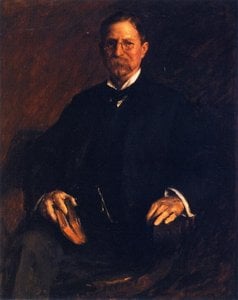
Dr August Weber

Theo Van Rysselberghe’s 1892 portrait of Dr August Weber exemplifies Post-Impressionism with a serious subject and bold brushstrokes. Own this captivating piece by a Belgian pioneer and explore timeless art.

Théo van Rysselberghe: Een baanbrekende Neo-Impressionist schilder met levendige kleuren & fascinerende portretten. Ontdek zijn invloedrijke kunst en de magie van het licht!

Koop een digitale afbeelding in hoge resolutie met verbeterde kwaliteit, die veel superieur is aan de online voorvertoning.

Elk bestand wordt met uiterste precisie voorbereid door onze interne specialisten, met behulp van geavanceerde tools en deskundige handmatige retouche. Wij garanderen dat elke afbeelding een uitzonderlijke helderheid, nauwkeurige kleurweergave en verfijnde details bezit.

Het uiteindelijke bestand wordt binnen 72 uur per e-mail geleverd, geoptimaliseerd voor direct gebruik in professionele, redactionele en printomgevingen. Dit is dezelfde kwaliteit waarop vooraanstaande designstudio's, uitgevers en galerieën vertrouwen.

Digitale afbeeldingen

Download een bestand met hoge resolutie voor persoonlijke weergave, afdrukken en creatieve projecten. ( Schakel over naar print Koop handgeschilderd kunstwerk)

Totaalbedrag

$ 24,90

Inbegrepen bij elke bestelling van een digitale afbeelding

Professionele digitale levering, gegarandeerd

Wanneer u kiest voor WahooArt.com, ontvangt u niet alleen een afbeelding – u krijgt een professioneel verbeterd digitaal kunstwerk, met precisie vervaardigd en voorzien van een tevredenheidsgarantie. Dit is alles wat automatisch bij uw bestelling is inbegrepen:

shipping_icon
Directe levering per e-mail

Uw hoogwaardige digitale afbeeldingsbestand wordt binnen 72 uur na bestelling naar u gemaild – klaar voor direct gebruik.

canvas_icon
AI-geoptimaliseerd digitaal bestand

Uw kunstwerk wordt professioneel geoptimaliseerd met behulp van geavanceerde AI-tools en handmatige bewerkingen, waardoor maximale details, helderheid en kleurnauwkeurigheid worden gegarandeerd.

insurance_icon
Gratis levenslange herlevering

Je bestand per ongeluk verwijderd of kwijtgeraakt? Geen zorgen – we sturen het u op elk gewenst moment gratis opnieuw toe.

tax_icon
Geen invoerkosten – nooit

Geniet direct van uw kunstwerk zonder invoerrechten, belastingen of verzendkosten – digitale downloads zijn altijd belastingvrij.

color_icon
Garantie op kleurgetrouwheid

Met behulp van professionele hulpmiddelen en kleurbeheer zorgen wij ervoor dat uw digitale afbeelding de originele kleuren zo nauwkeurig mogelijk weergeeft.

return_icon
100 dagen tevredenheidsgarantie

Als u niet tevreden bent met uw digitale afbeelding, passen wij deze aan of storten wij 100% terug binnen 100 dagen - zonder vragen te stellen.

guarantee_icon
100% Geld-terug-garantie

Niet tevreden? Ontvang een volledige terugbetaling binnen 100 dagen na ontvangst van uw digitale bestand – zonder vragen te stellen.

discount_icon
Korting bij grote bestellingen

Koop 3 afbeeldingen, bespaar 10% - Koop 5, bespaar 15% - Koop 10+, bespaar 20%. Ideaal voor creatieve projecten, galerieën en bureaus.

Belangrijkste kenmerken

  • Medium: Oil on canvas
  • Notable elements: Clock, green wall
  • Dimensions: 135 x 115 cm
  • Title: Dr August Weber
  • Location: University of Reading
  • Artist: Theo van Rysselberghe
  • Influences:
    • Van Rysselberghe
    • Neo-Impressionism

Dr August Weber: A Portrait of Contemplation by Theo van Rysselberghe

  • Subject: The painting depicts Dr. August Weber, a man rendered with quiet dignity and introspective focus. Van Rysselberghe’s masterful portrayal captures the essence of a thoughtful individual, seated in repose, his hands crossed as if lost in deep consideration.
  • Style & Technique: Created in 1892, this oil on canvas work exemplifies Post-Impressionism, showcasing Theo van Rysselberghe's signature style – bold brushstrokes and a deliberate use of color to evoke mood and atmosphere rather than photographic realism. The artist’s technique is characterized by a nuanced layering of paint, creating subtle gradations in tone and texture that contribute to the painting’s depth and richness.

Historical Context & Influences

  • Post-Impressionism: Van Rysselberghe was a key figure in the development of Post-Impressionism, reacting against the fleeting impressions of Impressionism and seeking to imbue his work with greater emotional and symbolic weight.
  • Neo-Impressionist Roots: While firmly rooted in Post-Impressionism, Van Rysselberghe’s artistic journey was shaped by influences from Neo-Impressionism, particularly evident in his exploration of color theory and his desire to capture the effects of light with scientific precision.
  • Contemporary Works: The creation of *Dr August Weber* occurred during a period of significant artistic innovation, alongside works like Van Rysselberghe’s *Girl in Green* and *Levant Isle*, further solidifying his position within the Belgian art scene.

Symbolism & Interpretation

  • The Figure of Dr. Weber: The seated posture and crossed hands suggest a man lost in thought, perhaps contemplating complex ideas or simply seeking solace. Van Rysselberghe’s ability to convey such subtle emotions through the figure's pose is a testament to his artistic skill.
  • Color Palette: The muted color palette – dominated by greens and browns – contributes to the painting’s contemplative mood, evoking a sense of calm and introspection. The green backdrop subtly enhances the feeling of serenity.
  • Time & Reflection: The inclusion of a clock in the background adds another layer of interpretation, hinting at the passage of time and the importance of reflection.

Artistic Significance & Reproduction

  • Van Rysselberghe’s Legacy: Theo van Rysselberghe remains a significant figure in Belgian art history, celebrated for his unique approach to portraiture and his contribution to the development of Post-Impressionism.
  • Handmade Reproduction: WahooArt offers meticulously crafted, hand-painted reproductions of *Dr August Weber*, ensuring that you own an authentic representation of this captivating artwork. Each reproduction is created using traditional oil painting techniques, faithfully capturing the nuances of Van Rysselberghe’s original style.
  • Perfect for Any Space: This striking portrait would be a valuable addition to any art collection or a sophisticated focal point within your interior design scheme.

Biografie van de kunstenaar

A Pioneer of Light: The Life and Art of Théo van Rysselberghe

Théophile “Théo” van Rysselberghe, born in Ghent, Belgium, in 1862, emerged as a pivotal figure bridging the gap between Impressionism and Neo-Impressionism. His journey wasn’t one of immediate stylistic conviction but rather an evolving exploration sparked by travel, intellectual exchange, and a relentless pursuit of capturing light's essence. Coming from a comfortably bourgeois French-speaking family, van Rysselberghe received his initial artistic training at the Academy of Ghent under Theo Canneel, followed by studies at the prestigious Académie Royale des Beaux-Arts in Brussels. These formative years instilled in him a foundation rooted in traditional realism, evident in early works like *Self-Portrait with Pipe* (1880), characterized by somber tones and meticulous detail—a reflection of the prevailing Belgian artistic climate. However, even within these early pieces, hints of a burgeoning sensitivity to light and color began to surface, foreshadowing his future trajectory. A pivotal work from this period, *Child in an Open Spot of the Forest* (1880), marked a subtle departure, hinting at the brighter palette and looser brushwork that would define his later style.

Moroccan Impressions and the Birth of Les XX

A transformative chapter unfolded with van Rysselberghe’s voyages to Morocco between 1882 and 1888. These extended sojourns immersed him in a world of vibrant colors, intense sunlight, and exotic landscapes—a stark contrast to the subdued tones of his earlier work. Paintings like *Arabian Street Cobbler* (1882), *Arabian Boy* (1882), and *Resting Guard* (1883) demonstrate a growing fascination with capturing the effects of light on form, moving away from strict realism towards a more impressionistic sensibility. The Moroccan experience wasn’t merely about visual observation; it was an immersion into a different culture that broadened his artistic horizons and instilled a lifelong love for travel. He documented these scenes meticulously, creating a series of evocative works that captured the energy and atmosphere of daily life in Tangier and surrounding areas. Upon returning to Brussels, van Rysselberghe became a driving force in the Belgian art scene, co-founding the influential group *Les XX* (The Twenty) in 1883 alongside Octave Maus and Émile Verhaeren. This collective served as a platform for showcasing avant-garde art, introducing new movements like Impressionism and Symbolism to a Belgian audience largely unfamiliar with such innovations. *Arabian Phantasia* (1884), a large-scale exotic painting depicting a bustling marketplace scene, became his most celebrated work from this period, demonstrating his mastery of light and composition.

Embracing Neo-Impressionism: A Scientific Approach to Color

The true turning point in van Rysselberghe’s artistic development arrived with his encounter with Georges Seurat's *A Sunday on La Grande Jatte* at the eighth Impressionist exhibition in Paris in 1886. Initially skeptical of Seurat’s meticulous “pointillist” technique—the systematic application of tiny dots of pure color—van Rysselberghe gradually came to appreciate its scientific basis and potential for achieving luminous effects. He began experimenting with divisionism, the Neo-Impressionist method of separating colors into their constituent parts and allowing the viewer’s eye to blend them optically. This wasn't simply a technical shift; it represented a fundamental change in his approach to painting—a move towards a more analytical and objective representation of light and color. He forged close friendships with other Neo-Impressionist painters like Paul Signac, traveling with him along the French Riviera and exchanging ideas about technique and theory. Van Rysselberghe distinguished himself within the movement by applying pointillism not only to landscapes but also to portraiture, creating strikingly vibrant and psychologically insightful likenesses of his family and friends—works such as *Madame Charles Maus* (1890) are prime examples.

Portraiture and a Lasting Legacy

While he initially embraced the scientific rigor of Neo-Impressionism, van Rysselberghe never fully abandoned his expressive impulses. He continued to develop his distinctive style, characterized by luminous color palettes, delicate brushwork, and an uncanny ability to capture the fleeting effects of light. His portraits are particularly noteworthy for their psychological depth and emotional resonance—works like *Portrait of Maria Sèthe* (1891) reveal a remarkable sensitivity to human character and expression. He also produced numerous landscapes and seascapes, often infused with a dreamlike quality. Beyond his artistic output, van Rysselberghe was an active participant in the Belgian cultural scene, contributing to the development of decorative arts and design. His influence extended far beyond Belgium, impacting artists like Piet Mondrian and Jan Toorop who were inspired by his innovative use of color and light. Van Rysselberghe’s legacy lies not only in his beautiful paintings but also in his role as a catalyst for artistic change—a champion of modernism who helped introduce new ideas and techniques to the Belgian art world. His works are now held in prominent museum collections worldwide, including the Musée du Luxembourg in Paris and the Museum voor Schone Kunsten in Ghent, ensuring that his contribution to the history of art continues to be celebrated and appreciated by generations to come. His dedication to exploring the interplay of light, color, and form cemented his place as a true pioneer of modern painting.

Key Works

* *Self-Portrait with Pipe* (1880) * *Child in an Open Spot of the Forest* (1880) * *Arabian Street Cobbler* (1882) * *Arabian Boy* (1882) * *Resting Guard* (1883) * *La Pointe Perkiridec Near Roscoff in Brittany* (1889) * *Madame Charles Maus* (1890) * *Portrait of Maria Sèthe* (1891)

Théo van Rysselberghe

Théo van Rysselberghe

1862 - 1926 , België

Kerngegevens

  • Artistic Movement Or Style: Neo-Impressionisme
  • Artists Or Movements Influenced By This Artist:
    • Les XX
    • Mondrian
  • Artists Who Influenced This Artist:
    • Portaels
    • Seurat
  • Date Of Birth: 23 november 1862
  • Date Of Death: 14 december 1926
  • Full Name: Théophile van Rysselberghe
  • Nationality: Belgische
  • Notable Artworks:
    • Arabian Phantasia
    • Sevillan Woman
  • Place Of Birth: Gent, België