Voorvertoning Bekijk in AR Bestel handgeschilderde reproductie Schakel over naar digitale afbeelding Verstuur
Details bekijken Toevoegen aan favorieten Download Vergelijkbare items Röntgenonderzoek Diavoorstelling Statistieken

Triptych (exterior)

Experience the dramatic 'Triptych (exterior)' by Taddeo Gaddi! This 1333 masterpiece depicts biblical scenes with intricate detail, showcasing early Renaissance artistry & a captivating composition.

Ontdek Taddeo Gaddi, een cruciale Florentijnse schilder en architect van de vroege Renaissance. Meester van Giotto's stijl; verken zijn fresco's in de Baroncelli-kapel en zijn invloed op de Italiaanse kunst.

Giclée / Kunstafdrukken

Giclée- of canvasafdruk van museumkwaliteit met een snelle productie en flexibele afwerkingsmogelijkheden. ( Bestel handgeschilderde reproductie Schakel over naar digitale afbeelding)

P118B $10
P118H $10
P118W $10
P438Z $10
P508JH $12
P508YH $12
P805H $10
P805Z $10
P919BZ $10
P919G $10
P919XJ $10
P959ZH $10
P968JZ $12
W106C $8
W218G $10
W218JH $8
W218Y $10
W307PJ $10
W316G $10
W316PJ $8
W316Y $10
W398PJ $8
W4111J $10
W500HY $15
W500JH $15
W692G $12
W849H $8
W940BG $15
W953PJ $8

Standaardformaat
op maat gemaakt
CM
INCH

Kies uit onze vooraf ingestelde maten die overeenkomen met de originele verhoudingen van het kunstwerk.

breedte
hoogte

U kunt uw eigen afmetingen opgeven om in een specifieke lijst of ruimte te passen. Als de door u gekozen maat niet overeenkomt met de proporties van het originele kunstwerk, zullen wij de afbeelding bijsnijden of uitbreiden met een gespiegelde of effen rand. Een digitaal mockup wordt ter goedkeuring naar u verzonden voordat de productie begint.
Houd er rekening mee dat de preview op het scherm de werkelijke bijsneding of uitbreiding niet weergeeft. Alleen de mockup toont de uiteindelijke compositie nauwkeurig.
Hoewel aangepaste maten beschikbaar zijn, raden wij aan een afmeting uit de vooraf bepaalde lijst te kiezen om de originele proporties te behouden.

Wereldwijde levering () binnen 2 weken in plaats van de standaard 4/5 weken. (16 september)

why_choose_icon
Gratis wereldwijde expressverzending
why_choose_icon
Hoogwaardig linnen canvas
why_choose_icon
Volledige verzendverzekering
why_choose_icon
Garantie op terugbetaling van invoerrechten
why_choose_icon
Garantie op exacte kleurweergave
why_choose_icon
Retourbeleid van 100 dagen (alleen bij defecten)
why_choose_icon
100% Geld-terug-garantie
why_choose_icon
Korting bij meerdere afnames

Totaalprijs

$ 69

reproduction

Triptych (exterior)

Giclée / Kunstafdrukken

Afmetingen reproductie

-

Eindtotaal

$ 69

Snelle feiten

  • Dimensions: 62 x 22 cm (each wing)
  • Subject or theme: Biblical narrative
  • Artist: Taddeo Gaddi
  • Influences: Giotto
  • Location: Staatliche Museen, Berlin
  • Artistic style: Early Renaissance
  • Title: Triptych (exterior)

Kunstquiz

Er is slechts één goed antwoord op elke vraag.

Vraag 1:
What is the primary subject depicted in Taddeo Gaddi’s ‘Triptych (exterior)?’, as described in the image?
Vraag 2:
According to the provided information, in what year was Taddeo Gaddi’s ‘Triptych (exterior)’ created?
Vraag 3:
The image description mentions the presence of horses and a wheelchair within the painting. What do these elements suggest about the setting or context?
Vraag 4:
Taddeo Gaddi is known for his influence on which prominent artist?
Vraag 5:
Based on the provided information, what artistic movement did Taddeo Gaddi belong to?

Triptych (Exterior) by Taddeo Gaddi – A Window into Fourteenth-Century Florence

The Triptych (exterior) by Taddeo Gaddi, painted in 1333, isn’t merely a religious depiction; it's a vibrant snapshot of Florentine life and faith during a pivotal moment in the city’s artistic evolution. Commissioned likely for a prominent church or civic building, this remarkable work offers a rare glimpse into the world of Taddeo Gaddi, Giotto’s most gifted pupil, and his innovative approach to portraying both sacred narratives and the realities of human experience. The piece, now housed at the Staatliche Museen zu Berlin, immediately captivates with its rich palette, dynamic composition, and subtle yet profound symbolism – a testament to Gaddi's mastery and Giotto’s enduring influence.
  • The Scene: At first glance, the triptych presents a familiar religious tableau: Christ Entrusting Mary to John, an event central to Christian theology. However, Gaddi elevates this scene beyond simple iconography. The figures aren't static; they’re imbued with a palpable sense of movement and emotion. Christ’s gesture is one of benevolent guidance, while Mary appears serene and receptive, her gaze fixed on the future. John, youthful and attentive, embodies loyalty and devotion.
  • The Angels: Above the central scene, two angels are depicted – St. Catherine of Alexandria and St. Christopher – flanking a celestial vision of Christ. These figures aren’t rendered with the idealized beauty often associated with religious art; instead, they possess a grounded quality, reflecting Gaddi's commitment to portraying human likeness with remarkable accuracy.
  • The Exterior Shutters: The intricate details of the exterior shutters are equally compelling. Here, Gaddi employs a full-color technique, a departure from the traditional grisaille used for these panels. This vibrant approach adds depth and drama to the scene, depicting a wayfarer being confronted by temptations and ultimately led towards damnation.

Gaddi’s Innovative Technique and Giotto's Legacy

Taddeo Gaddi’s style is deeply rooted in Giotto’s groundbreaking innovations – a move away from the stylized Byzantine tradition toward a more naturalistic and emotionally resonant representation of figures and space. Unlike many of his contemporaries, Gaddi didn’t shy away from depicting human imperfections; he embraced them, imbuing his subjects with a sense of humanity rarely seen in earlier Florentine art. The use of poplar wood, a common material for panel paintings at the time, contributes to the piece's slightly textured surface and adds to its overall rustic charm. The composition itself is carefully balanced, drawing the eye through the triptych’s layers of narrative and symbolism. Gaddi’s influence extends beyond his immediate teacher; he was a key figure in shaping the nascent Renaissance style in Florence. His work demonstrates a sophisticated understanding of perspective and spatial relationships – elements that would become increasingly important during the High Renaissance. The subtle gradations of light and shadow, combined with the dynamic poses of the figures, create a sense of depth and realism that distinguishes Gaddi’s art from earlier medieval styles.

Symbolism and Context: A Reflection of Florentine Society

The Triptych (exterior) is more than just a religious depiction; it's a reflection of Florentine society in 1333. The scene of the wayfarer, beset by temptations and ultimately destined for damnation, speaks to the anxieties and moral concerns prevalent during this period. The inclusion of figures like St. Margaret and St. Christopher highlights the importance of saints as protectors and guides within the community. Furthermore, the presence of a wagon filled with fools – a common motif in medieval art – underscores the pervasive corruption and moral decay that plagued Florentine society at the time. It’s believed that Gaddi's work was commissioned during a period of political instability and social unrest in Florence, reflecting the city’s turbulent history. The triptych serves as a poignant reminder of the challenges faced by Florentines striving to maintain their faith and values amidst uncertainty and adversity.

A Timeless Masterpiece: Reproduction and Appreciation

Today, the Triptych (exterior) by Taddeo Gaddi stands as a testament to the enduring power of art to illuminate history, evoke emotion, and inspire contemplation. Reproductions offer an accessible way to experience this remarkable work of art, bringing its beauty and symbolism into homes and spaces around the world. When selecting a reproduction, consider the quality of materials and printing techniques – ensuring that the colors and details faithfully capture the essence of Gaddi’s original masterpiece. Whether displayed in a grand hall or a cozy corner, this triptych continues to captivate viewers with its timeless appeal and profound insights into the heart of Renaissance Florence.

Biografie van de kunstenaar

De Florentijnse Visionair: Het Leven en de Nalatenschap van Taddeo Gaddi

In de levendige, ontluikende sfeer van het 14e-eeuwse Florence, een periode die werd gekenmerkt door de overgang van de middeleeuwen naar de vroege Renaissance, kwam Taddeo Gaddi naar voren als een meester van licht, narratief en architecturale grandeur. Als een van de meest vooraanstaande leerlingen van de legendarische Giotto di Bondone, erfde Gaddi niet louter een stijl; hij breidde het visuele vocabulaire van zijn tijd uit. Zijn werk dient als een vitale brug, die het monumentale gewicht van het Giottesque naturalisme meeneemt naar een nieuw rijk van decoratieve complexiteit en lumineus vertellen. Het bestuderen van Gaddi is getuige zijn van de evolutie van de Florentijnse schilderkunst, waarbij de rigide hiërarchieën van de Byzantijnse traditie begonnen te verzachten onder de invloed van menselijke emotie en ruimtelijke diepte.

De fundamenten van Gaddi's kunstenaarschap waren diep geworteld in het atelier van Giotto, waar hij het diepe belang van chiaroscuro leerde en het vermogen om figuren weer te geven met een gevoel van fysieke aanwezigheid. Gaddi bezat echter een aangeboren neiging tot een meer ornamentale en gedetailleerde aanpak dan zijn meester. Terwijl Giotto zich concentreerde op de rauwe, sculpturale essentie van de menselijkheid, introduceerde Gaddi een delicate elegantie en een verfijnd gebruik van licht dat een plat oppervlak kon transformeren tot een venster van goddelijke stralingskracht. Deze unieke synthese stelde hem in staat uit te blinken in grootschalige fresco-cycli, waarin hij een ongeëvenaard vermogen toonde om complexe theologische verhalen te organiseren binnen architecturale decors die zowel heilig als tastbaar aanvoelden.

Meesterschap in Narratief en het Heilige Licht

De meest blijvende bijdragen van Gaddi aan de kunstgeschiedenis zijn te vinden in zijn prachtige fresco-cycli, met name in de Baroncelli-kapel in Santa Croce, Florence. In deze werken bereikte hij een adembenemend niveau van narratieve continuïteit, waarbij hij de kijker met een ritmische gratie door de levens van heiligen leidde. Zijn techniek omvatte een minutieuze gelaagdheid van kleur en licht, waarbij hij vaak gouden accenten en rijke pigmenten gebruikte om de hemelse sfeer van het goddelijke op te roepen. Men kan zijn meesterschap waarnemen in werken zoals de Scène uit het leven van Sint Franciscus, waar de kunstenaar momenten van diepe spirituele intimiteit vastlegt. Door deze afbeeldingen vertelt Gaddi niet alleen een verhaal; hij creëert een meeslepende omgeving waarin vogels, landschappen en menselijke figuren samenkomen in een staat van heilige evenwicht.

Naast zijn religieuze toewijding wordt het werk van Gaddi gekenmerkt door verschillende bepalende artistieke elementen:

  • Architecturale Integratie: Hij bezat een zeldzaam talent voor het schilderen van architecturale kaders die de werkelijke fysieke ruimte van de kapel of kerk leken te vergroten.
  • Lumineuze Kleurenpaletten: Zijn gebruik van levendige blauwen, dieproden en glinsterend goud hielp de esthetische pracht van de Florentijnse school te definiëren.
  • Narratieve Details: In tegenstelling tot de meer sobere composities van zijn voorgangers, verrijkte Gaddi zijn scènes met ingewikkelde details—van de textuur van een monnikspij tot de delicate beweging van de natuur.

  • Evolutie van het Licht: Hij verlegde de grenzen van hoe licht met oppervlakken interageert, waardoor een gevoel van atmosfeer ontstond die het atmosferisch perspectief van latere Renaissance-meesters voorspelde.

Historisch Belang en Artistiek Erfgoed

Het historische belang van Taddeo Gaddi ligt in zijn rol als bewaker en innovator. Hij behield de monumentale waardigheid van de Giottesque traditie, terwijl hij deze tegelijkertijd verrijkte met de decoratieve rijkdom die de late gotiek zou kenmerken. Zijn invloed reikte veel verder dan de muren van Florentijnse kapellen en beïnvloedde de manier waarop latere generaties schilders het concept van ruimte en licht benaderden. Door de structurele degelijkheid van zijn opleiding te vermengen met een nieuwe, meer lyrische gevoeligheid, hielp Gaddi het artistieke landschap voor te bereiden op de volledige bloei van de Renaissance.

Wanneer we terugkijken op zijn oeuvre, zien we een kunstenaar die diep verbonden was met de spirituele en burgerlijke hartslag van zijn tijd. Zijn vermogen om het heilige weer te geven door de lens van een groeiend naturalisme zorgde ervoor dat zijn werken niet alleen objecten van verering bleven, maar ook meesterwerken van technische prestatie. Taddeo Gaddi blijft een hoeksteen van de Italiaanse kunstgeschiedenis, een schilder wiens penseelstreken het exacte moment vastlegden waarop de middeleeuwse wereld begon te kijken naar het licht van een nieuw, mensgericht tijdperk.

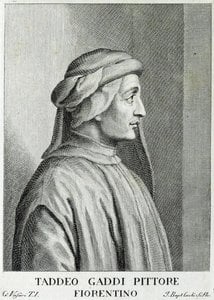
Taddeo Gaddi

Taddeo Gaddi

1290 - 1366 , Italië

Belangrijkste feiten

  • Artistic Movement Or Style: Vroege Renaissance
  • Artists Or Movements Influenced By This Artist:
    • Giotto
    • Proto-Renaissance
  • Artists Who Influenced This Artist:
    • Simone Martini
    • Italo-Byzantijnse kunst
  • Date Of Birth: ca. 1290
  • Date Of Death: 1348
  • Full Name: Ambrogio Lorenzetti
  • Nationality: Italiaans
  • Notable Artworks:
    • Allegorie van het Goede Bestuur
    • Allegorie van het Slechte Bestuur
  • Place Of Birth: Siena, Italië
Ontdek kunstwerken georganiseerd op thema, stijl en kenmerk.