Bekijk op ware grootte Bekijk in AR Koop handgeschilderd kunstwerk Schakel over naar digitale afbeeldingen Verstuur
Details bekijken Gids voor studentenkunstwerken Toevoegen aan favorieten Download Vergelijkbare items Röntgenonderzoek Diavoorstelling Statistieken

Landscape with Yellow Fields

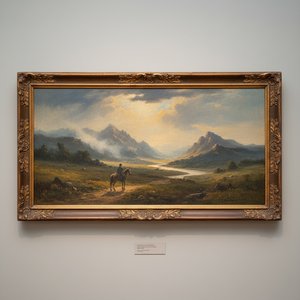
Sir William George Gillies’ "Landscape with Yellow Fields" captures a serene Scottish scene—a charming house amidst golden fields, painted by a master of evocative landscapes.

"meta_description": "W.G. Gillies schilderde betoverende Schotse landschappen en stillevens met invloeden van Cubisme en Klee. Zijn werk is gekenmerkt door kleurrijke composities en een unieke, nationale stijl – ontdek de meester van de Schotse kunst!"

Giclée / Kunstafdrukken

Giclée- of canvasafdruk van museumkwaliteit met een snelle productie en flexibele afwerkingsmogelijkheden. ( Koop handgeschilderd kunstwerk Schakel over naar digitale afbeeldingen)

P118B $10
P118H $10
P118W $10
P438Z $10
P508JH $12
P508YH $12
P805H $10
P805Z $10
P919BZ $10
P919G $10
P919XJ $10
P959ZH $10
P968JZ $12
W106C $8
W218G $10
W218JH $8
W218Y $10
W307PJ $10
W316G $10
W316PJ $8
W316Y $10
W398PJ $8
W4111J $10
W500HY $15
W500JH $15
W692G $12
W849H $8
W940BG $15
W953PJ $8

Standaardformaat
op maat gemaakt
CM
INCH

Kies uit onze vooraf ingestelde maten die overeenkomen met de originele verhoudingen van het kunstwerk.

breedte
hoogte

U kunt uw eigen afmetingen opgeven om in een specifieke lijst of ruimte te passen. Als de door u gekozen maat niet overeenkomt met de proporties van het originele kunstwerk, zullen wij de afbeelding bijsnijden of uitbreiden met een gespiegelde of effen rand. Een digitaal mockup wordt ter goedkeuring naar u verzonden voordat de productie begint.
Houd er rekening mee dat de preview op het scherm de werkelijke bijsneding of uitbreiding niet weergeeft. Alleen de mockup toont de uiteindelijke compositie nauwkeurig.
Hoewel aangepaste maten beschikbaar zijn, raden wij aan een afmeting uit de vooraf bepaalde lijst te kiezen om de originele proporties te behouden.

Wereldwijde levering () binnen 2 weken in plaats van de standaard 4/5 weken. (25 september)

why_choose_icon
Gratis wereldwijde expressverzending
why_choose_icon
Hoogwaardig linnen canvas
why_choose_icon
Volledige verzendverzekering
why_choose_icon
Garantie op terugbetaling van invoerrechten
why_choose_icon
Garantie op exacte kleurweergave
why_choose_icon
Retourbeleid van 100 dagen (alleen bij defecten)
why_choose_icon
100% Geld-terug-garantie
why_choose_icon
Korting bij meerdere afnames

Totaalprijs

$ 69

reproduction

Landscape with Yellow Fields

Giclée / Kunstafdrukken

Formaat reproductie

-

Totaalprijs

$ 69

Belangrijkste kenmerken

  • Dimensions: 55 x 76 cm
  • Subject or theme: Rural landscape
  • Medium: Oil on Canvas
  • Artist: William Gillies
  • Artistic style: Scottish Colourist
  • Location: Royal Scottish Academy

Kunstquiz

Er is slechts één goed antwoord op elke vraag.

Vraag 1:
What is the primary subject of ‘Landscape with Yellow Fields’?
Vraag 2:
Which artistic movement is most strongly associated with William George Gillies’ style, as evidenced by his early works like ‘Two Pots, Saucer and Fruit’?
Vraag 3:
What year was ‘Landscape with Yellow Fields’ painted, according to the provided information?
Vraag 4:
The red roof of the house in ‘Landscape with Yellow Fields’ is most likely intended to:
Vraag 5:
William George Gillies was primarily known for his work in which area?

A Frozen Reverie: Sir William George Gillies’ “Landscape with Yellow Fields”

Sir William George Gillies' "Landscape with Yellow Fields" isn’t merely a depiction of a rural scene; it’s a carefully constructed meditation on light, color, and the quiet dignity of the Scottish countryside. Painted around 1934, this work stands as a pivotal moment in Gillies’ artistic evolution, bridging his earlier explorations of Cubism with a deeply rooted appreciation for the evocative beauty of the British Isles. The painting captures a quintessential Highland vista – a rolling expanse of golden fields punctuated by a modest farmhouse and scattered trees, all bathed in the soft, diffused light characteristic of a late afternoon. It's a scene that feels both familiar and profoundly serene, inviting the viewer to step into a timeless moment of rural tranquility.

Gillies’ artistic journey had been shaped by encounters with European masters. His time in Paris with André Lhote exposed him to the principles of Cubism, leading to early works like “Two Pots, Saucer and Fruit,” where objects were fragmented and reassembled into geometric arrangements. However, a transformative encounter with Paul Klee in 1934 ignited a shift towards a more intuitive and emotionally resonant style. Klee’s use of vibrant color and childlike simplicity – his ability to imbue everyday subjects with a sense of wonder – profoundly influenced Gillies, prompting him to embrace bolder hues and a looser, more expressive brushstroke.

The Language of Color and Light

What immediately draws the eye is Gillies’ masterful manipulation of color. The dominant yellow of the fields isn't a flat, uniform hue; it’s layered with subtle variations – ochre, amber, and hints of gold – creating an illusion of depth and movement. This rich palette is expertly contrasted against the muted greens and browns of the trees and distant hills, further emphasizing the warmth and luminosity of the foreground. The red roof of the farmhouse acts as a striking focal point, anchoring the composition and adding a touch of domesticity to the vast landscape. Gillies’ use of light isn't photographic realism; it’s an artistic interpretation – a deliberate choice to capture the *feeling* of sunlight filtering through the air.

The technique employed is distinctly Impressionistic, yet infused with Gillies’ unique sensibility. He utilizes short, broken brushstrokes to build up texture and create a sense of atmosphere. These strokes aren't blended smoothly; instead, they retain their individual character, contributing to the painting’s vibrant energy. The layering of color and the visible brushwork invite the viewer to actively engage with the artwork, noticing the subtle shifts in tone and hue as they gaze upon it.

A Portrait of Rural Scotland

Beyond its aesthetic qualities, “Landscape with Yellow Fields” offers a glimpse into the heart of rural Scottish life. The farmhouse, modest yet sturdy, suggests a connection to the land and a sense of community. The scattered trees hint at the presence of wildlife and the rhythms of nature. Gillies’ paintings frequently depicted scenes from his native Scotland, capturing its distinctive landscapes and portraying the lives of its people with empathy and understanding.

The painting's historical context is also significant. Created during a period of economic hardship in Britain, it reflects a longing for simpler times and a connection to the land – values that resonated deeply with many at the time. Gillies’ work served as a powerful reminder of the beauty and resilience of the Scottish countryside.

Collecting the Essence: Reproduction & Beyond

Reproductions of “Landscape with Yellow Fields” offer an accessible way to experience the painting's captivating atmosphere. WahooArt meticulously recreates Gillies’ techniques, capturing the nuances of color, texture, and light that make this artwork so compelling. The 55 x 76 cm size is ideal for adding a touch of rustic charm to any interior space – whether it’s a living room, bedroom, or study.

More than just a decorative piece, “Landscape with Yellow Fields” evokes a sense of nostalgia and tranquility. It's an invitation to slow down, appreciate the beauty of nature, and connect with the timeless spirit of rural Scotland. Consider this reproduction not merely as a print, but as a portal – a window into a world of quiet contemplation and artistic brilliance.


Biografie van de kunstenaar

Early Life and Education

Sir William George Gillies, geboren in Haddington in East Lothian, Schotland, in 1898, was een kunstenaar wiens leven en werk diep verweven waren met de landschappen en tradities van zijn geboortegemeenschap. Zijn artistieke reis begon niet direct op het doek; hij startte zijn opleiding aan de Edinburgh College of Art, maar deze werd onderbroken door dienstplicht in de Royal Engineers tijdens de Eerste Wereldoorlog. Deze ervaring, die hem vroegtijdig blootstelde aan de realiteit van conflict en verlies, zou een blijvende invloed hebben op zijn artistieke visie.

Na de oorlog keerde Gillies terug om zijn studie af te maken aan het Edinburgh College of Art. Daar werd hij niet alleen een getalenteerd kunstenaar, maar ook een toegewijde leraar, die meer dan veertig jaar lang de School for Drawing and Painting leidde. Zijn betrokkenheid bij het onderwijs was een essentieel onderdeel van zijn leven en droeg bij aan de ontwikkeling van vele toekomstige kunstenaars.

Artistic Development and Influences

Gillies’ artistieke reis begon met een fascinatie voor Cubisme, een beweging die hij ontdekte na het studeren onder André Lhote in Parijs (1923) en een bezoek aan Italië in 1924. Deze periode was cruciaal voor zijn ontwikkeling, waarbij hij de principes van geometrische fragmentatie en perspectiefonderzoek leerde toepassen. Zijn vroege werken, zoals “Two Pots, Saucer and Fruit” (1933), getuigen hiervan; ze vertonen een invloed van Cézanne, met zijn zorgvuldige composities en het gebruik van kleur om volume en diepte te suggereren, in combinatie met de understatement van kunstenaars als Braque en Picasso.

Een fundamentele verandering in Gillies’ artistieke benadering kwam in 1934 tot stand door de ontmoeting met de werk van Paul Klee. Klee’s gebruik van kleur, zijn speelse composities en het vermogen om emotie te overbrengen via eenvoudige vormen inspireerden Gillies om een meer expressieve en intuïtieve benadering van de kleur te ontwikkelen. Hij begon elementen uit de folklore en traditie van Schotland op te nemen in zijn werk, waardoor zijn stijl zich onderscheidde van de rigide principes van Cubisme.

The 1922 Group and Collaborative Spirit

In 1922 richtte Gillies samen met andere kunstenaars, waaronder William Crozier, William Geissler en William MacTaggart, de “1922 Group” op. Deze groep was meer dan alleen een artistieke vereniging; het was een platform voor jonge Schotse kunstenaars om hun werk te presenteren aan het publiek via tentoonstellingen in de New Gallery in Edinburgh. De 1922 Group bevorderde een gevoel van gemeenschap en innovatie binnen de Schotse kunstscene, waardoor een vruchtbare omgeving ontstond voor experimenteren en uitwisselen van ideeën.

De groep speelde een cruciale rol bij het stimuleren van de ontwikkeling van nieuwe talenten en het creëren van een platform voor hun werk. De tentoonstellingen waren niet alleen een manier om kunst te presenteren, maar ook om kunstenaars met elkaar in contact te brengen en hen te inspireren.

Themes and Subject Matter

Gillies’ oeuvre is voornamelijk gekenmerkt door zijn liefde voor de Schotse landschappen. Hij schilderde de Lothian, Fife en Border regio's met een intense gevoeligheid, vastleggend niet alleen de fysieke kenmerken van het terrein, maar ook de sfeer en de emoties die hij ermee associeerde. Zijn landschappen zijn vaak doordrenkt van licht en kleur, en ze vertonen een diepe verbinding met de natuur.

Naast landschappen was Gillies ook gefascineerd door stillevenschilderingen. Deze werken, vaak gekenmerkt door de aanwezigheid van keramiek gemaakt door zijn jongere zus, Emma Smith Gillies – wiens vroege dood hem diep heeft getroffen – waren een bron van zowel schoonheid als verdriet. De stillevenschilderingen werden vaak gebruikt om emotionele reflectie te bieden en de complexiteit van het leven te onderzoeken.

Major Achievements and Recognition

Sir William George Gillies werd in 1970 ridder, een erkenning voor zijn bijdrage aan de kunst in Schotland. In 1957 ontving hij de CBE (Commander of the Order of the British Empire) voor zijn diensten aan de kunst. Na zijn pensionering van het Edinburgh College of Art bleef Gillies actief als kunstenaar en werd hij benoemd tot hoofd van de school in 1961, een positie die hij tot 1966 bekleedde. Tijdens deze periode werden belangrijke ontwikkelingen doorgevoerd, waaronder de bouw van een nieuwe architectuurfaculteit.

Zijn werk is te vinden in musea en collecties in heel Schotland, waaronder Aberdeen, Dundee, Edinburgh, Glasgow, en in nationale galerijen in Londen, Ottawa en Peru. De retrospectieve tentoonstelling die de Scottish Arts Council hem gaf trok meer dan 30.000 bezoekers, wat een bewijs is van zijn invloed en populariteit.

Historical Significance and Legacy

Sir William George Gillies wordt beschouwd als een van de meest prominente Schotse kunstenaars van de 20e eeuw. Zijn werk vertegenwoordigt een unieke synthese van moderne invloeden en traditionele Schotse esthetiek. Hij was een belangrijke figuur in de Edinburgh School, een beweging die zich kenmerkte door het gebruik van kleur en licht om emotie te overbrengen. Gillies’ nalatenschap strekt zich verder uit dan zijn eigen kunst; hij heeft generaties van kunstenaars geïnspireerd en de richting van Schotse kunst beïnvloed.

Hij stierf vredig in zijn bed op 15 april 1973, maar zijn werk blijft een bron van inspiratie en bewondering. Gillies’ artistieke visie, gekenmerkt door zijn liefde voor Schotland, zijn expressieve kleurgebruik en zijn vermogen om emotie te overbrengen, zal nog lang voortleven in de geschiedenis van de kunst.

William Gillies

William Gillies

1898 - 1973 , Verenigd Koninkrijk

Snelle feiten

  • Artistic Movement Or Style:
    • Cubisme
    • Landschappen
  • Artists Or Movements Influenced By This Artist:
    • Cézanne
    • Picasso
  • Artists Who Influenced This Artist:
    • André Lhote
    • Paul Klee
  • Date Of Birth: 1898
  • Date Of Death: 1973
  • Full Name: Sir William George Gillies
  • Nationality: Schots
  • Notable Artworks:
    • Twee potten, schaal en fruit
    • Mediterrane Landschap
  • Place Of Birth: Haddington, Verenigd Koninkrijk
Ontdek kunstwerken georganiseerd op thema, stijl en kenmerk.