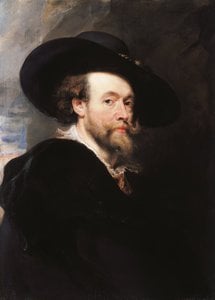
A Life Forged in Baroque Splendor
Sir Peter Paul Rubens, een naam die resoneert met de essentie van Barokse dynamiek, was veel meer dan simpelweg een schilder. Hij was een diplomaat, een geleerde en een culturele architect die de artistieke landschap van 17e-eeuwse Europa fundamenteel veranderde. Geboren in Siegen, Duitsland, in 1577, werd zijn jeugd gekenmerkt door verplaatsing – een vormende ervaring die subtiel een onderliggende spanning en emotionele diepte zou introduceren in latere werken. Zijn vader, Jan Rubens, een advocaat op de vlucht voor religieuze vervolging vanwege zijn calvinistische overtuigingen, trok het gezin weg uit Antwerpen, toen onder Spaanse heerschappij. Deze initiële ballingschap instilledde een gevoel van veerkracht en aanpassingsvermogen in jonge Peter Paul, kwaliteiten die hem gedurende zijn veelzijdige carrière goed zouden dienen. Na de dood van zijn vader in 1587 keerden de familie terug naar Antwerpen, waar hij een humanistische opleiding genoot voordat hij rond 1590 begon met zijn artistieke training, onder supervisie van Tobias Verhaecht en Adam van Noort, waarbij hij fundamentele vaardigheden in tekenen en schilderen ontwikkelde. Echter, zijn tijd met Otto van Veen bleek cruciaal te zijn, waardoor hij de rijke erfenis van Italiaanse Renaissance kunst werd blootgesteld – een wereld die hij snel zou omarmen.
De Italiaanse Opwekking en Artistieke Synthese
In 1600 verliet Rubens op zoek naar inspiratie een transformatieve reis naar Italië, een pelgrimstocht die zijn artistieke visie onherstelbaar vormde. Gedurende acht jaar dompelde hij zich onder in de meesterwerken van Michelangelo, Raphael en Titiaan, waardoor hij hun beheersing van vorm, kleur en compositie opnam. De invloed van deze Renaissance-grootheden is direct zichtbaar in zijn vroege Italiaanse werken, gekenmerkt door klassieke thema’s en geïdealiseerde figuren. Rubens kopieerde echter niet simpelweg; hij synthetiseerde deze invloeden met zijn eigen talent, waardoor een kenmerkende stijl ontstond die gedomineerd werd door levendige kleuren, dynamische composities en een sensuele weergave van de menselijke vorm. Hij bestudeerde anatomie nauwkeurig, wat resulteerde in figuren die zowel fysieke realisme als emotionele kracht vertoonden – stevige lichamen gevuld met leven en beweging. Deze periode was niet alleen gericht op artistische ontwikkeling; het was een diepe intellectuele ontdekking, die een diepe waardering voor klassieke mythologie en literatuur bevorderde, thema’s die herhaaldelijk terug zouden komen in zijn oeuvre. Na zijn terugkeer naar Antwerpen in 1608 vestigde Rubens zich snel als de leidende kunstenaar van zijn tijd, waarbij hij werd overspoeld met opdrachten die zijn groeiende reputatie en positie aan de vooravond van Vlaamse kunst bevestigden.
Een Meester van Veel Vormen: Schilderen Buiten Grenzen
Rubens’s artistieke output was ongelooflijk divers en productief. Hij beperkte zich niet tot één genre; in plaats daarvan excelleerde hij in geschiedenisschilderingen, mythologische scènes, portretten, landschappen en religieuze werken – een getuigenis van zijn veelzijdigheid en grenzeloze creativiteit. Zijn grote doeken, vaak bedoeld voor kerken, paleizen en openbare ruimtes, waren adembenemende demonstraties van technische meesterschap en dramatische storytelling.
De Afdaling van het Kruis (c. 1612-1614) illustreert zijn meesterlijke gebruik van licht en schaduw om een scène te creëren vol diepgaande emotionele intensiteit, waardoor de toeschouwer in het hart van het verhaal wordt getrokken.
Het Oostenigen van het Kruis (1610-1611), met zijn draaiende figuren en dynamische compositie, laat zien hoe hij beweging en energie kan overbrengen – een kenmerk van zijn Barokke stijl. Zelfs in statische onderwerpen zoals
De Judgement van Paris (c. 1636) voegde Rubens een gevoel van leven en vitaliteit toe door zijn levendige kleurenpalet en sensuele weergave van de menselijke vorm. Zijn techniek was even indrukwekkend – een meesterlijke beheersing van olieverf, waarbij hij impasto gebruikte om textuur en diepte te creëren, in combinatie met delicate glazuurtechnieken om levendige effecten te bereiken. Hij gebruikte vaak allegorische figuren en symbolische beelden, waardoor complexe betekenissen werden toegevoegd aan de werken die tot nadenken aanzetten.
Diplomatie, Erfgoed en Duurzame Invloed
Rubens’s invloed strekte zich ver buiten het kunstgebied uit. Zijn diplomatieke vaardigheden waren zeer gewild in de Zuidelijke Nederlanden (moderne België), en hij voerde verschillende missies uit naar Engeland, Frankrijk en Spanje, waarbij hij verdragen onderhandelde en politieke allianties bevorderde – een unieke dubbele rol die hem een genuanceerd perspectief op Europese aangelegenheden opleverde en zijn reputatie als een man van intellect en invloed verder versterkte. In 1622 werd hij door Maria de Medici, weduwe van koning Hendrik IV van Frankrijk, aangesteld om een enorm project uit te voeren in Parijs. Twee hele galerijen waren bedoeld om met scènes uit het leven van de vorst te worden versierd. De opdracht was een getraumatiserende onderneming. Maria was onhandig en veranderlijk; haar favoriete, kardinaal Richelieu, zag Rubens als een politieke bedreiging. Na jarenlange onderhandelingen werd de opdracht geannuleerd half voltooid toen Maria uit Parijs werd verbannen. In 1625 raakte Antwerpen getroffen door de pest. Rubens verplaatste zijn familie naar Brussel totdat het ergste voorbij was, maar toen keerde hij terug naar Antwerpen waar zijn vrouw, helaas, ziek werd en stierf. Hij was meestal een man die zichzelf stoïcijns probeerde te houden, maar de verlies van ‘iemand whom I must love and cherish as long as I live’ trok hem diep in elkaar. Hij stortte zich in zijn diplomatieke werk om zichzelf te vermaken. Hij bracht verschillende maanden door in Engeland waar hij Charles I, koning van Engeland, een opdracht gaf. In zowel Frankrijk als Engeland arriveerde Rubens als kunstenaar en verliet hij als vertrouweling van de machtige en gevaarlijke. Tijdens zijn reizen onderhandelde hij allianties voor Isabella Clara Eugenia, de gouverneur van het Spaanse Nederland. In ruil daarvoor schonk Isabella een ridderorden aan haar loyale schilder, en de kunstenaar werd Sir Peter Paul Rubens.
Belangrijkste Kenmerken van Rubens’ Stijl
- Dynamische Compositie: Rubens' schilderijen staan bekend om hun energieke en dramatische opstellingen van figuren.
- Levendige Kleurenpalet: Hij gebruikte een rijke, warme kleurenschema dat zijn doeken tot leven bracht.
- Sensuele Figuren: Zijn weergave van de menselijke vorm was gekenmerkt door volheid, vitaliteit en vaak, open sensualiteit.
- Meesterlijk Gebruik van Licht en Schaduw: Rubens manipuleerde licht en schaduw meesterlijk om diepte, drama en emotionele impact te creëren.
- Allegorische Symboliek: Zijn werken bevatten vaak allegorische figuren en symbolische beelden, waardoor complexe betekenissen werden toegevoegd aan de werken die tot nadenken aanzetten.



 Voorvertoning
 Schakel over naar print
 Verstuur
 Delen
Delen
 Details bekijken

 Download
 Vergelijkbare items
 Röntgenonderzoek
 Diavoorstelling
 Statistieken

 Lees meer