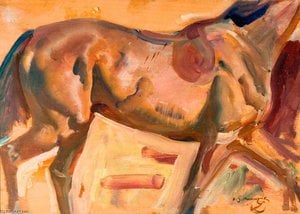
A Life Immersed in Equine Grace
Sir Alfred James Munnings, een naam die onlosmakelijk verbonden is aan de levendige weergave van paarden en de romantische verleiding van het platteland Engeland, bevindt zich op een cruciale positie binnen de 20ste-eeuwse Britse kunst. Hij werd geboren in 1878 in het dorp Mendham, in de rustige omgeving van Suffolk, en zijn leven werd diepgaand gevormd door een blijvende band met de paardenwereld – een verbinding die zijn artistieke visie zou definiëren en hem tot bekendheid zou leiden. Munnings registreerde niet simpelweg wat hij zag; hij bewaarde een gevoel, een sfeer, een wereld op het punt van onomkeerbare verandering te staan. Hij ving een verdwijnende levensstijl in, een scherp geobserveerd portret van Groot-Brittannië doordrenkt van traditie, jagen en de ritmes van het platteland.
From Rural Beginnings to Artistic Development
Munnings’s artistieke reis begon niet binnen de formele grenzen van een academie, maar in de praktische wereld van een drukkerij in Norwich. Deze leerlingperiode verfijnde zijn vaardigheden op het gebied van ontwerp en observatie terwijl hij tegelijkertijd studie volgde aan de Norwich School of Art. Dit was een vormende periode, die discipline instilled die hem goed zou dienen bij het navigeren door de uitdagingen van het etableren van zichzelf als kunstenaar. Vroege invloeden omvatten de plein air-schilders van de Newlyn School in Cornwall, waar hij hun toewijding aan het vastleggen van licht en atmosfeer direct vanuit de natuur omarmde. Deze onderdompeling in impressionistische technieken legde de basis voor zijn kenmerkende stijl – losse penseelstreken, een levendige palet en een tastbare sensatie van beweging. Zijn vroege werken toonden vaak landelijke scènes, met name die met Roma’s en paarden die door het Suffolk-landschap ronddrijven, doordrenkt van een romantische gevoeligheid die zijn groeiende beheersing van kleur en licht demonstreerde. Deze schilderijen waren niet simpelweg representaties; ze waren expressies van een diepe liefde voor het land en zijn inwoners.
War, Recognition, and a Champion of Tradition
De Eerste Wereldoorlog had een diepgaande invloed op zowel Munnings’s artistieke perspectief als zijn publieke imago. Hoewel aanvankelijk niet geschikt bevonden voor dienst, werd hij in 1918 naar Frankrijk gestuurd om de acties van de Canadese Cavalerie Brigade te documenteren, met name hun relatie tot de paarden die essentieel waren voor hun missie. Deze ervaring bracht hem oog in oog met de harde realiteit van oorlog – lijden, verlies en de blijvende band tussen mensen en dieren. Zijn schilderijen uit deze periode zijn geen glorieuze beschrijvingen van gevechten, maar aangrijpende reflecties op offerslag en veerkracht, die een sombere schoonheid vastleggen in de naschokken van de vernietiging. De jaren na de oorlog getuigden van een opleving van Munnings’s populariteit en financiële zekerheid. Prestigeuze commissies stroomden binnen, waardoor hij Castle House kon verwerven in Dedham, Essex – een eigendom dat zowel zijn thuis als studio zou worden voor de rest van zijn leven. Hij werd een gevraagde portretschilder, die het uiterlijk maar ook de karakter en geest van prominente figuren uit de adelstand en de paardenrace vastlegde. Zijn vermogen om niet alleen fysieke gelijkenis maar ook karakter en ziel over te brengen, versterkte zijn reputatie als een van Groot-Brittannië’s toptalenten. Munnings was echter ook een vurige pleitbezorger van traditionele artistieke waarden.
A Controversial Voice and Enduring Legacy
Munnings’s artistieke filosofie was diep geworteld in traditie, en hij werd een kritische stem op de groeiende modernistische bewegingen die conventionele ideeën over kunst uitdaagden. Zijn beroemde – en vaak controversiële – radio-uitzending van 1949 zag hem een verpletterend aanzoek tegen Cubisme en Surrealisme leveren, met kenmerkende eerlijkheid (en waarschijnlijk aangewakkerd door alcohol). Hoewel zijn opmerkingen woede veroorzaakten bij de voorstanders van moderne kunst, weerspiegelden ze ook de gevoelens van degenen die vasthielden aan representatie en de blijvende kracht van artistisch vakmanschap. Hij was niet simpelweg tegen verandering om de verandering zelf; hij geloofde in het belang van het behouden van artistieke normen en schoonheid in zijn traditionele vorm. Deze overtuiging leidde tot zijn verkiezing als president van de Royal Academy in 1944, een positie die hij bezat tot 1949, waardoor zijn status binnen de Britse kunstwereld werd verstevigd. Hij werd in 1944 Ritter en benoemd tot Knight Commander of the Royal Victorian Order in 1947, wat verder erkenning gaf aan zijn bijdragen aan het culturele leven van het land.
Major Achievements
- Royal Academy President: Elected President of the Royal Academy in 1944, serving until 1949.
- Knighthood: Knighted Bachelor in 1944 and appointed a Knight Commander of the Royal Victorian Order in 1947.
- War Artist Commissions: Recognized for his work documenting the Canadian Cavalry during WWI.
- Sculptural Work: Created sculptures, including an equestrian statue of Edward Horner.



 Bekijk op ware grootte
 Koop handgeschilderd kunstwerk
 Verstuur
 Delen
Delen
 Details bekijken
 Gids
Gids

 Download
 Vergelijkbare items
 Röntgenonderzoek
 Diavoorstelling
 Statistieken


 Lees meer






































 De optie voor glas is alleen beschikbaar bij een formaat kleiner dan 110 cm.