GRATIS KUNSTADVIES

x
Bestel schilderij Bestel schilderijKoop afbeelding in hoge resolutie Koop afbeelding in hoge resolutie VerstuurVerstuur
DetailsDetails Toevoegen aan favorieten Toevoegen aan favorieten DownloadDownload Vergelijkbare werkenVergelijkbare werken RöntgenfotoRöntgenfoto DiavoorstellingDiavoorstelling

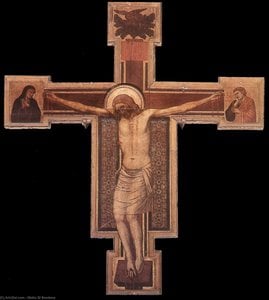
Crucifix

Simone Martini’s 1321 ‘Crucifix’ showcases the exquisite elegance of Sienese art with Jesus and Mary Magdalene before angels, a poignant depiction from the late medieval period – discover this masterpiece and bring it into your collection.

Ontdek Simone Martini, de Sienese meester van elegantie en gratie! Zijn internationale gotische schilderijen—zoals 'Maestà'—combineren religieuze thema’s met hofelijkheid & exquisite detail.

Giclée / Kunstafdruk

Giclée- of canvasafdruk van museumkwaliteit met snelle productie en flexibele afwerkingsopties.

P118B $10
P118H $10
P118W $10
P438Z $10
P508JH $12
P508YH $12
P805H $10
P805Z $10
P919BZ $10
P919G $10
P919XJ $10
P959ZH $10
P968JZ $12
W106C $8
W218G $10
W218JH $8
W218Y $10
W307PJ $10
W316G $10
W316PJ $8
W316Y $10
W398PJ $8
W4111J $10
W500HY $15
W500JH $15
W692G $12
W849H $8
W940BG $15
W953PJ $8

Standard
custom
CM
INCH

Kies uit onze vooraf ingestelde maten die overeenkomen met de originele verhoudingen van het kunstwerk.

breedte
hoogte

U kunt uw eigen afmetingen opgeven om in een specifieke lijst of ruimte te passen. Als de door u gekozen maat niet overeenkomt met de proporties van het originele kunstwerk, zullen wij de afbeelding bijsnijden of uitbreiden met een gespiegelde of effen rand. Een digitaal mockup wordt ter goedkeuring naar u verzonden voordat de productie begint.
Houd er rekening mee dat de preview op het scherm de werkelijke bijsneding of uitbreiding niet weergeeft. Alleen de mockup toont de uiteindelijke compositie nauwkeurig.
Hoewel aangepaste maten beschikbaar zijn, raden wij aan een afmeting uit de vooraf bepaalde lijst te kiezen om de originele proporties te behouden.

Wereldwijde levering () binnen 2 weken in plaats van de standaard 4/5 weken. (3 juli)

why_choose_icon
Gratis wereldwijde expressverzending
why_choose_icon
Hoogwaardig linnen canvas
why_choose_icon
Volledige verzendverzekering
why_choose_icon
Garantie op terugbetaling van invoerrechten
why_choose_icon
Garantie op exacte kleurweergave
why_choose_icon
60 dagen retourbeleid (alleen bij defecten)
why_choose_icon
100% Geld-terug-garantie
why_choose_icon
Korting bij meerdere afnames

Totaalprijs

-

reproduction

Crucifix

Giclée / Kunstafdruk

Afmetingen reproductie

-

Eindtotaal

-

Snelle feiten

  • Notable elements: Angels, book, cup
  • Movement: International Gothic
  • Dimensions: 164 x 147 cm
  • Year: 1321
  • Subject or theme: Religious scene
  • Influences:
    • Giotto
    • Duccio
  • Title: Crucifix

Beschrijving verzamelobject

A Testament to Faith and Courtly Grace: Simone Martini’s “Crucifix” (1321)

This arresting depiction of the crucifixion, attributed to the masterful hand of Simone Martini, transcends mere religious iconography; it is a profound meditation on faith, suffering, and the enduring power of grace. Painted in 1321, during the apex of his career, this work exemplifies Martini’s signature style – a breathtaking synthesis of Sienese artistic tradition with an unparalleled sensitivity to color and form. Measuring 164 x 147 cm, the scale of the painting immediately draws the viewer into the heart of the scene, fostering a deeply personal connection with the figures depicted.

  • Subject Matter: The composition centers on Jesus Christ crucified, presented with an almost agonizing realism that was revolutionary for its time. His posture, rendered with meticulous detail, conveys both physical pain and spiritual anguish.
  • The Presence of Mary Magdalene: Standing beside the cross is Mary Magdalene, a figure often associated with repentance and devotion. Her presence underscores the themes of redemption and forgiveness central to Christian belief.
  • Angelic Intervention: Above the cross, three angels are depicted in various positions, adding an ethereal dimension to the scene and suggesting divine intervention – a common motif in medieval religious art.

Technique and Artistic Innovation

Simone Martini’s technical prowess is immediately apparent in every brushstroke. Executed in tempera on panel, a technique favored by Sienese artists of the period, the painting boasts an astonishing level of detail and luminosity. The use of vibrant colors – rich blues, reds, and golds – creates a visual feast that was considered groundbreaking for its time. Martini’s mastery of line is particularly noteworthy; each contour is precisely rendered, contributing to the overall sense of realism and emotional intensity. The influence of Giotto, though debated, is undeniable in his approach to depicting human form, albeit filtered through his own distinctive aesthetic.

  • Tempera on Panel: The use of tempera paint, known for its slow drying time and ability to build up layers of color, allowed Martini to achieve the remarkable detail and depth characteristic of his work.
  • Line as Form: Martini’s meticulous attention to line is a defining feature of his style, creating a sense of solidity and weight in the figures and architectural elements.

Symbolism and Historical Context

Created during a period of intense religious fervor and artistic innovation, “Crucifix” reflects the profound spiritual concerns of 14th-century Siena. The painting’s symbolism is layered and complex, drawing upon both biblical narratives and medieval theological beliefs. The inclusion of the book in the lower left corner likely represents the Gospels, while the cup may symbolize the Eucharist – a central element of Christian worship. Siena itself was a powerful city-state, deeply invested in religious patronage, and Martini’s work served as a testament to its faith and artistic prestige. This piece is considered one of the most important examples of Sienese Gothic art, bridging the gap between the late medieval and early Renaissance periods.

Emotional Impact and Artistic Legacy

More than just a religious depiction, “Cruifix” evokes a powerful emotional response in the viewer. The raw intensity of Jesus’s suffering, combined with the serene presence of Mary Magdalene and the ethereal quality of the angels, creates a scene of profound pathos. Simone Martini's "Crucifix" remains a testament to his artistic genius and a poignant reminder of humanity's enduring struggle with faith, mortality, and redemption. A hand-painted reproduction offers an unparalleled opportunity to experience the beauty and emotional depth of this iconic masterpiece in your own space.


Biografie van de kunstenaar

A Sienese Master of Elegance and Grace

Simone Martini, born around 1284 in the heart of Siena, Italy, stands as a pivotal figure in the transition from medieval to Renaissance art. He wasn’t merely a painter; he was an architect of elegance, a master of line and color who infused his works with a courtly refinement that distinguished him from contemporaries like Giotto. While historical accounts vary regarding his early training—some suggest apprenticeship under Duccio di Buoninsegna, the leading Sienese artist of the time, while others point to Florence and the influence of Giotto—Martini undeniably forged a unique artistic path. His brother-in-law, Lippo Memmi, was also an artist with whom he frequently collaborated, further enriching the vibrant artistic landscape of Siena. The city itself played a crucial role in shaping Martini’s aesthetic; Siena, a thriving center of commerce and culture, fostered an environment where art flourished, blending religious devotion with worldly sophistication.

The Flourishing of International Gothic

Martini's style is immediately recognizable for its departure from the more monumental forms favored in Florence. He embraced a delicate sensibility, characterized by flowing lines, soft decorative details, and an overall sense of grace. This aesthetic wasn’t born in isolation; it was profoundly influenced by external forces. The Via Francigena, a major pilgrimage route traversing Europe, brought with it artistic currents from France—particularly the refined elegance of French manuscript illumination and ivory carving. These influences are readily apparent in Martini's work, manifesting as intricate patterns, elongated figures, and a heightened attention to surface ornamentation. He didn’t simply copy these styles; he synthesized them with existing Sienese traditions, creating something entirely new. His paintings weren’t merely representations of religious scenes but rather elegant narratives imbued with emotional depth and visual poetry.

From Siena to Avignon: A Courtly Appointment

Martini's reputation extended beyond the borders of Italy, leading to a significant turning point in his career. In 1336, he accepted a commission from Pope Benedict XII to create frescoes for the Papal Palace in Avignon, France—a move that placed him at the heart of European power and patronage. This appointment wasn’t merely about artistic skill; it was a testament to Martini's ability to cater to the tastes of a sophisticated courtly audience. While in Avignon, he entered into a remarkable intellectual circle, befriending Francesco Petrarca—better known as Petrarch, the renowned humanist poet. The connection with Petrarch is particularly poignant, as Vasari and other sources suggest that Martini painted a portrait of Laura de Noves, Petrarch’s lifelong muse. Though the portrait itself is lost to time, its very existence speaks volumes about Martini's status as a celebrated artist capable of capturing not only physical likeness but also the essence of beauty and inspiration. The Saint Louis Crowning Robert, painted during his time in Naples, exemplifies this period, showcasing delicate beauty and refined aesthetic.

Key Works and Artistic Techniques

Simone Martini’s oeuvre is characterized by a remarkable range of subjects and styles, reflecting the diverse influences that shaped his artistic development. His most celebrated works include the *Maestà* fresco in the Palazzo Pubblico of Siena, a monumental depiction of the Virgin Mary and Child surrounded by angels and saints; the *Annunciation* triptych, now housed in the Uffizi Gallery in Florence, renowned for its exquisite detail and delicate rendering of figures; and the *Saint Catherine of Alexandria Polyptych*, a masterpiece of color and composition that showcases Martini’s mastery of decorative painting. Throughout his career, Martini employed a variety of techniques to achieve his distinctive style, including meticulous attention to line, subtle gradations of color, and a masterful use of perspective—a departure from the more stylized approaches favored by earlier medieval artists. His works are often characterized by a sense of movement and dynamism, achieved through flowing draperies, expressive gestures, and carefully orchestrated compositions.

Legacy and Enduring Influence

Simone Martini’s impact on the development of European art cannot be overstated. He played a crucial role in disseminating the International Gothic style—a movement characterized by its elegance, refinement, and emphasis on decorative detail—across the continent. His influence extended to generations of artists who followed, shaping the course of late medieval and early Renaissance painting. Martini’s work wasn’t simply about technical skill; it was about creating a visual language that resonated with the sensibilities of his time—a language of beauty, grace, and spiritual devotion. Even today, his paintings continue to captivate viewers with their exquisite detail, harmonious compositions, and enduring sense of elegance. His frescoes in San Francesco d’Assisi demonstrate his mastery of large-scale decorative painting, while works like the Saint Catherine of Alexandria Polyptych showcase his unparalleled command of color and form. Simone Martini died in Avignon in 1344, leaving behind a legacy that continues to inspire awe and admiration centuries later—a testament to the enduring power of art to transcend time and touch the human spirit.

Simone Martini

Simone Martini

1284 - 1344 , Italië

Belangrijkste feiten

  • Artistic Movement Or Style: Internationale Gotiek
  • Artists Or Movements Influenced By This Artist: ['Sienese school']
  • Artists Who Influenced This Artist:
    • Duccio di Buoninsegna
    • Giotto
  • Date Of Birth: c. 1284
  • Date Of Death: 1344
  • Full Name: Simone Martini
  • Nationality: Italiaans
  • Notable Artworks:
    • Maestà
    • St. Louis
    • Annunciatie
  • Place Of Birth: Siena, Italië
Ontdek kunstwerken georganiseerd op thema's, stijlen en kenmerken.