GRATIS KUNSTADVIES

x
Bestel schilderij Bestel schilderijKoop afbeelding in hoge resolutie Koop afbeelding in hoge resolutie VerstuurVerstuur
DetailsDetails Toevoegen aan favorieten Toevoegen aan favorieten DownloadDownload Vergelijkbare werkenVergelijkbare werken RöntgenfotoRöntgenfoto DiavoorstellingDiavoorstelling

Annunciation

Simon Vouet’s "Annunciation" (1640) – A dramatic Baroque masterpiece! Witness exquisite detail, dynamic composition & divine light in this stunning religious painting.

Ontdek Simon Vouet (1590-1649), de Franse barokschilder die Italiaanse stijlen introduceerde & de Franse kunst van de 17e eeuw vormgaf! Bekijk zijn leven en werk.

Giclée / Kunstafdruk

Giclée- of canvasafdruk van museumkwaliteit met snelle productie en flexibele afwerkingsopties.

P118B $10
P118H $10
P118W $10
P438Z $10
P508JH $12
P508YH $12
P805H $10
P805Z $10
P919BZ $10
P919G $10
P919XJ $10
P959ZH $10
P968JZ $12
W106C $8
W218G $10
W218JH $8
W218Y $10
W307PJ $10
W316G $10
W316PJ $8
W316Y $10
W398PJ $8
W4111J $10
W500HY $15
W500JH $15
W692G $12
W849H $8
W940BG $15
W953PJ $8

Standard
custom
CM
INCH

Kies uit onze vooraf ingestelde maten die overeenkomen met de originele verhoudingen van het kunstwerk.

breedte
hoogte

U kunt uw eigen afmetingen opgeven om in een specifieke lijst of ruimte te passen. Als de door u gekozen maat niet overeenkomt met de proporties van het originele kunstwerk, zullen wij de afbeelding bijsnijden of uitbreiden met een gespiegelde of effen rand. Een digitaal mockup wordt ter goedkeuring naar u verzonden voordat de productie begint.
Houd er rekening mee dat de preview op het scherm de werkelijke bijsneding of uitbreiding niet weergeeft. Alleen de mockup toont de uiteindelijke compositie nauwkeurig.
Hoewel aangepaste maten beschikbaar zijn, raden wij aan een afmeting uit de vooraf bepaalde lijst te kiezen om de originele proporties te behouden.

Wereldwijde levering () binnen 2 weken in plaats van de standaard 4/5 weken. (2 juli)

why_choose_icon
Gratis wereldwijde expressverzending
why_choose_icon
Hoogwaardig linnen canvas
why_choose_icon
Volledige verzendverzekering
why_choose_icon
Garantie op terugbetaling van invoerrechten
why_choose_icon
Garantie op exacte kleurweergave
why_choose_icon
60 dagen retourbeleid (alleen bij defecten)
why_choose_icon
100% Geld-terug-garantie
why_choose_icon
Korting bij meerdere afnames

Totaalprijs

-

reproduction

Annunciation

Giclée / Kunstafdruk

Afmetingen reproductie

-

Eindtotaal

-

Snelle feiten

  • Medium: Oil on canvas
  • Dimensions: 121 x 86 cm
  • Subject or theme: Religious scene
  • Influences: Italian Baroque
  • Year: 1640
  • Location: Galleria degli Uffizi
  • Artistic style: Dynamic composition

Kunstquiz

Er is slechts één correct antwoord op elke vraag.

Vraag 1:
What is the primary religious scene depicted in Simon Vouet’s "Annunciation"?
Vraag 2:
Based on the image description, what is a prominent feature of the lighting in the painting?
Vraag 3:
The image description mentions a flattened perspective. What effect does this primarily create?
Vraag 4:
Simon Vouet is known for his role in introducing which artistic style to France?
Vraag 5:
What symbolic element is present in the painting, representing divine intervention?

Beschrijving verzamelobject

A Divine Encounter: Simon Vouet’s Annunciation

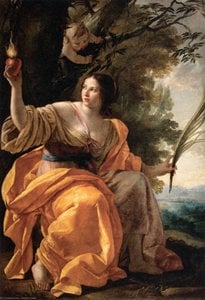
Simon Vouet's "Annunciation," painted in 1640, is more than just a religious depiction; it’s a masterful orchestration of light, shadow, and human emotion. This captivating work transports the viewer to an intimate interior space, where the momentous announcement of Mary’s divine conception unfolds with breathtaking drama. The painting immediately draws the eye to the kneeling figure of the Virgin Mary, bathed in a warm, golden glow emanating from the right side of the composition – a deliberate choice that emphasizes her purity and receptivity to the divine message. The angel Gabriel, rendered with elegant grace and poised authority, delivers the news, his gestures conveying both reverence and urgency. Beyond this central narrative, the painting is populated by a multitude of smaller angels ascending towards the upper reaches of the canvas, creating an atmosphere of celestial presence and overwhelming grace – a visual representation of the vastness and importance of the event.

Baroque Drama and Italian Influence

Vouet’s “Annunciation” firmly establishes itself within the Baroque style, yet it transcends simple imitation. He skillfully absorbed the innovations of the Italian Renaissance – particularly the dramatic use of light and shadow championed by Caravaggio – while adapting them to the evolving aesthetic sensibilities of 17th-century France. The strong directional lines, guiding the viewer’s eye from the architectural details in the background towards the central figures, are a hallmark of Baroque composition. The dynamic arrangement of bodies, the billowing drapery, and the carefully sculpted faces all contribute to a sense of movement and theatricality. This isn't merely a static representation; it’s an experience—a carefully constructed tableau designed to evoke awe and contemplation.

Symbolism and Compositional Detail

The painting is rich in symbolic elements, each contributing to the overall narrative and spiritual depth. The dove, a potent symbol of the Holy Spirit, ascends gracefully above the scene, signifying divine intervention. Mary’s red robe, a traditional color associated with royalty and purity, further emphasizes her elevated status as the Mother of God. Notice the subtle diagonal that runs from the window on the right, down through Mary's robes – this compositional device mirrors the angel Gabriel’s descent and reinforces the pivotal nature of the event. The use of perspective is deliberately flattened, prioritizing emotional impact over strict realism; Vouet sought to capture the *feeling* of the moment rather than a photographic likeness.

Technique and Materials: A Master's Hand

Painted in oil on canvas, “Annunciation” showcases Vouet’s exceptional technical skill. The smooth surfaces of Mary’s robes and the angel’s wings contrast with the textured appearance of the background walls, creating a tactile richness within the image. The artist's mastery of glazing techniques is evident in the luminous quality of the light and the subtle blending of colors. It’s likely that gold leaf was employed to embellish certain elements – perhaps the halo or decorative details – adding further opulence and grandeur to the scene. The meticulous attention to detail, from the delicate folds of drapery to the intricate patterns on the architecture, speaks volumes about Vouet's dedication to his craft. This painting is a testament to the artist’s ability to transform pigments into a vibrant and emotionally resonant work of art.

WahooArt offers meticulously hand-painted reproductions of Simon Vouet’s “Annunciation,” capturing the essence of this Baroque masterpiece with unparalleled fidelity. Each reproduction is created by skilled artists using traditional techniques, ensuring that you receive an authentic representation of this iconic artwork for your home or collection.


Biografie van de kunstenaar

Simon Vouet: De Italiaanse Barok in het Hart van Frankrijk

Simon Vouet, geboren te Parijs in 1590, was meer dan slechts een schilder; hij was een culturele ambassadeur. Een man die de dynamische energie van de Italiaanse barokkunst naar het formele hofleven van Frankrijk bracht en zo een onuitwisbare stempel drukte op de ontwikkeling van de Franse kunst in de zeventiende eeuw. Zijn leven was een reis, zowel geografisch als artistiek, vol invloeden die zich vermengden tot een unieke stijl – een stijl die tegelijkertijd krachtig en verfijnd was, dramatisch en toch elegant.

Vouet’s vroege jaren waren gevuld met de passie voor kunst. Zijn vader, Laurent Vouet, was reeds een erkend schilder, waardoor Simon al op jonge leeftijd in aanraking kwam met het ambacht. De eerste tekenen van zijn talent verschenen vroeg; al op veertienjarige leeftijd werd hij naar Engeland gestuurd om portretten te schilderen voor de baron de Sancy. Deze reis was slechts een prelude op een grotere ontdekkingsreis, want kort daarna voegde hij zich bij de entourage van dezelfde baron op weg naar het Ottomaanse Rijk en vervolgens naar Venetië. Het was in Venetië dat Vouet’s artistieke horizon werkelijk begon te verbreden; de levendige kleuren en theatrale composities van de Venetiaanse schilders maakten een diepe indruk.

De Romeinse Jaren: Een Smelterij van Stijlen

Maar het was zijn verblijf in Rome, dat zich uitstrekte van 1614 tot 1627, dat Vouet’s artistieke vormgeving werkelijk definieerde. Rome was toen het epicentrum van de barokkunst, een bruisende smeltkroes waar stijlen en technieken botsten en vermengden. Hier absorbeerde Vouet de invloeden van meesters als Caravaggio, met zijn baanbrekende gebruik van clair-obscur, maar ook die van Paolo Veronese, wiens weelderige kleurgebruik en monumentale composities een blijvende indruk achterlieten. Hij bestudeerde de klassieke idealen van de Carracci’s, de dramatische kracht van Guercino, de verfijnde elegantie van Lanfranco en de serene schoonheid van Guido Reni. Vouet was geen simpele imitator; hij synthetiseerde deze diverse invloeden tot een geheel eigen stijl – een Italiaanse barok die tegelijkertijd krachtig en verfijnd was.

Zijn succes in Rome werd erkend met zijn verkiezing tot president van de prestigieuze Accademia di San Luca, een bewijs van zijn vaardigheid en respect binnen de Italiaanse kunstwereld. De werken die hij tijdens deze periode produceerde, zoals De Kruisiging voor de Basiliek van Sint-Ambrosius, getuigen van zijn meesterschap in compositie, lichtval en kleurgebruik.

Terug naar Frankrijk: Premier Peintre du Roi

In 1627 werd Vouet teruggeroepen naar Parijs door koning Lodewijk XIII en kardinaal Richelieu. Hij werd benoemd tot Premier peintre du Roi, een positie die hem niet alleen aanzien gaf, maar ook toegang tot de meest prestigieuze opdrachten van het hof. Vouet’s stijl bleek precies te passen bij de smaak van zijn Franse opdrachtgevers; hij bood hen iets levendiger en moderner dan de heersende maniërisme, maar minder extreem dan het dramatische naturalisme van de caravaggisten of de volle emotionele expressie van de barok.

Hij stond aan het hoofd van een grote werkplaats, waar hij talloze jonge kunstenaars opleidde die later zelf invloedrijke figuren in de Franse kunst zouden worden. Onder zijn leerlingen bevonden zich namen als Charles Le Brun, Hubert Le Sueur en Pierre Mignard – allemaal meesters die bijdroegen aan het vormgeven van de barokke esthetiek in Frankrijk. Vouet’s decoratieve schilderijen, vaak uitgevoerd in samenwerking met beeldhouwers zoals Jacques Sarrazin, waren indrukwekkende manifestaties van grandeur en virtuositeit.

Een Erfgoed van Invloed

Simon Vouet stierf in 1649, maar zijn nalatenschap leeft voort. Hij was een cruciale schakel tussen de Italiaanse en Franse kunst, een man die met succes de dynamiek en grandeur van de Italiaanse barok naar Frankrijk bracht. Zijn invloed is onmiskenbaar te zien in de ontwikkeling van de Franse schilderkunst tijdens de zeventiende eeuw, en zijn werken blijven bewonderd worden om hun harmonieuze composities, rijke kleuren en verfijnde elegantie. Hij was niet alleen een getalenteerd schilder, maar ook een belangrijke onderwijzer en een pionier die de weg vrijmaakte voor de bloei van de Franse barokkunst.

Simon Vouet

Simon Vouet

1590 - 1649 , Frankrijk

Belangrijkste feiten

  • Artistic Movement Or Style: Barok schilderkunst
  • Artists Or Movements Influenced By This Artist:
    • Charles Le Brun
    • Franse Barokschilderkunst
  • Artists Who Influenced This Artist:
    • Caravaggio
    • Paolo Veronese
    • Guido Reni
  • Date Of Birth: 9 januari 1590
  • Date Of Death: 30 juni 1649
  • Full Name: Simon Vouet
  • Nationality: Frans
  • Notable Artworks:
    • De kruisiging voor Milaan
    • Riches
    • St. Bruno
    • Cupid en Psyche
    • Time Vanquished
  • Place Of Birth: Parijs, Frankrijk
Ontdek kunstwerken georganiseerd op thema's, stijlen en kenmerken.