


Koop een digitale afbeelding in hoge resolutie met verbeterde kwaliteit, die veel superieur is aan de online voorvertoning.
Elk bestand wordt met uiterste precisie voorbereid door onze interne specialisten, met behulp van geavanceerde tools en deskundige handmatige retouche. Wij garanderen dat elke afbeelding een uitzonderlijke helderheid, nauwkeurige kleurweergave en verfijnde details bezit.
Het uiteindelijke bestand wordt binnen 72 uur per e-mail geleverd, geoptimaliseerd voor direct gebruik in professionele, redactionele en printomgevingen. Dit is dezelfde kwaliteit waarop vooraanstaande designstudio's, uitgevers en galerieën vertrouwen.
Download een bestand met hoge resolutie voor persoonlijke weergave, afdrukken en creatieve projecten. ( Bestel print Bestel handgeschilderde reproductie)
Wanneer u kiest voor WahooArt.com, ontvangt u niet alleen een afbeelding – u krijgt een professioneel verbeterd digitaal kunstwerk, met precisie vervaardigd en voorzien van een tevredenheidsgarantie. Dit is alles wat automatisch bij uw bestelling is inbegrepen:

Uw hoogwaardige digitale afbeeldingsbestand wordt binnen 72 uur na bestelling naar u gemaild – klaar voor direct gebruik.

Uw kunstwerk wordt professioneel geoptimaliseerd met behulp van geavanceerde AI-tools en handmatige bewerkingen, waardoor maximale details, helderheid en kleurnauwkeurigheid worden gegarandeerd.

Je bestand per ongeluk verwijderd of kwijtgeraakt? Geen zorgen – we sturen het u op elk gewenst moment gratis opnieuw toe.

Geniet direct van uw kunstwerk zonder invoerrechten, belastingen of verzendkosten – digitale downloads zijn altijd belastingvrij.

Met behulp van professionele hulpmiddelen en kleurbeheer zorgen wij ervoor dat uw digitale afbeelding de originele kleuren zo nauwkeurig mogelijk weergeeft.

Als u niet tevreden bent met uw digitale afbeelding, passen wij deze aan of storten wij 100% terug binnen 100 dagen – zonder vragen gesteld.

Niet tevreden? Ontvang binnen 100 dagen na ontvangst van uw digitale bestand uw volledige aankoopbedrag terug – zonder vragen te stellen.

Koop 3 afbeeldingen, bespaar 10% - Koop 5, bespaar 15% - Koop 10+, bespaar 20%. Ideaal voor creatieve projecten, galerieën en bureaus.

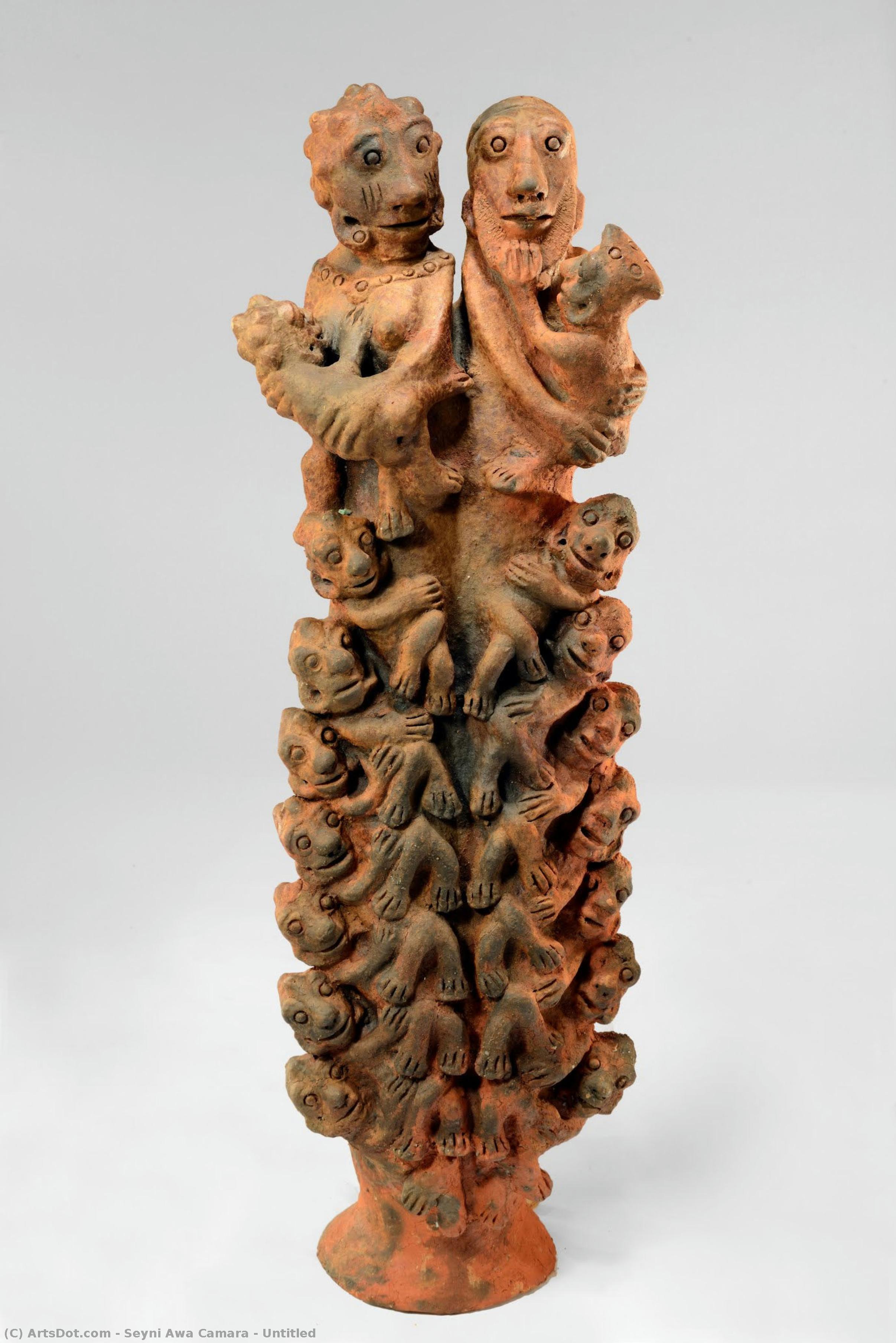
In the heart of Bignona, Senegal, where the air carries the weight of ancient stories and the scent of damp earth, the sculptures of Seyni Awa Camara emerge as profound witnesses to a vanishing world. Born around 1945, Camara did not merely practice an art form; she acted as a bridge between the tangible present and the ethereal realm of her ancestors. Her work, often described as totemic, transcends simple ceramic craft to become a spiritual dialogue. To encounter her figures is to meet the spirits of the Casamance region, rendered in clay with a raw, visceral energy that demands both reverence and reflection.
The genesis of Camara’s creative spirit is steeped in the mystical and the maternal. Raised in Oussouye, she was shaped by a dual heritage: the nomadic influence of her father, a Sousou man from Guinea, and the deep-rooted Senegalese traditions of her mother, a Sereer potter. While some accounts speak of a divine initiation—a period where she and her brothers wandered the forests of Casamançe, returning with sculptures gifted by the spirits themselves—others point to the practical, rhythmic labor of her mother’s pottery. Regardless of the origin, the result was an unbreakable bond with the earth. This connection allowed her to transform humble clay into monumental beings that range from small, intimate talismans to towering figures standing over eight feet tall.
Camara’s technique is a testament to the endurance of ancestral methods. Working largely in the open air of her front yard, she models her figures directly from the earth, a process that feels less like studio work and more like an act of summoning. These sculptures are often fired in open-hearth kilns, a traditional practice that imbues the finished pieces with a rugged, organic texture. Her aesthetic is intentionally evocative; she does not seek to replicate perfect human anatomy but rather to capture emotional truths. Through distorted faces and exaggerated proportions, she explores the complexities of the human condition—the beauty of maternity, the terror of the unknown, and the weight of spiritual responsibility.
The symbolism within her work is deeply layered, often touching upon themes of:
Despite the challenges of navigating an art historical landscape that was, for much of her career, dominated by male voices and Western-centric perspectives, Camara achieved significant international recognition. Her work found a home in prestigious collections, most notably through the support of Jean Pigozzi’s Collection Abri (CAAC), which brought her Senegalese storytelling to a global stage. She stood as a rare female presence in the celebrated Dakar “école des arts,” proving that the traditional medium of clay could hold the same intellectual and artistic weight as the more academic medium of painting.
Ultimately, the historical significance of Seyni Awa Camara lies in her ability to refuse the erasure of her culture. In an era of rapid globalization, she remained anchored to the soil of Senegal, using her art to ensure that the stories, the spirits, and the very texture of her heritage would remain indestructible. Her sculptures remain not just as objects of beauty, but as enduring monuments to a soul that found divinity in the mud.

Senegal

 Voorvertoning
 Verstuur
 Delen
Delen
 Details bekijken

 Download
 Vergelijkbare items
 Röntgenonderzoek
 Diavoorstelling

 Lees meer


