Bekijk op ware grootte Bekijk in AR Koop handgeschilderd kunstwerk Schakel over naar digitale afbeeldingen Verstuur
Details bekijken Gids Toevoegen aan favorieten Download Vergelijkbare items Röntgenonderzoek Diavoorstelling Statistieken

Calumny (detail)3

Botticelli’s ‘Calumny,’ a dramatic depiction of accusation and punishment during the Florentine Renaissance, captures a tense moment with meticulous detail—a man crowned in shame surrounded by judgmental figures. Explore this iconic masterpiece and bring its timeless beauty into your home.

Ontdek Sandro Botticelli (1445-1510), meester van 'De Geboorte van Venus' & 'Primavera'. Bewonder zijn elegante stijl, mythologische thema’s en blijvende invloed op de kunstgeschiedenis!

Giclée / Kunstafdrukken

Giclée- of canvasafdruk van museumkwaliteit met een snelle productie en flexibele afwerkingsmogelijkheden. ( Koop handgeschilderd kunstwerk Schakel over naar digitale afbeeldingen)

P118B $10
P118H $10
P118W $10
P438Z $10
P508JH $12
P508YH $12
P805H $10
P805Z $10
P919BZ $10
P919G $10
P919XJ $10
P959ZH $10
P968JZ $12
W106C $8
W218G $10
W218JH $8
W218Y $10
W307PJ $10
W316G $10
W316PJ $8
W316Y $10
W398PJ $8
W4111J $10
W500HY $15
W500JH $15
W692G $12
W849H $8
W940BG $15
W953PJ $8

Standaardformaat
op maat gemaakt
CM
INCH

Kies uit onze vooraf ingestelde maten die overeenkomen met de originele verhoudingen van het kunstwerk.

breedte
hoogte

U kunt uw eigen afmetingen opgeven om in een specifieke lijst of ruimte te passen. Als de door u gekozen maat niet overeenkomt met de proporties van het originele kunstwerk, zullen wij de afbeelding bijsnijden of uitbreiden met een gespiegelde of effen rand. Een digitaal mockup wordt ter goedkeuring naar u verzonden voordat de productie begint.
Houd er rekening mee dat de preview op het scherm de werkelijke bijsneding of uitbreiding niet weergeeft. Alleen de mockup toont de uiteindelijke compositie nauwkeurig.
Hoewel aangepaste maten beschikbaar zijn, raden wij aan een afmeting uit de vooraf bepaalde lijst te kiezen om de originele proporties te behouden.

Wereldwijde levering () binnen 2 weken in plaats van de standaard 4/5 weken. (22 september)

why_choose_icon
Gratis wereldwijde expressverzending
why_choose_icon
Hoogwaardig linnen canvas
why_choose_icon
Volledige verzendverzekering
why_choose_icon
Garantie op terugbetaling van invoerrechten
why_choose_icon
Garantie op exacte kleurweergave
why_choose_icon
Retourbeleid van 100 dagen (alleen bij defecten)
why_choose_icon
100% Geld-terug-garantie
why_choose_icon
Korting bij meerdere afnames

Totaalprijs

$ 69

reproduction

Calumny (detail)3

Giclée / Kunstafdrukken

Formaat reproductie

-

Totaalprijs

$ 69

Belangrijkste kenmerken

  • Influences: Humanism
  • Notable elements: Crown, Accusation
  • Year: c. 1495
  • Artistic style: Elegant
  • Artist: Sandro Botticelli
  • Medium: Oil paint
  • Subject: Allegory

A Symphony of Scandal and Grace

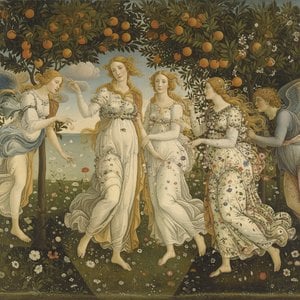
In the quiet intensity of Sandro Botticelli’s Calumny, we are invited into a world where the air itself feels heavy with accusation and whispered secrets. This evocative detail captures a moment frozen in time, a dramatic confrontation that serves as a window into the turbulent soul of Renaissance Florence. At its heart lies a man, perhaps bearing the weight of a crown, subjected to the piercing gaze and relentless judgment of a surrounding throng. The scene is not merely a depiction of conflict; it is a psychological landscape where the boundaries between private torment and public humiliation blur, creating an atmosphere of profound tension that continues to captivate viewers centuries after its creation.

The composition breathes with a sense of orchestrated chaos, yet it is held together by Botticelli’s unparalleled mastery of line and form. As one observes the figures gathered around the central protagonist, there is a palpable sense of movement—the leaning bodies, the accusing gestures, and the watchful eyes of those standing in the periphery. The presence of seemingly mundane objects, such as a solitary chair or a bowl tucked into the corner, grounds this high drama in a tangible, domestic reality, making the unfolding scandal feel disturbingly intimate. For the discerning collector, this piece offers more than just visual beauty; it provides a narrative depth that transforms any space into a gallery of historical reflection.

The Ethereal Touch of the Florentine Master

To look closely at Calumny is to witness the pinnacle of Botticelli’s signature technique. Eschewing the heavy, muscular shadows of his contemporaries, Botticelli employs a luminous, pastel palette that lends the work an almost otherworldly glow. Through the meticulous application of glazes—thin, translucent layers of pigment—he achieves a depth of color that seems to radiate from within the panel itself. His use of delicate, flowing lines defines the intricate folds of drapery and the expressive, often melancholic, features of his subjects with a grace that is uniquely his own.

The palette, dominated by soft creams, pale yellows, and ethereal blues, works in subtle harmony with the subject matter. Rather than using harsh contrasts to denote conflict, Botticelli uses these muted hues to heighten the sense of melancholy and psychological complexity. This delicate approach ensures that even the most intense moments of accusation are rendered with a poetic elegance. For interior designers seeking to introduce a sense of sophisticated calm paired with intellectual intrigue, the soft luminosity of this work provides an exquisite focal point that complements both classical and contemporary settings.

Echoes of Political Intrigue and Human Emotion

Beyond its aesthetic brilliance, Calumny is a profound historical document, reflecting the political instability of late 15th-century Florence. Painted during a period of shifting allegiances and intense scrutiny under the influence of the Medici family, the work likely mirrors the real-world scandals and accusations of corruption that haunted the era's most powerful figures. The figures in the painting are not mere archetypes; they embody the very essence of social anxiety, representing the fear of losing one's honor to the venomous spread of false rumors.

This layer of historical symbolism imbues the artwork with a timeless emotional resonance. The struggle against injustice and the vulnerability of the individual in the face of public opinion are themes that remain strikingly relevant today. Owning a high-quality reproduction of this masterpiece allows one to possess a piece of history that speaks to the enduring human condition. It is an investment in art that does not merely decorate a wall but invites conversation, contemplation, and a deep connection to the dramatic legacy of the Italian Renaissance.


Biografie van de kunstenaar

Early Life and Florentine Beginnings

Sandro Botticelli, geboren Alessandro di Mariano di Vanni Filipepi rond 1445 in Florence, Italië, kwam op tijdens een periode van buitengewone culturele fermentatie – de vroege Renaissance. Zijn leven was diep geworteld in de artistieke en sociale stof van de stad; hij dwaalde nooit ver af van zijn wijk Ognissanti, een getuigenis van zowel familiale banden als het levendige creatieve ecosysteem dat hem voedde. Zijn vader, Mariano Filipepi, begon als goudsmid en later als leerlooier, bood een vroege blootstelling aan vakmanschap en nauwkeurigheid – kwaliteiten die Botticelli’s artistieke benadering diepgaand zouden beïnvloeden. Hoewel aanvankelijke rapporten suggereerden dat hij goudsmid was, vond hij al snel zijn roeping onder de begeleiding van Fra Filippo Lippi, een toonaangevende schilder van het tijdvak. Deze leerlingenperiode bleek cruciaal, waardoor hij werd ondergedompeld in de technieken en esthetiek van de Florentijnse school, terwijl hij ook verbinding maakte met invloedrijke patrons zoals de Medici-familie.

A Style Defined by Grace and Myth

Botticelli’s artistieke stijl is onmiddellijk herkenbaar door zijn lyrische schoonheid, gekenmerkt door elegante lineariteit, vloeiende contouren en een delicate kleurgebruik. Hij beheerstte het overbruggen van de kloof tussen de late Gotische tradities en de opkomende Renaissance-esthetiek, waarbij hij invloeden opnam van meesters zoals Fra Angelico en Paolo Uccello, maar toch een unieke persoonlijke visie creëerde. Zijn figuren bezitten een etherische kwaliteit, vaak afgebeeld met verlengde proporties en gracieuze poses die zowel sereniteit als een subtiele melancholie uitdrukken. Een kenmerkend element van zijn werk is de frequente integratie van klassieke mythologie – een weerspiegeling van de humanistische interesses die door Florence’s Renaissance heen woedden. Hij illustreerde deze oude verhalen niet alleen; hij verlegde er nieuwe lagen betekenis aan, waarbij thema's als liefde, schoonheid en spirituele verlangens werden onderzocht. Botticelli’s techniek was innovatief voor zijn tijd. Hij gebruikte vaak een zilverpotlood-tekening onder de verf van zijn doeken, wat bijdroeg aan de luminositeit en delicate details die te zien zijn in zijn afgewerkte werken. Zijn gebruik van temperagewijze verf stelde hem in staat tot nauwkeurige weergave en levendige kleuren, terwijl zijn latere experimenten met olieverf zijn expressieve mogelijkheden uitbreidden.

Iconic Masterpieces and Artistic Development

Botticelli’s nalatenschap rust op een aantal iconische schilderijen die het publiek eeuwen later nog steeds betoveren. *De Geboorte van Venus*, voltooid rond 1486, staat als misschien zijn meest beroemde werk – een allegorisch beeld dat de godin afbeeldt die uit een schelpkom ontstaat, en de Renaissance-idealen van schoonheid en harmonie vertegenwoordigt. Zijn elegante compositie, delicate kleurpalet en evocatieve symboliek hebben het tot een blijvende symbool van de tijd gemaakt. Even beroemd is *Primavera*, gecreëerd rond 1482, een complex en raadselachtig schilderij dat lente en liefde viert, bevolkt met symbolische figuren uit klassieke mythologie. Deze werken tonen Botticelli’s meesterschap in compositie, zijn vermogen om atmosferische diepte te creëren en zijn diepe begrip van menselijke emoties. Zijn vroege jaren 70 zagen hem focussen op religieuze onderwerpen, waarbij hij zijn technische vaardigheden verfijnde en een reputatie opbouwde voor bekwame uitvoering. De jaren 80 markeerden het hoogtepunt van zijn creatieve kracht, met de creatie van zijn meest beroemde mythologische schilderijen. Het laatste kwart eeuw toonde echter een verschuiving in zijn stijl, beïnvloed door de gepassioneerde prediking van Girolamo Savonarola – een Dominicanse priester die wat hij zag als de decadentie en morele corruptie van Florence veroordeelde. Dit periode resulteerde in meer sober en emotioneel geladen werken, die een groeiende spirituele intensiteit weerspiegelden.

Major Works

  • De Geboorte van Venus (c. 1486): Een iconisch schilderij dat de Renaissance-idealen van schoonheid vertegenwoordigt.
  • Primavera (c. 1482): Een complex allegorisch schilderij dat lente en liefde viert.
  • Adoration of the Magi (1475-1476): Demonstreert vroege meesterschap in compositie en perspectief.
  • Mystic Nativity (1501): Weerspiegelt een verschuiving naar spirituele thema’s in zijn latere carrière.
Botticelli’s leven was diep geworteld in de stad Florence; hij bleef dicht bij zijn wijk Ognissanti, wat zowel familiale banden als het levendige creatieve ecosysteem dat hem voedde weerspiegelde. Zijn vader, Mariano Filipepi, begon aanvankelijk als goudsmid en later als leerlooier, bood een vroege blootstelling aan vakmanschap en nauwkeurigheid – kwaliteiten die Botticelli’s artistieke benadering diepgaand zouden beïnvloeden. Hoewel aanvankelijke rapporten suggereerden dat hij goudsmid was, vond hij al snel zijn roeping onder de begeleiding van Fra Filippo Lippi, een toonaangevende schilder van het tijdvak. Deze leerlingenperiode bleek cruciaal, waardoor hij werd ondergedompeld in de technieken en esthetiek van de Florentijnse school, terwijl hij ook verbinding maakte met invloedrijke patrons zoals de Medici-familie.
Sandro Botticelli

Sandro Botticelli

1445 - 1510 , Italië

Snelle feiten

  • Artistic Movement Or Style: Vroege Renaissance
  • Artists Or Movements Influenced By This Artist: ['Pre-Raphaelieten']
  • Artists Who Influenced This Artist:
    • Lippi
    • Uccello
  • Date Of Birth: c. 1445
  • Date Of Death: 1510
  • Full Name: Alessandro di Mariano Filipepi
  • Nationality: Italiaans
  • Notable Artworks:
    • Venus Ontstaan
    • Primavera
    • Wijzen Aanbidding
  • Place Of Birth: Florence, Italië
Ontdek kunstwerken georganiseerd op thema, stijl en kenmerk.