Bekijk op ware grootte Bekijk in AR Koop handgeschilderd kunstwerk Schakel over naar digitale afbeeldingen Verstuur
Details bekijken Gids voor studentenkunstwerken Toevoegen aan favorieten Download Vergelijkbare items Röntgenonderzoek Diavoorstelling Statistieken

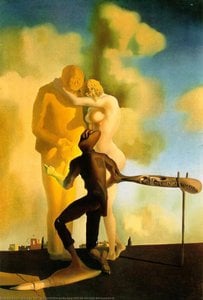
William Tell, 1930

Salvador Dalí's 'William Tell' (1930) is a surrealist masterpiece blending myth, rebellion, and psychological depth. Explore the chaotic scene of a bull-headed crossbowman and dreamlike figures – a captivating glimpse into Dalí’s subconscious.

Salvador Dalí (1904-1989): De meester van surrealisme! Ontdek droomachtige landschappen, iconische beelden & zijn blijvende invloed op kunst & popcultuur. #Dalí #Surrealisme

Giclée / Kunstafdrukken

Giclée- of canvasafdruk van museumkwaliteit met een snelle productie en flexibele afwerkingsmogelijkheden. ( Koop handgeschilderd kunstwerk Schakel over naar digitale afbeeldingen)

P118B $10
P118H $10
P118W $10
P438Z $10
P508JH $12
P508YH $12
P805H $10
P805Z $10
P919BZ $10
P919G $10
P919XJ $10
P959ZH $10
P968JZ $12
W106C $8
W218G $10
W218JH $8
W218Y $10
W307PJ $10
W316G $10
W316PJ $8
W316Y $10
W398PJ $8
W4111J $10
W500HY $15
W500JH $15
W692G $12
W849H $8
W940BG $15
W953PJ $8

Standaardformaat
op maat gemaakt
CM
INCH

Kies uit onze vooraf ingestelde maten die overeenkomen met de originele verhoudingen van het kunstwerk.

breedte
hoogte

U kunt uw eigen afmetingen opgeven om in een specifieke lijst of ruimte te passen. Als de door u gekozen maat niet overeenkomt met de proporties van het originele kunstwerk, zullen wij de afbeelding bijsnijden of uitbreiden met een gespiegelde of effen rand. Een digitaal mockup wordt ter goedkeuring naar u verzonden voordat de productie begint.
Houd er rekening mee dat de preview op het scherm de werkelijke bijsneding of uitbreiding niet weergeeft. Alleen de mockup toont de uiteindelijke compositie nauwkeurig.
Hoewel aangepaste maten beschikbaar zijn, raden wij aan een afmeting uit de vooraf bepaalde lijst te kiezen om de originele proporties te behouden.

Wereldwijde levering () binnen 2 weken in plaats van de standaard 4/5 weken. (26 september)

why_choose_icon
Gratis wereldwijde expressverzending
why_choose_icon
Hoogwaardig linnen canvas
why_choose_icon
Volledige verzendverzekering
why_choose_icon
Garantie op terugbetaling van invoerrechten
why_choose_icon
Garantie op exacte kleurweergave
why_choose_icon
Retourbeleid van 100 dagen (alleen bij defecten)
why_choose_icon
100% Geld-terug-garantie
why_choose_icon
Korting bij meerdere afnames

Totaalprijs

$ 69

reproduction

William Tell, 1930

Giclée / Kunstafdrukken

Formaat reproductie

-

Totaalprijs

$ 69

Belangrijkste kenmerken

  • Medium: Oil on canvas
  • Artistic style: Dreamlike imagery
  • Artist: Salvador Dalí
  • Subject or theme: Myth & Rebellion
  • Movement: Surrealism
  • Year: 1930
  • Notable elements: Bull-headed crossbow

Kunstquiz

Er is slechts één goed antwoord op elke vraag.

Vraag 1:
Salvador Dalí’s ‘William Tell’ primarily exemplifies which artistic movement?
Vraag 2:
The image of William Tell prominently features a bull-headed crossbow. What does this imagery likely symbolize?
Vraag 3:
Considering Salvador Dalí's known fascination with dreams and the subconscious, what is a key element of ‘William Tell’ that reflects this artistic approach?
Vraag 4:
The presence of multiple horses in the painting contributes to which aspect of the artwork’s composition?
Vraag 5:
Based on the historical context surrounding William Tell, what was the primary motivation behind his actions as depicted in Dalí’s painting?

The Genesis of a Myth: William Tell in the Realm of Dreams

Salvador Dalí’s “William Tell,” painted in 1930, isn't merely a depiction of the Swiss folk hero; it’s an immersion into the artist’s intensely personal and profoundly unsettling subconscious. This work transcends simple narrative, becoming a swirling vortex of symbolism, fractured forms, and dreamlike logic—a quintessential example of Dalí’s mature surrealist style. The painting immediately confronts the viewer with a chaotic tableau: a man on horseback, not in triumphant victory, but radiating an almost palpable anguish; a bull-headed crossbow, a jarring juxtaposition that speaks to primal fears and anxieties; and figures scattered across the landscape like fragments of a shattered memory. It’s crucial to understand Dalí's own biography at this time – his complex relationship with Gala Éluard, his burgeoning artistic independence, and his increasingly critical stance towards established artistic conventions—to fully grasp the emotional weight embedded within this scene.

  • The Mythic Core: Dalí doesn’t simply illustrate the legend of William Tell; he distorts it, amplifying its inherent drama and injecting a potent dose of psychological turmoil. The act of tyrannicide, central to the story, is presented not as an heroic deed but as a violent confrontation with authority.
  • Symbolic Distortion: Notice the disproportionate figures – the elongated limbs, the floating objects—a hallmark of Dalí’s technique designed to destabilize perception and evoke a sense of unease. The horse itself seems trapped in a perpetual state of motion, mirroring the protagonist's internal struggle.
  • A Personal Reflection: Many art historians believe this painting reflects Dalí’s own anxieties about control, power dynamics, and his evolving relationship with Gala, who represented both a muse and a formidable force in his life.

The Language of Surrealism: Technique and Composition

Dalí's mastery lies not just in the imagery but also in its execution. “William Tell” is a rich tapestry woven from various techniques, reflecting the artist’s eclectic approach. The painting incorporates elements of collage—fragments of reality seemingly pasted onto an imagined world—alongside traditional oil paint. The use of vibrant, almost hallucinatory colors – deep reds, blues, and yellows – contributes to the overall sense of disorientation. The composition is deliberately unbalanced, with a strong diagonal thrust created by the horse and figures, pulling the viewer’s eye through the chaotic scene. The meticulous detail in rendering each element—the texture of the horse's coat, the glint of the crossbow—contrasts sharply with the dreamlike atmosphere, further enhancing the painting’s unsettling effect.

Key Techniques:
  • Collage elements: Juxtaposition of disparate objects and textures.
  • Oil Paint: Rich color palette and meticulous rendering.
  • Distorted Perspective: Creates a sense of unease and disorientation.
  • Decoding the Dreamscape: Symbolism and Interpretation

    Beyond the immediate visual impact, “William Tell” is laden with symbolism. The bull-headed crossbow immediately evokes primal fears – the bull representing aggression and the crossbow, a tool of violence. The clock, subtly placed on the right side of the canvas, introduces an element of time and perhaps suggests the relentless passage of judgment or the inescapable nature of fate. The figures surrounding Tell—some standing close together, others distant—represent the complex web of relationships and power dynamics at play. Notably, the figure of a woman, often interpreted as Gala, is present, adding another layer of personal significance to the scene. It’s important to note that Dalí himself offered various interpretations, often deliberately ambiguous, encouraging viewers to project their own meanings onto the work.

    A Legacy of Surrealism: Dalí's Enduring Influence

    “William Tell” stands as a pivotal work in Salvador Dalí’s oeuvre and a cornerstone of the surrealist movement. It exemplifies the genre’s fascination with the unconscious, its rejection of rational thought, and its exploration of hidden desires and anxieties. Dalí's ability to transform a familiar myth into a profoundly personal and unsettling vision cemented his place as one of the 20th century’s most influential artists. Reproductions of this captivating painting continue to resonate with audiences today, offering a glimpse into the extraordinary mind of a visionary artist—a testament to the power of dreams and the enduring allure of surrealism.


    Biografie van de kunstenaar

    Een Leven Ondergedompeld in Dromen: De Wereld van Salvador Dalí

    Salvador Domingo Felipe Jacinto Dalí i Domènech, een naam die synoniem staat voor surrealisme, werd geboren op 11 mei 1904 in het zonnige stadje Figueres, Spanje. Zijn bestaan was voorbestemd om allesbehalve gewoon te zijn: een leven minutieus vormgegeven als een performance, een verkenning van het onderbewustzijn zichtbaar gemaakt door verbazingwekkende beelden en technische genialiteit. De schaduw van verlies hing vroeg over hem; zijn oudere broer, ook Salvador genaamd, stierf slechts negen maanden voor Dalí’s geboorte, een trauma dat zijn kunst zou doordringen met thema's van dualiteit en vervanging. Deze vormende ervaring, gecombineerd met een complexe relatie met zijn strenge maar pragmatische vader en de liefdevolle genegenheid van zijn moeder, vormde een persoonlijkheid die zowel flambojant als diep introspectief was. Al op jonge leeftijd toonde Dalí uitzonderlijk artistiek talent, gekoesterd door formele training aan de San Fernando Academy of Fine Arts in Madrid. Toch was het een cruciale ontmoeting met moderne schilderkunst – met name het werk van impressionisten en renaissance meesters – die in hem een vurig verlangen aanwakkerde om met traditie te breken en zijn eigen unieke pad te smeden.

    De Smaakmakerij van Parijs en de Geboorte van een Surrealistisch Visie

    Een reis naar Parijs in 1926 bleek transformatief, waardoor Dalí zich onderdompelde in het hart van de avant-gardebeweging. Hij voelde zich aangetrokken tot de rebelse geest van Dadaïsme, de afwijzing van logica en omarming van absurditeit resoneerde met zijn eigen opkomende artistieke neigingen. Belangrijker nog was dat Dalí in Parijs volledig omarmde het surrealisme, contact makend met sleutelfiguren als André Breton, Pablo Picasso – die Dalí hoogachtte – en Joan Miró. Deze ontmoeting was niet slechts een adoptie van een stijl; Dalí revolutioneerde de beweging zelf. Hij ontwikkelde wat hij noemde de “paranoïde-kritische methode”, een zelfopgewekte staat van paranoia, bedoeld om de verborgen beelden van het onderbewustzijn te ontsluiten. Deze techniek stelde hem in staat dromen, angsten en diep persoonlijke symbolen met verbluffende helderheid en minutieuze details op canvas over te brengen. Het resultaat was een wereld bevolkt door smeltende klokken, uitgerekte schaduwen, vervormde figuren en bizarre juxtaposities – kenmerken van zijn onmiddellijk herkenbare stijl. De Volharding van het Geheugen, voltooid in 1931, blijft misschien wel zijn meest iconische werk, dat de surrealistische verkenning van de vloeibaarheid van tijd, de fragiliteit van het geheugen en de onvermijdelijkheid van verval belichaamt.

    Voorbij het Canvas: Een Vruchtbare en Veelzijdige Kunstenaar

    Dalí’s creatieve output strekte zich veel verder uit dan schilderkunst. Hij was een opmerkelijk productieve kunstenaar, die zich waagde aan sculptuur, film – met name samenwerkingen met Alfred Hitchcock in Spellbound en Walt Disney – grafische kunsten, sieradenontwerp en zelfs toneeldecors. Zijn fascinatie beperkte zich niet tot traditionele artistieke media; hij verkende de grenzen van commerciële kunst en ontwierp advertenties en etalages. Terugkerende motieven doordrongen zijn werk: mieren die verval symboliseren, eieren die prenatale leven en hoop vertegenwoordigen, krukken die steun en fragiliteit aangeven, lades die verborgen geheimen suggereren en smeltende objecten die de instabiliteit van de werkelijkheid belichamen. Deze symbolen waren niet willekeurig; ze waren diep persoonlijk, geworteld in zijn eigen angsten, verlangens en herinneringen. Werken als Juliet's Tomb, een ontroerende verkenning van verlies, Mannequin (Barcelona Mannequin), die een obsessie met kunstmatigheid en identiteit weerspiegelt, en Landschap met Vliegen, een verontrustende afbeelding van sterfelijkheid, demonstreren de breedte en diepte van zijn thematische zorgen. Zijn minutieuze techniek, aangescherpt door jarenlange oefening, stelde hem in staat deze fantastische visies met fotografisch realisme weer te geven, waardoor hun onheilspellende kracht verder werd versterkt.

    Excentriciteit, Erfgoed en Blijvende Invloed

    Gedurende zijn hele leven cultiveerde Dalí een persona die net zo flambojant en excentriek was als zijn kunst. Hij omarmde zelfpromotie, in de overtuiging van de kracht van spektakel bij het vangen van de publieke aandacht. Zijn huwelijk met Gala Éluard in 1934 was cruciaal, niet alleen persoonlijk maar ook artistiek; zij werd zijn muze, zakelijke manager en onwrikbare supporter. Hoewel zijn latere jaren werden gekenmerkt door toenemende commerciële ondernemingen en een soms controversiële omarming van het Franco-regime, blijft zijn artistieke nalatenschap enorm. Hij stierf op 23 januari 1989 en liet een oeuvre achter dat nog steeds uitdaagt, prikkelt en inspireert. Het Salvador Dalí Museum in St. Petersburg, Florida, staat als getuigenis van zijn blijvende aantrekkingskracht, met een uitgebreide collectie die bezoekers de mogelijkheid biedt om zich onder te dompelen in de wereld van deze buitengewone kunstenaar. Dalí oversteeg de grenzen van de kunst en werd een cultureel icoon wiens invloed zichtbaar is in mode, film, reclame en populaire cultuur. Hij blijft een van de meest herkenbare en invloedrijke kunstenaars van de 20e eeuw – een ware visionair die durfde de diepten van het onderbewustzijn te verkennen en zijn mysteries op canvas over te brengen voor de hele wereld om te zien.

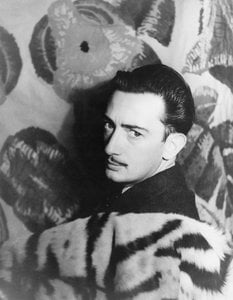
    Salvador Dalí

    Salvador Dalí

    1904 - 1989 , Spanje

    Snelle feiten

    • Artistic Movement Or Style: Surrealisme
    • Artists Or Movements Influenced By This Artist:
      • Pop art
      • Hedendaagse kunstenaars
    • Artists Who Influenced This Artist:
      • Cubisme
      • Dada
      • Pablo Picasso
    • Date Of Birth: 11 mei 1904
    • Date Of Death: 23 januari 1989
    • Full Name: Salvador Domingo Felipe Jacinto Dalí i Domènech
    • Nationality: Spaans
    • Notable Artworks:
      • Persistence of Memory
      • Juliet's Tomb
      • Mannequin
    • Place Of Birth (City And Country): Figueres, Spanje
    Ontdek kunstwerken georganiseerd op thema, stijl en kenmerk.