Giclée- of canvasafdruk van museumkwaliteit met een snelle productie en flexibele afwerkingsmogelijkheden. ( Bestel handgeschilderde reproductie
Schakel over naar digitale afbeelding)
Kies uit onze vooraf ingestelde maten die overeenkomen met de originele verhoudingen van het kunstwerk.
U kunt uw eigen afmetingen opgeven om in een specifieke lijst of ruimte te passen. Als de door u gekozen maat niet overeenkomt met de proporties van het originele kunstwerk, zullen wij de afbeelding bijsnijden of uitbreiden met een gespiegelde of effen rand. Een digitaal mockup wordt ter goedkeuring naar u verzonden voordat de productie begint.
Houd er rekening mee dat de preview op het scherm de werkelijke bijsneding of uitbreiding niet weergeeft. Alleen de mockup toont de uiteindelijke compositie nauwkeurig.
Hoewel aangepaste maten beschikbaar zijn, raden wij aan een afmeting uit de vooraf bepaalde lijst te kiezen om de originele proporties te behouden.
Wereldwijde levering () binnen 2 weken in plaats van de standaard 4/5 weken. (10 september)
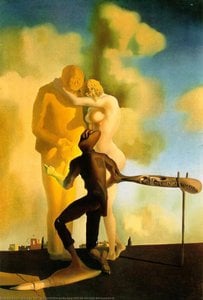
Female Bather
Afmetingen reproductie
Salvador Dalí's 'Female Bather,' painted in 1928, isn’t merely a depiction of a woman reclining on the beach; it’s an immersion into the artist’s meticulously constructed subconscious. This pivotal work from the early Surrealist period represents a radical departure from traditional nude painting, instead presenting a figure that exists simultaneously as a tangible form and a fluid, almost ethereal presence. Dalí masterfully blends realism with dreamlike distortion, creating an image that continues to fascinate and provoke interpretation nearly a century later.
The painting’s foundation lies in the burgeoning Surrealist movement, born from a desire to liberate art from the constraints of reason and logic. Dalí, deeply influenced by Freud's theories on the unconscious mind, sought to translate the illogical landscapes of dreams into visual form. ‘Female Bather’ exemplifies this ambition perfectly – it’s less about portraying a realistic woman in a natural setting, and more about evoking the unsettling yet alluring atmosphere of a dream state. The composition itself is deliberately destabilizing; the figure's contorted pose, with legs raised in an almost impossible angle, immediately challenges our perception of human anatomy. This deliberate distortion isn’t arbitrary; it serves to dissolve boundaries between reality and fantasy, mirroring the way dreams often defy conventional logic.
Beyond its formal qualities, ‘Female Bather’ is rich in symbolic detail. The stark, almost barren landscape – a desolate stretch of sand under a vast, cloud-filled sky – contributes to the painting's sense of isolation and vulnerability. The two birds, subtly placed near the top left and bottom right corners, are often interpreted as symbols of duality and transformation. Dalí frequently employed birds in his work to represent these concepts, suggesting a transition between states or a confrontation with opposing forces within the psyche. The sky itself, rendered in muted blues and grays, hints at an impending storm – a metaphor for the turbulent emotions and anxieties that might lie beneath the surface of the figure’s apparent serenity.
The woman's nude form is presented not as a celebration of physical beauty, but rather as a vehicle for exploring themes of identity, vulnerability, and the subconscious. Her pale skin contrasts sharply with the darker tones of the sand, drawing attention to her delicate features and emphasizing her exposed state. The subtle suggestion of a crack in the sky behind her adds another layer of complexity, hinting at a fractured reality and the instability of perception. It’s important to note that Dalí's approach to the female nude was profoundly personal, reflecting his own fascination with the human body as a subject for artistic exploration and psychological investigation.
Dalí’s technical skill is undeniable in ‘Female Bather.’ He employs meticulous draftsmanship, rendering every detail – from the texture of the sand to the delicate curve of the woman's body – with astonishing precision. However, this realism is deliberately juxtaposed with a sense of unreality through his use of color and perspective. The painting’s palette is restrained, dominated by earthy tones and muted blues, creating a somber yet captivating atmosphere. Dalí was deeply influenced by the Renaissance masters, particularly Raphael and Leonardo da Vinci, whose mastery of anatomy and composition he clearly admired. Yet, he deliberately subverted these classical conventions, injecting his own surrealist vision into their established techniques.
Furthermore, Dalí’s work stands as a direct response to the prevailing rationalism of the early 20th century. Modernism, with its emphasis on experimentation and subjective experience, provided fertile ground for Surrealism to flourish. ‘Female Bather,’ therefore, represents a bold assertion of the power of the subconscious mind – a realm where logic is suspended and dreams hold sway. It’s a testament to Dalí's ability to capture the elusive essence of the human psyche and translate it into a visually arresting and profoundly evocative work of art.
A hand-painted reproduction of 'Female Bather' offers a unique opportunity to bring this iconic Surrealist masterpiece into your home or office. WahooArt meticulously recreates Dalí’s original vision, capturing the painting’s intricate details and atmospheric depth with unparalleled accuracy. Whether you are an art enthusiast, a collector seeking to expand your collection, or simply someone looking for a striking piece of décor, this reproduction is sure to spark conversation and evoke the dreamlike quality of Dalí's genius. Explore our high-quality reproductions today and experience the captivating allure of ‘Female Bather’ firsthand.

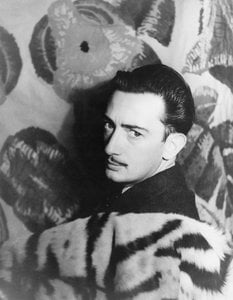
Salvador Domingo Felipe Jacinto Dalí i Domènech, een naam die synoniem staat voor surrealisme, werd geboren op 11 mei 1904 in het zonnige stadje Figueres, Spanje. Zijn bestaan was voorbestemd om allesbehalve gewoon te zijn: een leven minutieus vormgegeven als een performance, een verkenning van het onderbewustzijn zichtbaar gemaakt door verbazingwekkende beelden en technische genialiteit. De schaduw van verlies hing vroeg over hem; zijn oudere broer, ook Salvador genaamd, stierf slechts negen maanden voor Dalí’s geboorte, een trauma dat zijn kunst zou doordringen met thema's van dualiteit en vervanging. Deze vormende ervaring, gecombineerd met een complexe relatie met zijn strenge maar pragmatische vader en de liefdevolle genegenheid van zijn moeder, vormde een persoonlijkheid die zowel flambojant als diep introspectief was. Al op jonge leeftijd toonde Dalí uitzonderlijk artistiek talent, gekoesterd door formele training aan de San Fernando Academy of Fine Arts in Madrid. Toch was het een cruciale ontmoeting met moderne schilderkunst – met name het werk van impressionisten en renaissance meesters – die in hem een vurig verlangen aanwakkerde om met traditie te breken en zijn eigen unieke pad te smeden.
Een reis naar Parijs in 1926 bleek transformatief, waardoor Dalí zich onderdompelde in het hart van de avant-gardebeweging. Hij voelde zich aangetrokken tot de rebelse geest van Dadaïsme, de afwijzing van logica en omarming van absurditeit resoneerde met zijn eigen opkomende artistieke neigingen. Belangrijker nog was dat Dalí in Parijs volledig omarmde het surrealisme, contact makend met sleutelfiguren als André Breton, Pablo Picasso – die Dalí hoogachtte – en Joan Miró. Deze ontmoeting was niet slechts een adoptie van een stijl; Dalí revolutioneerde de beweging zelf. Hij ontwikkelde wat hij noemde de “paranoïde-kritische methode”, een zelfopgewekte staat van paranoia, bedoeld om de verborgen beelden van het onderbewustzijn te ontsluiten. Deze techniek stelde hem in staat dromen, angsten en diep persoonlijke symbolen met verbluffende helderheid en minutieuze details op canvas over te brengen. Het resultaat was een wereld bevolkt door smeltende klokken, uitgerekte schaduwen, vervormde figuren en bizarre juxtaposities – kenmerken van zijn onmiddellijk herkenbare stijl. De Volharding van het Geheugen, voltooid in 1931, blijft misschien wel zijn meest iconische werk, dat de surrealistische verkenning van de vloeibaarheid van tijd, de fragiliteit van het geheugen en de onvermijdelijkheid van verval belichaamt.
Dalí’s creatieve output strekte zich veel verder uit dan schilderkunst. Hij was een opmerkelijk productieve kunstenaar, die zich waagde aan sculptuur, film – met name samenwerkingen met Alfred Hitchcock in Spellbound en Walt Disney – grafische kunsten, sieradenontwerp en zelfs toneeldecors. Zijn fascinatie beperkte zich niet tot traditionele artistieke media; hij verkende de grenzen van commerciële kunst en ontwierp advertenties en etalages. Terugkerende motieven doordrongen zijn werk: mieren die verval symboliseren, eieren die prenatale leven en hoop vertegenwoordigen, krukken die steun en fragiliteit aangeven, lades die verborgen geheimen suggereren en smeltende objecten die de instabiliteit van de werkelijkheid belichamen. Deze symbolen waren niet willekeurig; ze waren diep persoonlijk, geworteld in zijn eigen angsten, verlangens en herinneringen. Werken als Juliet's Tomb, een ontroerende verkenning van verlies, Mannequin (Barcelona Mannequin), die een obsessie met kunstmatigheid en identiteit weerspiegelt, en Landschap met Vliegen, een verontrustende afbeelding van sterfelijkheid, demonstreren de breedte en diepte van zijn thematische zorgen. Zijn minutieuze techniek, aangescherpt door jarenlange oefening, stelde hem in staat deze fantastische visies met fotografisch realisme weer te geven, waardoor hun onheilspellende kracht verder werd versterkt.
Gedurende zijn hele leven cultiveerde Dalí een persona die net zo flambojant en excentriek was als zijn kunst. Hij omarmde zelfpromotie, in de overtuiging van de kracht van spektakel bij het vangen van de publieke aandacht. Zijn huwelijk met Gala Éluard in 1934 was cruciaal, niet alleen persoonlijk maar ook artistiek; zij werd zijn muze, zakelijke manager en onwrikbare supporter. Hoewel zijn latere jaren werden gekenmerkt door toenemende commerciële ondernemingen en een soms controversiële omarming van het Franco-regime, blijft zijn artistieke nalatenschap enorm. Hij stierf op 23 januari 1989 en liet een oeuvre achter dat nog steeds uitdaagt, prikkelt en inspireert. Het Salvador Dalí Museum in St. Petersburg, Florida, staat als getuigenis van zijn blijvende aantrekkingskracht, met een uitgebreide collectie die bezoekers de mogelijkheid biedt om zich onder te dompelen in de wereld van deze buitengewone kunstenaar. Dalí oversteeg de grenzen van de kunst en werd een cultureel icoon wiens invloed zichtbaar is in mode, film, reclame en populaire cultuur. Hij blijft een van de meest herkenbare en invloedrijke kunstenaars van de 20e eeuw – een ware visionair die durfde de diepten van het onderbewustzijn te verkennen en zijn mysteries op canvas over te brengen voor de hele wereld om te zien.
1904 - 1989 , Spanje