De kunstwerken die op deze pagina worden weergegeven, zijn beschermd door de auteursrechtwetgeving, wat betekent dat het ons wettelijk niet is toegestaan om identieke reproducties te maken of te verkopen. Deze bescherming wordt gehandhaafd onder internationale overeenkomsten zoals de Conventie van Bern en door nationale wetgeving, waaronder de bepalingen van de Amerikaanse auteurswet - Titel 17. Alle rechten voorbehouden. Reproduceren of distribueren van afbeeldingen is niet toegestaan zonder uitdrukkelijke schriftelijke toestemming van WahooArt.com en de rechthebbenden.
Deze methode voldoet volledig aan de auteursrechtwetgeving, omdat het niet gaat om het kopiëren of dupliceren van het beschermde kunstwerk. In plaats daarvan is er sprake van een creatieve herinterpretatie — een nieuw schilderij dat door het origineel wordt geïnspireerd, maar er niet identiek aan is.
Giclée- of canvasafdruk van museumkwaliteit met een snelle productie en flexibele afwerkingsmogelijkheden. ( Bestel handgeschilderde reproductie Schakel over naar digitale afbeeldingen)





























Kies uit onze vooraf ingestelde maten die overeenkomen met de originele verhoudingen van het kunstwerk.

Voer de gewenste breedte en hoogte in, passend bij uw lijst of muur. Een afdruk kan alleen worden ingekort en nooit groter worden gemaakt dan het origineel; een formaat met andere verhoudingen zal daarom een deel van de afbeelding verliezen. Wij sturen u een digitaal mockup ter goedkeuring voordat we tot drukwerk overgaan. De afbeelding op deze pagina toont niet de werkelijke uitsnede — dit is alleen te zien op het mockup.
Wereldwijde levering () binnen 2 weken in plaats van de standaard 4/5 weken. (21 november)
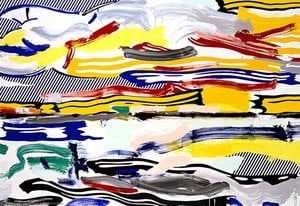
Sinking Sun
Afmetingen reproductie
Roy Lichtenstein’s Sinking Sun, painted in 1964, isn't merely a depiction of a sunset; it’s a carefully constructed meditation on the anxieties and visual language of the burgeoning Pop Art movement. Emerging from the shadows of Abstract Expressionism, Lichtenstein sought to dismantle traditional notions of fine art by embracing the imagery of popular culture – advertising, comic books, and everyday objects – transforming them into sophisticated works of art. Sinking Sun embodies this shift perfectly, capturing a fleeting moment of dramatic beauty while simultaneously hinting at an underlying sense of unease.
The painting’s genesis lies in the artist's fascination with the visual techniques employed in commercial printing, particularly the use of Ben-Day dots. This technique, borrowed from the world of mass production, creates a mosaic effect of tiny colored squares that mimics the appearance of halftone patterns found in newspapers and magazines. Lichtenstein masterfully employs this method to render the fiery hues of the sunset – vibrant yellows, deep oranges, and streaks of purple – imbuing the scene with an almost photographic quality while simultaneously distancing it from traditional representational painting. The deliberate flatness of the color fields contributes to the work’s immediate impact, drawing the viewer into its bold and dynamic composition.
The composition of Sinking Sun is deceptively simple yet profoundly effective. A dramatic sunset dominates the canvas, with a large, cloud-obscured sun positioned just above the horizon line. The clouds themselves are rendered in soft pinks and blues, creating a sense of depth and atmospheric perspective. A subtle rainbow arcs across the upper portion of the painting, adding a touch of hopeful beauty to the scene – a fleeting promise after the intensity of the sunset. However, it’s not just a picturesque landscape; the receding horizon line suggests a downward trajectory, subtly conveying a feeling of decline or transition.
The choice of subject matter itself is significant. A sinking sun has long been a potent symbol in art and literature, representing endings, mortality, and the passage of time. In Sinking Sun, this symbolism is amplified by Lichtenstein’s stylistic choices. The bright colors and simplified forms contrast sharply with the melancholic connotations of the subject matter, creating a compelling tension between beauty and sadness.
Lichtenstein’s work, including Sinking Sun, played a pivotal role in challenging established artistic conventions. By appropriating imagery from popular culture – a deliberate move away from the traditional subjects of fine art – he questioned the very definition of what constituted “art.” His use of comic book aesthetics, bold colors, and mass-produced techniques directly confronted the elitism and intellectualism often associated with the art world. Sinking Sun exemplifies this challenge, demonstrating how seemingly mundane imagery could be elevated to a level of artistic significance.
Today, Sinking Sun is recognized as an iconic image of American Pop Art and a testament to Lichtenstein’s innovative approach. Its vibrant colors, meticulous attention to detail, and subtle symbolism continue to resonate with viewers. The painting serves as a poignant reminder of the cultural landscape of its time – a period marked by rapid technological advancements, consumerism, and a growing sense of uncertainty. More than just a beautiful image, Sinking Sun offers a glimpse into the anxieties and aspirations of a generation grappling with the complexities of modernity. It’s a work that invites contemplation and rewards repeated viewing, revealing new layers of meaning with each encounter.
Further Resources: Roy Lichtenstein: Sinking sun, Roy Lichtenstein: Figures with sunset, Roy Lichtenstein: We rose up slowly, Roy Lichtenstein: Crying girl
Artist Information: Roy Fox Lichtenstein (1923-1997) was an American pop artist. He rose to prominence in the 1960s through pieces which were inspired by popular advertising and the comic book style. Much of his work explores the relationship between fine art, advertising, and consumerism.
Additional Research: Roy Lichtenstein, Roy Lichtenstein Foundation
Voor "Sinking Sun" door Roy Lichtenstein wordt een reproductie van Medium aanbevolen. De afmetingen kunnen worden aangepast met behoud van de verhoudingen.
De kunsthistorische classificatie van "Sinking Sun" door Roy Lichtenstein is Pop Art, uit de Modern-periode.
De vastgestelde waarden voor "Sinking Sun" door Roy Lichtenstein zijn: brilliant helderheid en Bright Balance luminantie.

Manhattan, New York City, 27 oktober 1923. Roy Lichtenstein treedt de wereld binnen als de zoon van Milton en Beatrice. De stedelijke energie van de metropool vormt het decor voor een leven dat uiteindelijk de grenzen van de schone kunsten zal uitdagen. Hij groeit op in een welgestelde Joodse familie, waarbij hij de culturele ritmes van de stad absorbeert via musea en jazzmuziek.
De koers van zijn carrière verschuift tijdens het midden van de twintigste eeuw. Hij verrijst als een vooraanstaand figuur binnen de Pop Art-beweging, een periode die wordt gekenmerkt door een radicale breuk met het zware, emotionele penseelwerk van het Abstract Expressionisme. In plaats van naar binnen te kijken, richt hij zijn blik naar buiten, op de glanzende, mechanische oppervlakken van de Amerikaanse massacultuur. Hij vindt zijn onderwerp in de meest over het hoofd geziene hoeken van het dagelijks leven: de dramatische panelen van stripboeken en de scherpe, repetitieve patronen van commerciële reclame.
Zijn werk transformeert de vluchtige taal van de drukpers tot iets monumentaals. Door de visuele verkorte taal van de massa te adopteren, dwingt hij een confrontatie af tussen het prestige van de hoogwaardige galerie en de alledaagse hartslag van de straat. Zijn aanwezigheid in de kunstwereld wordt gekenmerkt door een bewuste distantie, waarbij hij juist de instrumenten van industriële reproductie gebruikt om te herdefiniëren wat een schilderij kan zijn.
Manhattan, 1923. De stad vormt het decor voor de geboorte van Roy Fox Lichtenstein in een welgesteld Joods gezin. Zijn vader, Milton, werkt als makelaar, terwijl zijn moeder, Beatrice, een getraind pianiste is die hem introduceert in de culturele ritmes van New York. Deze vroege jaren worden gekenmerkt door een dubbele onderdompeling in het visuele en het auditieve; hij brengt zijn jeugd door in musea en bij concerten, waarbij hij een diepe waardering voor jazzmuziek ontwikkelt die de rest van zijn leven zal blijven bestaan.
In 1939 verschuift zijn traject naar formele discipline. Hij treedt in dienst bij de Art Students League of New York, waar hij zich onderwerpt aan de instructies van Reginald Marsh. Hier ligt de focus nog volledig op de fundamenten van het tekenen en schilderen. Van deze vroege exploraties beweegt hij zich richting het hoger onderwijs, door zich in te schrijven aan de Ohio State University om een diploma in de schone kunsten te behalen. Deze academische basis biedt de technische strengheid die uiteindelijk de ruggengraat zal vormen van zijn latere, radicale breuken met de traditionele representatie.
De koers van Lichtenstein's opleiding maakt in 1943 een abrupte wending. De dienstplicht trekt hem uit de vertrouwde collegezalen en voert hem naar het Amerikaanse leger. Gedurende twee jaar verschuift de focus van het atelier naar de frontlinies van Europa. Hij dient in Frankrijk, België en Duitsland, waar hij tussen 1943 en 1945 navigeert door de chaos van de oorlogsjaren. In deze turbulente periode werkt hij als ordonnans, als tekenaar en als kunstenaar, waarbij hij de rauwe realiteit van zijn omgeving vastlegt in schetsen terwijl het conflict zijn hoogtepunt bereikt.
Hoewel de oorlog ten einde komt, is de terugkeer naar het burgerleven geen onmiddellijke zaak. Na het staken van de vijandelijkheden in 1945 verblijft Lichtenstein nog enige tijd in Frankrijk, met de ambitie om aan de Sorbonne te gaan studeren. Dit plan komt echter abrupt tot stilstand wanneer zijn vader ernstig ziek wordt, wat hem dwingt tot een terugkeer naar de Verenigde Staten. Hij keert terug naar de Ohio State University om zijn studie af te maken. Tegen 1946 heeft hij zijn BFA behaald, klaar om als een getrainde vakman de professionele kunstwereld opnieuw te betreden.
De jaren na de oorlog vinden Roy Lichtenstein terwijl hij zich een weg baant door het academische landschap van het Amerikaanse Midwesten en de oostkust. Als kunstinstructeur aan de Ohio State University vervult hij gedurende een decennium een wisselende rol die een cruciale fase in zijn ontwikkeling markeert. In deze periode ondergaat zijn creatieve output een fundamentele verschuiving; hij beweegt zich weg van de zware, emotionele penseelstreken van het Abstract Expressionisme. In plaats daarvan begint hij te experimenteren met kubistische interpretaties en lyrische werken, geïnspireerd door het beroemde Tapijt van Bayeux. Ook de thema's van het Wilde Westen trekken hem aan, wat resulteert in series van tekeningen en schilderijen die een groeiende fascinatie voor gestileerde, gedrukte beeldtaal weerspiegelen.
De transitie naar een meer grafische beeldtaal versnelt naarmate hij verschillende academische posities inneemt. In 1957 verhuist hij naar de State University of New York, Oswego, om industrieel ontwerp te doceren. Deze rol valt samen met een periode van intense experimenteerdrift. Hij begint cartoonfiguren, zoals Mickey Mouse en Donald Duck, te combineren met abstracte achtergronden. Deze hybride benadering vormt een radicale breuk met de traditionele schone kunsten. Later werkt hij als assistent-professor aan het Douglass College, de Rutgers State University of New Jersey, en aan de SUNY Oswego. Deze academische omgevingen bieden hem de nodige stabiliteit om een visuele taal te verfijnen die de textuur van de traditionele schilderkunst verwerpt ten gunste van iets dat mechanischer en afstandelijker aanvoelt.
Het canvas transformeert tot een toneel van mechanische precisie. Roy Lichtenstein stript de zichtbare penseelstreek weg en vervangt de persoonlijke hand van de kunstenaar door de kille, berekende taal van massaproductie. Hij omarmt de esthetiek van stripboeken en reclame, waarbij hij gebruikmaakt van krachtige primaire kleuren en zware, zwarte contouren om zijn onderwerpen te definiëren. Het beeldmateriaal voelt afstandelijk aan, als een nabootsing van de vlakke, onpersoonlijke kwaliteit van een gedrukte pagina in plaats van een met de hand geschilderd oppervlak.
Textuur wordt bereikt door een doelbewuste, systematische toepassing van Ben-Day-stipjes. Deze kleine, gekleurde cirkels creëren schaduwen en gradaties, waarmee de look van goedkope commerciële drukwerk wordt gereproduceerd. Hij schildert deze stippen niet individueel; in plaats daarvan gebruikt hij sjablonen van dun plastic of metaal, waarmee hij met een penseel of een doek over het oppervlak veegt om een uniforme, machinale uitstraling te garanderen. Deze techniek transformeert de handeling van het schilderen tot een proces van reproductie, waardoor de grens tussen de schone kunsten en industriële productie vervaagt.
De verschuiving naar zijn kenmerkende stijl vindt plaats in 1961 met Look Mickey. Hier markeert de toe-eigening van een Disney-figuur een breuk met zijn eerdere abstracte experimenten. Hij beweegt weg van de zware, emotionele penseelstreken van het vorige decennium en kiest in plaats daarvan voor de mechanische helderheid van de stripverhalen. Het werk fungeert als een brug, waarbij de taal van de pulp-fictie wordt vertaald naar een formele, grootschalige compositie.
Tegen 1963 breidt de schaal van zijn visuele onderzoek zich verder uit. Whaam! explodeert over het canvas en maakt gebruik van de dramatische, gefragmenteerde panelen uit oorlogsstrips om een moment van explosieve geweld vast te leggen. Tegelijkertijd presenteert Drowning Girl een heel andere vorm van spanning. Het richt zich op een vrouw die in het water is ondergedompeld, haar gezicht getekend door gestileerde tranen en een tekstballon die een gevoel van persoonlijke strijd uitdrukt. Deze werken stellen niet louter scènes voor; ze bevriezen het melodrama van de massamedia tot statische, grafische objecten.
Het schilderij Nurse uit 1964 zet deze verkenning van het romantische en het dramatische voort. Het maakt gebruik van dezelfde hoog-contrast contouren en Ben-Day-stipjes die zijn meest herkenbare periode definiëren. Het onderwerp, een verpleegster uit een romantische striproman, wordt weergegeven met een afstandelijkheid die de kunstmatigheid van het bronmateriaal benadrukt. Zijn oeuvre in dit tijdperk blijft gefocust op het snijvlak van menselijke emotie en industriële reproductie.
De jaren zestig brachten een verschuiving in zijn persoonlijke leven teweeg toen hij in 1968 met Dorothy Herzka trouwde. In deze periode bleef hij een enorme hoeveelheid werk produceren, waarbij hij zijn artistieke reikwijdte via diverse media steeds verder uitbreidde. Zijn creatieve output bleef ongekend productief, met in totaal meer dan vijfduizend werken, variërend van schilderijen en sculpturen tot muurschilderingen. Hij bewoog zich voorbij de initiële schok van zijn op strips geïnspireerde stijl om complexere composities te verkennen, waaronder series die refereerden aan de klassieke kunst en landschappen.
Het einde kwam abrupt in de late jaren negentig. In augustus 1997 kreeg hij te maken met een longontsteking. De ziekte bleek te zwaar voor zijn lichaam. Hij overleed op 29 september 1997 aan de complicaties van de infectie. Hij was 73 jaar oud.
In de schaduw van zijn invloed vervagen de grenzen tussen de hoge kunst en de populaire cultuur volledig. Door de visuele taal van stripboeken en reclame naar de galerie te tillen, dwong hij een confrontatie af tussen de schone kunsten en de massaal geproduceerde beeldtaal van het dagelijks leven. Deze verschuiving veranderde meer dan alleen de onderwerpkeuze van de schilderkunst; het daagde de definitie van artistiek auteurschap en originaliteit zelf uit. Zijn werk blijft een katalysator voor een kritische dialoog over het snijvlak van kunst, cultuur en commercie.
Zijn aanwezigheid is voelbaar in de belangrijkste museumcollecties wereldwijd. Van de zalen van de Tate in Londen tot het Museum of Modern Art in New York: zijn esthetiek blijft een fundamenteel onderdeel van de moderne canon. De impact van zijn methode reikt tot diep in het grafisch ontwerp, de illustratie en de hedendaagse digitale kunst, waar de spanning tussen het mechanische en het handgeschilderde blijft resoneren. Hij nam niet slechts deel aan de Pop Art-beweging; hij hielp deze te vormen en creëerde een visueel vocabulaire dat nog steeds een primair referentiepunt is voor de manier waarop wij beelden consumeren in een door media verzadigd tijdperk.

1923 - 1997 , Verenigde Staten

Explore the psychological depth of Roy Lichtenstein's color theory. An expert analysis for art students and collectors on Ben-Day dots, primary palettes, and the intersection of Pop Art with mass media history.

Explore the fascinating history of Pop Art, from its rebellious origins to its enduring influence on contemporary artists. Discover key figures like Warhol & Lichtenstein and learn about collecting this iconic movement.
Immerse yourself in the vibrant legacy of Pop Art. Explore the stories, bold colors, and iconic techniques behind ten legendary masterpieces that redefined modern culture. Find museum-quality reproductions to elevate your space. Discover all masterpieces on WahooArt.com.

Immerse yourself in the vibrant world of Pop Art with our curated guide to Roy Lichtenstein's top 25 masterpieces. Explore the stories behind his iconic Ben-Day dots and bold comic aesthetics. Find museum-quality reproductions for your decor at WahooArt.com. Discover all masterpieces online.
Explore Roy Lichtenstein's revolutionary Pop Art! Discover the story behind Ben-Day dots, iconic works like 'Whaam!', and investment insights for collectors. Expert analysis & high-quality reproductions at WahooArt.
 Voorvertoning
 Verstuur
 Delen
Delen
 Details bekijken
 Gids
Gids

 Download
 Vergelijkbare items
 Röntgenonderzoek
 Diavoorstelling
 Vraag & antwoord
 Statistieken

 Lees meer









 De optie voor glas is alleen beschikbaar bij een formaat kleiner dan 110 cm.