The Genesis of a Pop Visionary
Roy Fox Lichtenstein, geboren in de levendige metropool New York City op 27 oktober 1923, veranderde fundamenteel het landschap van de twintigste-eeuwse kunst. Als een sleutelfiguur binnen de Pop Art beweging, onderzocht hij niet alleen zijn tijd; hij daagde deze actief uit, door alledaagse beelden om te vormen tot overtuigende artistieke verklaringen. Zijn opvoeding in een welgestelde Joodse familie in New York bevorderde zowel cultureel bewustzijn als een vroeg artistiek verlangen. Vroege blootstelling aan musea en concerten, gecombineerd met een diepe waardering voor jazzmuziek, legden de basis voor een creatieve geest die traditionele opvattingen over fijne kunst uitdaagde. Hoewel hij aanvankelijk werd aangetrokken tot realistisch tekenen en schilderen tijdens zijn jeugdige jaren, begon Lichtenstein’s formele opleiding in 1939 bij de Art Students League in New York onder Reginald Marsh, gevolgd door studies aan Ohio State University – kort onderbroken door militaire dienst tijdens de oorlog. Deze ervaringen boden een stevig technisch fundament dat later briljant werd hercontextualiseerd door de lens van massacultuur en commerciële esthetiek. De zaden van zijn kenmerkende stijl werden niet gesmeed in de heilige hallen van artistische traditie, maar eerder in de vaak over het hoofd geziene wereld van alledaagse beelden, met name stripboeken en reclame.
Van Abstractie naar Appropriatie: Een Cruciaal Verloop
Lichtenstein’s vroege werk toonde een duidelijke betrokkenheid bij Abstract Expressionisme, weerspiegelend de dominante esthetische trends van het post-oorlogse tijdperk. Echter, deze fase bleek transitief, een tussenstap naar zijn revolutionaire stijl. Een cruciale gebeurtenis vond plaats tijdens zijn verblijf aan Rutgers University, waar hij ontmoette Allan Kaprow, wiens invloed Lichtenstein’s hernieuwde interesse in proto-pop beelden herwakkerde. Deze ontmoeting leidde tot een fundamentele verschuiving in zijn artistieke traject, waardoor hij de gevestigde grenzen tussen “hoog” en “laag” kunst begon te betwisten. Hij begon verder te kijken dan subjectieve expressie binnen Abstract Expressionisme, naar de objectieve taal van populaire cultuur – met name stripboeken en reclame. Het jaar 1961 markeerde een keerpunt met *Look Mickey*, een werk dat opvallend stripfiguren uit Disney comics overnam, wat het begin was van zijn kenmerkende stijl. Dit was geen simpele imitatie; het was een artistieke herwaardering, waardoor alledaagse beelden de status van fijne kunst kregen. Hij kopieerde strips niet simpelweg; hij creëerde ze met technieken die leken op commerciële printprocessen, een bewuste vervaging van de grenzen tussen originele kunst en massaproductie. Deze appropriatie was niet bedoeld om consumptisme onkritisch te vieren, maar eerder om zijn alomtegenwoordige invloed op de Amerikaanse samenleving te onderzoeken en traditionele artistieke hiërarchieën uit te dagen.
De Taal van Ben-Day Dots en Duidelijke Lijnen
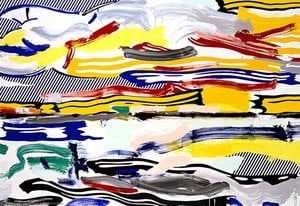
Lichtenstein’s artistieke vocabulaire is direct herkenbaar: felle, primaire kleuren, dikke zwarte lijnen en vooral de Ben-Day dots – een techniek die rechtstreeks werd overgenomen uit de mechanische reproductie van stripboeken. Deze dotten waren niet alleen decoratief; ze waren integraal aan zijn conceptuele kader. Zijn schilderijen vergrooten vaak details uit stripboeken tot monumentale schaal, waardoor kijkers geconfronteerd werden met de esthetische kwaliteiten van een kunstvorm die doorgaans als triviaal werd beschouwd. Werken zoals *Whaam!* (1963), *Drowning Girl* (1963) en *Oh, Jeff…I Love You, Too…But…* (1964) werden iconische representaties van Pop Art, die de angsten en verlangens van een snel veranderende consumptiemaatschappij vastlegden. Deze waren niet simpelweg afbeeldingen van stripboekscènes; het waren commentaar op thema’s als oorlog, romantiek en maatschappelijke verwachtingen, gefilterd door de visuele taal van massamedium. Hij streefde ernaar om elke artistieke subjectiviteit te verwijderen, zijn werk presenteerde als objectieve reflecties van de Amerikaanse samenleving – een spiegel die werd gericht op haar eigen vervaardigde realiteit. De bewuste vlakheid en het gebrek aan schilderachtige gestel benadrukten deze afstandelijkheid verder, waardoor het impersonale karakter van massaproductie werd nagebootst.
Invloeden en Historische Betekenis
Roy Lichtenstein’s invloed strekt zich ver buiten de wereld van schilderkunst uit. Zijn innovatieve gebruik van commerciële technieken en appropriatie legden de weg vrij voor nieuwe generaties kunstenaars die onderzoek deden naar thema's als consumptisme, media-satelliet en culturele identiteit. De verkoop van *Masterpiece* in 2017 voor $165 miljoen bevestigde zijn positie als een van de meest succesvolle Amerikaanse kunstenaars aller tijden, maar zijn nalatenschap wordt niet alleen gedefinieerd door monetaire waarde. Hij daagde traditionele opvattingen over artistieke auteurschap en originaliteit uit, waardoor een herziening werd vereist van wat “kunst” zelf is. Zijn werk inspireert nog steeds graphic designers, illustratoren en visuele kunstenaars in verschillende disciplines.
- Belangrijkste prestaties: Pionier in de Pop Art stijl; bereikte internationale erkenning met baanbrekende tentoonstellingen.
- Bekende werken: *Whaam!*, *Drowning Girl*, *Oh, Jeff…I Love You, Too…But…*, *Masterpiece*.
- Ondermeesterschap: Beïnvloedde opkomende kunstenaars aan SUNY Oswego en Rutgers University.
Lichtenstein stierf op 29 september 1997 in de New Yorkse wijk Manhattan aan een longontsteking, waardoor een oeuvre achterbleef dat nog steeds even relevant en provocerend is als tijdens het hoogtepunt van de Pop Art beweging. Zijn kunst dient als een krachtige herinnering aan de alomtegenwoordige invloed van massamedium en zijn vermogen om onze percepties van realiteit te vormen. Hij heeft niet alleen zijn tijd weerspiegeld; hij daagde deze actief uit, waardoor een onuitwisbare stempel op de geschiedenis van de kunst van de 20e eeuw werd gezet en die nog steeds kritische dialoog inspireert over de relatie tussen kunst, cultuur en commerce.



 Bekijk op ware grootte
 Schakel over naar print
 Verstuur
 Delen
Delen
 Details bekijken
 Gids
Gids

 Download
 Vergelijkbare items
 Röntgenonderzoek
 Diavoorstelling
 Statistieken

 Lees meer






































 De optie voor glas is alleen beschikbaar bij een formaat kleiner dan 110 cm.