

Giclée- of canvasafdruk van museumkwaliteit met een snelle productie en flexibele afwerkingsmogelijkheden. ( Bestel handgeschilderde reproductie Schakel over naar digitale afbeeldingen)





























Kies uit onze vooraf ingestelde maten die overeenkomen met de originele verhoudingen van het kunstwerk.

Voer de gewenste breedte en hoogte in, passend bij uw lijst of muur. Een afdruk kan alleen worden ingekort en nooit groter worden gemaakt dan het origineel; een formaat met andere verhoudingen zal daarom een deel van de afbeelding verliezen. Wij sturen u een digitaal mockup ter goedkeuring voordat we tot drukwerk overgaan. De afbeelding op deze pagina toont niet de werkelijke uitsnede — dit is alleen te zien op het mockup.
Wereldwijde levering () binnen 2 weken in plaats van de standaard 4/5 weken. (10 november)
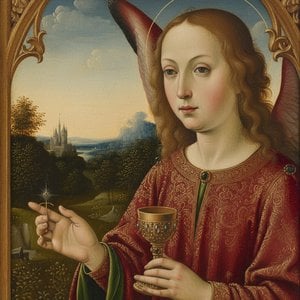
Deposition (detail)
Afmetingen reproductie
Rogier van der Weyden’s *The Descent from the Cross*, completed around 1435, stands as arguably the most influential Netherlandish painting depicting Christ's crucifixion—a monumental achievement that continues to captivate viewers centuries later. Commissioned by the Leuven Schutterij guild, this panel painting transcends mere representation; it embodies a profound emotional response to religious faith and exemplifies the zenith of Early Flemish artistic innovation.
Van der Weyden’s style is characterized by an unparalleled dedication to realism—a hallmark of the Northern Renaissance. He achieved this remarkable feat through meticulous attention to detail, employing a technique that prioritizes sculpted surfaces and dramatic chiaroscuro (light and shadow). Unlike many contemporaries who favored flattened perspectives, van der Weyden meticulously modeled the figures' musculature and drapery, creating an illusion of palpable physicality.
The artist’s masterful use of color—primarily reds, whites, and blues—further enhances the painting’s emotional impact. These vibrant hues are applied with remarkable precision, capturing the luminosity of flesh tones and conveying a sense of solemn grandeur. The palette is deliberately restrained yet powerfully expressive, reflecting the spiritual seriousness of the subject matter.
The painting’s genesis lies in the patronage of the Leuven Schutterij guild—a civic militia organization dedicated to defending the city. This commission underscores the importance of religious symbolism within medieval society, where depictions of Christ's suffering served as potent reminders of divine compassion and redemption. The Schutterij’s desire for a masterpiece that would inspire devotion is palpable in every brushstroke.
Contemporary art historians like Erwin Panofsky recognized *The Descent from the Cross*'s significance, noting its unparalleled pictorial brilliance and emotional depth. Panofsky famously declared that “It may be said that the painted tear, a shining pearl born of the strongest emotion,” epitomized what Italians most admired in Early Flemish painting—a testament to van der Weyden’s artistic genius.
Beyond its technical virtuosity, *The Descent from the Cross* is laden with symbolic meaning. The depiction of Christ's body in the T-shape—a deliberate reference to the crucifixion itself—emphasizes his sacrificial role. Furthermore, the anguished expressions of Joseph of Arimathea and Nicodemus convey profound sorrow and humility—mirroring the universal human experience of grief.
The meticulous rendering of drapery—particularly Mary’s robe—demonstrates van der Weyden's mastery of textile representation. Each fold and wrinkle is rendered with painstaking accuracy, conveying a sense of texture and movement that contributes to the painting’s overall dramatic effect. Ultimately, *The Descent from the Cross* transcends mere visual spectacle; it communicates an enduring message of faith and compassion—a timeless masterpiece that continues to inspire awe and contemplation.
Het Portrait-formaat van "Deposition (detail)" door Rogier van der Weyden wordt aanbevolen voor een Living Room. Formaat en ruimte samen bepalen de ideale plaatsing van een reproductie.
"Deposition (detail)" verbeeldt religious scene, crucifixion, mary magdalene, memento mori, emotional expression, medieval art, detail painting, terwijl de bekende thema's van Rogier van der Weyden emotional realism, flemish tradition, christian piety, funerary symbolism, symbolic grief, devotional art, artist’s peak achievement, masterpiece zijn. Een vergelijking tussen beide laat zien hoe het werk zich verhoudt tot de gebruikelijke onderwerpen van de kunstenaar.
"Deposition (detail)" door Rogier van der Weyden kan worden gedownload via de Downloaden-pagina van het kunstwerk, als een digitale afbeelding in hoge resolutie om te downloaden.


1400 - 1464 , België

Explore the exquisite precision of Flemish painting. From Jan van Eyck to Robert Campin, discover the revolutionary oil techniques and rich symbolism that defined the Northern Renaissance and continue to inspire fine art collectors today.

Delve into the luminous revolution of Early Netherlandish painting. Unveil how Jan van Eyck and Flemish masters pioneered oil techniques to achieve unparalleled depth, sacred symbolism, and breathtaking realism, forever shaping the legacy of Western art history.

Embark on a journey through the exquisite precision of Flemish Art. Discover the pioneering oil techniques, profound symbolism, and luminous realism that define the Northern Renaissance masters in this expert guide for art enthusiasts.
Embark on a journey through the luminous world of Early Netherlandish art. Discover the revolutionary oil techniques, microscopic realism, and sacred symbolism used by masters like Jan van Eyck to redefine Western art history in this expert-led guide.
 Voorvertoning
 Verstuur
 Delen
Delen
 Details bekijken
 Gids
Gids

 Download
 Vergelijkbare items
 Röntgenonderzoek
 Diavoorstelling
 Vraag & antwoord
 Statistieken


 Lees meer









 De optie voor glas is alleen beschikbaar bij een formaat kleiner dan 110 cm.


