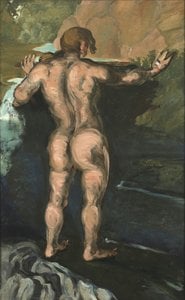
1959
1959 122.0 x 71.0 cm
Koop een digitale afbeelding in hoge resolutie met verbeterde kwaliteit, die veel superieur is aan de online voorvertoning.
Elk bestand wordt met uiterste precisie voorbereid door onze interne specialisten, met behulp van geavanceerde tools en deskundige handmatige retouche. Wij garanderen dat elke afbeelding een uitzonderlijke helderheid, nauwkeurige kleurweergave en verfijnde details bezit.
Het uiteindelijke bestand wordt binnen 72 uur per e-mail geleverd, geoptimaliseerd voor direct gebruik in professionele, redactionele en printomgevingen. Dit is dezelfde kwaliteit waarop vooraanstaande designstudio's, uitgevers en galerieën vertrouwen.
Download een bestand met hoge resolutie voor persoonlijke weergave, afdrukken en creatieve projecten. ( Bestel print Bestel handgeschilderde reproductie)
Wanneer u kiest voor WahooArt.com, ontvangt u niet alleen een afbeelding – u krijgt een professioneel verbeterd digitaal kunstwerk, met precisie vervaardigd en voorzien van een tevredenheidsgarantie. Dit is alles wat automatisch bij uw bestelling is inbegrepen:

Uw hoogwaardige digitale afbeeldingsbestand wordt binnen 72 uur na bestelling naar u gemaild – klaar voor direct gebruik.

Uw kunstwerk wordt professioneel geoptimaliseerd met behulp van geavanceerde AI-tools en handmatige bewerkingen, waardoor maximale details, helderheid en kleurnauwkeurigheid worden gegarandeerd.

Je bestand per ongeluk verwijderd of kwijtgeraakt? Geen zorgen – we sturen het u op elk gewenst moment gratis opnieuw toe.

Geniet direct van uw kunstwerk zonder invoerrechten, belastingen of verzendkosten – digitale downloads zijn altijd belastingvrij.

Met behulp van professionele hulpmiddelen en kleurbeheer zorgen wij ervoor dat uw digitale afbeelding de originele kleuren zo nauwkeurig mogelijk weergeeft.

Als u niet tevreden bent met uw digitale afbeelding, passen wij deze aan of storten wij 100% terug binnen 100 dagen - zonder vragen te stellen.

Niet tevreden? Ontvang een volledige terugbetaling binnen 100 dagen na ontvangst van uw digitale bestand - zonder vragen te stellen.

Koop 3 afbeeldingen, bespaar 10% - Koop 5, bespaar 15% - Koop 10+, bespaar 20%. Ideaal voor creatieve projecten, galerieën en bureaus.

Robert Andrew Parker (1927–2023) emerged as a singular, evocative voice in the landscape of American art, weaving a career that spanned over seven decades of profound creativity. Born in Norfolk, Virginia, Parker’s early life was marked by both fragility and resilience. Afflicted with tuberculosis as a child, his family relocated to the arid climates of New Mexico in hopes of restoring his health. This period of isolation, though born of necessity, became a foundational era for his artistry; unable to attend traditional school, he spent his formative years sketching and painting under the gentle tutelage of his mother, an amateur artist who nurtured his burgeoning talent. It was within this quiet, observant childhood that Parker first learned to translate the world around him into visual language, a skill that would later define his mastery of emotion and atmosphere.
His formal journey into the heart of American modernism led him to the Art Institute of Chicago, where he earned his bachelor's degree in 1952. This academic rigor, combined with formative experiences at the Skowhegan School of Painting and Sculpture, provided him with a sophisticated toolkit of technique and experimentation. Parker’s professional trajectory was nothing short of cinematic; in 1956, Metro-Goldwyn-Mayer recruited him to assist in the production of the biographical film Lust for Life. In a remarkable display of technical prowess, Parker’s hands were used to simulate the brushstrokes of Vincent van Gogh, creating authentic-looking replicas of masterpieces like Wheatfield with Crows to serve as backdrops for the film. This unique intersection of fine art and cinema foreshadowed his lifelong ability to blend reality with a heightened, almost surreal, sense of perception.
Parker’s artistic identity was deeply intertwined with the improvisational spirit of jazz music. Much like the legendary musicians he admired—including Thelonious Monk, Duke Ellington, and Dave Bracing—Parker approached the canvas with a sense of rhythmic intuition. His work often mirrored the syncopation of jazz, capturing fleeting moments of feeling through a distinctive expressionist lens. This connection was not merely thematic but structural; his ability to distill complex narratives into visually arresting images allowed him to become one of the most sought-after illustrators of his era. From the sophisticated pages of The New Yorker and Sports Illustrated to iconic album covers for jazz giants, Parker’s aesthetic permeated the very fabric of mid-century American visual culture.
Technically, Parker was a master of diverse media, moving seamlessly between the delicate transparency of watercolors and the tactile, structural depth of woodblock printing. His prints, such as the hauntingly beautiful Man Sitting, A (1962), demonstrate a sophisticated use of muted palettes and deliberate compositions to evoke themes of isolation, melancholy, and even artificiality. In other works, like the whimsical Bulldog in a Chair 2, he displayed a capacity for playfulness and Naive Art influences, utilizing bold colors and simplified forms to create a sense of charm and spontaneity. This duality—the ability to pivot from profound psychological depth to lighthearted whimsy—is what makes his oeuvre so endlessly captivating.
The significance of Robert Andrew Parker’s contribution to American art is cemented by both his critical acclaim and his remarkable personal perseverance. In 1970, he received the prestigious Caldecott Honor for his illustrations in Pop Corn and Ma Goodness, a testament to his ability to communicate complex emotions to even the youngest of audiences. His career was characterized by an unrelenting commitment to the craft; even as he faced the challenges of macular degeneration in his later years, Parker refused to let his vision dim. He continued to produce work well into his nineties, proving that the artist's drive is often independent of physical limitation.
Looking back upon his vast body of work, several key elements define his historical importance:
Robert Andrew Parker remains a vital figure for collectors and historians alike. His work does not merely represent objects or figures; it captures the "quiet intensity" of the human condition, inviting every viewer to linger in the shadows and light of his beautifully rendered worlds.

1927 -

 Voorvertoning
 Verstuur
 Delen
Delen
 Details bekijken

 Download
 Vergelijkbare items
 Röntgenonderzoek
 Diavoorstelling
 Lees meer