Voorvertoning Bekijk in AR Schakel over naar print Schakel over naar digitale afbeeldingen Verstuur
Details bekijken Gids Toevoegen aan favorieten Download Vergelijkbare items Röntgenonderzoek Diavoorstelling Q&A Statistieken

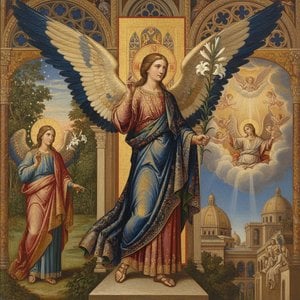
L'ANNONCIATION

Experience the serene beauty of Guido Reni's 'The Annunciation,' a Baroque masterpiece depicting Mary's acceptance of divine grace with exquisite detail and vibrant colors.

Ontdek Guido Reni (Le Guide), een meester van de Barok! Verken zijn religieuze & mythologische werken, invloedrijke stijl en nalatenschap in Italië. Bekijk reproducties.

Handgemaakte olieverfreproductie

Met de hand geschilderd in olieverf op canvas in uw gewenste maat en lijst, op bestelling gemaakt door onze kunstenaars. ( Schakel over naar print Schakel over naar digitale afbeeldingen)

Corner sample of the P118B picture frame: gegoten polystyreen, 5 cm wide and 3 cm thick
P118B €10
Corner sample of the P118H picture frame: gegoten polystyreen, 5 cm wide and 3 cm thick
P118H €10
Corner sample of the P118W picture frame: gegoten polystyreen, 5 cm wide and 3 cm thick
P118W €10
Corner sample of the P438Z picture frame: gegoten polystyreen, 5.5 cm wide and 3.5 cm thick
P438Z €10
Corner sample of the P508JH picture frame: gegoten polystyreen, 7 cm wide and 3.5 cm thick
P508JH €12
Corner sample of the P508YH picture frame: gegoten polystyreen, 7 cm wide and 3.5 cm thick
P508YH €12
Corner sample of the P805H picture frame: gegoten polystyreen, 5 cm wide and 3.5 cm thick
P805H €10
Corner sample of the P805Z picture frame: gegoten polystyreen, 5 cm wide and 3.5 cm thick
P805Z €10
Corner sample of the P919BZ picture frame: gegoten polystyreen, 7 cm wide and 3.5 cm thick
P919BZ €10
Corner sample of the P919G picture frame: gegoten polystyreen, 7 cm wide and 3.5 cm thick
P919G €10
Corner sample of the P919XJ picture frame: gegoten polystyreen, 7 cm wide and 3.5 cm thick
P919XJ €10
Corner sample of the P959ZH picture frame: gegoten polystyreen, 5 cm wide and 3 cm thick
P959ZH €10
Corner sample of the P968JZ picture frame: gegoten polystyreen, 6 cm wide and 4 cm thick
P968JZ €12
Corner sample of the W106C picture frame: massief hout, 5 cm wide and 3 cm thick
W106C €8
Corner sample of the W218G picture frame: massief hout, 5 cm wide and 3 cm thick
W218G €10
Corner sample of the W218JH picture frame: massief hout, 5 cm wide and 3 cm thick
W218JH €8
Corner sample of the W218Y picture frame: massief hout, 5 cm wide and 3 cm thick
W218Y €10
Corner sample of the W307PJ picture frame: massief hout, 6 cm wide and 3 cm thick
W307PJ €10
Corner sample of the W316G picture frame: massief hout, 6 cm wide and 3 cm thick
W316G €10
Corner sample of the W316PJ picture frame: massief hout, 6 cm wide and 3 cm thick
W316PJ €8
Corner sample of the W316Y picture frame: massief hout, 6 cm wide and 3 cm thick
W316Y €10
Corner sample of the W398PJ picture frame: massief hout, 5 cm wide and 3 cm thick
W398PJ €8
Corner sample of the W4111J picture frame: massief hout, 6.5 cm wide and 3.5 cm thick
W4111J €10
Corner sample of the W500HY picture frame: massief hout, 7 cm wide and 5 cm thick
W500HY €15
Corner sample of the W500JH picture frame: massief hout, 7 cm wide and 5 cm thick
W500JH €15
Corner sample of the W692G picture frame: massief hout, 8 cm wide and 4 cm thick
W692G €12
Corner sample of the W849H picture frame: massief hout, 5 cm wide and 3 cm thick
W849H €8
Corner sample of the W940BG picture frame: massief hout, 7.5 cm wide and 4.5 cm thick
W940BG €15
Corner sample of the W953PJ picture frame: massief hout, 6 cm wide and 3.5 cm thick
W953PJ €8

Standaardformaat
op maat gemaakt
CM
INCH

Kies uit onze vooraf ingestelde maten die overeenkomen met de originele verhoudingen van het kunstwerk.

breedte
hoogte

Voer de breedte en hoogte in die u nodig heeft, passend bij uw lijst of uw muur. Omdat dit handgeschilderd is, kan de kunstenaar bij een afmeting met een andere beeldverhouding iets meer rondom het schilderij schilderen of juist iets meer weglaten — u kiest zelf. Wij sturen u een digitaal mockup ter goedkeuring voordat het schilderwerk begint. De afbeelding die op deze pagina wordt getoond, is niet het uiteindelijke resultaat — alleen de mockup geeft dit weer.

Voorbeelden van aanpassingen: Vervang het gezicht met een eigen foto; Voeg een huisdier toe (bijv. vervang de kat door een hond); Verwerk een verborgen boodschap in de achtergrond; Wijzig het landschap of andere elementen in de achtergrond.
Na de bestelling zal het team van WahooArt.com per e-mail contact opnemen met de klant voor instructies en een mockup-voorbeeld sturen.

Wereldwijde levering () binnen 3 tot 4 weken in plaats van de standaard 5 weken. (29 oktober). Zonder concessies aan de kwaliteit.

Gratis wereldwijde expressverzending
Hoogwaardig linnen canvas
Volledige verzendverzekering
Garantie op terugbetaling van invoerrechten
Garantie op exacte kleurweergave
Retourbeleid van 100 dagen (alleen bij defecten)
100% Geld-terug-garantie
Korting bij meerdere afnames

Totaalprijs

€ 328

L'ANNONCIATION

Druktechniek

Afmetingen reproductie

-

Eindtotaal

€ 328

Snelle feiten

  • Artistic style: Elegant Classicism
  • Subject or theme: The Annunciation
  • Artist: Guido Reni

Kunstquiz

Er is slechts één goed antwoord op elke vraag.

Vraag 1:
What is the primary subject matter depicted in this artwork?
Vraag 2:
Which artistic period is the style of this painting most characteristic of?
Vraag 3:
According to the description, what colors dominate the color palette of the artwork?
Vraag 4:
The angel's presence in the scene primarily represents what concept?
Vraag 5:
Which artist, known for his elegant classicism, is associated with this work?

The Divine Encounter: An Exploration of L'Annunciation

To stand before an image like this is to step across the threshold of time and into a moment suspended by divine grace. This depiction of L'Annunciation captures one of Christianity’s most profound narratives—the instant the Angel Gabriel announces to Mary that she shall conceive the Son of God. The overall impression is one of breathtaking serenity mingled with palpable, otherworldly energy. It is not merely a portrait of an event, but a meditation on humility meeting omnipotence.

The composition itself guides the eye through a carefully orchestrated drama. We are drawn into the central tableau where Mary and the angel kneel in postures of profound reception. The artist has masterfully balanced the verticality of the scene, using the upper reaches filled with luminous clouds to suggest the celestial realm from which the message descends. This careful arrangement creates an immediate sense of balance, yet within that balance lies the tension of monumental change.

Mastery in Baroque Classicism

The style speaks eloquently of the late Renaissance merging into the burgeoning drama of the Baroque period. While retaining the idealized forms and classical restraint associated with earlier masters, there is an undeniable emotional current here—a hallmark of Guido Reni’s genius. His touch lends the scene an elegant classicism that never sacrifices spiritual depth for mere ornamentation. Observe the drapery; the soft, flowing lines defining Mary's deep blue robes against the contrasting red inner garment are not just decorative elements, but carriers of emotion and movement. The artist achieves a remarkable illusion of weightlessness in the fabric while simultaneously grounding the figures with classical poise.

Light, Texture, and Divine Radiance

Technically, the painting is a testament to meticulous oil application. The handling of light is perhaps its most captivating feature. It does not merely illuminate; it radiates. A divine luminescence seems to emanate from above, catching the highlights on the figures' faces and lending an ethereal glow to the voluminous clouds. This masterful use of chiaroscuro creates incredible depth, pulling the viewer into a space that feels both tangible in the foreground and infinitely deep in the background. The contrast between the smooth, almost porcelain texture suggested on the skin and the feathery softness implied in the angel’s wings speaks volumes about the artist's technical virtuosity.

Symbolism of Acceptance

Beyond the aesthetic pleasure, the work resonates deeply with its symbolism. Mary’s gesture—the poised acceptance—is the emotional anchor of the piece, embodying perfect human receptivity to divine will. The angel serves as the conduit for blessing and communication. For the collector or admirer, this painting offers more than just decoration; it offers a focal point for contemplation. It speaks to themes of grace, obedience, and the sublime mystery that underpins faith. To reproduce such an image is to invite a sense of sacred calm into any space.

Veelgestelde vragen

Waarvoor wordt een afdruk van "L'ANNONCIATION" aanbevolen?

Een reproductie van "L'ANNONCIATION" door Guido Reni wordt aanbevolen voor Statement. Dit advies is gebaseerd op het onderwerp, de sfeer en de kleuren van het werk.

Welke emotie straalt het Baroque Classicism-werk "L'ANNONCIATION" uit?

Binnen de Baroque Classicism-stroming is "L'ANNONCIATION" vastgelegd met een Spiritual toon.

Is "L'ANNONCIATION" door Guido Reni een portret, landschap of vierkante compositie?

Het formaat van "L'ANNONCIATION" is Portrait. Dit is handig bij het plannen van de plek waar een reproductie zal worden geplaatst.


Biografie kunstenaar

Guido Reni (Le Guide): Leven en Erfgoed

Guido Reni, ook bekend als Le Guide, werd in 1575 geboren in Bologna, Italië. Hij was het enige kind van Daniele Reni, een muzikant, en Ginevra Pozzi, eveneens uit een muzikale familie. Deze achtergrond wekte zijn waardering voor harmonie en vorm, die later zijn artistieke stijl zouden beïnvloeden. Al op negenjarige leeftijd begon Guido zijn leerperiode onder Denis Calvaert, een Vlaamse schilder die in Bologna werkte. Hij studeerde samen met andere ambitieuze kunstenaars Albani en Domenichino, waardoor hij een sterke basis legde in klassieke principes.

Artistieke Carrière en Ontwikkeling

Reni’s artistieke carrière strekte zich uit over verschillende Italiaanse steden, waaronder Rome, Napels en zijn geboortestad Bologna. Zijn vroeë werk toonde de invloed van Calvaert en de Carracci-broers, met nadruk op anatomische nauwkeurigheid en dramatische compositie. Reni ontwikkelde echter al snel een eigen stijl die gekenmerkt werd door elegant classicisme, verfijnde techniek en emotionele intensiteit. Hij werd een dominante figuur in de Bolognese School, bekend om haar nadruk op academische training en geïdealiseerde vormen. Zijn werk kenmerkte zich door een voortdurende zoektocht naar perfectie, waarbij hij vaak schetsen herwerkte en details verfijnde tot in het kleinste detail.

Belangrijkste Invloeden

  • Denis Calvaert: Reni’s eerste leraar gaf hem een sterke basis in Vlaamse schildertechnieken.
  • De Carracci-familie (Annibale, Agostino, Ludovico): Hun nadruk op klassieke kunst en anatomisch onderzoek had een grote invloed op zijn artistieke ontwikkeling. Ze stimuleerden hem om de meesters uit de Renaissance te bestuderen en hun idealen in zijn eigen werk te verwerken.
  • Raphael: Reni bewonderde Raphaëls gratie en harmonieuze composities, die duidelijk zichtbaar zijn in veel van zijn werken. Hij probeerde de sereniteit en evenwicht van Raphael’s stijl na te bootsen, maar voegde er zijn eigen emotionele intensiteit aan toe.

Belangrijkste Werken en Artistieke Stijl

Reni's oeuvre omvat een breed scala aan onderwerpen, waaronder religieuze scènes, mythologische verhalen en allegorische voorstellingen. Enkele van zijn meest gevierde werken zijn:

  • Apollo op de Zonnekar (Albertina, Wenen): Een dynamische tekening die Reni’s beheersing van de Barokstijl laat zien. Het werk toont Apollo als een krachtige en majestueuze figuur, omringd door bewegende wolken en stralende lichteffecten.
  • Sint Jacobus de Oudere: Demonstreert zijn vaardigheid in het vastleggen van religieuze vurigheid en menselijke emotie. De heilige wordt afgebeeld als een krachtige en toegewijde figuur, vol devotie en spirituele kracht.
  • Atalanta en Hippomenes (Paleis van Capodimonte, Napels): Een voorbeeld van zijn mythologische schilderijen, gekenmerkt door gracieuze figuren en dramatisch verhaalvertellen. Het werk toont het moment waarop Hippomenes Atalanta afleidt met gouden appels tijdens een race.
  • Sint Hiëronimus: Een bewijs van Reni’s vermogen om compositie te combineren met emotionele diepte. De heilige wordt afgebeeld in contemplatie, omringd door symbolische objecten en een serene atmosfeer.
  • Tarantella (Paleis van Capodimonte, Napels): Illustreert zijn invloed op de Italiaanse volksdanscultuur. Het werk toont een levendige scène met dansers in traditionele kleding, vol energie en beweging.

Reni’s stijl wordt vaak omschreven als eclectisch classicisme. Hij combineerde de precisie van klassieke kunst met de dynamiek en emotie van de Barokperiode. Zijn figuren zijn doorgaans geïdealiseerd, bezitten een serene schoonheid en gracieuze beweging. Hij was meester in het gebruik van clair-obscur, waarbij hij licht en schaduw gebruikte om dramatische effecten te creëren en de aandacht van de kijker te vestigen op belangrijke details.

Historische Betekenis en Erfgoed

Guido Reni speelde een cruciale rol in het vormgeven van de ontwikkeling van de Hoge Barokstijl in Italië. Hij beïnvloedde generaties kunstenaars met zijn verfijnde techniek, elegante composities en emotionele diepte. Zijn werk is te vinden in prominente musea over de hele wereld, waaronder het Paleis van Capodimonte in Napels. Reni’s nalatenschap strekt zich verder uit dan schilderkunst; hij was ook een dichter en een gerespecteerde intellectuele figuur in zijn tijd.

Zijn kunst blijft kunstenaars en kunstliefhebbers inspireren, waardoor zijn plaats als een van de belangrijkste schilders van de 17e eeuw wordt verstevigd. Zijn invloed is te zien in latere Barokkunstenaars die streefden naar het nabootsen van zijn gratie en emotionele kracht.

Overlijden

Guido Reni overleed in Bologna in 1642, en liet een rijke artistieke erfenis achter die tot op de dag van vandaag publiek blijft boeien. Zijn werken getuigen van zijn meesterschap, zijn passie voor klassieke schoonheid en zijn vermogen om menselijke emoties vast te leggen.

Guido Reni

Guido Reni

1575 - 1642 , Italië

Belangrijkste feiten

  • Artistieke Stroming: High Baroque
  • Bekende Werken:
    • Apollo's wagen
    • St. Jacobus de Grootste
    • Atalanta en Hippomenes
  • Beïnvloed Door:
    • Denis Calvaert
    • Carracci familie
  • Geboortedatum: 1575
  • Geboorteplaats: Bologna, Italië
  • Invloed Op: Generaties kunstenaars
  • Nationaliteit: Italiaans
  • Overlijdensdatum: 1642
  • Volledige Naam: Guido Reni (Le Guide)