x
VoorvertoningVoorvertoning Bekijk in ARBekijk in AR Bestel handgeschilderde reproductie Bestel handgeschilderde reproductieKoop afbeelding Koop afbeelding VerstuurVerstuur
Details bekijkenDetails bekijken Toevoegen aan favorieten Toevoegen aan favorieten DownloadDownload Vergelijkbare itemsVergelijkbare items RöntgenonderzoekRöntgenonderzoek DiavoorstellingDiavoorstelling

La Raza Blanca

René Magritte's "La Raza Blanca" fascineert met zijn surrealistische stijl en eenzaam figuur gehuld in witte stof. Een kunstwerk dat vragen oproept over perceptie en de aard van werkelijkheid – een meesterlijke combinatie van kleur en vorm!

René Magritte (1898-1967): Belgische surrealist meester van dromerige kunstwerken, bekend om 'De Trecheerschap van Beelden' en 'Tijd in Beweging'. Ontdek zijn mysterieuze wereld!

Giclée / Kunstafdrukken

Giclée- of canvasafdruk van museumkwaliteit met een snelle productie en flexibele afwerkingsmogelijkheden. (Bestel handgeschilderde reproductie Bestel handgeschilderde reproductieKoop afbeelding Koop afbeelding)

P118B $10
P118H $10
P118W $10
P438Z $10
P508JH $12
P508YH $12
P805H $10
P805Z $10
P919BZ $10
P919G $10
P919XJ $10
P959ZH $10
P968JZ $12
W106C $8
W218G $10
W218JH $8
W218Y $10
W307PJ $10
W316G $10
W316PJ $8
W316Y $10
W398PJ $8
W4111J $10
W500HY $15
W500JH $15
W692G $12
W849H $8
W940BG $15
W953PJ $8

Standaardformaat
op maat gemaakt
CM
INCH

Kies uit onze vooraf ingestelde maten die overeenkomen met de originele verhoudingen van het kunstwerk.

breedte
hoogte

U kunt uw eigen afmetingen opgeven om in een specifieke lijst of ruimte te passen. Als de door u gekozen maat niet overeenkomt met de proporties van het originele kunstwerk, zullen wij de afbeelding bijsnijden of uitbreiden met een gespiegelde of effen rand. Een digitaal mockup wordt ter goedkeuring naar u verzonden voordat de productie begint.
Houd er rekening mee dat de preview op het scherm de werkelijke bijsneding of uitbreiding niet weergeeft. Alleen de mockup toont de uiteindelijke compositie nauwkeurig.
Hoewel aangepaste maten beschikbaar zijn, raden wij aan een afmeting uit de vooraf bepaalde lijst te kiezen om de originele proporties te behouden.

Wereldwijde levering () binnen 2 weken in plaats van de standaard 4/5 weken. (5 september)

why_choose_icon
Gratis wereldwijde expressverzending
why_choose_icon
Hoogwaardig linnen canvas
why_choose_icon
Volledige verzendverzekering
why_choose_icon
Garantie op terugbetaling van invoerrechten
why_choose_icon
Garantie op exacte kleurweergave
why_choose_icon
Retourbeleid van 60 dagen (alleen bij defecten)
why_choose_icon
100% Geld-terug-garantie
why_choose_icon
Korting bij meerdere afnames

Totaalprijs

$ 69

reproduction

La Raza Blanca

Giclée / Kunstafdrukken

Afmetingen reproductie

-

Eindtotaal

$ 69

Snelle feiten

  • Notable elements or techniques: Fragmented figure, dreamlike
  • Artistic style: Precise rendering
  • Subject or theme: Perception, identity
  • Influences:
    • Cubism
    • Futurism
  • Artist: René Magritte
  • Title: La raza blanca

Kunstquiz

Er is slechts één goed antwoord op elke vraag.

Vraag 1:
René Magritte is most closely associated with which artistic movement?
Vraag 2:
What is a prominent characteristic of the figure depicted in *La Raza Blanca*?
Vraag 3:
The title *La Raza Blanca* ('The White Race') adds what element to the artwork?
Vraag 4:
What technique is *La Raza Blanca* presumed to be created with?
Vraag 5:
Magritte's approach to Surrealism differed from others in that he aimed to create…?

La Raza Blanca: A Dreamscape of Perception

René Magritte’s *La Raza Blanca* (The White Race) isn't merely a painting; it’s an invitation to confront the very essence of how we perceive reality. Executed with meticulous detail, this oval-shaped work transcends simple representation, drawing viewers into a realm where logic dissolves and psychological exploration takes center stage. The artwork presents a fragmented human form—an assemblage of anatomical elements that defy conventional understanding. It isn't a portrait in the traditional sense, but rather a carefully constructed puzzle of legs supporting a torso, culminating in a head featuring an unsettlingly placed eye, ear, and mouth. This deliberate disjointedness, coupled with Magritte’s rejection of standard perspective—flattening the image within its oval frame—creates a contained, almost claustrophobic space that intensifies the focus on this enigmatic figure.

The Surrealist Vision and Masterful Technique

Rooted firmly in the Surrealist movement, *La Raza Blanca* embodies the era’s fascination with illogical juxtapositions and the rejection of rational thought. However, Magritte distinguishes himself through a precise, almost clinical rendering of imagery. The technique appears to be watercolor or gouache on paper, evidenced by the soft blending of colors and subtle tonal variations achieved through delicate layering. Lines are used sparingly but effectively, defining contours without harshness, contributing to the overall smoothness and ethereal quality of the piece. This meticulous approach is key to Magritte’s power; he doesn’t rely on chaotic brushstrokes or expressive textures, but rather on a controlled precision that amplifies the unsettling nature of his subject matter. He wasn’t interested in depicting dreams themselves, but in creating dreamlike images while fully conscious—a distinction crucial to understanding his unique contribution to Surrealism.

Historical Echoes and Symbolic Ambiguity

To understand *La Raza Blanca*, one must consider the historical context of its creation. René Magritte (1898-1967) navigated an artistic journey that began with Impressionism and Cubism before fully embracing Surrealism in the mid-1920s. His work emerged during a period of profound societal upheaval following World War I, a time when artists questioned established norms and sought new ways to express the complexities of the human condition. Magritte’s ability was to imbue everyday objects with unsettling strangeness, challenging our perceptions of reality. The symbolism within *La Raza Blanca* is deliberately open-ended, inviting multiple interpretations. The prominent eye, ear, and mouth suggest a focus on perception—seeing, hearing, and experiencing the world. The fragmented nature of the figure could represent the fractured self, or perhaps the limitations of human understanding. Even the title itself, “The White Race,” adds another layer of complexity, potentially alluding to themes of identity, purity, or even societal constructs – a provocative choice that resists easy answers.

Emotional Resonance and Aesthetic Appeal

*La Raza Blanca* evokes a sense of unease and mystery. The muted color palette, dominated by dark tones punctuated by flashes of yellow and red, contributes to the painting’s somber mood. Despite its unsettling subject matter, the artwork possesses a compelling aesthetic appeal due to Magritte’s masterful technique and precise execution. It is a piece that lingers in the mind long after viewing, prompting introspection and challenging our assumptions about reality. This work would be an exceptional addition to any collection seeking thought-provoking art with a strong visual presence, or for interior design projects aiming for a sophisticated and intellectually stimulating atmosphere. Its enigmatic quality invites ongoing dialogue and contemplation, making it not just a beautiful object but a catalyst for deeper understanding.

  • Artist: René Magritte
  • Born Year: 1898
  • Death Year: 1967
  • Birth City: Lesennes
  • Birth Country: Belgium
Additional Research:
  • Explore René Magritte's surreal 'La Raza Blanca,' a captivating and unsettling painting featuring fragmented figures & symbolic imagery. A thought-provoking masterpiece!
  • René Magritte (1898-1967): Explore the surreal world of this Belgian master! Discover iconic paintings like 'The Lovers,' challenging reality & perception.
  • This painting belongs to a series of four works by René Magritte, all titled The White Race. In each he composed sculpturesque figures from isolated body parts and facial features, disrupting how bodies are usually seen. By deconstructing and reassembling human appendages, the artist defamiliarized something so ubiquitous as to be easily overlooked—the female nude, so often white in Western art—to challenge conventional understandings of bodily forms.
  • Created after the 1937 original oil on canvas *La race blanche* by René Magritte (1898-1967), this original color lithograph was published and printed by Philippe Moreno, Paris in 2003. This work is signed 'Magritte' in facsimile in graphite color in the lower right margin and signed in pencil in the lower left margin by the representative of ADAGP representing the Magritte Succession, Mr. Charly Herscovici. Numbered from the edition of 300 in pencil in the lower left margin (from the total edition of 360, 300 examples numbered 1-300, 45 artist’s proofs numbered 1-45, and 15 copies reserved for the Succession Magritte), this work is stamped with the ADAGP blindstamp in the lower left margin and the Succession Magritte blindstamp in the lower right margin.
  • Catalogue Raisonné & COA:\nRené Magritte *La race blanche* is fully documented and referenced in the below catalogue raisonnés and texts (copies will be enclosed as added documentation with the invoices that will accompany the final sale of the work).\n1. Whitfield, Sarah. Magritte. London: The South Bank Centre, 1992. Original 1937 oil on canvas illustrated as no. 78.\n2. A Certificate of Authenticity will accompany this work.

Biografie van de kunstenaar

Early Life and the Seeds of Surrealism

René Magritte, geboren René François Ghislain Magritte op 21 november 1898 in Lessines, België, kwam in een wereld terecht die zijn enigmatische artistieke visie diepgaand zou vormen. Zijn vroege jaren werden gekenmerkt door een onheilspellend incident – de zelfmoord van zijn moeder toen hij slechts dertien jaar oud was. Het beeld van haar lichaam dat uit de Samber werd opgegraven, met haar jurk die haar gezicht bedekte, werd een spookachtig motief dat subtiel terugkeerde in zijn latere werk, zich manifesteerde in verduisterde figuren en een voortdurende zoektocht naar verborgen realiteiten. Deze vroege trauma’s zaaiden een fascinatie met mysterie, verlies en de verstikkende kracht van wat onthuld blijft. Hoewel details van zijn jeugd enigszins ongrijpbaar zijn, is duidelijk dat deze vormende ervaring de basis legde voor zijn levenslange vraaging naar perceptie en representatie. Hij begon op tienjarige leeftijd met tekenen, wat een innige neiging tot visuele expressie onthulde, maar experimenteerde aanvankelijk met Impressionisme voordat hij een pad insloeg dat hem zou leiden tot het worden van een van de meest significante figuren in de Surrealistische kunst.

Artistic Development and Influences

Magritte’s artistieke reis was niet direct of rechtlijnig. Hij studeerde aan de Académie Royale des Beaux-Arts in Brussel, maar vond de traditionele methoden daar verstikkend. Zijn vroege werk experimenteerde met Futurisme en Cubisme, waardoor elementen van deze avantgardistische bewegingen werden opgenomen, maar uiteindelijk weigerde hun puur formele bezorgdheid. Het was pas in 1922, toen hij de schilderij *The Song of Love* van Giorgio de Chirico ontmoette, dat Magritte een resonatie ontdekte die zijn artistieke koers onherstelbaar zou veranderen. De Chirico’s dromerige landschappen en verontrustende juxtaposities openden voor Magritte een nieuwe manier van kijken – een wereld waar het bekende vreemd kon worden gemaakt, en het alledaagse met diepe mystiek werd ingezaaid. Dit ontmoeting leidde tot zijn toewijding aan Surrealisme, hoewel hij vaak een unieke afstand behield van de meer expliciet psychologische of automatische aspecten ervan. Hij prefereerde een nauwkeurige, bijna klinische precisie in zijn schilderkunst, waarbij hij realistische technieken gebruikte om illogische scenario’s weer te geven.

The Heart of Surrealism: Challenging Reality

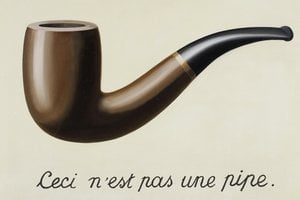
Vanaf 1926 had Magritte zich volledig ingezet voor de principes van Surrealisme, waarbij hij *Le Jockey Perdu (The Lost Jockey)* produceerde, die breed wordt beschouwd als zijn eerste echt surrealistische werk. Echter, zijn soort Surrealisme was uniek. Hij was niet geïnteresseerd in het verkennen van het onbewuste door vrije associatie of dromerige beelden zoals sommige van zijn tijdgenoten. In plaats daarvan zocht Magritte naar een manier om de perceptie van de werkelijkheid uit te dagen door alledaagse objecten in onverwachte contexten te presenteren, waardoor kijkers werden aangemoedigd hun aannames over de wereld om hen heen in twijfel te trekken. Iconische werken zoals *The Treachery of Images (This is not a pipe)* (1929) ontleden het relatie tussen beeld en object briljant, herinnerend ons dat een representatie nooit het ding zelf is. *Les Amants (The Lovers)* (1927-1928), met zijn verduisterde figuren, echoë de trauma’s van zijn moeder dood terwijl tegelijkertijd intimiteit en verborgenheid worden onderzocht. *Time Transfixed* (1938) presenteert een locomatief die door een bakstenen muur barst, waardoor onze perceptie van ruimte en tijd wordt verstoord. En *The Human Condition* (1933), een doek in een doek, vervaagt de grenzen tussen representatie en werkelijkheid, waardoor we worden aangemoedigd om te overwegen hoe we de wereld waarnemen en interpreteren.

Later Life, Recognition, and Enduring Legacy

Ondanks initiële moeilijkheden met erkenning, kreeg Magritte’s werk geleidelijk aan meer bekendheid, vooral in de Verenigde Staten door tentoonstellingen in 1936 en latere retrospectieve tentoonstellingen op het Museum of Modern Art (1965) en het Metropolitan Museum of Art (1992). Hij bleef politiek actief gedurende zijn hele leven, waarbij hij artistieke autonomie verdedigde. Hij bleef zijn kenmerkende stijl verfijnen, thema’s van herhaling, illusie en de kracht van taal onderzoeken in schilderijen die zowel intellectueel stimulerend als visueel aantrekkelijk zijn. Magritte stierf op 15 augustus 1967, waardoor een oeuvre achterbleef dat nog steeds kijkers wereldwijd fascineert en uitdaagt. Zijn invloed strekt zich verder uit dan de schilderkunst, beïnvloedt pop art, minimalistische kunst, conceptuele kunst en zelfs reclame en film. Vandaag de dag worden zijn schilderijen in belangrijke museumcollecties over de hele wereld gehouden, waaronder de Musées royaux des beaux-arts de Belgique in Brussel, die het Magritte Museum herbergen – gewijd geheel aan zijn werk en dat de grootste collectie van zijn creaties bezit.
  • Museum Collecties: Musées royaux des beaux-arts de Belgique, Brussels; Magritte Museum.
Magritte’s blijvende nalatenschap ligt in zijn vermogen om ons op een nieuwe manier te laten zien, om onze aannames over de werkelijkheid in twijfel te trekken en om te waarderen hoe kunst kan provoceren en wonder inspireren. Hij schilderde niet alleen beelden; hij creëerde visuele paradoxen die decennia na hun creatie nog steeds resoneren bij kijkers, waardoor zijn positie als een ware meester van Surrealisme en een sleutelfiguur in de 20e eeuwse kunst wordt versterkt.

René Magritte

René Magritte

1898 - 1967 , België

Belangrijkste feiten

  • Artistic Movement Or Style: Surrealisme
  • Artists Or Movements Influenced By This Artist:
    • Pop art
    • Minimalisme
  • Artists Who Influenced This Artist: ['Giorgio de Chirico']
  • Date Of Birth: 21 november 1898
  • Date Of Death: 15 augustus 1967
  • Full Name: René François Ghislain Magritte
  • Nationality: Belgisch
  • Notable Artworks:
    • De Lovers
    • Treurkaart
    • Tijd verstijfd
  • Place Of Birth: Lessines, België
Ontdek kunstwerken georganiseerd op thema, stijl en kenmerk.