Bekijk op ware grootte Bekijk in AR Koop handgeschilderd kunstwerk Schakel over naar digitale afbeeldingen Verstuur
Details bekijken Gids voor studentenkunstwerken Toevoegen aan favorieten Download Vergelijkbare items Röntgenonderzoek Diavoorstelling Statistieken

Madonna and Child

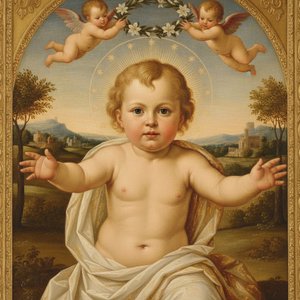
Experience the timeless beauty of Raphael's "Madonna and Child." This Renaissance masterpiece showcases serene grace & masterful composition, capturing divine love with vibrant colors & intricate detail.

Raphael (1483-1520): Een meester van de Renaissance, bekend om zijn serene Madonnen, architectuur en iconische werken zoals 'De School van Athene'. Ontdek zijn Urbino wortels & artistieke nalatenschap.

Giclée / Kunstafdrukken

Giclée- of canvasafdruk van museumkwaliteit met een snelle productie en flexibele afwerkingsmogelijkheden. ( Koop handgeschilderd kunstwerk Schakel over naar digitale afbeeldingen)

Corner sample of the P118B picture frame: gegoten polystyreen, 5 cm wide and 3 cm thick
P118B €10
Corner sample of the P118H picture frame: gegoten polystyreen, 5 cm wide and 3 cm thick
P118H €10
Corner sample of the P118W picture frame: gegoten polystyreen, 5 cm wide and 3 cm thick
P118W €10
Corner sample of the P438Z picture frame: gegoten polystyreen, 5.5 cm wide and 3.5 cm thick
P438Z €10
Corner sample of the P508JH picture frame: gegoten polystyreen, 7 cm wide and 3.5 cm thick
P508JH €12
Corner sample of the P508YH picture frame: gegoten polystyreen, 7 cm wide and 3.5 cm thick
P508YH €12
Corner sample of the P805H picture frame: gegoten polystyreen, 5 cm wide and 3.5 cm thick
P805H €10
Corner sample of the P805Z picture frame: gegoten polystyreen, 5 cm wide and 3.5 cm thick
P805Z €10
Corner sample of the P919BZ picture frame: gegoten polystyreen, 7 cm wide and 3.5 cm thick
P919BZ €10
Corner sample of the P919G picture frame: gegoten polystyreen, 7 cm wide and 3.5 cm thick
P919G €10
Corner sample of the P919XJ picture frame: gegoten polystyreen, 7 cm wide and 3.5 cm thick
P919XJ €10
Corner sample of the P959ZH picture frame: gegoten polystyreen, 5 cm wide and 3 cm thick
P959ZH €10
Corner sample of the P968JZ picture frame: gegoten polystyreen, 6 cm wide and 4 cm thick
P968JZ €12
Corner sample of the W106C picture frame: massief hout, 5 cm wide and 3 cm thick
W106C €8
Corner sample of the W218G picture frame: massief hout, 5 cm wide and 3 cm thick
W218G €10
Corner sample of the W218JH picture frame: massief hout, 5 cm wide and 3 cm thick
W218JH €8
Corner sample of the W218Y picture frame: massief hout, 5 cm wide and 3 cm thick
W218Y €10
Corner sample of the W307PJ picture frame: massief hout, 6 cm wide and 3 cm thick
W307PJ €10
Corner sample of the W316G picture frame: massief hout, 6 cm wide and 3 cm thick
W316G €10
Corner sample of the W316PJ picture frame: massief hout, 6 cm wide and 3 cm thick
W316PJ €8
Corner sample of the W316Y picture frame: massief hout, 6 cm wide and 3 cm thick
W316Y €10
Corner sample of the W398PJ picture frame: massief hout, 5 cm wide and 3 cm thick
W398PJ €8
Corner sample of the W4111J picture frame: massief hout, 6.5 cm wide and 3.5 cm thick
W4111J €10
Corner sample of the W500HY picture frame: massief hout, 7 cm wide and 5 cm thick
W500HY €15
Corner sample of the W500JH picture frame: massief hout, 7 cm wide and 5 cm thick
W500JH €15
Corner sample of the W692G picture frame: massief hout, 8 cm wide and 4 cm thick
W692G €12
Corner sample of the W849H picture frame: massief hout, 5 cm wide and 3 cm thick
W849H €8
Corner sample of the W940BG picture frame: massief hout, 7.5 cm wide and 4.5 cm thick
W940BG €15
Corner sample of the W953PJ picture frame: massief hout, 6 cm wide and 3.5 cm thick
W953PJ €8

Standaardformaat
op maat gemaakt
CM
INCH

Kies uit onze vooraf ingestelde maten die overeenkomen met de originele verhoudingen van het kunstwerk.

breedte
hoogte

Voer de breedte en de hoogte in die u nodig heeft, passend bij uw lijst of uw muur. Een afdruk kan alleen worden ingekort, nooit groter worden gemaakt dan het origineel, waardoor een formaat met een andere verhouding een deel van de afbeelding verliest. Wij sturen u een digitaal mockup ter goedkeuring voordat we iets drukken. De afbeelding op deze pagina toont niet de werkelijke uitsnede — dit is alleen te zien op het mockup.

Wereldwijde levering () binnen 2 weken in plaats van de standaard 4/5 weken. (23 oktober)

Gratis wereldwijde expressverzending
Hoogwaardig linnen canvas
Volledige verzendverzekering
Garantie op terugbetaling van invoerrechten
Garantie op exacte kleurweergave
Retourbeleid van 100 dagen (alleen bij defecten)
100% Geld-terug-garantie
Korting bij meerdere afnames

Totaalprijs

€ 61

Madonna and Child

Giclée / Kunstafdrukken

Formaat reproductie

-

Totaalprijs

€ 61

Belangrijkste kenmerken

  • Medium: Oil on canvas
  • Location: Uffizi Gallery, Florence
  • Title: Madonna and Child
  • Artistic style: High Renaissance
  • Subject or theme: Virgin Mary & Child

Kunstquiz

Er is slechts één goed antwoord op elke vraag.

Vraag 1:
What is the primary subject of Raphael’s ‘Madonna and Child’?
Vraag 2:
Which artistic technique is prominently featured in ‘Madonna and Child’ to create a sense of depth?
Vraag 3:
The color palette of ‘Madonna and Child’ is characterized by:
Vraag 4:
In what city is the original ‘Madonna and Child’ by Raphael housed?
Vraag 5:
What compositional element is most evident in the painting, contributing to its balanced appearance?

The Serene Majesty of Raphael’s Madonna and Child

Raphael’s “Madonna and Child” stands as an enduring testament to the Renaissance ideal of beauty, harmony, and spiritual grace. Painted in the early 16th century, this oil on canvas masterpiece transcends mere representation; it embodies a profound sense of serenity and invites contemplation. More than just a portrait of the Virgin Mary cradling her infant son, Christ, it’s a carefully constructed visual poem, steeped in symbolism and executed with breathtaking technical skill. The painting's enduring appeal lies not only in its exquisite beauty but also in its ability to evoke a deep emotional response – a feeling of peace, reverence, and connection to the divine.

At first glance, the composition is remarkably balanced, adhering to classical principles of symmetry and proportion. Raphael masterfully employs a pyramidal arrangement, with Mary’s figure forming the stable base and Christ rising upwards towards the heavens. This deliberate structure creates a sense of visual stability and reinforces the painting's message of order and harmony. The color palette further contributes to this effect; warm reds and pinks – reminiscent of roses and pomegranate blossoms – dominate the scene, contrasted by cooler blues and greens in the background. These carefully chosen hues not only create depth and spatial awareness but also evoke a sense of warmth and intimacy.

A Symphony of Technique and Detail

Raphael’s mastery of technique is immediately apparent in every brushstroke. The artist demonstrates an exceptional understanding of *sfumato*, the subtle blending of colors to create soft, hazy effects – particularly evident around Mary's face and hands. This technique lends a remarkable sense of realism and softness to the figures, while simultaneously conveying their ethereal quality. The drapery is rendered with meticulous detail, cascading in elegant folds that add volume and movement to the composition. Notice, too, the delicate rendering of Christ’s tiny hand resting on Mary's breast – a gesture both tender and symbolic, representing divine love and nurturing.

Beyond the technical brilliance, Raphael’s use of linear perspective is noteworthy. The background landscape, though simplified, creates a convincing sense of depth, drawing the viewer into the scene. This technique, pioneered during the Renaissance, demonstrates Raphael's commitment to creating a realistic and immersive experience for the observer. The inclusion of two books – one near the center and another on the right – adds an intriguing layer of symbolism. These represent Mary’s role as both a teacher and a vessel of divine knowledge, reflecting her importance within Christian theology.

Renaissance Ideals and Spiritual Resonance

“Madonna and Child” is deeply rooted in the Renaissance ideals of humanism and classical beauty. Raphael sought to capture not just the physical likeness of Mary and Christ but also their spiritual essence – embodying virtues such as piety, grace, and compassion. The direct gaze of the infant Christ, looking directly at the viewer, establishes an immediate connection, inviting a sense of personal engagement with the divine. This intimate portrayal was revolutionary for its time, moving beyond traditional depictions that often emphasized Mary’s passive role.

The painting's significance extends far beyond its aesthetic qualities. It reflects the broader cultural and religious context of the early 16th century – a period marked by renewed interest in classical art and philosophy, alongside a fervent devotion to Christianity. The work served as a powerful visual reminder of faith, hope, and redemption, resonating deeply with audiences then and continuing to do so today. It’s no surprise that this iconic image has been reproduced countless times throughout history, cementing its place as one of the most beloved and recognizable works of art ever created.

Bringing Raphael's Masterpiece Home

WahooArt offers meticulously crafted hand-painted reproductions of Raphael’s “Madonna and Child,” allowing you to experience the beauty and artistry of this timeless masterpiece in your own home. Our skilled artists utilize traditional techniques, faithfully recreating every detail – from the subtle *sfumato* effects to the intricate folds of the drapery. Whether you're an art collector, a design enthusiast, or simply someone seeking to infuse their space with a touch of Renaissance elegance, our reproductions provide a stunning and authentic representation of this iconic work.

To explore more works by Raphael and discover the perfect reproduction for your collection, visit WahooArt. For a deeper understanding of Renaissance art and Raphael’s artistic journey, we invite you to visit our Renaissance Art page.

Vragen & Antwoorden

Hoe kan ik een digitaal bestand van "Madonna and Child" door Rafaël verkrijgen?

Een digitale afbeelding van "Madonna and Child" door Rafaël kan worden aangeschaft op de Digitale afbeelding pagina: een download van een digitale afbeelding in hoge resolutie.

Waar past "Madonna and Child" binnen het oeuvre van Rafaël?

"Madonna and Child" behoort tot het Renaissance-werk van Rafaël, waarvan de bekende thema's onder meer perugino’s grace, florence’s realism, venetian color, donatello’s embrace, central to raphael's rome, demonstrates mastery, key example of high renaissance, virginity and motherhood omvatten.

Hoeveel licht lijken de kleuren van "Madonna and Child" te reflecteren?

"Madonna and Child" door Rafaël heeft een luminantie van Soft Shadow. Luminantie beschrijft hoeveel licht de kleuren lijken te reflecteren.


Biografie van de kunstenaar

De Vroege Jaren en de Renaissance van Urbino

Raffaello Sanzio da Urbino, wereldberoemd als Rafaël, ontsproot aan een uitzonderlijk vruchtbare culturele omgeving. Geboren in 1483 binnen de muren van Urbino, een kleine maar intellectueel levendige stadstaat in het centrale Italië, bracht hij zijn eerste jaren door in een sfeer die zowel artistieke vaardigheid als humanistische geleerdheid hoog in het vaandel droeg. Zijn vader, Giovanni Santi, was niet slechts een schilder in dienst van hertog Federico da Montefeltro – hij was een man diep betrokken bij de stromingen van de Renaissance, een dichter die het leven van de hertog beschreef en actief op zoek ging naar vernieuwende artistieke ideeën uit heel Italië en daarbuiten. Deze onderdompeling in een hofelijke omgeving, die verfijning en intellectuele discussie waardeerde, vormde de jonge Rafaëls gevoeligheid diepgaand. Het verlies van zijn vader op elfjarige leeftijd legde verantwoordelijkheid op hem, maar bood ook de gelegenheid om zijn vaardigheden te perfectioneren in de familie werkplaats, technieken en tradities absorberend onder leiding van lokale kunstenaars. Zelfs in deze vroege werken begon een zachte gratie en minutieuze aandacht voor detail – kenmerken van zijn volwassen stijl – zich af te tekenen.

Van Umbrië naar Florence: Nieuwe Invloeden Opdoen

Rafaëls artistieke reis was er één van voortdurende evolutie, gekenmerkt door periodes van intense studie en assimilatie. Zijn eerste opleiding bij Pietro Perugino in Perugia legde een solide basis in de Umbrische stijl – gekenmerkt door zachte modellering, harmonieuze composities en serene religieuze scènes. Rafaël bezat echter een onstilbare nieuwsgierigheid die hem dreef om nieuwe uitdagingen te zoeken en zijn artistieke horizon te verbreden. In 1504 reisde hij naar Florence, een stad die toen bruiste van artistieke innovatie. Hier ontmoette hij de meesterwerken van Leonardo da Vinci en Michelangelo, kunstenaars die de grenzen van de schilderkunst op ongekende wijze verlegden. Hij bestudeerde hun technieken nauwkeurig – Leonardo’s sfumato, zijn subtiele gradaties van licht en schaduw, en Michelangelo’s krachtige anatomische precisie en dramatische composities. Deze Florentijnse periode was een smeltkroes voor Rafaël, die hem dwong om nieuwe artistieke mogelijkheden onder ogen te zien en deze te synthetiseren tot zijn eigen unieke visie. De invloed is zichtbaar in de toegenomen dynamiek en psychologische diepte van zijn werken uit deze tijd, met name in zijn serie Madonna’s.

De Romeinse Triomf: Opdrachten en Meesterwerken

In 1508 ontving Rafaël een oproep die het verloop van zijn carrière zou veranderen – een uitnodiging van paus Julius II om naar Rome te komen. Dit markeerde het begin van zijn meest productieve en gevierde periode. De Eeuwige Stad bood hem een ongeëvenaarde kans om zijn talenten op grote schaal te tonen, door de pauskamer in het Vaticaan te sieren met adembenemende fresco’s. De School van Athene, misschien wel zijn beroemdste werk, getuigt van zijn beheersing van compositie, perspectief en filosofische allegorie. Binnen deze majestueuze ruimte bracht Rafaël figuren uit de klassieke oudheid samen – Plato, Aristoteles, Pythagoras, Euclid – en creëerde hij een levendig tableau dat menselijke rede en het streven naar kennis vierde. Hij bleef werken voor latere pausen, waaronder Leo X, en ondernam monumentale projecten zoals de decoratie van de Stanze della Segnatura en de Stanza d'Eliodoro. Zijn fresco’s in deze kamers zijn niet slechts decoratief; het zijn diepgaande verklaringen over pauselijke macht, religieus geloof en de idealen van de Renaissance.

Een Synthese van Gratie en Grootsheid: Rafaëls Artistieke Stijl

Rafaëls artistieke stijl wordt vaak omschreven als een harmonieuze mix van gratie, helderheid en geïdealiseerde schoonheid. Hij bezat een buitengewoon vermogen om uiteenlopende invloeden – de Umbrische traditie, Florentijnse innovaties, klassieke oudheid – te synthetiseren tot een uniek evenwichtige esthetiek. Zijn composities zijn minutieus gepland en vertonen een gevoel van orde en proportie dat zijn diepgaande begrip van Renaissance-principes weerspiegelt. Zijn figuren stralen serene waardigheid en emotionele expressiviteit uit, belichamend het humanistische ideaal van menselijke perfectie. Hij was ook een meesterkleurist, die rijke, heldere tinten gebruikte om werken te creëren die zowel visueel aantrekkelijk als intellectueel stimulerend zijn. In tegenstelling tot Michelangelo’s vaak dramatische en turbulente stijl straalt Rafaëls werk een gevoel van kalmte en harmonie uit – een kwaliteit die hem eeuwenlang dierbaar is gebleven bij het publiek.

Nalatenschap en Blijvende Invloed

Rafaëls voortijdige dood in 1520 op de leeftijd van zevenendertig maakte abrupt een carrière af die vol potentieel zat. Toch blijft zijn nalatenschap bestaan als één van de belangrijkste figuren in de westerse kunstgeschiedenis. Zijn werk werd een hoeksteen van de High Renaissance-esthetiek en diende als model voor generaties kunstenaars. Hoewel Michelangelo’s invloed later de artistieke discussie zou domineren, beleefde Rafaëls nadruk op helderheid, harmonie en geïdealiseerde schoonheid een heropleving tijdens de neoklassieke periode, geprezen door critici als Johann Joachim Winckelmann. Vandaag de dag blijven zijn schilderijen ontzag en bewondering inspireren, waarbij kijkers worden geboeid door hun technische genialiteit, emotionele diepte en blijvende aantrekkingskracht. Zijn invloed is te zien in talloze kunstwerken die volgden, waardoor zijn plaats als een ware meester van de Renaissance wordt verstevigd – een schilder die niet alleen het fysieke uiterlijk van zijn onderwerpen vastlegde, maar ook de essentie van menselijke gratie en waardigheid.

Rafaël

Rafaël

1483 - 1520 , Italië

Snelle feiten

  • Artistic Movement Or Style: Hoge Renaissance
  • Artists Or Movements Influenced By This Artist: ['Neoclassicisme']
  • Artists Who Influenced This Artist:
    • Leonardo da Vinci
    • Michelangelo
  • Date Of Birth: 1483
  • Date Of Death: 1520
  • Full Name: Raffaello Sanzio
  • Nationality: Italiaans
  • Notable Artworks: ['School van Athene']
  • Place Of Birth (City And Country): Urbino, Italië
Ontdek kunstwerken georganiseerd op thema, stijl en kenmerk.