VoorvertoningVoorvertoning Bekijk in ARBekijk in AR Switch to Print Switch to PrintBestel handgeschilderde reproductie Bestel handgeschilderde reproductie VerstuurVerstuur
Details bekijkenDetails bekijken Toevoegen aan favorieten Toevoegen aan favorieten DownloadDownload Vergelijkbare itemsVergelijkbare items RöntgenonderzoekRöntgenonderzoek DiavoorstellingDiavoorstelling StatsStats

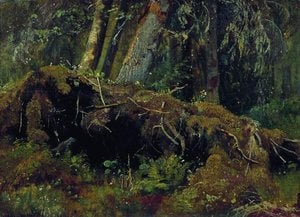
The Boulder and the Flume

This evocative painting captures Franconia Notch’s dramatic White Mountains scenery with masterful use of light and texture, reflecting Blakelock's distinctive tonalist approach.

Ralph Albert Blakelock (1847-1919): Ontdek de spookachtige landschappen & Tonalist meesterwerken van deze Amerikaanse schilder. Laat je inspireren door zijn tragische leven, wilde westenavonden en een prachtige terugkomst na jarenlange aandachtloze omgang.

Koop een digitale afbeelding in hoge resolutie met verbeterde kwaliteit, die veel superieur is aan de online voorvertoning.

Elk bestand wordt met uiterste precisie voorbereid door onze interne specialisten, met behulp van geavanceerde tools en deskundige handmatige retouche. Wij garanderen dat elke afbeelding een uitzonderlijke helderheid, nauwkeurige kleurweergave en verfijnde details bezit.

Het uiteindelijke bestand wordt binnen 72 uur per e-mail geleverd, geoptimaliseerd voor direct gebruik in professionele, redactionele en printomgevingen. Dit is dezelfde kwaliteit waarop vooraanstaande designstudio's, uitgevers en galerieën vertrouwen.

Digitale afbeeldingen

Download een bestand met hoge resolutie voor persoonlijke weergave, afdrukken en creatieve projecten. (Switch to Print Switch to PrintBestel handgeschilderde reproductie Bestel handgeschilderde reproductie)

Totaalprijs

$ 24,90

Inbegrepen bij elke bestelling van een digitale afbeelding

Professionele digitale levering, gegarandeerd

Wanneer u kiest voor WahooArt.com, ontvangt u niet alleen een afbeelding – u krijgt een professioneel verbeterd digitaal kunstwerk, met precisie vervaardigd en voorzien van een tevredenheidsgarantie. Dit is alles wat automatisch bij uw bestelling is inbegrepen:

shipping_icon
Snelle levering per e-mail

Uw hoogwaardige digitale afbeeldingsbestand wordt binnen 72 uur na bestelling naar u gemaild – klaar voor direct gebruik.

canvas_icon
AI-verbeterd digitaal bestand

Uw kunstwerk wordt professioneel geoptimaliseerd met behulp van geavanceerde AI-tools en handmatige bewerkingen, waardoor maximale details, helderheid en kleurnauwkeurigheid worden gegarandeerd.

insurance_icon
Gratis levenslange herlevering van digitale afbeeldingen

Je bestand per ongeluk verwijderd of kwijtgeraakt? Geen zorgen – we sturen het u op elk gewenst moment gratis opnieuw toe.

tax_icon
Geen invoerkosten – nooit

Geniet direct van uw kunstwerk zonder invoerrechten, belastingen of verzendkosten – digitale downloads zijn altijd belastingvrij.

color_icon
Garantie op kleurgetrouwheid

Met behulp van professionele hulpmiddelen en kleurbeheer zorgen wij ervoor dat uw digitale afbeelding de originele kleuren zo nauwkeurig mogelijk weergeeft.

return_icon
100 dagen tevredenheidsgarantie

Als u niet tevreden bent met uw digitale afbeelding, passen wij deze aan of storten wij 100% terug binnen 100 dagen - zonder vragen te stellen.

guarantee_icon
100% Geld-terug-garantie

Niet tevreden? Ontvang een volledige terugbetaling binnen 100 dagen na ontvangst van uw digitale bestand - zonder vragen te stellen.

discount_icon
Korting bij grote bestellingen

Koop 3 afbeeldingen, bespaar 10% - Koop 5, bespaar 15% - Koop 10+, bespaar 20%. Ideaal voor creatieve projecten, galerieën en bureaus.

Snelle feiten

  • Artist: Ralph Albert Blakelock
  • Influences: Hudson River School
  • Location: The Metropolitan Museum of Art
  • Year: 1878
  • Dimensions: 54 x 28 in.
  • Movement: Tonalist
  • Subject or theme: White Mountains

Kunstquiz

Er is slechts één goed antwoord op elke vraag.

Vraag 1:
What is the location depicted in ‘The Boulder and the Flume’?
Vraag 2:
When was this painting created?
Vraag 3:
What artistic technique is Blakelock known for using in this piece?
Vraag 4:
The description emphasizes ‘great directness and objectivity.’ What does this suggest about Blakelock’s approach?
Vraag 5:
What contributes to the overall atmosphere of the painting?

A Symphony of Shadow and Stone

In the quiet, evocative realm of American Tonalism, few works capture the profound intersection of geological power and atmospheric stillness as masterfully as Ralph Albert Blakelock’s 1878 masterpiece, The Boulder and the Flume. This painting is far more than a mere topographical record of Franconia Notch; it is an immersive sensory experience that invites the viewer into a world where the boundaries between earth, water, and air seem to dissolve. Blakelock, a painter whose life was as textured and complex as his canvases, utilizes a muted, sophisticated palette to evoke the damp, heavy air of the White Mountains. The scene presents a dramatic cleft in the granite bedrock, where a colossal boulder sits poised with a sense of precarious majesty above a rushing stream. There is an inherent tension in this composition—a silent dialogue between the immovable weight of the stone and the kinetic energy of the flowing water.

To gaze upon this work is to witness the artist’s profound ability to translate emotion into landscape. Unlike the Impressionists, who sought to capture the fleeting sparkle of sunlight, Blakelock was a poet of the twilight and the mist. He prioritized the sublime—that specific Romantic feeling of awe mixed with a touch of trepidation when faced with the untamed forces of nature. Through subtle gradations of brown, gray, and ochre, he simulates a diffused, ethereal light that suggests a sun struggling to pierce through a dense mountain canopy. For the collector or interior designer, this piece offers a sense of grounded tranquility; it possesses a rhythmic, meditative quality that can anchor a room, providing a focal point that encourages deep contemplation and a connection to the primordial beauty of the natural world.

Mastery of Texture and Tonalist Technique

The technical brilliance of The Boulder and the Flume lies in Blakelock’s virtuosic use of impasto. He did not merely paint a landscape; he sculpted it upon the canvas. By applying thick, deliberate layers of oil paint, Blakelock created a palpable surface that mirrors the rugged, weathered texture of the granite and the mossy crevices of the forest floor. These visible, rhythmic brushstrokes serve a dual purpose: they provide a physical dimension to the artwork and enhance the illusion of luminosity, as the raised paint catches the light in a way that mimics the natural glisten of wet stone and spray. This tactile approach ensures that the painting remains dynamic, even in its most somber moments.

Beyond the surface, the historical significance of this work resides in its role as a cornerstone of the Tonalist movement. Blakelock’s ability to weave together his personal experiences—including the memories of his travels through the American West and the rugged landscapes of New Hampshire—into a unified aesthetic vision is unparalleled. The painting serves as a bridge between the literal landscape and the internal psychological state. For those seeking to adorn a space with art that possesses both historical weight and contemporary elegance, this reproduction offers an exquisite opportunity to bring the soulful, atmospheric essence of 19th-century American Romanticism into a modern setting.


Kunstenaarsbiografie

Ralph Albert Blakelock (1847–1919): A Life Shrouded in Mystery

Ralph Albert Blakelock, born in New York City in 1847, remains one of the most enigmatic and tragically compelling figures in American art. His life was a poignant blend of artistic vision and personal turmoil, a narrative often overshadowed by obscurity until late in his career. The son of a successful English physician, young Ralph initially followed a path toward medicine, enrolling at the Free Academy of the City of New York – now City College – in 1864. However, the allure of art and music proved too strong to resist, leading him to abandon medical studies after only three terms and dedicate himself fully to creative pursuits. Largely self-taught, Blakelock’s artistic development was a deeply personal journey, shaped by observation, introspection, and an innate sensitivity to the natural world rather than formal academic constraints. This independence would become a defining characteristic of his unique style.

Early Influences and Artistic Beginnings

Blakelock's formative years were marked by exposure to both classical music and visual arts—a combination that profoundly shaped his artistic sensibilities. He demonstrated an early aptitude for drawing, honing his skills through self-directed study and experimentation. Recognizing the importance of mastering technique, Blakelock diligently practiced sketching landscapes and portraits, absorbing influences from artists such as Frederic Church and Albert Pinkham Ryder – figures who championed a Romantic aesthetic rooted in emotional expression and sublime grandeur. These connections to prominent artistic voices would prove crucial in establishing Blakelock’s distinctive stylistic trajectory. His initial works reflected the prevailing Hudson River School tradition, characterized by luminous color palettes and meticulous depictions of American wilderness—a style that nevertheless served as springboard for his own explorations into mood and atmosphere.

Western Wanderings: Inspiration from Native Landscapes

A pivotal period in Blakelock’s life was his extensive journey through the American West from 1869 to 1872. He ventured far beyond established settlements, immersing himself in the landscapes and cultures of the frontier. This wasn't merely a geographical exploration; it was a spiritual quest that profoundly impacted his artistic vision. Spending time among Native American communities provided him with invaluable subject matter and inspiration, fueling his imagination with scenes of wilderness and indigenous life. He meticulously documented his experiences in notebooks filled with sketches and observations, which served as crucial references for his later works. These early landscapes and depictions of Indian encampments weren’t simply representations of what he saw; they were imbued with a romanticized, almost mystical quality, establishing the foundation for his distinctive artistic voice. The vastness and solitude of the West seemed to seep into his very being, influencing the mood and atmosphere that would become hallmarks of his paintings. He sought to capture not just the visual appearance of these landscapes but also their emotional resonance—a quest that would define his artistic practice for decades to come.

The Tonalist Style: Darkness Embraced

Ralph Albert Blakelock is now recognized as a key figure within the Tonalist movement, an artistic current that emerged in the late 19th century as a reaction against the more detailed and dramatic styles of earlier landscape painting. His canvases are characterized by muted color palettes – often dominated by grays, browns, and greens – atmospheric effects achieved through subtle gradations of tone, and a profound emphasis on mood and emotion over precise representation. He frequently depicted nocturnal scenes and shadowy forests, creating an evocative sense of mystery and introspection. Blakelock’s technique was particularly unique; he famously incorporated coal tar into his pigments to deepen the darkness and achieve a velvety texture. The influence of Albert Pinkham Ryder is evident in this approach – Ryder's dreamlike landscapes resonated deeply with Blakelock’s own artistic sensibilities, inspiring him to explore similar themes of solitude, spirituality, and the sublime power of nature. He wasn’t interested in simply *depicting* a landscape; he sought to capture its essence, its emotional resonance, and its ability to stir the soul.

Later Years: Institutionalization and Artistic Legacy

Despite his undeniable talent, Blakelock struggled with financial hardship throughout much of his life. Supporting a large family – nine children – proved an immense burden, leading him to sell paintings at drastically undervalued prices in moments of desperation. This economic strain contributed to a series of mental breakdowns, the first occurring in 1891, and another more severe episode in 1899 that resulted in nearly two decades spent institutionalized. Ironically, it was during this period of personal suffering that Blakelock’s work began to gain recognition, though often through the unfortunate proliferation of forgeries sold at inflated prices. A turning point arrived in 1916 when one of his landscapes achieved a record-breaking sale price of $20,000, bringing him unexpected public attention and leading to his election as an academician of the National Academy of Design (1916). Though he experienced brief periods of lucidity and continued painting within the confines of the asylum, Blakelock remained largely confined until his death on August 9, 1919, at the age of 71. His enduring legacy rests upon his ability to convey profound emotion through understated visual language—a testament to the transformative power of art and a poignant reminder of the complexities inherent in human experience.
Ralph Albert Blakelock

Ralph Albert Blakelock

1847 - 1919 , Verenigde Staten van Amerika

Belangrijkste feiten

  • Artistic Movement Or Style: Tonalisme
  • Artists Or Movements Influenced By This Artist: ['Hudson River School']
  • Artists Who Influenced This Artist: ['Albert Pinkham Ryder']
  • Date Of Birth: October 15, 1847
  • Date Of Death: August 9, 1919
  • Full Name: Ralph Albert Blakelock
  • Nationality: Amerikaans
  • Notable Artworks:
    • Moonlight
    • Indian Encampment
  • Place Of Birth: New York City, USA