Een Leven in Vorm en Kleur: De Reis van Piet Mondriaan
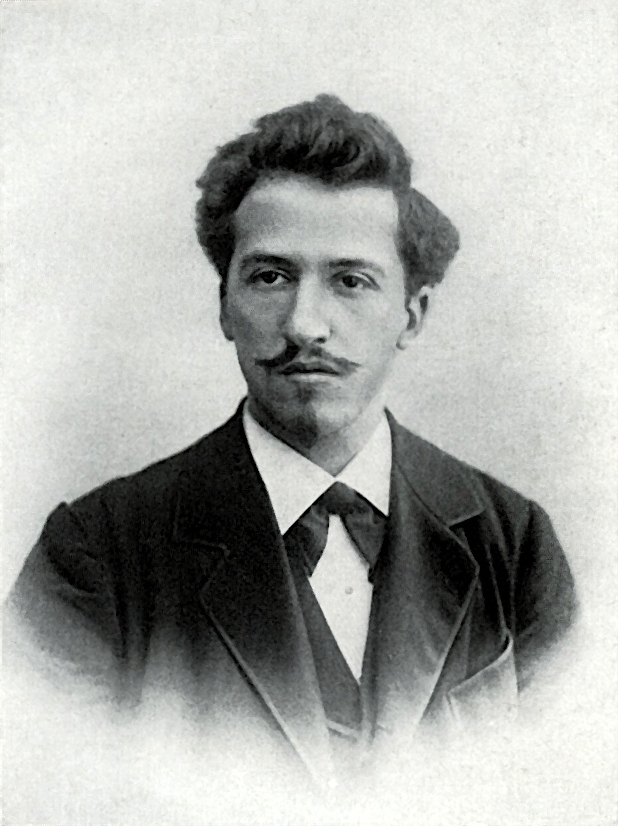
Pieter Cornelis Mondriaan, geboren op 7 maart 1872 in het rustige Amersfoort, zette zijn eerste stappen op een artistiek pad dat geen onmiddellijke openbaring was, maar eerder een geleidelijke ontplooiing. Zijn jeugd was doordrenkt van traditie; zijn oom, Frits Mondriaan, was reeds een gevestigd schilder en deze familieband leidde aanvankelijk tot interesse in landschapsschilderkunst. Deze vroege werken, die doen denken aan de Haagse School en het Nederlands Impressionisme – stukken als *De Rode Molen* – tonen een jonge kunstenaar die ijverig de natuur bestudeert, techniek beheerst, maar subtiel op zoek is naar iets verder dan louter representatie. Zelfs toen leek een verlangen naar vereenvoudiging zijn penseelstreken te beïnvloeden. Hij was niet tevreden met het simpelweg spiegelen van de wereld; hij wilde de essentie ervan destilleren. Deze beginperiode kenmerkte zich door experimenten met Pointillisme en Fauvisme, stijlen die elk een andere lens boden om kleur en vorm te bekijken, maar geen enkele voldeed aan zijn opkomende artistieke visie. Het was een tijd van verkenning, een noodzakelijke prelude tot de radicale breuk die zijn nalatenschap zou definiëren.
De Parijse Ontwaking en de Geboorte van het Neoplasticisme
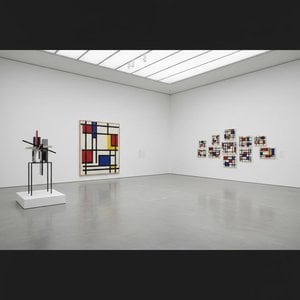
Een cruciaal moment brak aan in 1912 met Mondriaans verhuizing naar Parijs. De stad bruiste van avant-gardistische energie, en hij verdiepte zich in de revolutionaire wereld van het Kubisme. Deze ontmoeting bleek transformatief. Hij begon vormen te deconstrueren, objecten af te breken tot hun geometrische componenten, weg bewegend van het weergeven *wat* hij zag naar het verkennen *hoe* hij het zag. Maar Mondriaan adopteerde niet zomaar een nieuwe stijl; hij begon aan een spirituele zoektocht. Diep beïnvloed door Theosofie – een mystieke filosofie die onderliggende universele principes benadrukte – geloofde hij dat kunst een vehikel kon zijn om deze verborgen waarheden uit te drukken. Dit geloof voedde zijn meedogenloze streven naar abstractie, waardoor hij kleur en vorm terugbracht tot hun meest fundamentele elementen. Rond 1917 culmineerde deze reis in de formulering van het Neoplasticisme, vaak aangeduid als ‘pure plastische kunst’. Het was een radicale esthetiek gebaseerd op essentiële vormen – rechte lijnen, rechthoeken – en een beperkt palet: primaire kleuren (rood, blauw, geel), zwart, wit en grijs. Voor Mondriaan ging deze reductie niet over leegte; het ging om het onthullen van de onderliggende harmonie van het universum, een visuele manifestatie van spirituele orde. Hij was medeoprichter van de *De Stijl*-beweging met Theo van Doesburg om deze ideeën te promoten, waarmee hij het Neoplasticisme verankerde als een bepalende kracht in de moderne kunst. Meesterwerken zoals *Compositie met Rood, Blauw en Geel* en *Tableau no. 2 Compositie no. V* staan als getuigenissen van deze periode, iconische representaties van zijn onwrikbare toewijding aan geometrische zuiverheid.
Nieuwe Ritmes in New York: Een Late Bloei
De uitbraak van de Tweede Wereldoorlog dwong Mondriaan in 1940 Europa te ontvluchten, en hij vond zijn toevluchtsoord in de bruisende metropool New York City. Deze verhuizing bleek onverwacht stimulerend. De strakke rasterstructuur van de stad – een scherp contrast met de meer organische landschappen die hij kende – resoneerde met zijn artistieke principes. Zijn latere werken, met name *Broadway Boogie Woogie* (1943), weerspiegelen deze invloed. Terwijl hij de kernprincipes van het Neoplasticisme behield, introduceert het schilderij een dynamische energie, een levendig ritme geïnspireerd door het pulserende leven en de jazzmuziek van de stad. De rechte lijnen zijn nog steeds aanwezig, maar ze dansen en kruisen elkaar nu vrijer, waardoor een gevoel van beweging en vreugde ontstaat. Het was alsof Mondriaan een nieuwe taal had gevonden binnen zijn gevestigde vocabulaire, een manier om de complexiteit van het moderne stadsleven uit te drukken door de eenvoud van geometrische abstractie. Hij bleef zijn stijl verfijnen tot aan zijn dood in 1944, en liet een oeuvre achter dat nog steeds boeit en inspireert.
Een Blijvende Erfenis: Mondriaans Duurzame Invloed
Piet Mondriaans impact op de kunstwereld is onmeetbaar. Hij was niet slechts een kunstenaar; hij was een visionair die ons begrip van abstractie fundamenteel veranderde en het potentieel ervan om universele waarheden uit te drukken. Zijn werk heeft talloze kunstenaars, bewegingen en disciplines diepgaand beïnvloed. Abstract Expressionisme, Minimalisme en Color Field painting zijn allemaal in zijn schuld aan zijn baanbrekende geest. Maar zijn invloed reikt verder dan het canvas. De principes van het Neoplasticisme – eenvoud, helderheid, geometrische orde – hebben architectuur, design en mode doordrongen. Van meubels en textiel tot gevels van gebouwen en grafische ontwerpen, Mondriaans esthetiek blijft onze visuele wereld vormgeven. Hij is een iconisch figuur in de moderne kunst, een symbool voor het onvermoeibare streven naar abstractie en de blijvende kracht van artistische innovatie. Zoals designhistoricus Stephen Bayley treffend opmerkte, is Mondriaan een “totem geworden voor alles wat het Modernisme nastreefde”. Zijn nalatenschap is niet slechts één van esthetische schoonheid, maar ook van intellectuele strengheid, spirituele diepte en een onwrikbaar geloof in de transformerende kracht van kunst.
Invloeden en Sleutelwerken
- Vroege Invloeden: De Haagse School, Nederlands Impressionisme, Pointillisme, Fauvisme vormden de basis voor zijn eerste artistieke verkenningen.
- Transformatieve Invloed: Het Kubisme in Parijs was cruciaal voor zijn verschuiving naar abstractie en geometrische vormen.
- Filosofische Fundering: Theosofie informeerde diepgaand zijn geloof dat kunst universele spirituele principes kon uitdrukken.
- Sleutelwerken: *De Rode Molen* (vroege naturalistische periode), *Compositie met Rood, Blauw en Geel* (quintessentiële Neoplasticisme), *Tableau no. 2 Compositie no. V* (demonstreert de reductie tot essentiële vormen), *Broadway Boogie Woogie* (late-bloei dynamiek beïnvloed door New York City).
- Blijvende Impact: Mondriaans werk blijft kunstenaars, architecten en ontwerpers inspireren, en vormt moderne esthetiek in verschillende disciplines.
Zijn esthetische principes reikten verder dan schilderkunst om architectuur, design en mode te beïnvloeden. Hij is een iconisch figuur in de moderne kunst, die de zoektocht naar abstractie en universele harmonie vertegenwoordigt.



 Bekijk op ware grootte
 Koop handgeschilderd kunstwerk
 Verstuur
 Delen
Delen
 Details bekijken
 Gids
Gids

 Download
 Vergelijkbare items
 Röntgenonderzoek
 Diavoorstelling
 Statistieken

 Lees meer






































 De optie voor glas is alleen beschikbaar bij een formaat kleiner dan 110 cm.