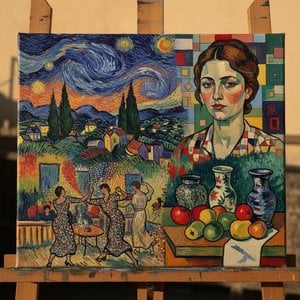
A Life Bathed in Light: The World of Pierre Bonnard
Pierre Bonnard, geboren in 1867 in de Parijse buitenwijk Fontenay-aux-Roses, was niet bestemd voor een leven doordrenkt met artistieke expressie. Zijn vader, een hoge functionaris in het Franse Ministerie van Oorlog, had voor zijn zoon een juridische carrière voorgesteld. Jonge Pierre studeerde vervolgens rechten en behaalde in 1888 zijn licentie, maar zijn hart lag elders – in de betoverende wereld van kleur en vorm. Deze dualiteit, deze spanning tussen verwachting en passie, zou subtiel informeren over zijn artistieke reis, waardoor zijn werk een unieke intimiteit kreeg. In eerste instantie experimenteerde hij met karikaturen, waarbij hij een observatievaardigheid ontwikkelde die later bloeide in exquisitely rendered huismusscènes. Echter, het was op de Académie Julian waar Bonnard zijn pad echt vond, waar hij gelijkgestemden ontmoette die zijn groeiende afwijzing van academische conventies deelden en zich verwantwoord voelden voor de avant-garde geest die door Parijs woelde. Deze ontmoeting leidde hem naar de Nabis, een groep kunstenaars – waaronder Maurice Denis, Paul Sérusier en Édouard Vuillard – die stremden om kunst te verrijken met spiritualiteit en symboliek, verdergaand dan alleen representatie richting een exploratie van innerlijke ervaring.
The Nabi Years and the Cultivation of Intimacy
Bonnard’s associatie met de Nabis bleek cruciaal. De nadruk van de groep op platte vormen, felle kleurenpaletten en een afwijzing van traditioneel perspectief resoneerde diep in zijn artistieke zintuigen. Geïnspireerd door Japanse prints – hun elegante lijnen en harmonieuze composities – en de symbolistische beweging’s verkenning van subjectieve emotie, begon Bonnard zijn eigen signatuurstijl te ontwikkelen. Hij was niet geïnteresseerd in grote verhalen of historische allegorieën; in plaats daarvan keek hij naar binnen, waarbij hij zich concentreerde op de stille momenten van alledaagse het leven: een vrouw die bad, een familie die aan tafel zat, een zonovergoten tuin. Deze weren niet alleen scènes weer, maar distillaten van gevoel – evocaties van herinnering en sfeer. Deze focus op intieme domesticiteit verdiende hem de titel “Intimist”, een term die perfect de emotionele resonatie van zijn werk vastlegt. Zijn schilderijen gaan niet over *wat* er wordt afgebeeld, maar *hoe* het voelt om in die momenten aanwezig te zijn. Hij werkte vanuit herinnering, maakte uitgebreid schetsen en vertaalde vervolgens deze indrukken op het doek met een bijzondere gevoeligheid voor licht en kleur. De Nabis zocht naar een nieuwe vorm van kunst, die verder ging dan de traditionele representatie. Ze wilden kunst gebruiken om emoties te verwerken en ideeën uit te drukken.
Color as Emotion: A Master Colorist
Bonnard’s meesterschap in kleur is waarschijnlijk zijn meest kenmerkende eigenschap. Hij gebruikte niet alleen kleur; hij *voelde* het, waardoor het de stemming en sfeer van zijn schilderijen dicteerde. Zijn palet was levendig maar genuanceerd, vaak met onverwachte combinaties die een gevoel van gloeiend licht creëerden. Hij zou bijvoorbeeld afgeronde schilderijen herzien en subtiel kleuren over meerdere werken aanpassen om perfecte harmonie te bereiken – een getuigenis van zijn obsessieve toewijding aan chromatische balans. Dit was niet bedoeld als realistische representatie; het ging om het vastleggen van de subjectieve ervaring van kleur, zijn vermogen om emoties en herinneringen op te wekken. Hij verliet directe observatie, prefereerde in plaats daarvan het schilderen vanuit herinnering, waardoor hij zijn scènes kon doordrenken met een dromerige kwaliteit. Zijn landschappen waren niet alleen representaties van plaatsen, maar emotionele reacties erop – gefilterd door de lens van persoonlijke ervaring. Hij was op zoek naar een nieuwe manier om de wereld te zien en weergeven.
Later Life and Lasting Legacy
Naarmate Bonnard ouder werd, verschoven zijn artistieke focus verder naar het verkennen van kleur en licht. Hij bracht steeds meer tijd buiten Parijs door, gefascineerd door het Middellandse Zee landschap en zijn intense gloed. Zijn relatie met Marthe de Meligny, zijn vrouw en levenslange muze, bleef centraal in zijn leven en werk. Ze verscheen vaak in zijn schilderijen, vaak afgebeeld terwijl ze bad of betrokken was bij alledaagse activiteiten, haar aanwezigheid uitstraalde een rustige gratie en intimiteit. In 1912 kocht hij “La Roulotte” in Vernonnet, nabij Giverny, en vestigde zo een nauwe vriendschap met Claude Monet. Deze nabijheid tot de meester van de impressionisme voedde zijn verkenning van licht en kleur verder, hoewel hij altijd zijn eigen unieke artistieke visie behield. Hij bleef schilderen tot kort voor zijn dood in 1947, waardoor een oeuvre achterbleef dat nog steeds fascineert en inspireert. Bonnard’s invloed op latere generaties kunstenaars is onmiskenbaar. Zijn nadruk op innerlijke ervaring, zijn meesterschap in kleur en zijn viering van het alledaagse hebben een blijvende stempel gedrukt op de moderne kunst. Hij liet zien dat schoonheid te vinden was niet in grote gebaren of heroïsche verhalen, maar in de stille momenten van het leven – doordrenkt met licht en emotie.
Notable Works & Collections
- Woman in Checkered Dress (1890): Een vroeg voorbeeld van zijn Nabi-invloedde stijl, die platte vormen en felle kleurenpaletten laat zien.
- The Dining Room (1913): Een kenmerkend Intimist schilderij, dat de warmte en intimiteit van huiselijk leven vastlegt.
- Bowl of Fruit (c. 1933): Demonstreert zijn meesterschap in stillevisie, met levendige kleuren en een gevoel van gloeiend diepte.
- The Almond Tree in Blossom (1947): Een van zijn laatste schilderijen, voltooid kort voor zijn dood, die zijn voortdurende verkenning van kleur en licht laat zien.
Bonnard’s werken worden gevonden in belangrijke musea wereldwijd, waaronder:
- Musée Marmottan Monet, Parijs, Frankrijk
- Art Institute of Chicago
- Museum of Modern Art, New York City
- Tate Modern, Londen



 Bekijk op ware grootte
 Schakel over naar print
 Verstuur
 Delen
Delen
 Details bekijken
 Gids
Gids

 Download
 Vergelijkbare items
 Röntgenonderzoek
 Diavoorstelling
 Statistieken


 Lees meer






































 De optie voor glas is alleen beschikbaar bij een formaat kleiner dan 110 cm.