Bekijk op ware grootte Bekijk in AR Schakel over naar print Koop handgeschilderd kunstwerk Verstuur
Details bekijken Gids voor studentenkunstwerken Toevoegen aan favorieten Download Vergelijkbare items Röntgenonderzoek Diavoorstelling Statistieken

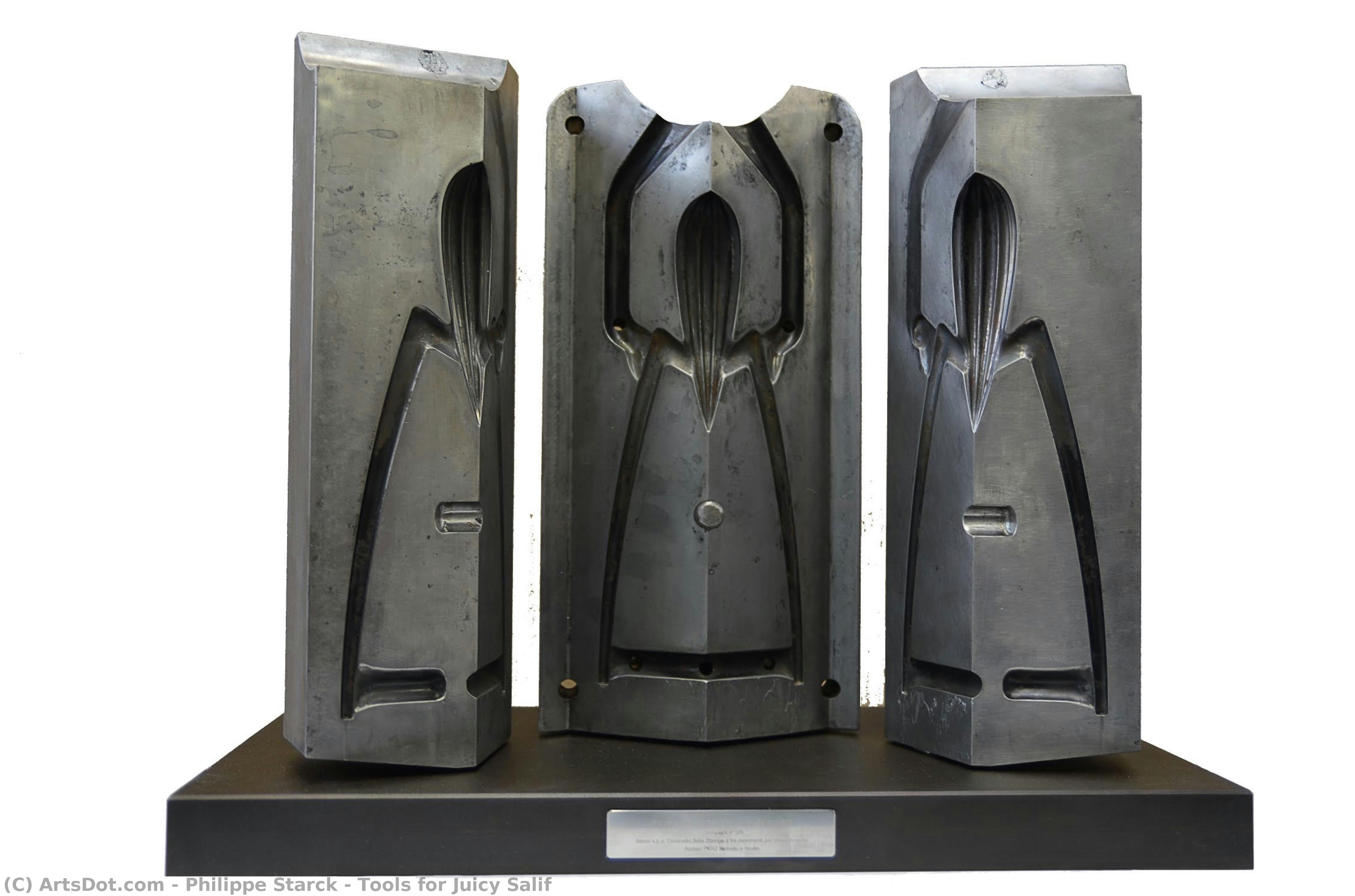
Tools for Juicy Salif

Discover 'Tools for Juicy Salif' by Philippe Starck – a playful aluminum citrus reamer. Iconic industrial design, museum-quality & a conversation starter. Explore this unique artwork.

Philippe Starck: Explore designs by the iconic French architect & designer! Known for playful, unconventional furniture, interiors & bold contemporary style.

Koop een digitale afbeelding in hoge resolutie met verbeterde kwaliteit, die veel superieur is aan de online voorvertoning.

Elk bestand wordt met uiterste precisie voorbereid door onze interne specialisten, met behulp van geavanceerde tools en deskundige handmatige retouche. Wij garanderen dat elke afbeelding een uitzonderlijke helderheid, nauwkeurige kleurweergave en verfijnde details bezit.

Het uiteindelijke bestand wordt binnen 72 uur per e-mail geleverd, geoptimaliseerd voor direct gebruik in professionele, redactionele en printomgevingen. Dit is dezelfde kwaliteit waarop vooraanstaande designstudio's, uitgevers en galerieën vertrouwen.

Digitale afbeeldingen

Download een bestand met hoge resolutie voor persoonlijke weergave, afdrukken en creatieve projecten. ( Schakel over naar print Koop handgeschilderd kunstwerk)

Totaalbedrag

$ 24,90

Inbegrepen bij elke bestelling van een digitale afbeelding

Professionele digitale levering, gegarandeerd

Wanneer u kiest voor WahooArt.com, ontvangt u niet alleen een afbeelding – u krijgt een professioneel verbeterd digitaal kunstwerk, met precisie vervaardigd en voorzien van een tevredenheidsgarantie. Dit is alles wat automatisch bij uw bestelling is inbegrepen:

shipping_icon
Directe levering per e-mail

Uw hoogwaardige digitale afbeeldingsbestand wordt binnen 72 uur na bestelling naar u gemaild – klaar voor direct gebruik.

canvas_icon
AI-geoptimaliseerd digitaal bestand

Uw kunstwerk wordt professioneel geoptimaliseerd met behulp van geavanceerde AI-tools en handmatige bewerkingen, waardoor maximale details, helderheid en kleurnauwkeurigheid worden gegarandeerd.

insurance_icon
Gratis levenslange herlevering

Je bestand per ongeluk verwijderd of kwijtgeraakt? Geen zorgen – we sturen het u op elk gewenst moment gratis opnieuw toe.

tax_icon
Geen invoerkosten – nooit

Geniet direct van uw kunstwerk zonder invoerrechten, belastingen of verzendkosten – digitale downloads zijn altijd belastingvrij.

color_icon
Garantie op kleurgetrouwheid

Met behulp van professionele hulpmiddelen en kleurbeheer zorgen wij ervoor dat uw digitale afbeelding de originele kleuren zo nauwkeurig mogelijk weergeeft.

return_icon
100 dagen tevredenheidsgarantie

Als u niet tevreden bent met uw digitale afbeelding, passen wij deze aan of storten wij 100% terug binnen 100 dagen - zonder vragen te stellen.

guarantee_icon
100% Geld-terug-garantie

Niet tevreden? Ontvang een volledige terugbetaling binnen 100 dagen na ontvangst van uw digitale bestand – zonder vragen te stellen.

discount_icon
Korting bij grote bestellingen

Koop 3 afbeeldingen, bespaar 10% - Koop 5, bespaar 15% - Koop 10+, bespaar 20%. Ideaal voor creatieve projecten, galerieën en bureaus.

Belangrijkste kenmerken

  • artist: Philippe Starck
  • influences: Calamari squid
  • year: 1990
  • dimensions: 54 x 44 cm
  • title: Tools for Juicy Salif
  • style: Postmodern

Kunstquiz

Er is slechts één goed antwoord op elke vraag.

Vraag 1:
In what year was 'Tools for Juicy Salif' created?
Vraag 2:
Who is the artist behind 'Tools for Juicy Salif'?
Vraag 3:
What material are these sculptures primarily made of?
Vraag 4:
The design of the 'Juicy Salif' was originally inspired by what?
Vraag 5:
What artistic movement is Philippe Starck often associated with?

A Playful Deconstruction of Function: Philippe Starck’s ‘Tools for Juicy Salif’

  • Created in 1990, ‘Tools for Juicy Salif’ is not a singular object but a trio of sculptural interpretations – a spoon, fork, and knife – rendered in polished aluminum. Measuring 54 x 44 cm, these pieces are more akin to artistic statements than practical cutlery.
  • Style & Technique: Starck’s work here embodies his signature rejection of rigid stylistic boundaries, leaning into a postmodern aesthetic that prioritizes form and concept over strict functionality. The highly polished aluminum lends a futuristic sheen while simultaneously referencing industrial design principles. The sculptures are cast metal, showcasing a deliberate embrace of the manufacturing process as part of the artistic expression.

Beyond Utility: Symbolism & Conceptual Intent

  • While ostensibly representing everyday dining implements, ‘Tools for Juicy Salif’ deliberately subverts their intended purpose. They are unwieldy and impractical as actual tools for eating. This intentional dysfunction is central to Starck's artistic philosophy – a challenge to conventional notions of design.
  • Democratic Design & Provocation: Starck, known for his commitment to ‘democratic design’ (making high-quality objects accessible to all), uses this piece to question the very definition of “useful.” Is an object only valuable if it performs its intended function flawlessly? Or can beauty and conceptual provocation hold intrinsic worth?
  • The sculptures are a playful commentary on consumer culture, questioning our relationship with objects and their perceived value. They invite viewers to consider design not just as problem-solving but as a form of artistic expression.

Historical Context & Legacy

  • Emerging in the 1990s, ‘Tools for Juicy Salif’ reflects a broader postmodern movement that challenged modernist ideals of functionality and minimalism. It aligns with a growing interest in deconstruction and irony within design.
  • Part of a Larger Vision: These sculptures are intrinsically linked to Starck's iconic 'Juicy Salif' citrus reamer (1990), also produced by Alessi. Both pieces demonstrate his willingness to create objects that prioritize aesthetic impact and conceptual depth over pure practicality, solidifying his reputation as a boundary-pushing designer.
  • The work has gained recognition beyond the design world, finding its way into the permanent collections of prestigious institutions like the Museum of Modern Art and the Metropolitan Museum of Art, cementing its status as a significant piece of late 20th-century art.

Emotional Impact & Interior Design Considerations

  • ‘Tools for Juicy Salif’ evokes a sense of playful curiosity and intellectual engagement. Its unconventional form sparks conversation and challenges viewers to reconsider their assumptions about design.
  • As decorative objects, these sculptures add a touch of avant-garde sophistication to any interior space. Their polished aluminum finish complements modern aesthetics, while their sculptural quality makes them suitable for display in living rooms, dining areas, or even office environments.
  • A Statement Piece: These pieces are not merely decorative; they are statements about art, design, and the human experience – ideal for collectors and those seeking to infuse their spaces with intellectual depth and artistic flair.

Biografie van de kunstenaar

Philippe Starck: A Biography

Early Life and Education

  • Born in Paris, France on January 18, 1949, Philippe Starck’s early life was shaped by his father's influence as an aeronautical engineer and designer.
  • He attended the École Camondo, a prestigious school of architecture and design in Paris. However, he left before completing his studies, believing formal education limited creative expression.
  • Early Influences: His father instilled in him an appreciation for technical innovation and functionality, while his mother’s artistic sensibility fostered a love for aesthetics.

Artistic Development and Style

  • Starck's design philosophy is rooted in democratic design – creating high-quality, accessible products for the masses. He rejects elitism in design.
  • His style is characterized by playful forms, unconventional materials, and a rejection of rigid stylistic boundaries. It blends postmodern irony with functional considerations.
  • He often incorporates organic shapes and references to nature into his work, creating designs that are both visually striking and user-friendly.
  • Key Characteristics: Playfulness, functionality, accessibility, eclecticism, and a touch of subversion.

Major Achievements and Notable Works

  • 1984: Achieved international fame with his design for the private flat of French President François Mitterrand at the Élysée Palace. This project showcased his ability to blend luxury with a modern sensibility.
  • Juicy Salif (1989): An iconic citrus reamer, celebrated for its sculptural form and functional design. It remains one of his most recognizable creations.
  • Starck has designed numerous hotels and restaurants worldwide, including the Mama Shelter hotel chain and various Alain Ducasse restaurants, each reflecting a unique atmosphere and aesthetic.
  • He collaborated with Duravit to create innovative bathroom fixtures, pushing the boundaries of ceramic design.
  • His work extends to boats (e.g., sailing yachts), furniture for Kartell and Driade, and even wind turbines.

Influences and Collaborations

  • Influenced By: While rejecting strict adherence to any single movement, Starck draws inspiration from Art Nouveau, Bauhaus principles, and the work of designers like Ettore Sottsass.
  • He frequently collaborates with various companies and brands, allowing him to explore diverse design challenges and reach a wider audience. These collaborations include partnerships with Alessi, Baccarat, and Xiaomi.
  • Collaborative Spirit: Starck believes in the power of collaboration to foster innovation and create impactful designs.

Historical Significance and Legacy

  • Philippe Starck is considered one of the most influential designers of the late 20th and early 21st centuries. He has played a pivotal role in democratizing design, making it more accessible to everyday consumers.
  • His work challenged conventional notions of style and functionality, paving the way for new approaches to product design and interior architecture.
  • Lasting Impact: Starck’s designs continue to inspire designers worldwide, and his commitment to sustainability and social responsibility reflects a forward-thinking approach to design practice.
  • He has received numerous awards throughout his career, including the Grand Prix National de la Création Industrielle and a lifetime achievement award from the National Design Museum.
Philippe Starck

Philippe Starck

1949 - , France

Kerngegevens

  • Birth Date: 1949-01-18
  • Birth Place: Paris, France
  • Movement: Postmodernism, Industrial Design
  • Name: Philippe Starck
  • Nationality: French
  • Notable Works:
    • Juicy Salif
    • Private flat of François Mitterrand