Voorvertoning Bekijk in AR Schakel over naar print Schakel over naar digitale afbeeldingen Verstuur
Details bekijken Gids Toevoegen aan favorieten Download Vergelijkbare items Röntgenonderzoek Diavoorstelling Q&A Statistieken

The Annunciation Hand-painted oil painting reproduction

Ontdek Philippe de Champaigne (1602-1674), een vooraanstaand Franse Barokschilder bekend om zijn krachtige portretten van Kardinaal Richelieu & diep spirituele religieuze werken. Verken zijn nalatenschap!

Handgemaakte olieverfreproductie

Met de hand geschilderd in olieverf op canvas in uw gewenste maat en lijst, op bestelling gemaakt door onze kunstenaars. ( Schakel over naar print Schakel over naar digitale afbeeldingen)

Corner sample of the P118B picture frame: gegoten polystyreen, 5 cm wide and 3 cm thick
P118B €10
Corner sample of the P118H picture frame: gegoten polystyreen, 5 cm wide and 3 cm thick
P118H €10
Corner sample of the P118W picture frame: gegoten polystyreen, 5 cm wide and 3 cm thick
P118W €10
Corner sample of the P438Z picture frame: gegoten polystyreen, 5.5 cm wide and 3.5 cm thick
P438Z €10
Corner sample of the P508JH picture frame: gegoten polystyreen, 7 cm wide and 3.5 cm thick
P508JH €12
Corner sample of the P508YH picture frame: gegoten polystyreen, 7 cm wide and 3.5 cm thick
P508YH €12
Corner sample of the P805H picture frame: gegoten polystyreen, 5 cm wide and 3.5 cm thick
P805H €10
Corner sample of the P805Z picture frame: gegoten polystyreen, 5 cm wide and 3.5 cm thick
P805Z €10
Corner sample of the P919BZ picture frame: gegoten polystyreen, 7 cm wide and 3.5 cm thick
P919BZ €10
Corner sample of the P919G picture frame: gegoten polystyreen, 7 cm wide and 3.5 cm thick
P919G €10
Corner sample of the P919XJ picture frame: gegoten polystyreen, 7 cm wide and 3.5 cm thick
P919XJ €10
Corner sample of the P959ZH picture frame: gegoten polystyreen, 5 cm wide and 3 cm thick
P959ZH €10
Corner sample of the P968JZ picture frame: gegoten polystyreen, 6 cm wide and 4 cm thick
P968JZ €12
Corner sample of the W106C picture frame: massief hout, 5 cm wide and 3 cm thick
W106C €8
Corner sample of the W218G picture frame: massief hout, 5 cm wide and 3 cm thick
W218G €10
Corner sample of the W218JH picture frame: massief hout, 5 cm wide and 3 cm thick
W218JH €8
Corner sample of the W218Y picture frame: massief hout, 5 cm wide and 3 cm thick
W218Y €10
Corner sample of the W307PJ picture frame: massief hout, 6 cm wide and 3 cm thick
W307PJ €10
Corner sample of the W316G picture frame: massief hout, 6 cm wide and 3 cm thick
W316G €10
Corner sample of the W316PJ picture frame: massief hout, 6 cm wide and 3 cm thick
W316PJ €8
Corner sample of the W316Y picture frame: massief hout, 6 cm wide and 3 cm thick
W316Y €10
Corner sample of the W398PJ picture frame: massief hout, 5 cm wide and 3 cm thick
W398PJ €8
Corner sample of the W4111J picture frame: massief hout, 6.5 cm wide and 3.5 cm thick
W4111J €10
Corner sample of the W500HY picture frame: massief hout, 7 cm wide and 5 cm thick
W500HY €15
Corner sample of the W500JH picture frame: massief hout, 7 cm wide and 5 cm thick
W500JH €15
Corner sample of the W692G picture frame: massief hout, 8 cm wide and 4 cm thick
W692G €12
Corner sample of the W849H picture frame: massief hout, 5 cm wide and 3 cm thick
W849H €8
Corner sample of the W940BG picture frame: massief hout, 7.5 cm wide and 4.5 cm thick
W940BG €15
Corner sample of the W953PJ picture frame: massief hout, 6 cm wide and 3.5 cm thick
W953PJ €8

Standaardformaat
op maat gemaakt
CM
INCH

Kies uit onze vooraf ingestelde maten die overeenkomen met de originele verhoudingen van het kunstwerk.

breedte
hoogte

Voer de breedte en hoogte in die u nodig heeft, passend bij uw lijst of uw muur. Omdat dit handgeschilderd is, kan de kunstenaar bij een afmeting met een andere beeldverhouding iets meer rondom het schilderij schilderen of juist iets meer weglaten — u kiest zelf. Wij sturen u een digitaal mockup ter goedkeuring voordat het schilderwerk begint. De afbeelding die op deze pagina wordt getoond, is niet het uiteindelijke resultaat — alleen de mockup geeft dit weer.

Voorbeelden van aanpassingen: Vervang het gezicht met een eigen foto; Voeg een huisdier toe (bijv. vervang de kat door een hond); Verwerk een verborgen boodschap in de achtergrond; Wijzig het landschap of andere elementen in de achtergrond.
Na de bestelling zal het team van WahooArt.com per e-mail contact opnemen met de klant voor instructies en een mockup-voorbeeld sturen.

Wereldwijde levering () binnen 3 tot 4 weken in plaats van de standaard 5 weken. (29 oktober). Zonder concessies aan de kwaliteit.

Gratis wereldwijde expressverzending
Hoogwaardig linnen canvas
Volledige verzendverzekering
Garantie op terugbetaling van invoerrechten
Garantie op exacte kleurweergave
Retourbeleid van 100 dagen (alleen bij defecten)
100% Geld-terug-garantie
Korting bij meerdere afnames

Totaalprijs

€ 240

The Annunciation

Druktechniek

Afmetingen reproductie

-

Eindtotaal

€ 240

Snelle feiten

  • Location: Private Collection
  • Notable elements or techniques: Sculptural forms; Rich palette
  • Title: The Annunciation
  • Artistic style: Classicism
  • Dimensions: 71 x 73 cm
  • Medium: Oil on canvas

Kunstquiz

Er is slechts één goed antwoord op elke vraag.

Vraag 1:
What was the Annunciation commissioned for?
Vraag 2:
Which artistic movement is Champaigne associated with?
Vraag 3:
What stylistic characteristic defines Champaigne's approach to composition?
Vraag 4:
Why was Louis XIV concerned about Jansenism?
Vraag 5:
What role did Nicolas Poussin play in shaping Champaigne's artistic style?

A Moment Frozen in Time: Exploring Philippe de Champaigne’s ‘The Annunciation’

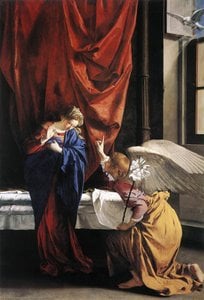
Philippe de Champaigne's “The Annunciation,” completed in 1644, stands as a testament to the burgeoning Baroque aesthetic within France and embodies the intellectual fervor of its era. More than just a depiction of biblical narrative—the Virgin Mary receiving the divine proclamation of Jesus’ birth—it represents a carefully constructed dialogue between artistic innovation and religious conviction. Commissioned for the private chapel of Queen Anne of Austria, this painting exemplifies Champaigne's signature style: a masterful blend of sculptural form and restrained color palette that speaks volumes about Jansenist ideals prevalent at the time.
  • Style & Technique: Champaigne’s approach aligns squarely with Classicism, albeit infused with Baroque dynamism. He eschewed flamboyant ornamentation favored by some contemporaries, prioritizing clarity and precision in his draughtsmanship. The artist meticulously rendered figures with anatomical accuracy—a hallmark of Poussin's influence—creating a sense of monumental presence despite the subdued hues dominating the composition.
  • Color Palette: The icy blues and creams that characterize “The Annunciation” aren’t merely decorative choices; they reflect the Jansenist preoccupation with spiritual purity. These cool tones contribute to an atmosphere of solemn contemplation, mirroring the inner turmoil experienced by those grappling with theological debates surrounding predestination.
  • Composition & Symbolism: Champaigne skillfully employs pyramidal composition—a technique borrowed from Raphael and Poussin—to guide the viewer’s gaze upwards towards Mary and the angel. The angel's positioning on the right symbolizes divine grace descending upon humanity, while Mary’s posture conveys humility and receptiveness to God’s will. Notably, the inclusion of a book at the bottom left serves as a subtle reminder of scripture and intellectual discourse—essential components of Jansenist thought.

Historical Context: The Shadow of Louis XIV’s Reign

“The Annunciation” was created during a period fraught with political tension. Louis XIV, consolidating his absolute monarchy, actively suppressed Jansenist practices, fearing their perceived challenge to royal authority. This suppression underscores the painting's significance as an emblem of resistance—albeit quiet and understated—to papal dogma. Champaigne’s decision to depict Mary in prayerful solitude speaks to a broader cultural anxiety about maintaining faith amidst societal pressures.
  • Influence & Legacy: Champaigne’s work profoundly impacted subsequent generations of French artists, establishing a precedent for sculptural form and tonal subtlety. It solidified Classicism's dominance in the decorative arts, demonstrating that beauty could coexist with intellectual rigor—a principle championed by Louis XIV himself.
  • Interior Design Considerations: For collectors and interior designers seeking to evoke serenity and contemplation, reproductions of “The Annunciation” offer an exceptional choice. Its muted palette and balanced composition lend themselves beautifully to spaces designed for quiet reflection and spiritual enrichment.

Emotional Resonance: A Portrait of Faith’s Inner Landscape

Ultimately, Champaigne's masterpiece transcends mere visual representation; it captures the essence of faith—its vulnerability, its yearning for divine grace. The serene expression on Mary’s face invites viewers to contemplate their own spiritual journeys, prompting a dialogue between art and personal experience. “The Annunciation” remains an enduring symbol of hope amidst uncertainty, reminding us that even in moments of profound stillness, beauty and truth can prevail.

Veelgestelde vragen

Wie heeft "The Annunciation" gemaakt en in welk jaar?

Philippe De Champaigne maakte "The Annunciation" in 1644.

Waar is "The Annunciation" door Philippe De Champaigne tegenwoordig te zien?

"The Annunciation" door Philippe De Champaigne is te zien in Metropolitan Museum of Art, New York, United States of America. De vermelding van het museum heeft betrekking op het originele werk, niet op reproducties.

Wat is de dominante kleur in "The Annunciation" door Philippe De Champaigne?

Een Amber to Saffron tint loopt door "The Annunciation" door Philippe De Champaigne.


Biografie kunstenaar

Een Leven Gekleurd door Licht en Schaduw

Philippe de Champaigne, geboren in Brussel in 1602, ontpopte zich als een sleutelfiguur binnen het Franse Baroklandschap, hoewel zijn oorsprong buiten de grenzen van het koninkrijk lag. Zijn reis begon niet in privileges, maar binnen een bescheiden gezin, waar een vroege artistieke aanleg werd gekoesterd door eerste studies onder Jacques Fouquieres, een landschapsschilder die fundamentele vaardigheden verschafte. Deze basis bleek cruciaal toen de jonge kunstenaar in 1621 naar Parijs waagde – een stad die zowel zijn aangenomen thuis zou worden als het canvas voor zijn bloeiend talent. Daar leerde hij bij Nicolas Poussin, een ontmoeting die zijn begrip van compositie en draftsmanship onuitwisbaar vormgaf. Het Palais du Luxembourg werd een vroege beproeving, aangezien de Champaigne bijdroeg aan de decoratie onder leiding van Nicolas Duchesne, een formatieve ervaring die de loop van zijn artistieke traject bepaalde. Dit was een periode van absorberende invloeden, die de basis legden voor een stijl die uiteindelijk Barokdrama zou combineren met een uniek Frans gevoel.

De Penseelstreken van Macht en Vroomheid

De naam van de Champaigne werd synoniem met zowel religieuze schilderkunst als portretkunst – twee pijlers die de dominante stromingen van zijn tijd weerspiegelden. Zijn doeken waren niet louter afbeeldingen; het waren verklaringen, doordrenkt van emotionele intensiteit en een meesterlijke beheersing van clair-obscur, dat dramatische samenspel van licht en schaduw die de Barokesthetiek definieerde. Werken als Sint Hiëronimus in de Wildernis, Portret van Omer Talon, en Mozes met de Tafelen der Wet staan als getuigenissen van zijn vaardigheid, elke penseelstreek onthult een diep begrip van menselijke vorm en spiritueel gewicht. Hij beperkte zich niet tot kleinere werken; talrijke schilderijen voor Notre Dame Cathedral toonden zijn vermogen om grootschalige composities met ingewikkelde details te bedenken en uit te voeren. Het was echter zijn serie portretten van Kardinaal Richelieu die zijn plaats in de geschiedenis verankerden. Elf verschillende afbeeldingen van de machtige staatsman – elk vastleggend een ander facet van zijn autoriteit – werden in opdracht gegeven, wat niet alleen de artistieke bekwaamheid van de Champaigne weerspiegelde, maar ook een hechte relatie met een van Frankrijks meest invloedrijke figuren. Dit waren geen louter gelijkenissen; het waren zorgvuldig geconstrueerde beelden die ontworpen waren om macht en controle uit te stralen.

Een Vaderlijke Figuur in de Franse Kunst

De Champaigne was niet alleen een schilder; hij was een architect van de Franse kunstwereld zelf. Als medeoprichter van de Académie royale de peinture et de sculpture speelde hij een vitale rol bij het formaliseren van artistieke opleiding en het vaststellen van normen van uitmuntendheid binnen het Koninkrijk. Deze instelling werd de hoeksteen van de Franse artistieke identiteit, die een onderscheidende stijl bevorderde die Barokdynamiek combineerde met klassieke terughoudendheid – een mix waaraan de Champaigne aanzienlijk bijdroeg. Zijn invloed reikte verder dan zijn eigen levenstijd en baande de weg voor volgende generaties Franse kunstenaars die voortbouwden op de fundamenten die hij hielp leggen. Vandaag sieren zijn werken prestigieuze musea over de hele wereld, waaronder het Louvre en Notre Dame Cathedral, waardoor zijn nalatenschap blijft inspireren tot ontzag en bewondering. De impact van zijn toewijding aan artistische strengheid is nog steeds voelbaar in het kunstonderwijs vandaag.

Evoluerende Visies en Spirituele Diepten

Gedurende zijn carrière onderging de stijl van de Champaigne een subtiele maar significante evolutie. Zijn latere werken onthullen een toenemende somberheid en introspectie, met name zichtbaar in zijn religieuze schilderijen. Bijbelse scènes waren niet langer louter verhalen; ze werden voertuigen voor diepe spirituele contemplatie, doordrenkt van een gevoel van stille eerbied. Deze verschuiving werd deels beïnvloed door de theologische stromingen van het Jansenisme – een katholieke beweging die nadruk legde op goddelijke genade en menselijke onwaardigheid – die tot uiting kwam in de stemming en thematiek van enkele van zijn meest overtuigende stukken. Hij verkende thema's als nederigheid, opoffering en het zoeken naar verlossing, en creëerde beelden die resoneerden met een groeiend gevoel van religieuze ijver binnen de Franse samenleving. Zelfs in zijn portretten ontstond er een nieuw niveau van psychologische diepte, dat niet alleen uiterlijke verschijningen onthulde, maar ook het innerlijk leven van zijn onderwerpen. De artistieke reis van Philippe de Champaigne was er één van continue verfijning, culminerend in werken die spraken tot zowel het intellect als de ziel. Zijn zoon, Jean-Baptiste de Champaigne, volgde in zijn voetsporen als schilder en zette daarmee de toewijding van de familie aan artistieke inspanningen voort en verzekerde de continuïteit van hun creatieve nalatenschap.

Philippe De Champaigne

Philippe De Champaigne

1602 - 1674 , Nederland

Belangrijkste feiten

  • Artistic Movement Or Style: Barok
  • Artists Or Movements Influenced By This Artist: ['Franse School']
  • Artists Who Influenced This Artist: ['Nicolas Poussin']
  • Date Of Birth: 1602
  • Date Of Death: 1674
  • Full Name: Philippe de Champaigne
  • Nationality: Frans
  • Notable Artworks:
    • St. Jerome in de wildernis
    • Portret Omer Talon
    • Moses met tabletten
  • Place Of Birth: Brussel, Nederland