Kunstenaarsbiografie
Peter Schlumbohm: The Alchemist of Everyday Objects
Peter Schlumbohm, born in Kiel, Germany, in 1896, wasn’t a name destined for the annals of traditional art history. Yet, through his singular focus on elevating the mundane – transforming simple objects into elegant expressions of functionality and beauty – he carved out an enduring legacy. His story is one of a restless intellect, a pragmatic inventor, and a surprisingly profound appreciation for design, all culminating in the iconic Chemex coffee maker, a vessel that continues to shape how we experience this daily ritual. Schlumbohm’s life was marked by both academic rigor and wartime service; he earned his doctorate in chemistry from the University of Berlin before being conscripted into the German army during World War I. This early exposure to conflict likely fueled a desire for order, precision, and ultimately, a rejection of chaos – qualities that would inform his design philosophy.
Early Innovations and American Aspirations
Following the war, Schlumbohm embarked on a series of inventive pursuits, demonstrating a remarkable breadth of interests alongside his core passion for chemistry and refrigeration. He secured patents for diverse projects, ranging from color-correcting mirrors intended for theatrical use to methods for producing “unburnable gasoline,” reflecting a mind constantly seeking solutions and improvements across various fields. His initial foray into the American market in 1931 proved pivotal. Seeking to capitalize on his intellectual property, he attempted to sell patent rights related to carbon dioxide production. While this venture didn’t yield immediate riches, it solidified his belief in the potential of the U.S. patent system and ultimately led him to relocate to New York City in 1936. This move marked a deliberate shift towards a landscape where innovation was actively encouraged and rewarded.
The Genesis of the Chemex
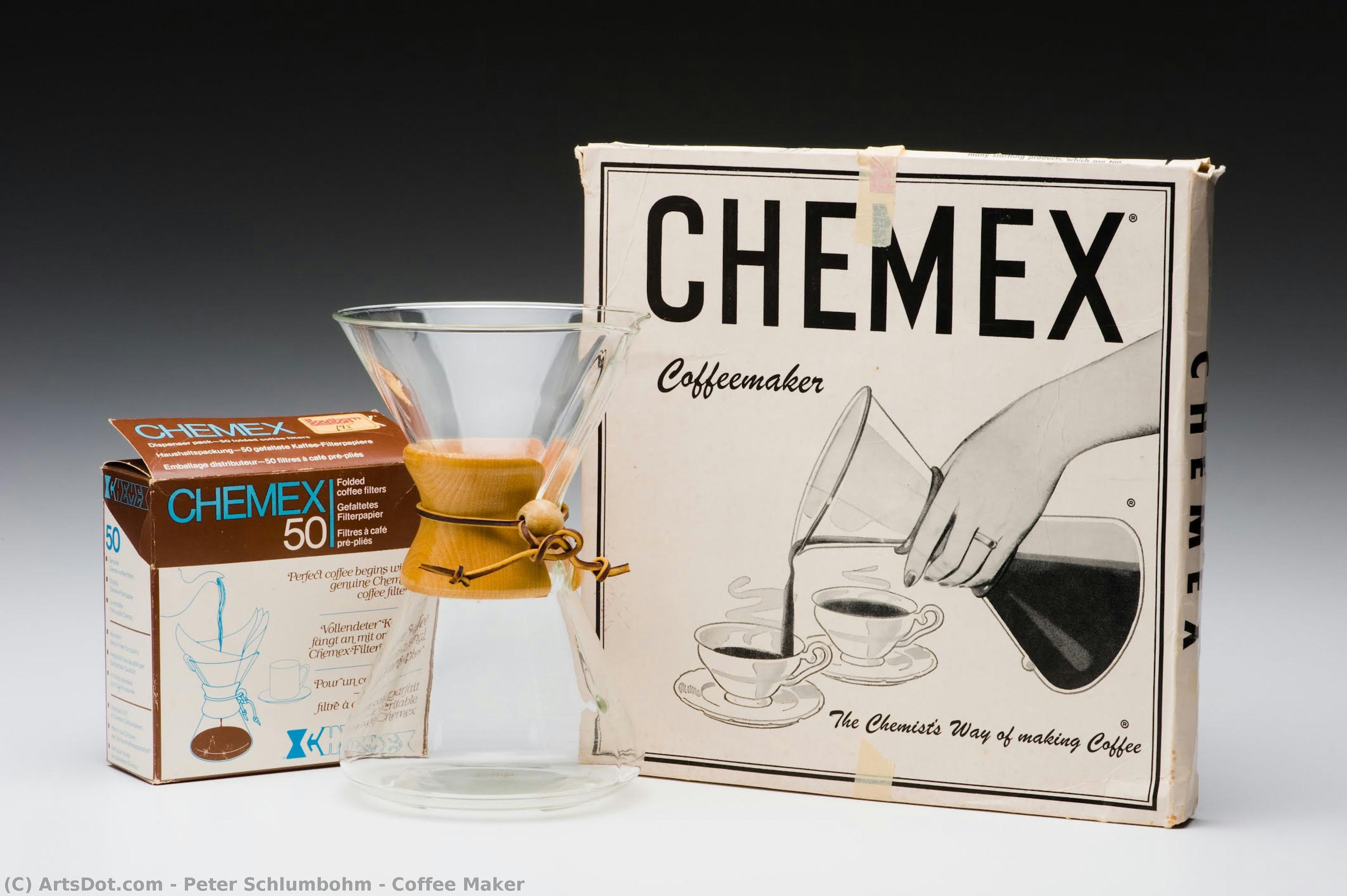
Schlumbohm’s most enduring contribution, undoubtedly, is the Chemex coffee maker. The story behind its creation is as fascinating as the object itself. Drawing inspiration from his laboratory experience with Erlenmeyer flasks – those elegant, conical glass vessels – he envisioned a brewing method that combined scientific precision with an appreciation for aesthetics. He wasn't simply seeking a functional device; he aimed to create an object of beauty and elegance, mirroring the principles of the Bauhaus movement’s emphasis on form following function. The Chemex’s hourglass shape, constructed from borosilicate glass renowned for its heat resistance, became a testament to this philosophy – a harmonious blend of practicality and design. The meticulous attention to detail—the pouring groove, the level indicator, the integrated filter—demonstrates Schlumbohm's commitment to creating an intuitive and rewarding user experience.
Beyond the Chemex: A Diverse Inventor
While the Chemex rightfully dominates his legacy, it’s important to recognize that Schlumbohm was a prolific inventor with over 300 patents filed throughout his career. His interests spanned a surprisingly wide range of fields, including lighting systems, refrigeration technologies, and even novel writing utensils. This diverse portfolio reveals a restless intellect driven by curiosity and a desire to improve everyday life through inventive solutions. His work on transitory refrigeration cycles, showcased at the 1939 New York World’s Fair, highlights his commitment to pushing the boundaries of scientific innovation. The fact that he was willing to explore such unconventional ideas speaks volumes about his independent spirit and unwavering belief in the power of invention.
Legacy and Enduring Influence
Peter Schlumbohm died in 1962, leaving behind a relatively small but remarkably impactful body of work. The Chemex coffee maker, however, transcended its initial purpose to become an icon of modern design—a symbol of refined taste and the pursuit of quality. Its enduring popularity is a testament to Schlumbohm’s vision: a simple object that elevates a commonplace ritual into an experience of beauty and pleasure. His work continues to be celebrated for its elegant form, its functional ingenuity, and its quiet contribution to the art of everyday living. The Chemex remains in production today, a tangible reminder of the German inventor who dared to transform the ordinary into something extraordinary.