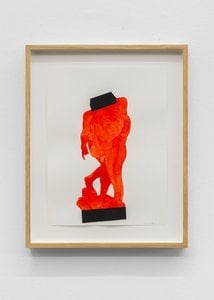
Pello Irazu Mendizabal: Sculpting the Basque Landscape and Beyond
Born in Ordoñez de Reye, Spain, in 1963 – specifically in Andoain, a town steeped in Basque history and tradition – Pello Irazu Mendizabal’s artistic journey is inextricably linked to his homeland. He emerged as a key figure in the revitalization of Basque sculpture during the 1980s, a period marked by a renewed interest in regional identity and artistic expression. His work isn't merely about creating objects; it’s an exploration of space, form, and the relationship between the viewer and the artwork – a dialogue that challenges conventional notions of sculpture and invites profound contemplation.
Early Influences and Artistic Foundations
Irazu’s early artistic development was profoundly shaped by Jorge Oteiza, a towering figure in Basque sculpture. Oteiza's philosophy centered on the idea that form should be intrinsically linked to its function, rejecting decorative excess in favor of pure geometric abstraction. Irazu initially embraced this approach, meticulously studying Oteiza’s use of space and his commitment to stripping away superfluous elements. However, he quickly began to diverge, incorporating industrial materials – steel, wood, plywood – into his work, a shift that signaled a move towards a more tactile and experiential engagement with the viewer. This experimentation was further fueled by his time in London and New York, exposing him to diverse artistic currents including minimalism and post-minimalism.
- London (1989): A year spent absorbing international art trends.
- New York (1990-1998): Crucial period of experimentation with materials like plywood and plastic, leading to a new visual language.
A Shift Towards Hybridity: Sculpture, Painting, and Photography
Irazu’s artistic practice underwent a significant transformation in the late 1980s and early 1990s. He began to challenge the traditional boundaries between sculpture, painting, and photography. He famously started applying paint directly to walls, creating mural-like compositions that integrated three-dimensional elements – objects, forms, and arrangements – into a single, unified space. This blurring of genres was not merely stylistic; it reflected a deeper interrogation of perception and representation. He deliberately disrupted the established hierarchy between foreground and background, forcing the viewer to actively participate in constructing meaning.
His work during this period frequently referenced domestic spaces, deconstructing familiar objects and reassembling them in ways that created a sense of disorientation and intrigue. The use of scrap paper, often printed, further complicated the visual landscape, layering references and challenging the notion of a singular, fixed image. This approach aligns with conceptualism, prioritizing ideas and processes over purely aesthetic concerns.
Major Works and Institutional Recognition
Irazu’s sculptures have been recognized by some of the most prestigious institutions in Spain and internationally. His work is featured prominently in collections such as the Bilbao Fine Arts Museum, the Reina Sofía Museum, the MACBA (Barcelona), the ARTIUM (Vitoria), the San Diego Museum of Contemporary Art, and the Guggenheim Museum Bilbao. Notable pieces include *Corazón* (1989) and *Plural* (1991), which are held in the Fundació Suñol’s collection, showcasing his early explorations with spatial relationships and material experimentation.
- Corazón (1989): A foundational work demonstrating his initial engagement with Oteiza's principles.
- Plural (1991): Illustrates his evolving approach to space and form.
Contemporary Significance and Ongoing Exploration
Pello Irazu’s contribution to contemporary sculpture extends beyond mere stylistic innovation. He has consistently pushed the boundaries of what sculpture can be, questioning established conventions and inviting viewers to reconsider their relationship with art and space. His work continues to evolve, incorporating new technologies and reflecting on themes of representation and perception. He remains a vital voice in the Basque artistic landscape, embodying a spirit of experimentation, intellectual rigor, and a deep connection to his cultural heritage. His ongoing exploration of form, function, and the interplay between different media ensures that his legacy as one of the most significant sculptors of our time will continue to grow.



 Voorvertoning
 Schakel over naar print
 Verstuur
 Delen
Delen
 Details bekijken

 Download
 Vergelijkbare items
 Röntgenonderzoek
 Diavoorstelling
 Statistieken


 Lees meer