x
VoorvertoningVoorvertoning Bekijk in ARBekijk in AR Bestel handgeschilderde reproductie Bestel handgeschilderde reproductieKoop afbeelding Koop afbeelding VerstuurVerstuur
Details bekijkenDetails bekijken Toevoegen aan favorieten Toevoegen aan favorieten DownloadDownload Vergelijkbare itemsVergelijkbare items RöntgenonderzoekRöntgenonderzoek DiavoorstellingDiavoorstelling

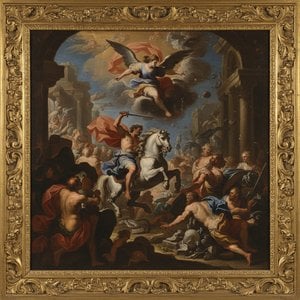
Intrede in Jeruzalem

Pedro Orrente's 'Intrede in Jeruzalem' (1620) toont een indrukwekkende scène van Jezus' aankomst. Een meesterwerk van de Spaanse Barok, vol emotie en realisme.

Explore the Baroque paintings of Pedro Orrente, a Spanish artist known for animal & landscape scenes, historical works, & his influence on Valencian art.

Giclée / Kunstafdrukken

Giclée- of canvasafdruk van museumkwaliteit met een snelle productie en flexibele afwerkingsmogelijkheden. (Bestel handgeschilderde reproductie Bestel handgeschilderde reproductieKoop afbeelding Koop afbeelding)

P118B $10
P118H $10
P118W $10
P438Z $10
P508JH $12
P508YH $12
P805H $10
P805Z $10
P919BZ $10
P919G $10
P919XJ $10
P959ZH $10
P968JZ $12
W106C $8
W218G $10
W218JH $8
W218Y $10
W307PJ $10
W316G $10
W316PJ $8
W316Y $10
W398PJ $8
W4111J $10
W500HY $15
W500JH $15
W692G $12
W849H $8
W940BG $15
W953PJ $8

Standaardformaat
op maat gemaakt
CM
INCH

Kies uit onze vooraf ingestelde maten die overeenkomen met de originele verhoudingen van het kunstwerk.

breedte
hoogte

U kunt uw eigen afmetingen opgeven om in een specifieke lijst of ruimte te passen. Als de door u gekozen maat niet overeenkomt met de proporties van het originele kunstwerk, zullen wij de afbeelding bijsnijden of uitbreiden met een gespiegelde of effen rand. Een digitaal mockup wordt ter goedkeuring naar u verzonden voordat de productie begint.
Houd er rekening mee dat de preview op het scherm de werkelijke bijsneding of uitbreiding niet weergeeft. Alleen de mockup toont de uiteindelijke compositie nauwkeurig.
Hoewel aangepaste maten beschikbaar zijn, raden wij aan een afmeting uit de vooraf bepaalde lijst te kiezen om de originele proporties te behouden.

Wereldwijde levering () binnen 2 weken in plaats van de standaard 4/5 weken. (5 september)

why_choose_icon
Gratis wereldwijde expressverzending
why_choose_icon
Hoogwaardig linnen canvas
why_choose_icon
Volledige verzendverzekering
why_choose_icon
Garantie op terugbetaling van invoerrechten
why_choose_icon
Garantie op exacte kleurweergave
why_choose_icon
Retourbeleid van 60 dagen (alleen bij defecten)
why_choose_icon
100% Geld-terug-garantie
why_choose_icon
Korting bij meerdere afnames

Totaalprijs

$ 69

reproduction

Intrede in Jeruzalem

Giclée / Kunstafdrukken

Afmetingen reproductie

-

Eindtotaal

$ 69

Snelle feiten

  • Title: Entry into Jerusalem
  • Subject or theme: Christ's Entry
  • Influences: Spanish Baroque
  • Notable elements: Cross, birds, crowd
  • Dimensions: 112 x 127 cm
  • Medium: Oil on canvas
  • Location: Hermitage, St. Petersburg

Kunstquiz

Er is slechts één goed antwoord op elke vraag.

Vraag 1:
What is the primary subject depicted in Pedro Orrente’s ‘Entry into Jerusalem’?
Vraag 2:
According to the description, what prominent element is visible in the center of the painting?
Vraag 3:
In what year was ‘Entry into Jerusalem’ painted?
Vraag 4:
Pedro Orrente is considered significant for his work because he:
Vraag 5:
The image description mentions two birds visible in the sky. What do these likely symbolize?

De Betekenis van een Moment: Pedro Orrente’s ‘Entry into Jerusalem’

Pedro de Orrente’s ‘Entry into Jerusalem,’ geschilderd rond 1620, is meer dan een historische afbeelding; het is een krachtige visuele weergave van geloof, hoop en de spanning van een moment. De compositie, met zijn gedetailleerde weergave van de menigte en de prominente figuur van Jezus op een ezel, roept een gevoel van verwondering en spirituele intensiteit op. Orrente’s kunstwerk is een bewijs van zijn baanbrekende naturalistische benadering binnen de context van de Spaanse Barok, een stijl die hij met succes combineerde met emotionele expressie en dramatische compositie.

De scène zelf is doordrenkt van symboliek. Jezus’ toetreding tot Jeruzalem, zoals beschreven in de Evangelies, markeert het begin van zijn laatste dagen en de culminatie van zijn reis naar de stad. Orrente vangst dit moment met een scherp oog voor detail: de diverse gezichten van de menigte, die variëren van vroomheid tot opwinding, creëren een levendig en authentiek beeld van de reactie van het volk. De man die de kruisdragende ezel vasthoudt, is een krachtig symbool van lijden en offerschap, terwijl de twee vogels in de lucht een element van hoop en verlichting toevoegen aan de compositie.

Barokke Techniek en Realistische Weergave

Orrente’s schildersteknik is kenmerkend voor de Spaanse Barok, gekenmerkt door rijke kleuren, dramatische lichtval en een intense emotionele expressie. Hij maakt gebruik van *sfumato*, een techniek die vaak werd gebruikt door Leonardo da Vinci, om de contouren van de figuren te vervagen en een zachte, dromerige atmosfeer te creëren. De details in de kleding, de gezichten en de omgeving zijn met zorg uitgewerkt, wat bijdraagt aan het gevoel van realisme en authenticiteit. De gebruikte olieverftechniek zorgt voor diepte en textuur, waardoor de scène tot leven lijkt te komen.

Het is opvallend dat Orrente zich in deze periode afweek van de meer traditionele, idealistische benadering van religieuze kunst. Hij koos ervoor om de gebeurtenis zo realistisch mogelijk weer te geven, met alle menselijke emoties en imperfecties die daarbij horen. Dit maakte zijn werk bijzonder innovatief voor zijn tijd en plaatste hem in de positie van een pionier binnen de Spaanse kunstwereld.

Historische Context en Orrente’s Erfgoed

Pedro Orrente leefde in een periode van grote artistieke transformatie in Spanje. Na de Renaissance, die zich kenmerkte door idealisme en perfectie, begon de Barok om zich heen te groeien, met zijn nadruk op emotie, drama en realisme. Orrente was een belangrijke figuur in deze overgang, en hij werd beschouwd als een van de eerste Spaanse kunstenaars die naturalistische elementen integreerde in zijn werk. Zijn ‘Entry into Jerusalem’ is daar een perfect voorbeeld van.

Hoewel Orrente niet zo bekend is als sommige van zijn contemporaines, zoals El Greco, heeft hij een belangrijke bijdrage geleverd aan de Spaanse kunstgeschiedenis. Zijn werk wordt gekenmerkt door een unieke combinatie van emotionele intensiteit en realistische weergave, waardoor het tot op vandaag nog steeds indrukwekkend is. De ‘Entry into Jerusalem’ is een bewijs van zijn talent en visie, en een waardevolle toevoeging aan elke kunstcollectie.


Biografie van de kunstenaar

The Spanish Bassano: The Life and Legacy of Pedro Orrente

In the vibrant tapestry of the Spanish Golden Age, few threads are as intricately woven yet subtly colored as those left by Pedro Orrente. Born in Murcia in 1580, Orrente emerged during a transformative era when the dramatic tensions of the Baroque were beginning to coalesce with a burgeoning interest in naturalism. While history often shines its brightest spotlight on more flamboyant figures like El Greco, Orrente carved out a profound niche by bridging these two worlds. His life was one of movement and adaptation, traveling from his native Murcia to the artistic hubs of Toledo and eventually settling in Valencia, where he would pass away in 1645. This nomadic existence allowed him to absorb the diverse artistic currents of Spain, creating a body of work that feels both deeply rooted in Spanish tradition and breathlessly connected to the broader European landscape.

The foundations of Orrente’s mastery were laid in his early years, likely under the tutelage of the Murcia painter Juan de Arizmendi. However, it was his time in Toledo around 1600 that truly ignited his professional ascent. It was here that he encountered Jorge Manuel Theotocóp_uli, the son of El Greco, a friendship that undoubtedly exposed him to the lingering echoes of Mannerism. Yet, Orrente’s true artistic soul found its resonance elsewhere. His travels took him to Venice, where the influence of the Bassano family became an indelible part of his visual vocabulary. Often referred to as "the Spanish Bassano," Orrente adopted their unique ability to transform biblical narratives into dynamic genre scenes. He learned to populate his canvases with lively figures set against lush, detailed landscapes, moving away from stiff, idealized compositions toward a more visceral, human experience of the divine.

A Mastery of Naturalism and Dramatic Light

Orrente’s technical prowess is most evident in his ability to manipulate light and shadow to evoke profound emotional responses. He was a pioneer of naturalism within the Spanish Baroque framework, prioritizing an accurate, almost tactile representation of the world around him. In masterpieces such as "The Sacrifice of Isaac" (1616), one can witness this tension between the sacred and the earthly. The composition is charged with an urgent, palpable anxiety, where the intervention of the angel provides a moment of divine grace amidst the raw, human terror of the scene. His use of chiaroscuro—the dramatic interplay of light and dark—serves not merely as a stylistic flourish but as a narrative tool to anchor the viewer’s eye to the most poignant emotional beats of his stories.

This skill is further illuminated in works like "Entry into Jerusalem" (c. 1620), where the biblical event is stripped of distant abstraction and rendered as a vibrant, crowded tableau. Through his brush, Jesus does not arrive merely as a theological icon but as a figure moving through a real, breathing world, surrounded by a diverse crowd of worshippers, skeptics, and onlookers. Orrente had a remarkable gift for detail; whether it was the texture of a donkey's coat, the fluttering of birds in a vast sky, or the subtle expressions of devotion on a disciple's face, his work invites a slow, meditative gaze that rewards the observer with endless layers of meaning.

Historical Significance and Artistic Triumph

The enduring significance of Pedro Orrente lies in his role as a transitional architect of Spanish art. He stood at the crossroads of eras, helping to steer the Spanish aesthetic away from the elongated, spiritualized forms of the late Renaissance toward the grounded, dramatic realism that would define much of the 17th century. His ability to synthesize the Venetian approach to landscape and genre with the intense religious fervor of Spain created a unique visual language that resonated across the regions where he worked.

Reflecting on his contributions, several key elements define his artistic triumph:

  • Pioneering Naturalism: He was among the first in his region to prioritize realistic, human-centric representations within religious subjects.
  • The Venetian Connection: His successful integration of the Bassano family's style allowed him to introduce a new sense of landscape and movement to Spanish altarpieces.
  • Emotional Depth: Through masterful use of light and composition, he transformed static biblical stories into living, breathing dramas.
  • Cultural Bridge: His work served as a vital link between the fading influence of El Greco's Mannerism and the rising tide of the Baroque.

Though his name may not always command the immediate recognition of the most famous masters, the impact of Pedro Orrente is felt in every shadow and every sun-drenched landscape of his canvases. He remains a vital figure for any student of art history, representing a moment of profound change where the divine was brought down to earth through the lens of breathtaking realism.

Pedro Orrente

Pedro Orrente

1580 - 1645 , Spain

Belangrijkste feiten

  • Artistic Movement Or Style: Baroque
  • Artists Or Movements Influenced By This Artist:
    • Esteban March
    • Valencian art
  • Artists Who Influenced This Artist: ['El Greco']
  • Date Of Birth: April 1580
  • Date Of Death: January 1645
  • Full Name: Pedro de Orrente
  • Nationality: Spanish
  • Notable Artworks:
    • The Sacrifice of Isaac
    • El bateig de Crist
    • Saint Leocadia
  • Place Of Birth: Murcia, Spain
Ontdek kunstwerken georganiseerd op thema, stijl en kenmerk.