


 Acrylic On CanvasWallArtNeo-Impressionistic Pointillism
 190419th Century
 65.0 x 81.0 cm
Met de hand geschilderd in olieverf op canvas in uw gewenste maat en lijst, op bestelling gemaakt door onze kunstenaars. ( Bestel print Koop afbeelding)





























Kies uit onze vooraf ingestelde maten die overeenkomen met de originele verhoudingen van het kunstwerk.

U kunt uw eigen afmetingen invoeren om in een specifieke lijst of ruimte te passen. Als de door u gekozen maat niet overeenkomt met de verhoudingen van het originele beeld, zullen we het kunstwerk bijsnijden of het schilderij uitbreiden met extra handgeschilderde elementen. Een digitale mockup wordt ter goedkeuring naar u verzonden voordat de productie begint.
Houd er rekening mee dat de preview op het scherm niet de werkelijke uitsnede of uitbreiding weergeeft. Alleen de mockup toont de uiteindelijke compositie nauwkeurig.
Hoewel aangepaste afmetingen mogelijk zijn, raden we aan een maat uit de vooraf gedefinieerde lijst te selecteren om de originele verhoudingen te behouden.
Wereldwijde levering () binnen 3 tot 4 weken in plaats van de standaard 5 weken. (6 september). Zonder concessies aan de kwaliteit.


La Voile verte
Afmetingen reproductie
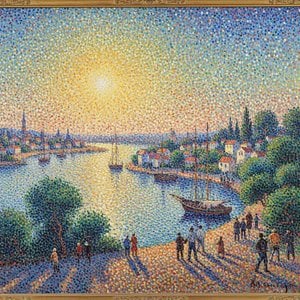
Paul Signac's 1904 painting, *La Voile verte*, is more than just a depiction of a serene coastal scene; it’s a meticulously constructed testament to the revolutionary principles of Neo-Impressionism. This vibrant canvas captures a fleeting moment on the water – sailboats gliding across a brilliant blue expanse – rendered with an almost scientific precision that reveals Signac's deep engagement with the burgeoning field of color theory. The painting, measuring 65 x 81 cm, immediately draws the viewer into its luminous embrace, inviting contemplation of light, movement, and the very nature of perception.
*La Voile verte* exemplifies Signac’s mastery of Pointillism, a technique he developed in collaboration with Georges Seurat. Rather than blending colors on the palette or directly on the canvas, Signac employed thousands of tiny, distinct dots – *touches* as he called them – of pure color. These individual points, when viewed from a distance, optically blend to create an illusion of tone and hue. This method wasn’t simply a stylistic choice; it was rooted in scientific observation of how the human eye perceives color. Signac believed that by isolating and applying these pure colors, he could achieve a greater luminosity and vibrancy than traditional blending techniques allowed. The result is a shimmering surface alive with reflected light, capturing the dynamism of the water and the sails with remarkable fidelity.
Created in 1904, *La Voile verte* sits firmly within the context of Neo-Impressionism, a movement that emerged as a reaction against the subjective Impressionists. While Impressionists sought to capture fleeting moments and atmospheric effects, Signac and Seurat aimed for a more systematic approach – one grounded in scientific principles. They drew inspiration from the work of Eugène Chevreul, a chemist who had studied color perception and demonstrated how complementary colors could enhance each other’s brilliance. This pursuit of ‘scientific beauty’ sought to unlock the secrets of light and color through rigorous observation and methodical application.
Beyond its technical innovation, *La Voile verte* evokes a powerful sense of tranquility and leisure. The sailboats, with their billowing green sails, represent freedom, movement, and connection to nature. The bright blue water mirrors the sky, creating a harmonious balance that is both visually stunning and emotionally soothing. Signac’s meticulous attention to detail – from the reflections on the water to the subtle variations in color – invites the viewer to lose themselves in the scene, experiencing a moment of quiet contemplation amidst the bustle of modern life. This painting continues to resonate with its masterful use of light and color, offering a timeless depiction of beauty and serenity.


1863 - 1935 , Frankrijk
Embark on a sophisticated journey into the luminous world of Neo-Impressionism. Uncover the scientific brilliance of Pointillism, from Georges Seurat’s revolutionary color theory to the mesmerizing magic of the dot. An expert exploration for true art history enthusiasts.

Explore the scientific brilliance of Seurat and Signac. Discover how Pointillism revolutionized color through optical mixing and light, offering a profound look into the Neo-Impressionist movement for true art connoisseurs and collectors.
Discover the mesmerizing world of Pointillism. Explore the revolutionary techniques of Georges Seurat, the science of optical color mixing, and the enduring legacy of Neo-Impressionism in this expert guide for classical art enthusiasts.

Explore the ethereal beauty of Impressionist landscapes. Discover how masters like Monet captured fleeting light through color and texture, and learn to curate these timeless, luminous masterpieces for your home collection.

 Voorvertoning
 Verstuur
 Delen
Delen
 Details bekijken

 Download
 Vergelijkbare items
 Röntgenonderzoek
 Diavoorstelling
 Lees meer







 De optie voor glas is alleen beschikbaar bij een formaat kleiner dan 110 cm.


