Bekijk op ware grootte Bekijk in AR Koop handgeschilderd kunstwerk Schakel over naar digitale afbeeldingen Verstuur
Details bekijken Gids voor studentenkunstwerken Toevoegen aan favorieten Download Vergelijkbare items Röntgenonderzoek Diavoorstelling Statistieken

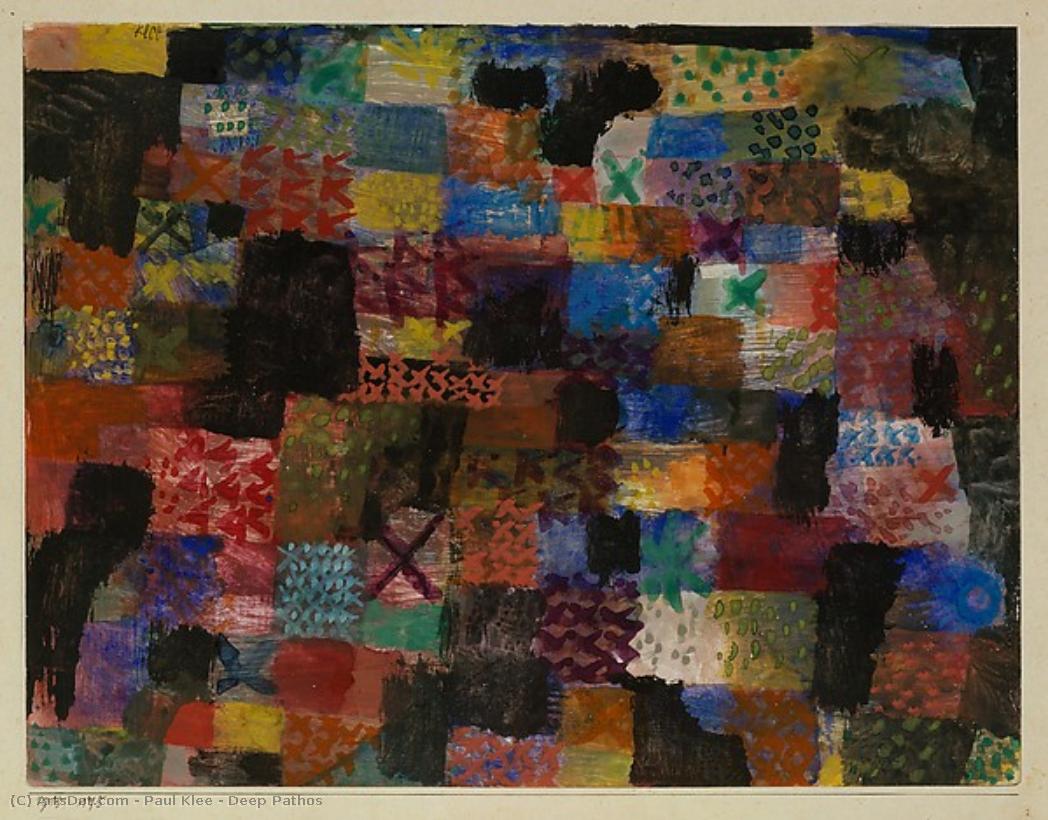
Deep Pathos

Explore Paul Klee's 'Deep Pathos,' an evocative abstract painting blending Expressionism and Cubism with muted earth tones and vibrant accents—a masterpiece reflecting profound emotion.

Ontdek Paul Klee (1879-1940): Een Zwitserse kunstenaar die Expressionisme, Kubisme en Surrealisme combineerde tot een speelse abstracte stijl. Laat je inspireren door zijn kleurtheorie & Bauhaus invloed!

Giclée / Kunstafdrukken

Giclée- of canvasafdruk van museumkwaliteit met een snelle productie en flexibele afwerkingsmogelijkheden. ( Koop handgeschilderd kunstwerk Schakel over naar digitale afbeeldingen)

Corner sample of the P118B picture frame: moulded polystyrene, 5 cm wide and 3 cm thick
P118B €10
Corner sample of the P118H picture frame: moulded polystyrene, 5 cm wide and 3 cm thick
P118H €10
Corner sample of the P118W picture frame: moulded polystyrene, 5 cm wide and 3 cm thick
P118W €10
Corner sample of the P438Z picture frame: moulded polystyrene, 5.5 cm wide and 3.5 cm thick
P438Z €10
Corner sample of the P508JH picture frame: moulded polystyrene, 7 cm wide and 3.5 cm thick
P508JH €12
Corner sample of the P508YH picture frame: moulded polystyrene, 7 cm wide and 3.5 cm thick
P508YH €12
Corner sample of the P805H picture frame: moulded polystyrene, 5 cm wide and 3.5 cm thick
P805H €10
Corner sample of the P805Z picture frame: moulded polystyrene, 5 cm wide and 3.5 cm thick
P805Z €10
Corner sample of the P919BZ picture frame: moulded polystyrene, 7 cm wide and 3.5 cm thick
P919BZ €10
Corner sample of the P919G picture frame: moulded polystyrene, 7 cm wide and 3.5 cm thick
P919G €10
Corner sample of the P919XJ picture frame: moulded polystyrene, 7 cm wide and 3.5 cm thick
P919XJ €10
Corner sample of the P959ZH picture frame: moulded polystyrene, 5 cm wide and 3 cm thick
P959ZH €10
Corner sample of the P968JZ picture frame: moulded polystyrene, 6 cm wide and 4 cm thick
P968JZ €12
Corner sample of the W106C picture frame: solid wood, 5 cm wide and 3 cm thick
W106C €8
Corner sample of the W218G picture frame: solid wood, 5 cm wide and 3 cm thick
W218G €10
Corner sample of the W218JH picture frame: solid wood, 5 cm wide and 3 cm thick
W218JH €8
Corner sample of the W218Y picture frame: solid wood, 5 cm wide and 3 cm thick
W218Y €10
Corner sample of the W307PJ picture frame: solid wood, 6 cm wide and 3 cm thick
W307PJ €10
Corner sample of the W316G picture frame: solid wood, 6 cm wide and 3 cm thick
W316G €10
Corner sample of the W316PJ picture frame: solid wood, 6 cm wide and 3 cm thick
W316PJ €8
Corner sample of the W316Y picture frame: solid wood, 6 cm wide and 3 cm thick
W316Y €10
Corner sample of the W398PJ picture frame: solid wood, 5 cm wide and 3 cm thick
W398PJ €8
Corner sample of the W4111J picture frame: solid wood, 6.5 cm wide and 3.5 cm thick
W4111J €10
Corner sample of the W500HY picture frame: solid wood, 7 cm wide and 5 cm thick
W500HY €15
Corner sample of the W500JH picture frame: solid wood, 7 cm wide and 5 cm thick
W500JH €15
Corner sample of the W692G picture frame: solid wood, 8 cm wide and 4 cm thick
W692G €12
Corner sample of the W849H picture frame: solid wood, 5 cm wide and 3 cm thick
W849H €8
Corner sample of the W940BG picture frame: solid wood, 7.5 cm wide and 4.5 cm thick
W940BG €15
Corner sample of the W953PJ picture frame: solid wood, 6 cm wide and 3.5 cm thick
W953PJ €8

Standaardformaat
op maat gemaakt
CM
INCH

Kies uit onze vooraf ingestelde maten die overeenkomen met de originele verhoudingen van het kunstwerk.

breedte
hoogte

U kunt uw eigen afmetingen opgeven om in een specifieke lijst of ruimte te passen. Als de door u gekozen maat niet overeenkomt met de proporties van het originele kunstwerk, zullen wij de afbeelding bijsnijden of uitbreiden met een gespiegelde of effen rand. Een digitaal mockup wordt ter goedkeuring naar u verzonden voordat de productie begint.
Houd er rekening mee dat de preview op het scherm de werkelijke bijsneding of uitbreiding niet weergeeft. Alleen de mockup toont de uiteindelijke compositie nauwkeurig.
Hoewel aangepaste maten beschikbaar zijn, raden wij aan een afmeting uit de vooraf bepaalde lijst te kiezen om de originele proporties te behouden.

Wereldwijde levering () binnen 2 weken in plaats van de standaard 4/5 weken. (10 oktober)

Gratis wereldwijde expressverzending
Hoogwaardig linnen canvas
Volledige verzendverzekering
Garantie op terugbetaling van invoerrechten
Garantie op exacte kleurweergave
Retourbeleid van 100 dagen (alleen bij defecten)
100% Geld-terug-garantie
Korting bij meerdere afnames

Totaalprijs

€ 59

Deep Pathos

Giclée / Kunstafdrukken

Formaat reproductie

-

Totaalprijs

€ 59

Belangrijkste kenmerken

  • Subject or theme: Emotion
  • Year: 1915
  • Location: The Metropolitan Museum of Art
  • Artist: Paul Klee
  • Medium: Oil on paper
  • Influences:
    • Cubism
    • Surrealism
  • Movement: Expressionism

Kunstquiz

Er is slechts één goed antwoord op elke vraag.

Vraag 1:
What artistic movement is Paul Klee’s ‘Deep Pathos’ primarily associated with?
Vraag 2:
In what year was ‘Deep Pathos’ created?
Vraag 3:
What medium did Paul Klee use to create ‘Deep Pathos’?
Vraag 4:
‘Deep Pathos’ utilizes a grid-like structure. What does this structural element symbolize?
Vraag 5:
Which artistic influences are evident in Klee's use of color theory within ‘Deep Pathos’?

Deep Pathos: An Exploration of Color and Emotion in Paul Klee’s Masterpiece

Paul Klee's "Deep Pathos," created in 1915, stands as a testament to the artist’s singular vision—a fusion of Expressionism, Cubism, and Surrealism that transcends mere visual representation. More than just pigment on paper, it embodies a profound engagement with psychological depth and invites contemplation about the complexities of human experience. This oil painting on cardboard, measuring 9 1/4 × 11 1/2 inches, is housed at The Metropolitan Museum of Art (The ME), offering visitors an unparalleled opportunity to immerse themselves in Klee’s groundbreaking aesthetic.

Composition and Structure: A Grid Beyond Geometry

At first glance, "Deep Pathos" presents a deceptively simple geometric framework—a grid composed of interlocking rectangular blocks. However, this apparent rigidity belies a dynamic interplay of movement and visual rhythm. Unlike traditional perspective, Klee eschews linear recession, instead layering colors and shapes to create an illusion of depth that feels organic rather than calculated. The absence of a dominant focal point encourages the viewer’s eye to wander across the surface, discovering subtle nuances in texture and color as it progresses. This deliberate fragmentation reflects Klee's fascination with Cubist principles while simultaneously hinting at the subconscious currents explored by Surrealist artists—a duality that underscores the painting’s emotional resonance.

Color Palette: Earthy Undertones Illuminated by Vibrant Accents

The artwork’s dominant palette is rooted in muted earth tones—browns, ochres, reds, and blues—creating a mood of quiet contemplation. Yet, these subdued hues are punctuated by bursts of brighter colors—yellows, greens, and oranges—that inject vitality into the composition without overwhelming it. Klee's masterful manipulation of color theory is evident in his careful layering of pigments, allowing underlying tones to subtly influence the appearance of surface shades. This technique contributes to a sense of luminosity and depth, mirroring the artist’s belief that color possesses inherent expressive power. The translucent quality of the paint lends an ethereal feel to the piece, enhancing its contemplative atmosphere.

Influence and Artistic Context: Echoes of Ancient Art and Modern Movements

Klee's artistic sensibilities were profoundly shaped by a diverse range of influences—from ancient Egyptian art’s symbolic use of color and form to the burgeoning avant-garde movements of his time. Notably, "Deep Pathos" draws inspiration from Surrealist imagery, mirroring Klee’s exploration of dreamlike states and subconscious associations. Simultaneously, it reflects the geometric rigor characteristic of Cubism, demonstrating Klee's willingness to experiment with innovative stylistic approaches. His involvement in Der Blaue Reiter (The Blue Rider) and Die Brücke solidified his position within a circle of artists committed to challenging artistic conventions and expressing emotional truths—a legacy that continues to inspire contemporary art practitioners.

Symbolic Depth: Exploring Emotion Through Abstract Form

Ultimately, "Deep Pathos" transcends literal representation, prioritizing symbolic exploration over visual realism. The grid-like structure serves as a metaphor for order struggling against chaos—a motif recurrent throughout Klee’s oeuvre—while the delicate lines and organic shapes evoke feelings of vulnerability and introspection. As Klee himself stated, “I want to express what I see.” The title itself—"Deep Pathos"—suggests an investigation into profound sorrow or melancholy, conveyed through the careful orchestration of color and form. Viewing this artwork is akin to embarking on a journey inward, prompting reflection on universal themes of emotion and experience.

Vragen & Antwoorden

Op welke leeftijd maakte Paul Klee "Deep Pathos"?

Paul Klee was 36 jaar oud bij het creëren van "Deep Pathos" in 1915. De leeftijd is berekend op basis van het geboortejaar van de kunstenaar, 1879.

Naar welke tint neigt "Deep Pathos"?

De dominante kleur van "Deep Pathos" door Paul Klee is Golden Yellow Range. Deze kleur vormt de onderliggende toon van het palet.

Welke techniek en stijl kenmerken "Deep Pathos" door Paul Klee?

"Deep Pathos" is vervaardigd in Gouache, in de Cubism-stijl.

Aan welke kunstenaar wordt "Deep Pathos" toegeschreven?

"Deep Pathos" wordt toegeschreven aan Paul Klee.

Wat is de creatiedatum van "Deep Pathos" door Paul Klee?

"Deep Pathos" dateert uit 1915. Deze datum plaatst het werk binnen de carrière van Paul Klee en de betreffende tijdperk.

Hoe wordt de stemming van "Deep Pathos" door Paul Klee beschreven?

De algehele stemming van "Deep Pathos" door Paul Klee is Calm. De stemming beschrijft de algemene atmosfeer van het werk.

Waar kan ik een digitale afbeelding van "Deep Pathos" door Paul Klee kopen?

Een digitale afbeelding van "Deep Pathos" door Paul Klee kan worden aangeschaft op deze pagina: een download van een digitale afbeelding in hoge resolutie.


Biografie van de kunstenaar

Een Leven Gevuld met Kleur en Vorm

Paul Klee, een naam die synoniem staat voor speelse abstractie en diepe emotionele rijkdom, neemt een unieke positie in het landschap van de 20e-eeuwse kunst in. Geboren op 18 december 1879 in Münchenbuchsee, Zwitserland, was zijn artistieke reis er één van constante verkenning, die zich onttrok aan gemakkelijke categorisering en een pad smidde dat invloeden uit het Expressionisme, Kubisme en Surrealisme combineerde tot een opvallend persoonlijke visuele taal. Klees jeugd voedde een vroege waardering voor de kunsten; zijn vader, een Duitse muziekdocent, en zijn moeder, een Zwitserse zangeres, instilleerden in hem een gevoeligheid voor zowel auditieve als visuele harmonie. Deze fundamentele verbinding tussen muziek en schilderkunst zou een bepalend kenmerk van zijn oeuvre worden, dat niet alleen zijn compositorische benadering vormgaf, maar ook zijn theoretisch begrip van kunst als een vorm van abstracte expressie die vergelijkbaar is met muzikale arrangementen. Aanvankelijk aangetrokken tot tekenen, verliet Klee al snel het nastreven van realistische representatie en erkende de beperkingen ervan bij het overbrengen van de innerlijke wereld van emoties en ideeën die hij wilde uiten. Hij schreef zich in tussen 1898 en 1901 in aan de Academie voor Beeldende Kunsten in München, een periode gekenmerkt door experimenten en de ontwikkeling van zijn unieke artistieke stem.

De Vorming van een Artistiek Visie

Klees vroege werk onthult de invloed van Art Nouveau en Symbolisme, maar zelfs binnen deze kaders begonnen er hints van zijn toekomstige stijl te ontstaan. Een cruciaal moment in zijn artistieke ontwikkeling was een reis naar Tunesië in 1914. Het intense licht en de levendige sfeer van Noord-Afrika hadden een diepgaande invloed op zijn kleurgebruik, waardoor hij zich losmaakte van gedempte tinten en overging op gedurfder, expressievere paletten. Deze ervaring markeerde een keerpunt, dat zijn toewijding aan abstractie versterkte als middel om de essentie van perceptie vast te leggen in plaats van alleen het oppervlak ervan na te bootsen. Hij *zag* Tunesië niet simpelweg; hij vertaalde de emotionele resonantie ervan naar visuele vorm. Gedurende deze periode engageerde Klee zich met verschillende artistieke bewegingen, absorbeerde hun principes en verzet zich tegelijkertijd tegen volledige naleving van één enkele ideologie. Zijn interesse in muziek bleef van het grootste belang en hij sprak vaak over schilderen als een proces dat analoog is aan het componeren van muziekstukken – een zorgvuldige rangschikking van elementen om een harmonieus geheel te creëren. Deze synesthetische benadering blijkt uit de ritmische kwaliteit van zijn lijnen, de delicate balans van kleuren en het algehele gevoel van beweging dat veel van zijn werken doordringt.

Bauhaus en Verder: Een Periode van Bloei

Van 1931 tot 1933 accepteerde Klee een onderwijsfunctie aan de invloedrijke Bauhaus-school voor kunst, design en architectuur, naast Wassily Kandinsky. Deze periode bleek opmerkelijk vruchtbaar te zijn voor zijn artistieke ontwikkeling. Omringd door innovatieve denkers en medekunstenaars bloeide hij in een omgeving die experimenten en theoretisch onderzoek aanmoedigde. Zijn werk uit deze jaren verdiepte zich verder in de kleurtheorie en formele relaties, waarbij hij de wisselwerking tussen abstracte vormen en emotionele expressie onderzocht. Deze creatieve haven werd echter verstoord door de opkomst van het nazisme in Duitsland. In 1933 werd Klee ontslagen uit het Bauhaus omdat zijn kunst als "ontaard" werd bestempeld door het Nazi-regime – een huiveringwekkend bewijs van de gevaren van politieke ideologie die artistieke vrijheid onderdrukt. Gedwongen terug te keren naar Zwitserland, bleef hij schilderen, maar zijn gezondheid verslechterde onder de schaduw van toenemende politieke onrust en persoonlijke ontberingen. Ondanks deze uitdagingen bleef Klee trouw aan zijn artistieke visie en produceerde werken die zowel de angsten van het tijdperk weerspiegelden als zijn aanhoudend geloof in de kracht van kunst om tegenspoed te overstijgen.

Thema's, Stijl en Blijvende Erfenis

Het werk van Paul Klee wordt gekenmerkt door een boeiende mix van speelsheid en diepe contemplatie. Hij gebruikte vaak kinderlijke beelden en grillige composities, doordrenkt met lagen van symbolische betekenis. Terugkerende thema's in zijn kunst omvatten tuinen, landschappen, portretten en abstracte arrangementen – elk als een voertuig voor het verkennen van de complexiteit van menselijke ervaringen. Zijn “Paul Klee Notebooks”, postuum gepubliceerd, bieden waardevolle inzichten in zijn uitgebreide theoretische onderzoeken naar kleur en design, die een nauwgezette en intellectuele benadering van artistieke creatie onthullen. Hij schilderde niet simpelweg; hij construeerde een visuele taal gebaseerd op principes van harmonie, evenwicht en emotionele resonantie. Hamamet, Tuin van het Zuiden en De Zwitscher-Maschine zijn slechts enkele voorbeelden die zijn beheersing van kleur en vorm laten zien. Paul Klee stierf op 29 juni 1940 in Muralto, Zwitserland, en liet een erfenis achter die kunstenaars blijft inspireren en publiek wereldwijd boeit. Hij wordt terecht beschouwd als een van de belangrijkste figuren van de 20e-eeuwse kunst, die de kloof overbrugde tussen figuratieve en abstracte expressie en zijn plaats verankerde als een iconische vernieuwer wiens werk eeuwig relevant blijft.

Musea & Verder Onderzoek

  • Zentrum Paul Klee (Bern): Thuisbasis van de grootste collectie werken van Klee, die een uitgebreid overzicht biedt van zijn artistieke reis.
  • Museum voor Schone Kunsten Bern: Bevat belangrijke stukken van Klee naast meesterwerken van Picasso en Hodler.
  • Kunstmuseum Bern: Zwitserlands oudste kunstmuseum, met een diverse collectie waaronder werken van Klee en andere moderne meesters.
Zijn invloed strekt zich uit tot gebieden buiten de schilderkunst, zoals design, architectuur en muziek. De blijvende aantrekkingskracht van Paul Klees werk ligt in het vermogen om een gevoel van verwondering op te roepen en kijkers uit te nodigen kunst op emotioneel en intellectueel niveau te ervaren – een bewijs van zijn genialiteit en blijvende bijdrage aan de wereld van de visuele cultuur.
Paul Klee

Paul Klee

1879 - 1940 , Zwitserland

Snelle feiten

  • Artistic Movement Or Style: Expressionisme, Kubisme, Surrealisme
  • Artists Or Movements Influenced By This Artist: ['Moderne kunst']
  • Artists Who Influenced This Artist: ['Wassily Kandinsky']
  • Date Of Birth: 18 december 1879
  • Date Of Death: 29 juni 1940
  • Full Name: Paul Klee
  • Nationality: Zwitsers-Duits
  • Notable Artworks:
    • Hamamet
    • Siblings
    • En la corriente seis umbrales
  • Place Of Birth: Münchenbuchsee, Zwitserland
Ontdek kunstwerken georganiseerd op thema, stijl en kenmerk.