Kunstenaarsbiografie
Paul Delvaux: Een Droomwever van de Surrealistische Kunst
Paul Delvaux, geboren in 1897 in het kleine Belgische dorp Wanze, begon een reis die hem zou leiden tot een van de meest herkenbare stemmen binnen de surrealistische kunst, hoewel hij vaak weigerde zich strikt aan deze categorie te houden. Zijn vroege leven was doordrenkt met tegenstrijdige invloeden – de rigoureuze discipline van klassieke opleiding in Grieks en Latijn naast de fantastische werelden die werden geschetst door Jules Verne en Homers *Odyssee*. Deze dualiteit, tussen orde en verbeelding, zou zijn artistieke visie definiëren. In eerste instantie werd hij door zijn ouders richting een praktische carrière in architectuur geleid, maar Delvaux voelde zich onweerstaanbaar aangetrokken tot schilderkunst, waarbij hij uiteindelijk inschrijving nastreeft aan de Academie Royale des Beaux-Arts in Brussel. Hoewel hij worstelde met de wiskundige eisen van architectuur, stelde de training hem een beheersing te bieden van perspectief en vorm die later diende als basis voor zijn verontrustende droomlandschappen. Zijn vroege werken weerspiegelden deze academische grondslag, voornamelijk landschappen geschilderd in een post-impressionistische stijl, maar al vroeg waren hints van de vreemde sfeer die kenmerkend zou worden voor zijn volwassen werk.
De Ontstaan van een Surrealistische Visie
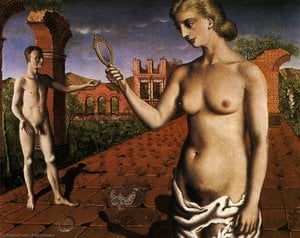
Het cruciale moment in Delvaux’s artistieke ontwikkeling kwam met zijn ontmoeting met het werk van Giorgio de Chirico. De Chirico’s metafysische schilderijen – strakke, enigmatische scènes vol schaduwen en klassieke architectuur – resoneren diep bij Delvaux, waardoor een nieuwe mogelijkheid werd geopend. Hij begon zijn doeken te bevuilen met naakte figuren, vaak geplaatst tegenover indrukwekkende architectonische structuren of in uitgestrekte, verlaten landschappen. Deze waren niet simpelweg afbeeldingen van de menselijke vorm; ze waren verkenningsreizen naar verlangen, vervreemding en het onderbewustzijn. De invloed van Vlaamse expressionisten zoals Constant Permeke en Gustave De Smet is ook zichtbaar in deze periode, waardoor een bepaalde sombere intensiteit aan zijn palet en penseelwerk werd toegevoegd. Echter, Delvaux overtrof al snel deze invloeden, waarbij hij zijn eigen unieke stijl creëerde – een mengeling van klassieke precisie en droomachtige irrationaliteit. Zijn schilderijen begonnen een sfeer van onbehagen te wekken, een gevoel dat iets verborgen lag onder het oppervlak van de werkelijkheid. Herkerende motieven verschenen: treinen, skeletfiguren en naaktes met verduisterde gezichten, die allemaal bijdragen aan de verontrustende atmosfeer die zijn werk kenmerkt.
Herkenbare Motieven en Symbolische Taal
Delvaux’s artistieke taal is rijk aan symboliek, hoewel hij consequent weigerde pogingen te doen om een direct psychoanalytische interpretatie te bieden. De naakte vrouw, een centraal figuur in veel van zijn schilderijen, verschijnt vaak passief of melancholisch, uitdragend zowel verlangen als kwetsbaarheid. Treinen en treinstations verschijnen vaak als symbolen voor transitie, vervoer en de angsten van de moderniteit. Skeletten, die niet simpelweg morbide symbolen van dood zijn, vertegenwoordigen een spookachtige aanwezigheid, een herinnering aan mortaliteit die doordringt zelfs de meest idyllische scènes. Klassieke architectuur biedt een achtergrond van orde en duurzaamheid, maar wordt vaak op vreemde wijze vervormd of onvolledig weergegeven, wat een kwetsbaarheid onder het oppervlak suggereert. Deze elementen zijn niet simpelweg decoratief; ze zijn integraal aan de emotionele en psychologische impact van zijn werk. Night Train, bijvoorbeeld, vat al deze thema’s samen – de anonieme figuren, de imposante architectuur en het gevoel van naderend onheil creëren een krachtig en gedenkwaardig beeld. De kunstenaar zelf verklaarde dat zijn beelden voortkwamen uit diep persoonlijke herinneringen en indrukken, in plaats van bewuste pogingen om het onderbewustzijn te decoderen.
Erfgoed en Duurzaam Invloed
Doorheen zijn lange carrière bleef Paul Delvaux een unieke figuur in de kunstwereld. Hoewel hij kort geassocieerd werd met de surrealistische beweging, handhaafde hij een mate van onafhankelijkheid, weigerend zich strikt aan haar regels te houden. Zijn schilderijen blijven het publiek verbluffen met hun spookachtige schoonheid en enigmatische sfeer. Belangrijke werken zoals The Summer, Grise City en verschillende versies van Sleeping Venus worden bewaard in prominente musea over de hele wereld, waaronder de Tate Gallery in Londen en het Musée de Toyama in Japan. Delvaux’s invloed is te zien in het werk van tal van hedendaagse kunstenaars die thema's verkennen zoals geheugen, verlangen en het onderbewustzijn. Hij liet zien dat surrealisme verder kon gaan dan de grenzen van automatische schrijven en droomanalyse, door zich in plaats daarvan te richten op een nauwkeurige techniek en een diep persoonlijke visie. Zijn nalatenschap leeft voort niet alleen door zijn schilderijen, maar ook door de blijvende kracht van zijn unieke artistieke taal – een taal die nog steeds spreekt tot onze diepste angsten en verlangens. Het Paul Delvaux Museum in Saint-Idesbald, België, staat als getuigenis van zijn blijvende impact, waarin de wereld’s grootste collectie van zijn werk wordt tentoongesteld en bezoekers een blik krijgen op het fascinerende rijk van zijn verbeelding.



 Voorvertoning
 Schakel over naar print
 Verstuur
 Delen
Delen
 Details bekijken

 Download
 Vergelijkbare items
 Röntgenonderzoek
 Diavoorstelling
 Statistieken


 Lees meer