GRATIS KUNSTADVIES

x
Bestel schilderij Bestel schilderijKoop afbeelding in hoge resolutie Koop afbeelding in hoge resolutie VerstuurVerstuur
DetailsDetails Toevoegen aan favorieten Toevoegen aan favorieten DownloadDownload Vergelijkbare werkenVergelijkbare werken RöntgenfotoRöntgenfoto DiavoorstellingDiavoorstelling

Cupid

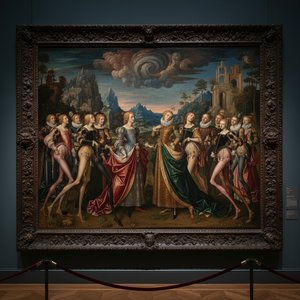
Admire Parmigianino's 'Cupid,' a captivating Renaissance masterpiece showcasing the god of love with exquisite detail and dynamic composition. A timeless work of art, now available as a stunning reproduction.

Ontdek Parmigianino (1503-1540), Italiaanse maniëristische meester! Bekijk zijn elegante, langgerekte figuren & verfijnde sensualiteit in werken als 'Madonna met de Lange Hals'. Renaissance kunst invloedrijk!

Giclée / Kunstafdruk

Giclée- of canvasafdruk van museumkwaliteit met snelle productie en flexibele afwerkingsopties.

P118B $10
P118H $10
P118W $10
P438Z $10
P508JH $12
P508YH $12
P805H $10
P805Z $10
P919BZ $10
P919G $10
P919XJ $10
P959ZH $10
P968JZ $12
W106C $8
W218G $10
W218JH $8
W218Y $10
W307PJ $10
W316G $10
W316PJ $8
W316Y $10
W398PJ $8
W4111J $10
W500HY $15
W500JH $15
W692G $12
W849H $8
W940BG $15
W953PJ $8

Standard
custom
CM
INCH

Kies uit onze vooraf ingestelde maten die overeenkomen met de originele verhoudingen van het kunstwerk.

breedte
hoogte

U kunt uw eigen afmetingen opgeven om in een specifieke lijst of ruimte te passen. Als de door u gekozen maat niet overeenkomt met de proporties van het originele kunstwerk, zullen wij de afbeelding bijsnijden of uitbreiden met een gespiegelde of effen rand. Een digitaal mockup wordt ter goedkeuring naar u verzonden voordat de productie begint.
Houd er rekening mee dat de preview op het scherm de werkelijke bijsneding of uitbreiding niet weergeeft. Alleen de mockup toont de uiteindelijke compositie nauwkeurig.
Hoewel aangepaste maten beschikbaar zijn, raden wij aan een afmeting uit de vooraf bepaalde lijst te kiezen om de originele proporties te behouden.

Wereldwijde levering () binnen 2 weken in plaats van de standaard 4/5 weken. (3 juli)

why_choose_icon
Gratis wereldwijde expressverzending
why_choose_icon
Hoogwaardig linnen canvas
why_choose_icon
Volledige verzendverzekering
why_choose_icon
Garantie op terugbetaling van invoerrechten
why_choose_icon
Garantie op exacte kleurweergave
why_choose_icon
60 dagen retourbeleid (alleen bij defecten)
why_choose_icon
100% Geld-terug-garantie
why_choose_icon
Korting bij meerdere afnames

Totaalprijs

-

reproduction

Cupid

Giclée / Kunstafdruk

Afmetingen reproductie

-

Eindtotaal

-

Snelle feiten

  • Location: Kunsthistorisches Museum, Vienna
  • Artist: Parmigianino
  • Movement: Mannerism
  • Subject or theme: Love and desire
  • Notable elements: Chiaroscuro, elongated figure
  • Medium: Oil on wood
  • Year: 1523-24

Kunstquiz

Er is slechts één correct antwoord op elke vraag.

Vraag 1:
What artistic movement is Parmigianino primarily associated with?
Vraag 2:
In which museum is the painting 'Cupid' currently housed?
Vraag 3:
What is a key characteristic of Parmigianino's style, evident in 'Cupid'?
Vraag 4:
The painting 'Cupid' was created in which year?
Vraag 5:
What does the 'zinale' garment worn by the woman in 'Antea' traditionally symbolize?

Beschrijving verzamelobject

A Renaissance Reverie: Unveiling Parmigianino’s “Cupid”

The world of art rarely offers a glimpse into such profound tenderness as that presented by Parmigianino's "Cupid," painted in 1523. This exquisite work, now residing within the hallowed halls of the Kunsthistorisches Museum in Vienna, transcends mere representation; it’s an invitation to contemplate the very essence of love and desire, rendered with a masterful blend of classical grace and Mannerist sophistication. More than just a portrait, “Cupid” is a distillation of Renaissance ideals – a testament to human beauty, mythological narrative, and the artist's unparalleled ability to capture fleeting emotion.

At first glance, the painting presents a strikingly youthful Cupid, poised in an upright stance that exudes confidence and quiet contemplation. His pose, reminiscent of classical sculpture, is subtly elongated—a hallmark of Parmigianino’s Mannerist style—creating a sense of elegant distortion that elevates the figure beyond simple realism. The artist's keen eye for detail is immediately apparent: the delicate folds of his drapery, the subtle shading of his skin, and the precise rendering of his wings – all contribute to an overwhelming feeling of lifelike presence. The background, deliberately dark, serves not as a distraction but rather as a dramatic foil, intensifying the luminosity of Cupid’s form and drawing the viewer's attention directly to the central figure.

A Symphony of Light and Shadow: Technique and Style

Parmigianino’s genius lies in his masterful manipulation of light and shadow – a technique known as *chiaroscuro*. He employs this dramatic contrast with exceptional skill, sculpting volume and depth onto the canvas. The use of dark tones in the background creates an atmosphere of mystery and intimacy, while strategically placed highlights accentuate Cupid's features, emphasizing his youthful beauty and serene expression. The painting’s surface is rich with texture, achieved through meticulous layering of oil paint—a technique that allows for incredible detail and a remarkable sense of realism. The artist’s brushstrokes are visible yet controlled, contributing to the overall fluidity and dynamism of the composition.

Furthermore, “Cupid” embodies the core tenets of Mannerism, a style that emerged in Florence during the High Renaissance. Unlike the balanced compositions and naturalistic depictions favored by earlier artists, Mannerist works often prioritize elegance, refinement, and stylized forms. Parmigianino’s elongated figures, asymmetrical arrangements, and subtle distortions are all characteristic features of this movement. The painting is not simply a portrait; it's an exploration of beauty through a deliberately heightened lens.

Mythological Roots and Symbolic Resonance

Cupid, the Roman god of love, is instantly recognizable by his winged sandals and bow and arrow – symbols inextricably linked to passion, desire, and fertility. Parmigianino’s depiction of Cupid taps into this rich mythological heritage while simultaneously imbuing the figure with a sense of quiet introspection. The infant figures at his feet—often interpreted as representing Venus and Mars—add another layer of symbolic complexity, suggesting the origins of love itself. The scene subtly alludes to Ovid's *Metamorphoses*, where Cupid accidentally shoots his mother, Venus, with an arrow, triggering her passionate love for the mortal Adonis.

The positioning of the infants, reaching towards Cupid’s leg and gazing upwards, creates a poignant tableau of vulnerability and adoration. It speaks to the transformative power of love—a force capable of shaping destinies and altering the course of human existence. The painting invites viewers to contemplate not only the beauty of love but also its potential for both joy and sorrow.

A Timeless Masterpiece: Reproduction and Legacy

“Cupid” by Parmigianino stands as a testament to the enduring power of Renaissance art—a timeless masterpiece that continues to captivate audiences centuries after its creation. Today, WahooArt offers exquisite, hand-painted oil painting reproductions that faithfully capture the essence and beauty of this iconic work. Our skilled artists meticulously recreate every detail, from the subtle nuances of light and shadow to the delicate texture of Cupid’s drapery, ensuring a stunningly authentic representation.

Whether you are an art enthusiast, a collector seeking to enrich your collection, or an interior designer searching for a touch of Renaissance elegance, a reproduction of “Cupid” is sure to be a cherished addition to any space. Visit WahooArt.com today to bring this captivating masterpiece into your home.

Vergelijkbare kunstwerken


Biografie van de kunstenaar

Een Verfijnde Gevoeligheid: Het Leven en Werk van Parmigianino

Girolamo Francesco Maria Mazzola, bekend in de geschiedenis als Parmigianino – “de kleine uit Parma” – kwam voort uit de Hoog Renaissance, maar werd al snel een sleutelfiguur van de opkomende maniëristische stijl. Geboren te Parma op 11 januari 1503, was zijn vroege leven getekend door familiaal verlies; zijn vader, Filippo Mazzola, overleed toen Girolamo slechts twee jaar oud was. Opgevoed door zijn ooms, Michele en Pier Ilario, die zelf bescheiden bekwame kunstenaars waren, ontving de jonge Parmigianino zijn eerste artistieke training binnen deze familie kring. Deze basis bleek echter slechts een springplank voor een uitzonderlijk talent dat al snel zelfs zijn mentoren zou overstijgen. Al op de verbazingwekkende leeftijd van achttien jaar had hij het Bardi Altaarwerk voltooid, een werk dat een rijpheid en verfijning toonde die ver boven zijn jaren uitsteeg, waarmee de komst van een werkelijk opmerkelijke kunstenaar werd aangekondigd.

Van Florence naar Rome: De Vorming van een Maniëristische Visie

Parmigianino’s artistieke reis leidde hem rond 1524 naar Florence, waar hij zich liete beïnvloeden door meesters als Rafaël en Leonardo da Vinci, hoewel hij al snel zijn eigen unieke pad begon te bewandelen. Hij presenteerde paus Clemens VII drie schilderijen, waaronder een opvallend zelfportret in een bolle spiegel – een getuigenis van zijn technische vaardigheid en groeiende zelfbewustzijn. Deze daad verzekerde hem opdrachten in Rome, maar het artistieke landschap van de stad werd al snel verstoord door de tumultueuze Plundering van 1527. Gedwongen te vluchten, zocht Parmigianino onderdak in Bologna, waar hij een van zijn meest gevierde werken schilderde: *De Heilige Familie*. Het was tijdens deze periode dat zijn kenmerkende stijl werkelijk kristalliseerde: langgerekte vormen, gracieuze poses en een verfijnde sensualiteit werden handelsmerken van zijn kunst. Hij stelde niet slechts de realiteit af te beelden; hij herinterpreteerde het door een lens van elegantie en geïdealiseerde schoonheid. Dit vertrek van de Hoog Renaissance’s nadruk op naturalisme markeerde hem als een belangrijke innovator van maniërisme, een artistieke beweging die zich kenmerkte door zijn kunstmatigheid, verfijning en bewuste vervorming van klassieke vormen.

Meesterwerken van Lengte en Gratie

Parmigianino’s nalatenschap rust op een relatief klein maar buitengewoon invloedrijk oeuvre. *Madonna met de Lange Hals* (1534) blijft wellicht zijn meest iconische creatie. De verontrustende, maar tegelijkertijd boeiende compositie, met figuren met langgerekte nekken en ledematen, daagt conventionele opvattingen over schoonheid en proporties uit. Deze bewuste vervorming is niet slechts stilistisch; het geeft een gevoel van spirituele hunkering en bovenaardse gratie weer. Evenzo toont *Visioen van Sint Hiëronymus* (1527), voltooid tijdens zijn tijd in Rome, zijn meesterschap over anatomie en perspectief, terwijl hij tegelijkertijd de maniëristische voorkeur voor dramatische composities en emotionele intensiteit omarmt. Naast deze gevierde schilderijen onthullen Parmigianino’s tekeningen een buitengewoon niveau van vaardigheid en gevoeligheid. Zijn studies van figuren, draperieën en architectonische elementen demonstreren een nauwgezette aandacht voor detail en een diepgaand begrip van vorm. Zelfs zijn minder bekende werken, zoals *Bow-Carving Amor*, vertonen dezelfde verfijnde gevoelzaamheid en technische virtuositeit die zijn oeuvre definiëren.

Een Afgebroken Legacy: Parmigianino’s Laatste Jaren

Tragisch genoeg werd Parmigianino's veelbelovende carrière vroegtijdig beëindigd door zijn voortijdige dood in Casalmaggiore in 1540, op de leeftijd van slechts zevenendertig jaar. De omstandigheden rond zijn overlijden blijven enigszins mysterieus; sommige berichten suggereren dat hij aan een koorts bezweek, terwijl andere hinten naar complicaties door een val. Ondanks zijn korte leven heeft Parmigianino een onuitwisbare stempel gedrukt op de Italiaanse Renaissance kunst. Hij staat als een van de belangrijkste vertegenwoordigers van maniërisme, en beïnvloedt generaties kunstenaars met zijn elegante stijl en innovatieve benadering van vorm en compositie. Zijn werk blijft vandaag de dag kijkers boeien, en biedt een glimp in een wereld waarin schoonheid niet slechts wordt waargenomen, maar actief wordt gecreëerd – een getuigenis van de blijvende kracht van artistieke visie. De fresco's die hij onafgemaakt liet in Parma en Fontanellato dienen als treurige herinneringen aan wat er had kunnen zijn, maar zelfs in hun onvoltooide staat onthullen ze de genialiteit van een meester wiens nalatenschap door de eeuwen heen resoneert.
Parmigianino

Parmigianino

1503 - 1540 , Italië

Belangrijkste feiten

  • Artistic Movement Or Style: Maniërisme
  • Artists Or Movements Influenced By This Artist: ['Italiaanse Renaissance kunst']
  • Artists Who Influenced This Artist:
    • Correggio
    • Raphael
  • Date Of Birth: 11 januari 1503
  • Date Of Death: 24 augustus 1540
  • Full Name: Girolamo Francesco Maria Mazzola
  • Nationality: Italiaans
  • Notable Artworks:
    • Madonna met de lange nek
    • Zelfportret in spiegel
    • Visioen van Sint Hiëronymus
    • Heilige Familie
    • De Omcirkeling
  • Place Of Birth: Parma, Italië
Ontdek kunstwerken georganiseerd op thema's, stijlen en kenmerken.