GRATIS KUNSTADVIES

x
Bestel schilderij Bestel schilderijKoop afbeelding in hoge resolutie Koop afbeelding in hoge resolutie VerstuurVerstuur
DetailsDetails Toevoegen aan favorieten Toevoegen aan favorieten DownloadDownload Vergelijkbare werkenVergelijkbare werken RöntgenfotoRöntgenfoto DiavoorstellingDiavoorstelling

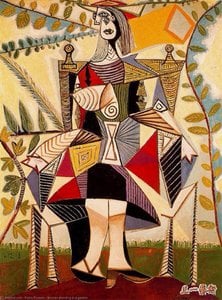
Madeleine

Pablo Picasso (1881-1973): De revolutionair Spaanse kunstenaar achter Cubisme, Guernica & iconische werken. Zijn invloed op de kunst is onmiskenbaar!

Giclée / Kunstafdruk

Giclée- of canvasafdruk van museumkwaliteit met snelle productie en flexibele afwerkingsopties.

P118B $10
P118H $10
P118W $10
P438Z $10
P508JH $12
P508YH $12
P805H $10
P805Z $10
P919BZ $10
P919G $10
P919XJ $10
P959ZH $10
P968JZ $12
W106C $8
W218G $10
W218JH $8
W218Y $10
W307PJ $10
W316G $10
W316PJ $8
W316Y $10
W398PJ $8
W4111J $10
W500HY $15
W500JH $15
W692G $12
W849H $8
W940BG $15
W953PJ $8

Standard
custom
CM
INCH

Kies uit onze vooraf ingestelde maten die overeenkomen met de originele verhoudingen van het kunstwerk.

breedte
hoogte

U kunt uw eigen afmetingen opgeven om in een specifieke lijst of ruimte te passen. Als de door u gekozen maat niet overeenkomt met de proporties van het originele kunstwerk, zullen wij de afbeelding bijsnijden of uitbreiden met een gespiegelde of effen rand. Een digitaal mockup wordt ter goedkeuring naar u verzonden voordat de productie begint.
Houd er rekening mee dat de preview op het scherm de werkelijke bijsneding of uitbreiding niet weergeeft. Alleen de mockup toont de uiteindelijke compositie nauwkeurig.
Hoewel aangepaste maten beschikbaar zijn, raden wij aan een afmeting uit de vooraf bepaalde lijst te kiezen om de originele proporties te behouden.

Wereldwijde levering () binnen 2 weken in plaats van de standaard 4/5 weken. (5 juli)

why_choose_icon
Gratis wereldwijde expressverzending
why_choose_icon
Hoogwaardig linnen canvas
why_choose_icon
Volledige verzendverzekering
why_choose_icon
Garantie op terugbetaling van invoerrechten
why_choose_icon
Garantie op exacte kleurweergave
why_choose_icon
60 dagen retourbeleid (alleen bij defecten)
why_choose_icon
100% Geld-terug-garantie
why_choose_icon
Korting bij meerdere afnames

Totaalprijs

-

reproduction

Madeleine

Giclée / Kunstafdruk

Afmetingen reproductie

-

Eindtotaal

-

Snelle feiten

  • Movement: Proto-Cubism
  • Artistic style: Symbolism
  • Dimensions: 69 x 52 cm
  • Artist: Pablo Picasso
  • Influences: Paul Cézanne
  • Subject or theme: Woman; Femininity
  • Location: Museu Picasso, Barcelona

Kunstquiz

Er is slechts één correct antwoord op elke vraag.

Vraag 1:
What artistic period is Pablo Picasso’s ‘Madeleine’ primarily associated with?
Vraag 2:
Which artist heavily influenced Picasso's early work, emphasizing the underlying structure of objects and using planes of color?
Vraag 3:
What is the dominant hue in the background of ‘Madeleine’?
Vraag 4:
The woman depicted in ‘Madeleine’ is primarily interpreted as a symbol of:
Vraag 5:
‘Madeleine’ played a significant role in the development of modern art by experimenting with geometric forms and reducing color palettes.

Beschrijving verzamelobject

Pablo Picasso: Madeleine

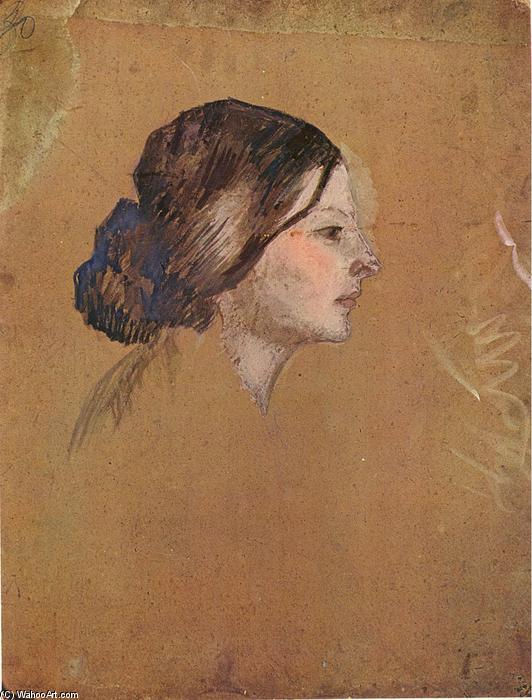
Pablo Picasso, one of the most influential artists of the 20th century, created a wide range of artworks that continue to captivate art enthusiasts around the world. Among his notable works is the painting titled Madeleine, which showcases his unique style and artistic vision. This evocative piece, completed in 1904, embodies Picasso’s formative Symbolism period—a crucial step toward the revolutionary Cubism he would later pioneer—and offers a glimpse into the artist's profound exploration of emotion and form.

Artistic Style and Period

Painted in 1904, “Madeleine” falls within Picasso’s Symbolism period, characterized by a focus on geometric forms and a limited color palette. This phase is often seen as a precursor to the development of Cubism, which would later become a defining feature of his work. Unlike Impressionists who sought to capture fleeting moments of light and atmosphere, Picasso deliberately employed simplified shapes and muted hues—primarily blues and yellows—to convey psychological states rather than literal representations. Critics noted that Picasso’s style was influenced by Paul Cézanne, whom he considered “the father of us all,” citing Cézanne's emphasis on the underlying structure of objects and his use of planes of color as a significant inspiration for Picasso’s early explorations.

Composition and Elements

The painting features a woman with long hair, adorned with a blue ribbon, looking directly at the viewer. This arresting gaze immediately establishes a connection between the subject and the observer—a hallmark of Picasso's psychological portraiture. The background is painted in a warm yellowish hue, adding depth and warmth to the scene while subtly contrasting with the cool blues dominating the woman’s attire. Two other figures are partially visible on either side of the main subject, creating a sense of balance and harmony that contributes to the painting’s overall visual impact. These figures appear to be deliberately blurred, hinting at an elusive quality—perhaps representing memories or subconscious thoughts—and reinforcing Picasso's commitment to conveying emotion through abstraction.

Symbolism and Interpretation

The woman in the painting can be interpreted as a symbol of femininity and beauty, reflecting the prevalent artistic conventions of the time. However, Picasso transcends mere depiction; he imbues Madeleine with emotional resonance. The blue ribbon in her hair—a prominent visual element—may represent innocence or purity, aligning with Symbolist ideals that prioritized spiritual contemplation over purely sensory experience. Furthermore, the blurred figures in the background could signify the presence of others in her life, yet they are not the primary focus of attention—suggesting a preoccupation with internal reflection and psychological complexity. Picasso’s deliberate use of symbolism underscores his desire to communicate ideas beyond the surface appearance of the image.

Artistic Influences

Picasso's work during this period was profoundly influenced by various artists, including Paul Cézanne, who is often referred to as “the father of us all” by both Henri Matisse and Pablo Picasso. Cézanne’s insistence on depicting objects from multiple viewpoints simultaneously—a technique known as "multiple perspectives"—and his masterful manipulation of planar surfaces—characteristic of Cézanne's landscapes—directly impacted Picasso’s approach to composition and form. This influence is particularly evident in the painting's careful structuring, mirroring Cézanne’s groundbreaking explorations of spatial relationships. WahooArt.com offers high-quality, handmade oil painting reproductions of famous artworks, including those by Pablo Picasso. Visit our website to explore more about “Madeleine” and other notable paintings.
Photo Description: The image is a painting of a woman with long hair, wearing a blue ribbon in her hair. She appears to be looking directly at the viewer, possibly making a face or showing some emotion. The background features a yellowish color that adds warmth and depth to the scene. In addition to the main subject, there are two other people visible in the painting, one on the left side of the image and another towards the right. These figures appear to be partially obscured or blurred, possibly indicating that they are not the main focus of the painting. The overall composition of the painting is well-balanced, with the woman as the central figure and the other elements in the background creating a sense of depth and dimension. Size: 69 x 52 cm Date: 1904

Biografie van de kunstenaar

De Vroege Jaren en Fundamenten: Málaga tot Barcelona

Pablo Ruiz Picasso, een naam die onlosmakelijk verbonden is met de revolutie in de kunstwereld, zag het levenslicht op 25 oktober 1881 in het bruisende Málaga, Spanje. Vanaf zijn vroegste jeugd leek hij voorbestemd tot een creatief bestaan; er gaat zelfs de legende dat zijn eerste woorden “piz, piz” waren, een poging om ‘potlood’ te zeggen. Deze vroege aanleg werd met zorg gekoesterd door zijn vader, José Ruiz y Blasco, zelf een schilder en kunstleraar die Pablo de basisvaardigheden bijbracht. Al snel bleek echter dat de leerling zijn meester overtrof, met een opmerkelijke begaafdheid voor naturalistisch weergeven die de uitzonderlijke talenten van de jonge Picasso verraadde. De familie’s latere verhuizingen – eerst naar A Coruña en vervolgens Barcelona – werden gekenmerkt door persoonlijke tegenslagen, in het bijzonder het verlies van Picasso's zus, ervaringen die zijn latere werk subtiel zouden doordringen met thema’s als melancholie en sterfelijkheid. Zelfs tijdens zijn formele studies aan de School voor Schone Kunsten in Barcelona en een korte periode aan de Koninklijke Academie van San Fernando in Madrid botste Picasso op starre academische beperkingen, hij verkoos het zich onder te dompelen in het werk van meesters als Velázquez en Goya, waarmee hij zijn eigen pad naar artistieke vernieuwing insloeg.

De Blauwe en Roze Periodes: Emotie en Transformatie

Het begin van de 20e eeuw bracht twee duidelijke periodes voort in Picasso’s oeuvre: de Blauwe Periode (ongeveer 1901-1904) en de Roze Periode (1904-1906). De Blauwe Periode, geboren uit persoonlijke ontberingen en een scherp bewustzijn van sociaal lijden, wordt gekenmerkt door schilderijen die doordrenkt zijn van sombere tinten blauw en blauwgroen. Deze werken worden bevolkt door gemarginaliseerde figuren – bedelaars, blinden, prostituees – geschilderd met een aangrijpende empathie die spreekt over thema’s als isolatie en wanhoop. La Vie (1903) en The Old Guitarist (1903-1904) zijn treffende voorbeelden van deze emotioneel geladen fase. Een verschuiving in Picasso's persoonlijke leven, gecombineerd met een verhuizing naar Parijs, luidde het begin in van de Roze Periode. Het palet werd aanzienlijk warmer, met roze-, oranje- en rode tinten die een optimistischer perspectief weerspiegelden. Deze periode kenmerkte zich door fascinatie voor circusartiesten – harlekijnen, acrobaten en familiespelers – figuren die zowel kwetsbaarheid als veerkracht belichaamden. Family of Saltimbanques (1905) vat deze overgang prachtig samen, met een hint naar de stilistische ontdekkingen die nog zouden komen.

De Revolutie van het Cubisme: Een Nieuwe Visie op Realiteit

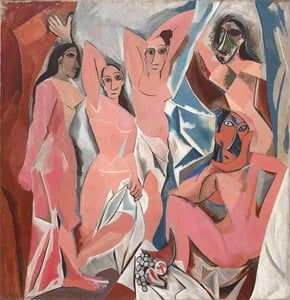
Het jaar 1907 markeerde een cruciaal moment in de kunstgeschiedenis met de creatie van Les Demoiselles d'Avignon. Geïnspireerd door Iberisch beeldhouwwerk en Afrikaanse maskers, brak dit baanbrekende schilderij met traditionele opvattingen over perspectief en representatie. Het was een radicale afwijking, een bewuste verwerping van eeuwenoude conventies die de weg vrijmaakte voor het Cubisme. In nauwe samenwerking met Georges Braque richtte Picasso deze revolutionaire beweging op, waarmee hij fundamenteel veranderde hoe kunstenaars de werkelijkheid waarnamen en weergafven. Analytisch Cubisme (1909-1912) omvatte de fragmentatie van objecten in geometrische vormen, geschilderd in gedempte kleuren, alsof de vorm zelf ontleed werd. Dit evolueerde naar Synthetisch Cubisme (1912-1919), dat collage-elementen – krantenknipsels, stoffresten – integreerde, waardoor textuur en nieuwe lagen van visuele complexiteit ontstonden. Picasso was niet tevreden met het simpelweg representeren van de wereld; hij zocht naar manieren om deze te deconstrueren en op eigen voorwaarden te reconstrueren.

Neoclassicisme, Surrealisme en de Echo’s van Oorlog

In de jaren twintig experimenteerde Picasso kort met neoklassieke stijlen, waarbij hij monumentale figuren creëerde die klassieke vormen echoën terwijl ze toch een onderscheidende moderne gevoeligheid behielden. Tegelijkertijd raakte hij betrokken bij de opkomende surrealistische beweging, hoewel hij zich er nooit volledig mee identificeerde. Zijn werk uit deze periode combineerde eerdere stilistische invloeden met surrealistische beelden en vervormde perspectieven, waarmee hij zijn onophoudelijke experimenteerdrift demonstreerde. De verschrikkingen van de Spaanse Burgeroorlog hadden een diepgaande impact op Picasso, wat culmineerde in de creatie van Guernica (1937), een intense en emotioneel verwoestende reactie op het bombardement van Guernica. Dit monumentale werk werd een blijvend symbool van de gruwelen van oorlog, waarmee Picasso's rol als niet alleen kunstenaar maar ook krachtige stem voor vrede en sociale rechtvaardigheid verstevigd werd. Gedurende de jaren vijftig en zestig bleef hij grenzen verleggen, met onvermoeibare nieuwsgierigheid en vaardigheid keramiek, beeldhouwwerk en grafische kunst verkennend. Zijn huwelijk met Jacqueline Roque in 1961 bracht een nieuwe dimensie aan zijn persoonlijke leven en artistieke expressie.

Een Onmeetbare Erfenis

Pablo Picasso overleed op 8 april 1973 in Mougins, Frankrijk, en liet een verbazingwekkend oeuvre achter – geschat op meer dan 50.000 stukken – dat nog steeds boeit en inspireert. Zijn artistieke ontwikkeling werd gevormd door een diverse reeks invloeden, van Spaanse meesters als Velázquez en Goya tot Iberisch beeldhouwwerk, Afrikaanse kunst en de levendige kleurenpaletten van Henri Matisse. Zijn impact op de kunst van de 20e eeuw is onmeetbaar. Hij richtte het Cubisme op, was een pionier in collage en geconstrueerd beeldhouwwerk, en daagde voortdurend artistieke conventies uit. Picasso’s meedogenloze experimenteerdrift herdefinieerde de moderne kunst, waarmee hij een onuitwisbare stempel drukte op generaties kunstenaars en zijn positie als een van de belangrijkste en invloedrijkste figuren in de geschiedenis verstevigde. Zijn nalatenschap reikt verder dan het canvas, resoneert in talloze aspecten van de hedendaagse cultuur en herinnert ons aan de transformerende kracht van artistieke visie.

Pablo Picasso

Pablo Picasso

1881 - 1973 , Spanje

Belangrijkste feiten

  • Artistic Movement Or Style:
    • Cubisme
    • Surrealisme
  • Artists Or Movements Influenced By This Artist:
    • Cubisme
    • Moderne kunst
  • Artists Who Influenced This Artist:
    • Velázquez
    • Goya
    • Matisse
  • Date Of Birth: 25 oktober 1881
  • Date Of Death: 8 april 1973
  • Full Name: Pablo Diego José Ruiz Picasso
  • Nationality: Spaans
  • Notable Artworks:
    • Les Demoiselles d'Avignon
    • Guernica
    • The Old Guitarist
    • La Vie
    • Family of Saltimbanques
  • Place Of Birth: Málaga, Spanje
Ontdek kunstwerken georganiseerd op thema's, stijlen en kenmerken.