GRATIS KUNSTADVIES

x
Bestel schilderij Bestel schilderijKoop afbeelding in hoge resolutie Koop afbeelding in hoge resolutie VerstuurVerstuur
DetailsDetails Toevoegen aan favorieten Toevoegen aan favorieten DownloadDownload Vergelijkbare werkenVergelijkbare werken RöntgenfotoRöntgenfoto DiavoorstellingDiavoorstelling

Winter (De Brug)

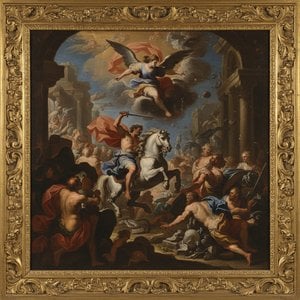
Een meesterwerk van Nicolas Poussin: "Winter (De Brug)". Laat je onderdompelen in de klassieke schoonheid en emotionele diepte van deze prachtige huile op doek uit 1664.

Ontdek Nicolas Poussin's prachtige Barok schilderkunst—bekend om vredige landschappen en mythologische verhalen geïnspireerd door klassieke oudheid. Laat je fascineren door iconische kunstwerken op WahooArt!

Giclée / Kunstafdruk

Giclée- of canvasafdruk van museumkwaliteit met snelle productie en flexibele afwerkingsopties.

P118B $10
P118H $10
P118W $10
P438Z $10
P508JH $12
P508YH $12
P805H $10
P805Z $10
P919BZ $10
P919G $10
P919XJ $10
P959ZH $10
P968JZ $12
W106C $8
W218G $10
W218JH $8
W218Y $10
W307PJ $10
W316G $10
W316PJ $8
W316Y $10
W398PJ $8
W4111J $10
W500HY $15
W500JH $15
W692G $12
W849H $8
W940BG $15
W953PJ $8

Standard
custom
CM
INCH

Kies uit onze vooraf ingestelde maten die overeenkomen met de originele verhoudingen van het kunstwerk.

breedte
hoogte

U kunt uw eigen afmetingen opgeven om in een specifieke lijst of ruimte te passen. Als de door u gekozen maat niet overeenkomt met de proporties van het originele kunstwerk, zullen wij de afbeelding bijsnijden of uitbreiden met een gespiegelde of effen rand. Een digitaal mockup wordt ter goedkeuring naar u verzonden voordat de productie begint.
Houd er rekening mee dat de preview op het scherm de werkelijke bijsneding of uitbreiding niet weergeeft. Alleen de mockup toont de uiteindelijke compositie nauwkeurig.
Hoewel aangepaste maten beschikbaar zijn, raden wij aan een afmeting uit de vooraf bepaalde lijst te kiezen om de originele proporties te behouden.

Wereldwijde levering () binnen 2 weken in plaats van de standaard 4/5 weken. (7 juli)

why_choose_icon
Gratis wereldwijde expressverzending
why_choose_icon
Hoogwaardig linnen canvas
why_choose_icon
Volledige verzendverzekering
why_choose_icon
Garantie op terugbetaling van invoerrechten
why_choose_icon
Garantie op exacte kleurweergave
why_choose_icon
60 dagen retourbeleid (alleen bij defecten)
why_choose_icon
100% Geld-terug-garantie
why_choose_icon
Korting bij meerdere afnames

Totaalprijs

-

reproduction

Winter (De Brug)

Giclée / Kunstafdruk

Afmetingen reproductie

-

Eindtotaal

-

Snelle feiten

  • Influences: Classical art
  • Movement: Baroque
  • Subject or theme: Deluge, Nature's power
  • Notable elements: Dramatic flood scene
  • Title: Winter (The Flood)
  • Dimensions: 117 x 160 cm
  • Artistic style: Classicism

Kunstquiz

Er is slechts één correct antwoord op elke vraag.

Vraag 1:
What artistic movement is most closely associated with Nicolas Poussin’s ‘Winter (The Flood)’?
Vraag 2:
Approximately how large is the painting 'Winter (The Flood)'?
Vraag 3:
The painting depicts a scene of what natural disaster?
Vraag 4:
What is the primary subject matter depicted in 'Winter (The Flood)'?
Vraag 5:
Considering Poussin’s biography, what physical challenge did he face during the creation of ‘Winter (The Flood)’?

Beschrijving verzamelobject

Winter (The Flood): A Tempestuous Vision of Classical Grace

Nicolas Poussin, a name synonymous with classical grace and profound emotional depth in 17th-century art, gifted the world with a series of paintings known collectively as “The Four Seasons.” Among these masterpieces, “Winter (The Flood),” painted between 1660 and 1664, stands as a particularly arresting testament to his artistic prowess. More than simply a depiction of a natural disaster, it’s a meticulously constructed allegory—a meditation on human vulnerability, the indifference of nature, and the precarious balance between survival and oblivion. Measuring a substantial 117 x 160 cm, this oil-on-canvas work resides within the esteemed collection of the Louvre Museum in Paris, a testament to its enduring significance. The scene immediately commands attention with its dramatic chiaroscuro—the stark contrast between light and shadow that Poussin masterfully employs. A bruised, storm-wracked sky dominates the upper portion of the canvas, pregnant with impending doom. Lightning flashes illuminate fleeting glimpses of a turbulent river, swollen to dangerous proportions by relentless rain. Below this chaotic expanse unfolds a landscape dominated by imposing mountains, their peaks shrouded in mist and snow – symbols of enduring strength and impassivity against the forces unleashed below. At the heart of the composition lies a small boat, precariously navigating the raging waters, carrying at least twelve souls and a loyal dog—a microcosm of humanity struggling against overwhelming odds. ## The Classical Foundation & Poussin’s Technique Poussin's artistic identity is firmly rooted in the principles of Classicism. This wasn’t merely an aesthetic choice; it represented a conscious rejection of the exuberant, often theatrical style prevalent during the Baroque period. Instead, he sought order, harmony, and balance—qualities deeply admired by Renaissance artists like Raphael. His meticulous attention to detail, evident in the precise rendering of textures – from the rough bark of the trees to the glistening surface of the water – speaks volumes about his rigorous training and unwavering commitment to accuracy. The composition itself adheres to strict geometric principles, creating a sense of stability within the turbulent scene. Notice how the diagonal lines of the boat’s trajectory are counterbalanced by the verticality of the mountains, contributing to a visual equilibrium that belies the chaos depicted. Poussin's technique is characterized by his use of *sfumato*—a subtle blurring of edges and contours—to create an atmospheric depth. He skillfully employs layering techniques, building up color gradually to achieve a luminous quality. The colors are predominantly cool – blues, grays, and whites – reflecting the bleakness of the winter landscape and the despair of the situation. However, flashes of warmer tones—the red of a garment clinging to a struggling figure—add dramatic emphasis and heighten the emotional impact. ## A Biblical Echo & Philosophical Undertones “Winter (The Flood)” is part of “The Four Seasons” series, commissioned by the son of Cardinal Richelieu. Interestingly, Poussin's work transcends a simple depiction of a flood; it carries profound philosophical and potentially biblical undertones. The scene echoes the story of Noah's Ark, albeit with a distinctly more pessimistic interpretation. While the biblical narrative emphasizes divine judgment and the cleansing of humanity, Poussin presents a far less comforting vision. The figures in the boat are not heroes embarking on a righteous mission; they are simply struggling to survive, their fate uncertain. The inclusion of the serpent adds an element of foreboding, hinting at the destructive forces that lie dormant beneath the surface. Furthermore, Poussin’s personal struggles during this period—he suffered from debilitating hand tremors—are believed to have influenced the painting's slow and painstaking creation. This physical difficulty likely deepened his contemplation on themes of mortality, vulnerability, and the limitations of human control. The painting can be interpreted as a reflection on the fragility of existence in the face of overwhelming natural forces – a poignant reminder that even the most enduring structures are ultimately subject to destruction. ## Symbolism & Emotional Resonance Beyond its narrative elements, “Winter (The Flood)” is rich in symbolism. The boat itself represents humanity—a small, vulnerable vessel tossed about on the vast and indifferent ocean of nature. The figures within it embody a range of emotions – fear, desperation, hope, and resilience. The dog, often interpreted as a symbol of loyalty and fidelity, offers a glimmer of comfort amidst the chaos. The mountains, steadfast and unyielding, represent the enduring power of the natural world—a force that is both beautiful and terrifying. The overall effect is one of profound melancholy and unsettling beauty – a visual poem on the human condition. Reproductions of “Winter (The Flood)” capture only a fraction of the painting’s original impact, but they offer a valuable opportunity to engage with Poussin's masterful artistry and contemplate his enduring message. Consider commissioning a high-quality hand-painted reproduction from WahooArt.com to bring this iconic work into your home or office – a timeless reminder of humanity’s place within the grand scheme of nature.

Vergelijkbare kunstwerken


Biografie van de kunstenaar

Nicolas Poussin – Een Symbool van Franse Barok Kunst

Nicolas Poussin, een naam die synoniem staat voor de grandeur van Franse Barok kunst, was echter een ziel die diep geworteld was in Italiaanse grond voor het grootste deel van zijn artistieke leven. Geboren in Les Andelys, Normandië, in juni 1594, blijven zijn vroegste jaren enigszins gehuld in mysterie, maar ze legden onmiskenbaar de basis voor een carrière die zou worden cruciaal bij het vormen van de klassieke traditie binnen Franse kunst. Hoewel hij kortstondig studeerde aan Parijs tijdens het begin van de 1610er jaren, waarbij hij invloed opnam van minder bekende kunstenaars van dat tijdperk, was zijn reis naar Rome in 1624 echt een vonkende kracht achter zijn artistieke bestemming. Dit was niet alleen een geografische verschuiving; het betekende een onderdompeling in het hart van de oudheid, een pelgrimstocht naar de bron van inspiratie die zijn esthetische visie zou definiëren. Zijn eerste pogingen tot schilderen werden gekenmerkt door een sensuele kwaliteit die doet denken aan Venetiaanse meesters zoals Titiaan, maar zelfs hierin begon een nieuwe vorm van ordening en intellectuele ernst te emergensen—een voorbode van de stijl waarin hij zo magistraal zou verbeteren.

De Romeinse Jaren: Het Vormgeven van Een Klassieke Ideeel

Rome bleek meer dan alleen een atelier voor Poussin; het werd zijn intellectuele kruispunt. Hij bevond zich middenin een bruisende cirkel van geleerden, archeologen en mede kunstenaars, waaronder Cassiano dal Pozzo, wiens diepe kennis van klassieke oudheid de kunstenaar’s benadering enorm beïnvloedde. Dal Pozzo's toegewijdheid aan het zorgvuldig documenteren van oude resten gaf Poussin een diepe waardering voor historische nauwkeurigheid en een drang om zijn schilderijen te voorzien van een gevoel van tijdloosheid. Deze periode zag Poussin weg bewegen van de flamboyante exuberantie van sommige van zijn tijdgenoten, maar omarmde een stijl gekenmerkt door helderheid, balans en een bewuste nadruk op lijn compositie. Hij bestudeerde meticulëus Raphael’s werken, waarbij hij hun harmonieuze arrangementen en elegante vormen absorbeerde, terwijl hij tegelijkertijd inspiratie haalde uit oude sculpturen en literatuur bronnen zoals Ovid's *Metamorphoses*. Zijn schilderijen begonnen zich te bevinden met figuren getrokken uit klassieke geschiedenis en mythologie, afgebeeld niet alleen als decoratieve elementen maar als verkondigers van morele deugden en filosofische idealen. Hij werd bijzonder getroffen door het werk van Raphael, wiens stijl hij als een voorbeeld beschouwde voor harmonie en elegantie. Zijn aandacht voor licht en kleur was een directe echo van de Venetiaanse traditie, waarbij hij een gevoel voor atmosfeer en emotionele expressie nastreefte.

De Invloed van Klassieke Oudheid

Poussin’s artistieke ontwikkeling werd sterk bepaald door zijn fascinatie voor het klassieke wereldbeeld. Hij volgde nauwlettend de ontwikkelingen binnen de wetenschap en archeologie van zijn tijd, waarbij hij zich liet leiden door nieuwe ontdekkingen die het beeld van het oude Griekenland en Italië verbreedden. Zijn studie van oude kunstwerken gaf hem een diepe waardering voor schoonheid en proportie, maar ook een kritische geest die hem aanmoedigde om bestaande conventies uit te dagen. Hij zag zichzelf als een voortzetter van de Renaissance Humanisme, waarbij hij zich liet inspireren door filosofen zoals Erasmus en Pico della Mirandola. Deze intellectuele zoektocht leidde tot een stijl die zowel technisch hoogstaand als filosofisch doordrongen was—een stijl die zou resulteren in werken die niet alleen prachtige schoonheid bezitten maar ook een diepe boodschap dragen over de menselijke natuur en het universum. Zijn kunstenaarschap werd gekenmerkt door een voortdurende zoektocht naar nieuwe vormen van expressie, terwijl hij zich steeds meer richtte op het verkennen van complexe thema’s zoals liefde, dood en religieuze contemplatie. Hij wilde niet alleen de wereld vastleggen maar ook een manier vinden om deze te begrijpen en te waarderen—een doel dat hem leidde tot een stijl die zowel technisch innovatief als artistiek doordrongen was.

Een Laatste Legacy: Het Vormgeven van Franse Kunst

Ondanks dat hij het grootste deel van zijn werk buiten Frankrijk doorbracht, had Nicolas Poussin een enorme invloed op Franse kunst. Hij werd kortstondig aangesteld als eerste schilder aan het hof van Kardinaal Richelieu in 1640, maar vond zichzelf verstoken van de dynamiek en intriges van het koninklijk huis. Hij keerde snel terug naar Rome, waar hij bleef schilderen tot zijn dood in 1665. Zijn toegewijdheid aan klassieke principes hielp een standaard voor kunstenaarschap en praktijk binnen Frankrijk te vestigen, waardoor hij generaties van kunstenaars inspireerde die volgden. Hij werd een leidende figuur in de Académie Royale de Peinture et de Sculpture, waarbij hij zijn positie bevestigde als een hoeksteen van Franse Classicisme. Kunstenaars zoals Jacques-Louis David en Paul Cézanne bekroonden hun erkenning voor Poussin’s strenge benadering en intellectuele diepte met een directe verwijzing naar zijn stijl en filosofische visie. Zijn kunstwerken blijven een bron van inspiratie voor kunstenaars en critici tot op de dag van vandaag, waardoor hij een plaats heeft verdiend in de geschiedenis als een van de meest invloedrijke kunstenaars van zijn tijdperk.
Nicolas Poussin

Nicolas Poussin

1594 - 1665 , Frankrijk

Belangrijkste feiten

  • Artistic Movement Or Style: Baroque, Classicisme
  • Artists Who Influenced This Artist:
    • Raphael
    • Titian
  • Date Of Birth: 1594
  • Full Name: Nicolas Poussin
  • Nationality: Frans
  • Notable Artworks:
    • De dood van Germanicus
    • De Zevens Sacramenten Serie
    • Een Romeinse Weg
    • Orion Geblinderd Zoekt de Zon
  • Place Of Birth: Les Andelys, Frankrijk
Ontdek kunstwerken georganiseerd op thema's, stijlen en kenmerken.