Voorvertoning Bekijk in AR Bestel handgeschilderde reproductie Schakel over naar digitale afbeeldingen Verstuur
Details bekijken Gids Toevoegen aan favorieten Download Vergelijkbare items Röntgenonderzoek Diavoorstelling Statistieken

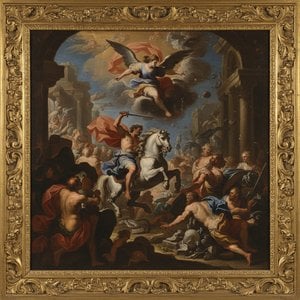
The Extreme Unction

Experience Nicolas Poussin's 'The Extreme Unction,' a masterpiece of 17th-century French art. This oil painting captures a poignant scene with classical elegance and emotional depth – explore its history & beauty.

Ontdek Nicolas Poussin's prachtige Barok schilderkunst—bekend om vredige landschappen en mythologische verhalen geïnspireerd door klassieke oudheid. Laat je fascineren door iconische kunstwerken op WahooArt!

Giclée / Kunstafdrukken

Giclée- of canvasafdruk van museumkwaliteit met een snelle productie en flexibele afwerkingsmogelijkheden. ( Bestel handgeschilderde reproductie Schakel over naar digitale afbeeldingen)

Corner sample of the P118B picture frame: gegoten polystyreen, 5 cm wide and 3 cm thick
P118B €10
Corner sample of the P118H picture frame: gegoten polystyreen, 5 cm wide and 3 cm thick
P118H €10
Corner sample of the P118W picture frame: gegoten polystyreen, 5 cm wide and 3 cm thick
P118W €10
Corner sample of the P438Z picture frame: gegoten polystyreen, 5.5 cm wide and 3.5 cm thick
P438Z €10
Corner sample of the P508JH picture frame: gegoten polystyreen, 7 cm wide and 3.5 cm thick
P508JH €12
Corner sample of the P508YH picture frame: gegoten polystyreen, 7 cm wide and 3.5 cm thick
P508YH €12
Corner sample of the P805H picture frame: gegoten polystyreen, 5 cm wide and 3.5 cm thick
P805H €10
Corner sample of the P805Z picture frame: gegoten polystyreen, 5 cm wide and 3.5 cm thick
P805Z €10
Corner sample of the P919BZ picture frame: gegoten polystyreen, 7 cm wide and 3.5 cm thick
P919BZ €10
Corner sample of the P919G picture frame: gegoten polystyreen, 7 cm wide and 3.5 cm thick
P919G €10
Corner sample of the P919XJ picture frame: gegoten polystyreen, 7 cm wide and 3.5 cm thick
P919XJ €10
Corner sample of the P959ZH picture frame: gegoten polystyreen, 5 cm wide and 3 cm thick
P959ZH €10
Corner sample of the P968JZ picture frame: gegoten polystyreen, 6 cm wide and 4 cm thick
P968JZ €12
Corner sample of the W106C picture frame: massief hout, 5 cm wide and 3 cm thick
W106C €8
Corner sample of the W218G picture frame: massief hout, 5 cm wide and 3 cm thick
W218G €10
Corner sample of the W218JH picture frame: massief hout, 5 cm wide and 3 cm thick
W218JH €8
Corner sample of the W218Y picture frame: massief hout, 5 cm wide and 3 cm thick
W218Y €10
Corner sample of the W307PJ picture frame: massief hout, 6 cm wide and 3 cm thick
W307PJ €10
Corner sample of the W316G picture frame: massief hout, 6 cm wide and 3 cm thick
W316G €10
Corner sample of the W316PJ picture frame: massief hout, 6 cm wide and 3 cm thick
W316PJ €8
Corner sample of the W316Y picture frame: massief hout, 6 cm wide and 3 cm thick
W316Y €10
Corner sample of the W398PJ picture frame: massief hout, 5 cm wide and 3 cm thick
W398PJ €8
Corner sample of the W4111J picture frame: massief hout, 6.5 cm wide and 3.5 cm thick
W4111J €10
Corner sample of the W500HY picture frame: massief hout, 7 cm wide and 5 cm thick
W500HY €15
Corner sample of the W500JH picture frame: massief hout, 7 cm wide and 5 cm thick
W500JH €15
Corner sample of the W692G picture frame: massief hout, 8 cm wide and 4 cm thick
W692G €12
Corner sample of the W849H picture frame: massief hout, 5 cm wide and 3 cm thick
W849H €8
Corner sample of the W940BG picture frame: massief hout, 7.5 cm wide and 4.5 cm thick
W940BG €15
Corner sample of the W953PJ picture frame: massief hout, 6 cm wide and 3.5 cm thick
W953PJ €8

Standaardformaat
op maat gemaakt
CM
INCH

Kies uit onze vooraf ingestelde maten die overeenkomen met de originele verhoudingen van het kunstwerk.

breedte
hoogte

Voer de gewenste breedte en hoogte in, passend bij uw lijst of muur. Een afdruk kan alleen worden ingekort en nooit groter worden gemaakt dan het origineel; een formaat met andere verhoudingen zal daarom een deel van de afbeelding verliezen. Wij sturen u een digitaal mockup ter goedkeuring voordat we tot drukwerk overgaan. De afbeelding op deze pagina toont niet de werkelijke uitsnede — dit is alleen te zien op het mockup.

Wereldwijde levering () binnen 2 weken in plaats van de standaard 4/5 weken. (26 oktober)

Gratis wereldwijde expressverzending
Hoogwaardig linnen canvas
Volledige verzendverzekering
Garantie op terugbetaling van invoerrechten
Garantie op exacte kleurweergave
Retourbeleid van 100 dagen (alleen bij defecten)
100% Geld-terug-garantie
Korting bij meerdere afnames

Totaalprijs

€ 61

The Extreme Unction

Giclée / Kunstafdrukken

Afmetingen reproductie

-

Eindtotaal

€ 61

Snelle feiten

  • Medium: Oil on canvas
  • Artist: Nicolas Poussin
  • Influences: Raphael
  • Subject or theme: Sacrament of Unction
  • Year: 1640

The Profound Stillness of “The Extreme Unction”

Nicolas Poussin’s “The Extreme Unction,” painted in 1640, isn't merely a depiction of a religious ceremony; it’s a meticulously crafted meditation on mortality, faith, and the quiet dignity of human experience. This large-scale oil painting on canvas transcends its subject matter to become a profound exploration of the human condition, rendered with an almost unnerving stillness that draws the viewer into its intimate scene. Poussin, already establishing his signature style—a harmonious blend of classical restraint and Baroque emotional depth—presents us with thirteen figures gathered in a dimly lit chamber, each caught in a moment of contemplation or action surrounding the dying man’s final moments. The painting isn't loud or dramatic; instead, it whispers of sorrow, acceptance, and the enduring power of faith.

The scene unfolds within a room subtly defined by Poussin’s masterful use of chiaroscuro – the dramatic interplay of light and shadow. A single candle casts elongated shadows across the walls and floor, creating an atmosphere of solemnity and drawing our attention to the central figures. The composition itself is remarkably balanced, employing a pyramidal structure that anchors the scene while simultaneously suggesting a sense of infinite space. Notice how Poussin carefully arranges the figures – some seated on benches, others standing near tables laden with objects—each contributing to the overall narrative without resorting to overt gestures or expressions. This restraint amplifies the painting’s emotional impact, inviting us to interpret the subtle nuances of each character's posture and gaze.

A Classical Foundation, Baroque Emotion

Poussin’s artistic lineage is complex, reflecting his lifelong engagement with both classical ideals and the burgeoning spirit of the Baroque. While firmly rooted in the principles of Renaissance art—particularly those of Raphael—he infused his work with a distinctly French sensibility, characterized by clarity, order, and an almost photographic realism. “The Extreme Unction” exemplifies this synthesis perfectly. The figures are rendered with meticulous detail, their drapery flowing realistically, their faces conveying a range of emotions – grief, compassion, and quiet reverence. Yet, Poussin doesn’t simply replicate reality; he elevates it through his masterful use of line and color, creating an image that is both deeply human and profoundly beautiful.

The painting's classical influences are evident in the architectural setting—a simple, yet elegant chamber reminiscent of Roman interiors. The figures themselves are arranged with a sense of formality and dignity, echoing the idealized forms found in ancient sculpture. However, Poussin subtly departs from strict classical conventions by imbuing his subjects with an intense emotionality that is characteristic of the Baroque. The expressions on their faces—a mixture of sorrow, concern, and acceptance—are remarkably expressive, conveying a depth of feeling rarely seen in earlier Renaissance art. This blending of classical restraint and Baroque emotion is what makes Poussin’s work so compelling and enduring.

Symbolism and Spiritual Resonance

Beyond its formal beauty, “The Extreme Unction” is rich in symbolism, reflecting the profound theological significance of the sacrament it depicts. The dying man, draped in a simple robe, represents humanity facing mortality. The priest, administering the oil—a symbol of healing and divine grace—offers solace and comfort. The other figures – family members, attendants, and fellow monks – represent the community’s shared grief and unwavering faith. Each element contributes to a larger meditation on life, death, and the promise of eternal salvation.

The use of light is particularly symbolic in this context. The single candle illuminates the scene, casting long shadows that suggest both darkness and hope. It represents the divine presence guiding the dying man through his final moments, offering him comfort and assurance. Furthermore, the muted color palette—dominated by browns, grays, and golds—creates a sense of solemnity and reverence, reinforcing the painting’s spiritual message. The scene is not one of joyous celebration, but rather of quiet acceptance and profound faith.

A Legacy in Reproduction

As a handmade oil painting reproduction created for WahooArt.com, this artwork retains the essence of Poussin's original vision while offering a tangible connection to a masterpiece of Western art history. The meticulous attention to detail—the subtle gradations of light and shadow, the delicate rendering of drapery, the nuanced expressions on the figures’ faces—is faithfully reproduced, allowing viewers to appreciate the full beauty and emotional depth of Poussin's work. Bringing this iconic painting into a contemporary setting allows for a new appreciation of its timeless themes and artistic brilliance. Explore more works by Nicolas Poussin at WahooArt.com, or discover the Detroit Institute of Arts’ impressive collection of Poussin and other renowned artists at WahooArt.com.

Veelgestelde vragen

Uit welke fase van de carrière van Nicolas Poussin is "The Extreme Unction"?

"The Extreme Unction" vertegenwoordigt de Mature Period van Nicolas Poussin.

Wat is de aanbevolen afmeting voor de print van "The Extreme Unction" door Nicolas Poussin?

Voor "The Extreme Unction" door Nicolas Poussin wordt een reproductie van Large aanbevolen. De afmetingen kunnen worden aangepast met behoud van de verhoudingen.

Is er een factsheet over "The Extreme Unction" door Nicolas Poussin voor studenten?

De Informatieblad-pagina van "The Extreme Unction" door Nicolas Poussin biedt een printbaar factsheet van twee pagina's: het kunstwerk met de bijbehorende identificatietabel, een tijdlijn die het werk plaatst binnen de levensloop van de kunstenaar, andere werken van de kunstenaar, het gemeten kleurenpalet en kant-en-klare citaten in vier verschillende stijlen.


Biografie kunstenaar

Nicolas Poussin – Een Symbool van Franse Barok Kunst

Nicolas Poussin, een naam die synoniem staat voor de grandeur van Franse Barok kunst, was echter een ziel die diep geworteld was in Italiaanse grond voor het grootste deel van zijn artistieke leven. Geboren in Les Andelys, Normandië, in juni 1594, blijven zijn vroegste jaren enigszins gehuld in mysterie, maar ze legden onmiskenbaar de basis voor een carrière die zou worden cruciaal bij het vormen van de klassieke traditie binnen Franse kunst. Hoewel hij kortstondig studeerde aan Parijs tijdens het begin van de 1610er jaren, waarbij hij invloed opnam van minder bekende kunstenaars van dat tijdperk, was zijn reis naar Rome in 1624 echt een vonkende kracht achter zijn artistieke bestemming. Dit was niet alleen een geografische verschuiving; het betekende een onderdompeling in het hart van de oudheid, een pelgrimstocht naar de bron van inspiratie die zijn esthetische visie zou definiëren. Zijn eerste pogingen tot schilderen werden gekenmerkt door een sensuele kwaliteit die doet denken aan Venetiaanse meesters zoals Titiaan, maar zelfs hierin begon een nieuwe vorm van ordening en intellectuele ernst te emergensen—een voorbode van de stijl waarin hij zo magistraal zou verbeteren.

De Romeinse Jaren: Het Vormgeven van Een Klassieke Ideeel

Rome bleek meer dan alleen een atelier voor Poussin; het werd zijn intellectuele kruispunt. Hij bevond zich middenin een bruisende cirkel van geleerden, archeologen en mede kunstenaars, waaronder Cassiano dal Pozzo, wiens diepe kennis van klassieke oudheid de kunstenaar’s benadering enorm beïnvloedde. Dal Pozzo's toegewijdheid aan het zorgvuldig documenteren van oude resten gaf Poussin een diepe waardering voor historische nauwkeurigheid en een drang om zijn schilderijen te voorzien van een gevoel van tijdloosheid. Deze periode zag Poussin weg bewegen van de flamboyante exuberantie van sommige van zijn tijdgenoten, maar omarmde een stijl gekenmerkt door helderheid, balans en een bewuste nadruk op lijn compositie. Hij bestudeerde meticulëus Raphael’s werken, waarbij hij hun harmonieuze arrangementen en elegante vormen absorbeerde, terwijl hij tegelijkertijd inspiratie haalde uit oude sculpturen en literatuur bronnen zoals Ovid's *Metamorphoses*. Zijn schilderijen begonnen zich te bevinden met figuren getrokken uit klassieke geschiedenis en mythologie, afgebeeld niet alleen als decoratieve elementen maar als verkondigers van morele deugden en filosofische idealen. Hij werd bijzonder getroffen door het werk van Raphael, wiens stijl hij als een voorbeeld beschouwde voor harmonie en elegantie. Zijn aandacht voor licht en kleur was een directe echo van de Venetiaanse traditie, waarbij hij een gevoel voor atmosfeer en emotionele expressie nastreefte.

De Invloed van Klassieke Oudheid

Poussin’s artistieke ontwikkeling werd sterk bepaald door zijn fascinatie voor het klassieke wereldbeeld. Hij volgde nauwlettend de ontwikkelingen binnen de wetenschap en archeologie van zijn tijd, waarbij hij zich liet leiden door nieuwe ontdekkingen die het beeld van het oude Griekenland en Italië verbreedden. Zijn studie van oude kunstwerken gaf hem een diepe waardering voor schoonheid en proportie, maar ook een kritische geest die hem aanmoedigde om bestaande conventies uit te dagen. Hij zag zichzelf als een voortzetter van de Renaissance Humanisme, waarbij hij zich liet inspireren door filosofen zoals Erasmus en Pico della Mirandola. Deze intellectuele zoektocht leidde tot een stijl die zowel technisch hoogstaand als filosofisch doordrongen was—een stijl die zou resulteren in werken die niet alleen prachtige schoonheid bezitten maar ook een diepe boodschap dragen over de menselijke natuur en het universum. Zijn kunstenaarschap werd gekenmerkt door een voortdurende zoektocht naar nieuwe vormen van expressie, terwijl hij zich steeds meer richtte op het verkennen van complexe thema’s zoals liefde, dood en religieuze contemplatie. Hij wilde niet alleen de wereld vastleggen maar ook een manier vinden om deze te begrijpen en te waarderen—een doel dat hem leidde tot een stijl die zowel technisch innovatief als artistiek doordrongen was.

Een Laatste Legacy: Het Vormgeven van Franse Kunst

Ondanks dat hij het grootste deel van zijn werk buiten Frankrijk doorbracht, had Nicolas Poussin een enorme invloed op Franse kunst. Hij werd kortstondig aangesteld als eerste schilder aan het hof van Kardinaal Richelieu in 1640, maar vond zichzelf verstoken van de dynamiek en intriges van het koninklijk huis. Hij keerde snel terug naar Rome, waar hij bleef schilderen tot zijn dood in 1665. Zijn toegewijdheid aan klassieke principes hielp een standaard voor kunstenaarschap en praktijk binnen Frankrijk te vestigen, waardoor hij generaties van kunstenaars inspireerde die volgden. Hij werd een leidende figuur in de Académie Royale de Peinture et de Sculpture, waarbij hij zijn positie bevestigde als een hoeksteen van Franse Classicisme. Kunstenaars zoals Jacques-Louis David en Paul Cézanne bekroonden hun erkenning voor Poussin’s strenge benadering en intellectuele diepte met een directe verwijzing naar zijn stijl en filosofische visie. Zijn kunstwerken blijven een bron van inspiratie voor kunstenaars en critici tot op de dag van vandaag, waardoor hij een plaats heeft verdiend in de geschiedenis als een van de meest invloedrijke kunstenaars van zijn tijdperk.
Nicolas Poussin

Nicolas Poussin

1594 - 1665 , Frankrijk

Belangrijkste feiten

  • Artistic Movement Or Style: Baroque, Classicisme
  • Artists Who Influenced This Artist:
    • Raphael
    • Titian
  • Date Of Birth: 1594
  • Full Name: Nicolas Poussin
  • Nationality: Frans
  • Notable Artworks:
    • De dood van Germanicus
    • De Zevens Sacramenten Serie
    • Een Romeinse Weg
    • Orion Geblinderd Zoekt de Zon
  • Place Of Birth: Les Andelys, Frankrijk
Ontdek kunstwerken georganiseerd op thema, stijl en kenmerk.