


 Oil On CanvasWallArtBaroque French château
 1637Early Modern
 106.0 x 82.0 cm
 Gemäldegalerie Alte Meister
Giclée- of canvasafdruk van museumkwaliteit met een snelle productie en flexibele afwerkingsmogelijkheden. ( Bestel handgeschilderde reproductie Koop afbeelding)





























Kies uit onze vooraf ingestelde maten die overeenkomen met de originele verhoudingen van het kunstwerk.

U kunt uw eigen afmetingen opgeven om in een specifieke lijst of ruimte te passen. Als de door u gekozen maat niet overeenkomt met de proporties van het originele kunstwerk, zullen wij de afbeelding bijsnijden of uitbreiden met een gespiegelde of effen rand. Een digitaal mockup wordt ter goedkeuring naar u verzonden voordat de productie begint.
Houd er rekening mee dat de preview op het scherm de werkelijke bijsneding of uitbreiding niet weergeeft. Alleen de mockup toont de uiteindelijke compositie nauwkeurig.
Hoewel aangepaste maten beschikbaar zijn, raden wij aan een afmeting uit de vooraf bepaalde lijst te kiezen om de originele proporties te behouden.
Wereldwijde levering () binnen 2 weken in plaats van de standaard 4/5 weken. (7 september)


Pan and Syrinx
Afmetingen reproductie
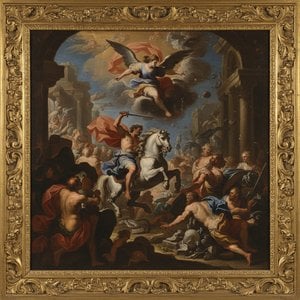
In the quiet grandeur of Nicolas Poussin’s Pan and Syrinx, we are invited into a moment where time itself seems to suspend its forward march. Completed between 1637 and 1638, this masterpiece serves as a breathtaking distillation of Baroque idealism, capturing the precise instant when myth intersects with metamorphosis. The scene, drawn from the evocative pages of Ovid’s Metamorphoses, depicts the pursuit of the nymph Syrinx by the goat-legged god Pan. It is a narrative of intense longing and desperate evasion, yet Poussin elevates this primal chase into a profound meditation on the tension between earthly desire and divine preservation. As the viewer gazes upon the canvas, they do not merely witness a hunt; they experience a poetic struggle written in light and shadow.
The composition is a triumph of classical order, reflecting Poussin’s deep reverence for the structural harmony found in the works of Raphael. Utilizing a sophisticated pyramidal structure, the artist anchors the drama within a stable, monumental framework that provides a sense of eternal stillness despite the underlying movement. Pan dominates the foreground, his physical presence heavy with the weight of unrequited passion, while Syrinx stands poised at the edge of the reeds, her gaze averted in a gesture of timid resistance. This careful arrangement creates a rhythmic balance, guiding the eye from the muscular tension of the pursuing deity to the ethereal, angelic figure in the upper periphery, which offers a celestial counterweight to the earthly drama unfolding below.
Technically, Pan and Syrinx is a testament to the French Baroque style’s ability to marry intellectual rigor with visual splendor. Poussin’s brushwork favors clarity and line over the more fluid, painterly textures seen in Venetian traditions, a choice that imbues each figure with a sculptural permanence. The palette is masterfully orchestrated; the warm, vital tones of Pan’s skin contrast beautifully with the cool, verdant landscape and the delicate, translucent quality of the reeds. This interplay of color does more than define form—it characterizes the very essence of the protagonists: the sensual vitality of the shepherd-god versus the chaste, fleeting beauty of the nymph.
For the discerning collector or interior designer, this work offers an unparalleled opportunity to introduce a sense of historical depth and intellectual sophistication into a space. The painting’s ability to evoke both tension and tranquility makes it a versatile centerpiece for a curated gallery or a refined study. It is not merely a decorative object but a window into the classical soul, providing a focal point that invites contemplation and conversation. Whether placed in a setting of modern minimalism or traditional opulence, the enduring elegance of Poussin’s vision remains undiminished, offering a timeless connection to the legends that have shaped Western art history.


1594 - 1665 , Frankrijk

Embark on a sophisticated journey through the eternal allure of mythological art. Discover how master painters breathe life into ancient legends, from Greek deities to Baroque masterpieces, and learn to curate these timeless narratives within your own exquisite art collection.
Explore the breathtaking power of Baroque art. Delve into the dramatic interplay of light, shadow, and motion through the works of masters like Caravaggio. Discover how the era's intense emotional realism continues to inspire collectors and connoisseurs of classical grandeur.

Explore the breathtaking drama of the Baroque era. From the mastery of chiaroscuro to epic mythological narratives, discover a definitive guide to art's most powerful period of light, shadow, and emotion for the true classical art enthusiast.

Explore the profound elegance of Baroque Classicism. Discover how masters fused dramatic chiaroscuro with structured order to redefine art history through light, shadow, and emotional grandeur.

 Voorvertoning
 Verstuur
 Delen
Delen
 Details bekijken

 Download
 Vergelijkbare items
 Röntgenonderzoek
 Diavoorstelling
 Lees meer







 De optie voor glas is alleen beschikbaar bij een formaat kleiner dan 110 cm.


