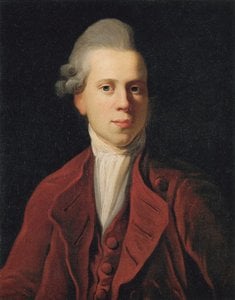
Kunstenaarsbiografie
Early Life and Artistic Foundations
Nicolai Abraham Abildgaard, geboren in Kopenhagen op september 11e, 1743, kwam voort uit een familie die diep geworteld was in de kunst en wetenschap. Zijn vader, Søren Abildgaard, was een gerespecteerde antiquarische tekenaar, waardoor hij zijn zoon vroeg een waardering ontwikkelde voor klassieke vormen en minutieuze observatie. Deze familiale invloed bleek fundamenteel te zijn omdat Abildgaard zijn artistieke reis begon, aanvankelijk onder begeleiding van een lokale schilderleraar voordat hij formeel toegeschreven werd aan het Nieuwe Koninklijke Dansse Academie voor Kunst in 1764. Zijn talent kwam snel naar boven; vanaf 1764 tot 1767 verdiende hij consequent prijzen en medailles die zijn groeiende bekwaamheid erkenden. Deze vroege successen kwamen samen met een reisbeurs die hij vijf jaar later eindelijk kon gebruiken – een belangrijke kans die zijn artistieke ontwikkeling vorm gaf, hoewel het vijf jaar duurde voordat hij deze daadwerkelijk kon benutten. Tijdens deze vroegste jaren aan de Academie profiteerde hij van de begeleiding van Johan Edvard Mandelberg en Johannes Wiedewelt, terwijl hij tegelijkertijd zijn eigen unieke pad volgde. Hij werd getraind door een schilderleraar voor hij zich bij het Nieuwe Koninklijke Dansse Academie voor Kunst in 1764 aangaf waar hij studeerde onder de begeleiding van Johan Edvard Mandelberg en Johannes Wiedewelt. Hij won een reeks medailles aan de Academie voor zijn briljantie vanaf 1764 tot 1767 waardoor hij steeds weer werd bekroond met erkenning voor zijn groeiende talent. Deze vroege successen kwamen samen met een reisbeurs die hij vijf jaar later eindelijk kon gebruiken – een belangrijke kans die zijn artistieke ontwikkeling vorm gaf, hoewel het vijf jaar duurde voordat hij deze daadwerkelijk kon benutten. Tijdens deze vroegste jaren aan de Academie profiteerde hij van de begeleiding van Johan Edvard Mandelberg en Johannes Wiedewelt terwijl hij tegelijkertijd zijn eigen unieke pad volgde. Hij ontwikkelde een diepe waardering voor literatuur, waarbij hij inspiratie haalde uit het werk van Shakespeare, Homer en Ossian – verhalen die hij later op zijn doeken doorvoerden met lagen van betekenis en emotionele resonans.
De Romeinse Ontwaking: Een Verschuiving in Perspectief
In 1772 reisde Nicolai Abildgaard eindelijk naar zijn lange gekende droom uit naar Rome. Deze vijfjarige séjour bleek transformatief, waarbij hij een cruciale keerpunt markteerde in zijn artistieke evolutie. Omringd door het hart van de klassieke oudheid besteedde hij zich volledig aan het bestuderen niet alleen beeldhouwkunst maar ook architectuur, decoratie en de prachtige fresco's die Palazzo Farnese versierden. Een bezoek aan Napels in 1776 met kunstenaar Jens Juel breidde zijn horizonen verder uit. Rome was niet alleen een plaats voor technische studie; het was een intellectuele ontwaking. Abildgaard duikte in geschiedenisschilderkunst, zoekend naar beheersing van zijn complexiteit en narratieve kracht. Hij haalde inspiratie op bij de meesters – Annibale Carracci, Rafael, Titian en Michelangelo – waarbij hij hun compositiesstrategieën, dramatische lichtgebruik en diepgaande kennis van anatomie absorbeerde. Een bezoek aan Napels in 1776 met kunstenaar Jens Juel breidde zijn horizonen verder uit. Rome was niet alleen een plaats voor technische studie; het was een intellectuele ontwaking. Abildgaard duikte in geschiedenisschilderkunst, zoekend naar beheersing van zijn complexiteit en narratieve kracht. Hij haalde inspiratie op bij de meesters – Annibale Carracci, Rafael, Titian en Michelangelo – waarbij hij hun compositiesstrategieën, dramatische lichtgebruik en diepgaande kennis van anatomie absorbeerde. Een bezoek aan Napels in 1776 met kunstenaar Jens Juel breidde zijn horizonen verder uit. Rome was niet alleen een plaats voor technische studie; het was een intellectuele ontwaking. Abildgaard duikte in geschiedenisschilderkunst, zoekend naar beheersing van zijn complexiteit en narratieve kracht. Hij haalde inspiratie op bij de meesters – Annibale Carracci, Rafael, Titian en Michelangelo – waarbij hij hun compositiesstrategieën, dramatische lichtgebruik en diepgaande kennis van anatomie absorbeerde. Een bezoek aan Napels in 1776 met kunstenaar Jens Juel breidde zijn horizonen verder uit. Rome was niet alleen een plaats voor technische studie; het was een intellectuele ontwaking. Abildgaard duikte in geschiedenisschilderkunst, zoekend naar beheersing van zijn complexiteit en narratieve kracht. Hij haalde inspiratie op bij de meesters – Annibale Carracci, Rafael, Titian en Michelangelo – waarbij hij hun compositiesstrategieën, dramatische lichtgebruik en diepgaande kennis van anatomie absorbeerde. Een bezoek aan Napels in 1776 met kunstenaar Jens Juel breidde zijn horizonen verder uit. Rome was niet alleen een plaats voor technische studie; het was een intellectuele ontwaking. Abildgaard duikte in geschiedenisschilderkunst, zoekend naar beheersing van zijn complexiteit en narratieve kracht. Hij haalde inspiratie op bij de meesters – Annibale Carracci, Rafael, Titian en Michelangelo – waarbij hij hun compositiesstrategieën, dramatische lichtgebruik en diepgaande kennis van anatomie absorbeerde. Een bezoek aan Napels in 1776 met kunstenaar Jens Juel breidde zijn horizonen verder uit. Rome was niet alleen een plaats voor technische studie; het was een intellectuele ontwaking. Abildgaard duikte in geschiedenisschilderkunst, zoekend naar beheersing van zijn complexiteit en narratieve kracht. Hij haalde inspiratie op bij de meesters – Annibale Carracci, Rafael, Titian en Michelangelo – waarbij hij hun compositiesstrategieën, dramatische lichtgebruik en diepgaande kennis van anatomie absorbeerde. Een bezoek aan Napels in 1776 met kunstenaar Jens Juel breidde zijn horizonen verder uit. Rome was niet alleen een plaats voor technische studie; het was een intellectuele ontwaking. Abildgaard duikte in geschiedenisschilderkunst, zoekend naar beheersing van zijn complexiteit en narratieve kracht. Hij haalde inspiratie op bij de meesters – Annibale Carracci, Rafael, Titian en Michelangelo – waarbij hij hun compositiesstrategieën, dramatische lichtgebruik en diepgaande kennis van anatomie absorbeerde. Een bezoek aan Napels in 1776 met kunstenaar Jens Juel breidde zijn horizonen verder uit. Rome was niet alleen een plaats voor technische studie; het was een intellectuele ontwaking. Abildgaard duikte in geschiedenisschilderkunst, zoekend naar beheersing van zijn complexiteit en narratieve kracht. Hij haalde inspiratie op bij de meesters – Annibale Carracci, Rafael, Titian en Michelangelo – waarbij hij hun compositiesstrategieën, dramatische lichtgebruik en diepgaande kennis van anatomie absorbeerde. Een bezoek aan Napels in 1776 met kunstenaar Jens Juel breidde zijn horizonen verder uit. Rome was niet alleen een plaats voor technische studie; het was een intellectuele ontwaking. Abildgaard duikte in geschiedenisschilderkunst, zoekend naar beheersing van zijn complexiteit en narratieve kracht. Hij haalde inspiratie op bij de meesters – Annibale Carracci, Rafael, Titian en Michelangelo – waarbij hij hun compositiesstrategieën, dramatische lichtgebruik en diepgaande kennis van anatomie absorbeerde. Een bezoek aan Napels in 1776 met kunstenaar Jens Juel breidde zijn horizonen verder uit. Rome was niet alleen een plaats voor technische studie; het was een intellectuele ontwaking. Abildgaard duikte in geschiedenisschilderkunst, zoekend naar beheersing van zijn complexiteit en narratieve kracht. Hij haalde inspiratie op bij de meesters – Annibale Carracci, Rafael, Titian en Michelangelo – waarbij hij hun compositiesstrategieën, dramatische lichtgebruik en diepgaande kennis van anatomie absorbeerde. Een bezoek aan Napels in 1776 met kunstenaar Jens Juel breidde zijn horizonen verder uit. Rome was niet alleen een plaats voor technische studie; het was een intellectuele ontwaking. Abildgaard duikte in geschiedenisschilderkunst, zoekend naar beheersing van zijn complexiteit en narratieve kracht. Hij haalde inspiratie op bij de meesters – Annibale Carracci, Rafael, Titian en Michelangelo – waarbij hij hun compositiesstrategieën, dramatische lichtgebruik en diepga



 Voorvertoning
 Schakel over naar print
 Verstuur
 Delen
Delen
 Details bekijken

 Download
 Vergelijkbare items
 Röntgenonderzoek
 Diavoorstelling
 Statistieken


 Lees meer