Voorvertoning Bekijk in AR Bestel handgeschilderde reproductie Schakel over naar digitale afbeeldingen Verstuur
Details bekijken Gids Toevoegen aan favorieten Download Vergelijkbare items Röntgenonderzoek Diavoorstelling Vraag & antwoord Presentatie Statistieken

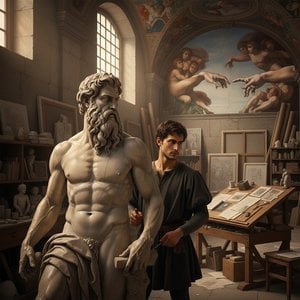
David (rear view)

Hoogrenaissancemeester van de Sixtijnse Kapel. Ontdek vandaag nog zijn legendarische sculpturen en fresco's.

Giclée / Kunstafdrukken

Giclée- of canvasafdruk van museumkwaliteit met een snelle productie en flexibele afwerkingsmogelijkheden. ( Bestel handgeschilderde reproductie Schakel over naar digitale afbeeldingen)

Corner sample of the P118B picture frame: gegoten polystyreen, 5 cm wide and 3 cm thick
P118B €10
Corner sample of the P118H picture frame: gegoten polystyreen, 5 cm wide and 3 cm thick
P118H €10
Corner sample of the P118W picture frame: gegoten polystyreen, 5 cm wide and 3 cm thick
P118W €10
Corner sample of the P438Z picture frame: gegoten polystyreen, 5.5 cm wide and 3.5 cm thick
P438Z €10
Corner sample of the P508JH picture frame: gegoten polystyreen, 7 cm wide and 3.5 cm thick
P508JH €12
Corner sample of the P508YH picture frame: gegoten polystyreen, 7 cm wide and 3.5 cm thick
P508YH €12
Corner sample of the P805H picture frame: gegoten polystyreen, 5 cm wide and 3.5 cm thick
P805H €10
Corner sample of the P805Z picture frame: gegoten polystyreen, 5 cm wide and 3.5 cm thick
P805Z €10
Corner sample of the P919BZ picture frame: gegoten polystyreen, 7 cm wide and 3.5 cm thick
P919BZ €10
Corner sample of the P919G picture frame: gegoten polystyreen, 7 cm wide and 3.5 cm thick
P919G €10
Corner sample of the P919XJ picture frame: gegoten polystyreen, 7 cm wide and 3.5 cm thick
P919XJ €10
Corner sample of the P959ZH picture frame: gegoten polystyreen, 5 cm wide and 3 cm thick
P959ZH €10
Corner sample of the P968JZ picture frame: gegoten polystyreen, 6 cm wide and 4 cm thick
P968JZ €12
Corner sample of the W106C picture frame: massief hout, 5 cm wide and 3 cm thick
W106C €8
Corner sample of the W218G picture frame: massief hout, 5 cm wide and 3 cm thick
W218G €10
Corner sample of the W218JH picture frame: massief hout, 5 cm wide and 3 cm thick
W218JH €8
Corner sample of the W218Y picture frame: massief hout, 5 cm wide and 3 cm thick
W218Y €10
Corner sample of the W307PJ picture frame: massief hout, 6 cm wide and 3 cm thick
W307PJ €10
Corner sample of the W316G picture frame: massief hout, 6 cm wide and 3 cm thick
W316G €10
Corner sample of the W316PJ picture frame: massief hout, 6 cm wide and 3 cm thick
W316PJ €8
Corner sample of the W316Y picture frame: massief hout, 6 cm wide and 3 cm thick
W316Y €10
Corner sample of the W398PJ picture frame: massief hout, 5 cm wide and 3 cm thick
W398PJ €8
Corner sample of the W4111J picture frame: massief hout, 6.5 cm wide and 3.5 cm thick
W4111J €10
Corner sample of the W500HY picture frame: massief hout, 7 cm wide and 5 cm thick
W500HY €15
Corner sample of the W500JH picture frame: massief hout, 7 cm wide and 5 cm thick
W500JH €15
Corner sample of the W692G picture frame: massief hout, 8 cm wide and 4 cm thick
W692G €12
Corner sample of the W849H picture frame: massief hout, 5 cm wide and 3 cm thick
W849H €8
Corner sample of the W940BG picture frame: massief hout, 7.5 cm wide and 4.5 cm thick
W940BG €15
Corner sample of the W953PJ picture frame: massief hout, 6 cm wide and 3.5 cm thick
W953PJ €8

Standaardformaat
op maat gemaakt
CM
INCH

Kies uit onze vooraf ingestelde maten die overeenkomen met de originele verhoudingen van het kunstwerk.

breedte
hoogte

Voer de gewenste breedte en hoogte in, passend bij uw lijst of muur. Een afdruk kan alleen worden ingekort en nooit groter worden gemaakt dan het origineel; een formaat met andere verhoudingen zal daarom een deel van de afbeelding verliezen. Wij sturen u een digitaal mockup ter goedkeuring voordat we tot drukwerk overgaan. De afbeelding op deze pagina toont niet de werkelijke uitsnede — dit is alleen te zien op het mockup.

Wereldwijde levering () binnen 2 weken in plaats van de standaard 4/5 weken. (10 november)

Gratis wereldwijde expressverzending
Hoogwaardig linnen canvas
Volledige verzendverzekering
Garantie op terugbetaling van invoerrechten
Garantie op exacte kleurweergave
Retourbeleid van 100 dagen (alleen bij defecten)
100% Geld-terug-garantie
Korting bij meerdere afnames

Totaalprijs

€ 62

David (rear view)

Giclée / Kunstafdrukken

Afmetingen reproductie

-

Eindtotaal

€ 62

Snelle feiten

  • Subject or theme: Biblical Heroism; Strength and Courage
  • Year: 1504
  • Medium: Marble Sculpture
  • Dimensions: 517 cm (height)
  • Artistic style: Idealized Human Form; Classical Influence
  • Influences: Classical Sculpture

David (Rear View): A Masterpiece of Proportion and Tension

The sculpture David by Michelangelo Buonarroti stands as an enduring testament to Renaissance artistic genius—a figure whose rear view offers a profound glimpse into the sculptor’s meticulous craft and unwavering dedication to anatomical precision. Created in 1504 during his illustrious tenure in Rome, this monumental marble statue resides within the Galleria dell'Accademia, Florence, captivating visitors with its serene stillness juxtaposed against an underlying dynamism that speaks volumes about Michelangelo’s artistic vision.

Michelangelo Buonarroti: The Renaissance Forge

Michelangelo di Lodovico Buonarroti Simoni (1475-1564) wasn’t merely a sculptor; he was the embodiment of the Renaissance ideal—a polymath who excelled in painting, architecture, and poetry. His unparalleled skill stemmed from an unwavering belief in classical ideals combined with an innate understanding of human anatomy. As Giorgio Vasari eloquently stated, Michelangelo “was the most accomplished artist of his era,” surpassing even Leonardo da Vinci in mastery and innovation. This conviction solidified during his formative years under Domenico Ghirlandaio’s tutelage, where he honed foundational drafting skills before immersing himself in the study of Greek sculptures within the Medici Gardens—a crucible for shaping his distinctive style.

The Anatomy of Perfection: Detail and Proportion

The rear view of David is particularly remarkable for its meticulous depiction of human musculature. Michelangelo painstakingly recreated the subtle contours of muscles like the sternocleidomastoid and abductor digiti minimi, achieving an astonishing level of realism that defied conventional artistic standards of the time. Furthermore, he deliberately manipulated proportions—slightly elongating the torso and exaggerating the musculature of the upper body—to convey a sense of tension and readiness for action. This technique wasn’t merely stylistic; it reflected Michelangelo's profound understanding of human anatomy and his desire to capture the essence of movement within static form. As Vasari noted, Michelangelo “was able to express the most subtle emotions.”

Symbolism and Context: Triumph Over Fear

Beyond its technical brilliance, David embodies a powerful symbolic narrative rooted in biblical tradition—the tale of David slaying Goliath. The statue’s posture conveys unwavering confidence and determination, mirroring the heroic spirit of the Old Testament hero. Michelangelo's deliberate choice to depict David facing away from the viewer reinforces this message, emphasizing his inner resolve and focusing attention on the musculature of his torso and upper limbs. This visual strategy underscores the sculpture’s significance as a celebration of courage and resilience—themes central to Renaissance humanist thought.

A Legacy Enduring Through Time

David's placement in Piazza della Signoria, Florence, served as a deliberate assertion of Florentine republican ideals during a period fraught with political instability. Michelangelo’s masterpiece continues to inspire awe and admiration worldwide, cementing his place among the greatest artists of all time—a figure whose enduring legacy transcends centuries and speaks to the timeless beauty of human form and artistic expression. Its presence in the Galleria dell'Accademia ensures that future generations can appreciate the sublime achievement of Buonarroti’s genius.

Veelgestelde vragen

Welke emotie straalt het Renaissance Humanism-werk "David (rear view)" uit?

"David (rear view)" ademt een Powerful emotionele toon uit binnen de Renaissance Humanism-stroming.

Kan ik "David (rear view)" bekijken als een diavoorstelling op volledig scherm?

De diaporama van "David (rear view)" is te bekijken op de Diavoorstelling-pagina van het kunstwerk.

Tot welke periode in de carrière van Michelangelo Buonarroti behoort "David (rear view)"?

"David (rear view)" behoort tot de High Renaissance in de carrière van Michelangelo Buonarroti. Deze classificatie plaatst het werk in de context van de ontwikkeling van de kunstenaar.


Biografie kunstenaar

Het Gewicht van Steen en Stof

In de heuvels van Caprese leerde een jongen het gewicht van steen en de korreligheid van marmerstof kennen. Geboren in 1475, bracht Michelangelo Buonarroti zijn vroege jaren door in de buurt van Settignano, waar zijn vader een steengroeve bezat. De geur van vochtige aarde en het geluid van hamers tegen rotsen maakten deel uit van zijn jeugd. Hij begon niet met penselen, maar met de beitel. Zijn leerlingplaats onder Domenico Ghirlandaio in Florence bracht hem in contact met de groeiende belangstelling van de stad voor de menselijke vorm, maar het waren de tuinen van de Medici die zijn blik werkelijk vormgaven. Daar, te midden van de antieke Griekse en Romeinse fragmenten, bestudeerde hij hoe het licht over spieren en botten valt.

Zijn werk begon vorm te krijgen door een diepgaande studie van de anatomie. Hij observeerde de manier waarop een ledemaat gewicht draagt en hoe de huid over een gewricht spant. Deze focus op de fysieke realiteit van het lichaam werd zijn primaire taal. Tegen de tijd dat hij in 1496 Rome bereikte, was hij al bezig met het uithakken van figuren die een zware, tastbare aanwezigheid bezaten. De Pietà, voltooid in 1499, getuigt van dit vroege vermogen om marmer zo zacht als vlees te laten lijken, zelfs terwijl het het gewicht van een overleden man draagt.

De Spanning van het Plafond

De taak van het plafond van de Sixtijnse Kapel was niet iets wat hij zocht. Hij zag zichzelf als een beeldhouwer, iemand die het leven uit steen bevrijdt in plaats van pigment op pleister aanbrengt. Toch werkte hij gedurende vier jaar in de hoogste gewelven van de kapel, waar hij meer dan 300 figuren uit het boek Genesis schilderde. De fysieke tol was zichtbaar in zijn dagelijks leven. Hij bracht uren door in moeizame houdingen, zijn lichaam uitgeput door het reiken en de zware toepassing van de fresco-techniek. In panelen zoals De Schepping van Adam wordt de spanning gevonden in de kleine opening tussen twee vingers, een moment van bijna-contact dat de aandacht van de kijker vasthoudt door pure compositie.

Naarmate de tijd verstreek, bewoog zijn stijl weg van de evenwichtige idealen van de Hoogrenaissance naar iets dat onrustiger was. Zijn latere werken, zoals Het Laatste Oordeel op de altaarwand, tonen een verschuiving naar het Maniërisme. De figuren werden langgerekter en de composities drukker en dramatischer. Deze verandering weerspiegelde een verschuivend spiritueel klimaat in Rome. Hij bleef werken met een intensiteit die velen overweldigend vonden, waarbij hij projecten vaak onvoltooid liet terwijl zijn geest zich richtte op nieuwe architecturale of beeldhouwkundige vraagstukken.

Architectuur en de Laatste Jaren

In zijn latere decennia richtte Michelangelo veel van zijn aandacht op de structuur van gebouwen. Op 71-jarige leeftijd nam hij de werkzaamheden aan de Sint-Pietersbasiliek op zich en paste hij de plannen aan om een massiever, imposanter ontwerp te creëren. Hij ontwierp ook de Laurentinerbibliotheek, waar zijn gebruik van architecturale elementen brak met de traditie en een gevoel van beweging binnen de steen zelf creëerde. Zijn werk aan de Piazza del Campidoglio in Rome toonde hoe hij een publieke ruimte kon organiseren met behulp van symmetrie en klassieke motieven om het oog door het plein te leiden.

Hij stierf in Rome in 1564 en liet een nalatenschap na geschreven in marmer, fresco en steen. Zijn leven werd gedefinieerd door verschillende sleutelrollen:

  • Beeldhouwer: Het uithakken van werken zoals David uit massieve blokken Carrara-marmer.
  • Schilder: Het uitvoeren van de enorme narratieve cycli van de Sixtijnse Kapel.
  • Architect: Het herontwerpen van de fundamenten van de Sint-Pietersbasiliek en de Laurentinerbibliotheek.
  • Dichter: Het uitdrukken van zijn innerlijke gedachten door middel van versen.
Michelangelo Buonarroti

Michelangelo Buonarroti

1475 - 1564 , Italië

Belangrijkste feiten

  • Artistic Movement Or Style: Hoogrenaissance, Maniërisme
  • Artists Or Movements Influenced By This Artist: ['Maniërisme']
  • Artists Who Influenced This Artist: ['Domenico Ghirlandaio']
  • Date Of Birth: 1475
  • Date Of Death: 1564
  • Full Name: Michelangelo di Lodovico Buonarroti Simoni
  • Nationality: Italiaans
  • Notable Artworks:
    • Pietà
    • David
    • Plafond van de Sixtijnse Kapel
    • Het Laatste Oordeel
  • Place Of Birth: Caprese Michelangelo, Italië
Ontdek kunstwerken georganiseerd op thema, stijl en kenmerk.