A Glimpse into the Heart of Virtue and Strength
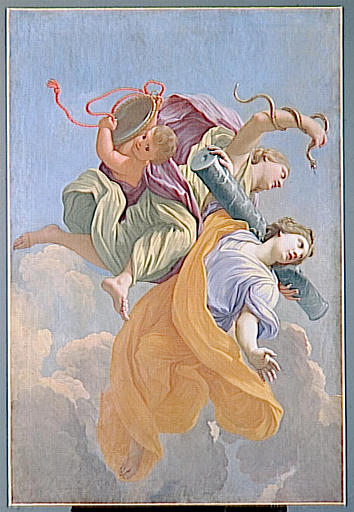
Michel Dorigny’s “La Force et la Prudence” (Strength and Prudence) is not merely a decorative ceiling painting; it's a carefully constructed allegory, a visual meditation on the virtues that underpinned Renaissance thought and continue to resonate today. Painted in 1659-1661 during his time at the Académie de peinture et de sculpture in Paris, this work embodies the spirit of the French Baroque while retaining a classical elegance—a testament to Dorigny’s rigorous training under masters like Vouet. The scene unfolds within a swirling cloudscape, reminiscent of both the heavens and the depths of human experience, suggesting that true strength and prudence are found not in earthly pursuits alone but also in understanding one's place within a larger order.
Composition and Color: A Symphony of Balance
The painting’s composition is immediately striking – a deliberate pyramid structure anchored by the reclining figure of Prudence. This central female form, rendered with exquisite detail and draped in flowing robes of cream and pale blue, embodies wisdom, restraint, and foresight. Above her, bathed in a softer light, stands Strength, represented by an angel—a dynamic figure radiating power and determination. The careful arrangement creates a sense of upward movement, drawing the eye towards the celestial realm while simultaneously grounding it in the earthly concerns of virtue. Dorigny masterfully employs a muted color palette dominated by blues, yellows, pinks, and creams; these tones are not vibrant or dramatic but rather contribute to an atmosphere of serene contemplation. Subtle contrasts between the warm drapery and the cooler sky create depth and visual interest without disrupting the overall sense of harmony.
Technique and Detail: The Art of Layered Illusion
Dorigny’s technique is characterized by a remarkable attention to detail and a sophisticated understanding of oil painting. He utilizes thin, translucent glazes—a hallmark of the French Baroque style—to build up layers of color, creating a luminous effect that seems to emanate from within the canvas. The rendering of fabric is particularly noteworthy; each fold and drape appears incredibly tactile, conveying a sense of weight and movement. The cherubic figures are painted with delicate precision, their features subtly expressive yet retaining an air of innocence. Close examination reveals meticulous work in capturing the textures of skin, hair, and clothing—a testament to Dorigny’s skill as a painter and his dedication to realism within the context of allegorical representation. The use of lines is primarily curvilinear, mirroring the flowing drapery and cloud formations, contributing to the painting's overall sense of fluidity.
Symbolism: Echoes of Classical Virtue
“La Force et la Prudence” is rich in symbolic meaning, drawing upon classical mythology and philosophical concepts. Prudence, often depicted as a goddess or wise woman, represents not just caution but also the ability to discern truth from falsehood, to make sound judgments, and to act with foresight. Strength, embodied by the angel, symbolizes courage, resilience, and the capacity to overcome obstacles. The interaction between these two figures suggests a harmonious balance—that true strength is not merely brute force but rather tempered by wisdom and prudence. The swirling clouds serve as a backdrop for this symbolic drama, representing the uncertainties of life and the need for guidance in navigating them.
A Timeless Masterpiece: Inspiration for Today
More than three centuries after its creation, “La Force et la Prudence” continues to captivate viewers with its beauty, elegance, and profound symbolism. It stands as a powerful reminder of the enduring value of virtue—of strength tempered by wisdom, and of prudence guiding us towards a more fulfilling life. Reproductions of this exquisite painting offer a unique opportunity to bring this timeless masterpiece into your home or office, adding a touch of classical grace and intellectual depth to any space.



 Voorvertoning
 Bestel print
 Verstuur
 Delen
Delen
 Details bekijken

 Download
 Vergelijkbare items
 Röntgenonderzoek
 Diavoorstelling

 Lees meer






































 De optie voor glas is alleen beschikbaar bij een formaat kleiner dan 110 cm.