VoorvertoningVoorvertoning Bekijk in ARBekijk in AR Bestel handgeschilderde reproductie Bestel handgeschilderde reproductieSchakel over naar digitale afbeelding Schakel over naar digitale afbeelding VerstuurVerstuur
Details bekijkenDetails bekijken Toevoegen aan favorieten Toevoegen aan favorieten DownloadDownload Vergelijkbare itemsVergelijkbare items RöntgenonderzoekRöntgenonderzoek DiavoorstellingDiavoorstelling StatistiekenStatistieken

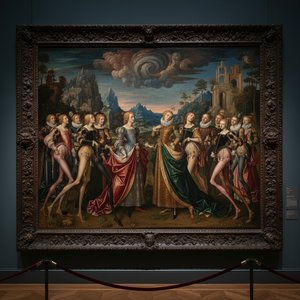
Portret van Ursula Tucher

Een prachtige Renaissance portret van Ursula Tucher door Wolgemut, gekenmerkt door natuurlijke stijl en symbolische details die de schoonheid en waardigheid van een Nürnbergse aristocratin vastleggen.

Explore Michael Wolgemut (1434-1519), a German Renaissance painter & printmaker who mentored Albrecht Dürer! Discover his Flemish influences and iconic woodcuts from the Nuremberg Chronicle.

Giclée / Kunstafdrukken

Giclée- of canvasafdruk van museumkwaliteit met een snelle productie en flexibele afwerkingsmogelijkheden. (Bestel handgeschilderde reproductie Bestel handgeschilderde reproductieSchakel over naar digitale afbeelding Schakel over naar digitale afbeelding)

P118B $10
P118H $10
P118W $10
P438Z $10
P508JH $12
P508YH $12
P805H $10
P805Z $10
P919BZ $10
P919G $10
P919XJ $10
P959ZH $10
P968JZ $12
W106C $8
W218G $10
W218JH $8
W218Y $10
W307PJ $10
W316G $10
W316PJ $8
W316Y $10
W398PJ $8
W4111J $10
W500HY $15
W500JH $15
W692G $12
W849H $8
W940BG $15
W953PJ $8

Standaardformaat
op maat gemaakt
CM
INCH

Kies uit onze vooraf ingestelde maten die overeenkomen met de originele verhoudingen van het kunstwerk.

breedte
hoogte

U kunt uw eigen afmetingen opgeven om in een specifieke lijst of ruimte te passen. Als de door u gekozen maat niet overeenkomt met de proporties van het originele kunstwerk, zullen wij de afbeelding bijsnijden of uitbreiden met een gespiegelde of effen rand. Een digitaal mockup wordt ter goedkeuring naar u verzonden voordat de productie begint.
Houd er rekening mee dat de preview op het scherm de werkelijke bijsneding of uitbreiding niet weergeeft. Alleen de mockup toont de uiteindelijke compositie nauwkeurig.
Hoewel aangepaste maten beschikbaar zijn, raden wij aan een afmeting uit de vooraf bepaalde lijst te kiezen om de originele proporties te behouden.

Wereldwijde levering () binnen 2 weken in plaats van de standaard 4/5 weken. (13 september)

why_choose_icon
Gratis wereldwijde expressverzending
why_choose_icon
Hoogwaardig linnen canvas
why_choose_icon
Volledige verzendverzekering
why_choose_icon
Garantie op terugbetaling van invoerrechten
why_choose_icon
Garantie op exacte kleurweergave
why_choose_icon
Retourbeleid van 100 dagen (alleen bij defecten)
why_choose_icon
100% Geld-terug-garantie
why_choose_icon
Korting bij meerdere afnames

Totaalprijs

$ 69

reproduction

Portret van Ursula Tucher

Giclée / Kunstafdrukken

Afmetingen reproductie

-

Eindtotaal

$ 69

Snelle feiten

  • Title: Portrait of Ursula Tucher
  • Subject or theme: Portraiture
  • Medium: Oil on limewood
  • Influences: Flemish Art
  • Artist: Michael Wolgemut
  • Movement: Northern Renaissance

Kunstquiz

Er is slechts één goed antwoord op elke vraag.

Vraag 1:
What artistic movement is prominently represented in the portrait of Ursula Tucher?
Vraag 2:
Who mentored Michael Wolgemut, significantly influencing his artistic style?
Vraag 3:
What material was primarily used to create the portrait of Ursula Tucher?
Vraag 4:
The headdress worn by Ursula Tucher symbolizes what characteristic feature of medieval society?
Vraag 5:
What is the significance of the small red flower pinned to Ursula Tucher's chest in the painting?

Een Venster op de Renaissance Digniteit: Michael Wolgemut’s Portret van Ursula Tucher

Michael Wolgemut's “Portret van Ursula Tucher,” geschilderd in 1478, staat als een getuigenis van het groeiende humanisme van Noordelijke Renaissance kunst. Meer dan alleen een afbeelding van een aristocratische vrouw – Ursula Tucherin zelf – het schilderij belichaamt idealen van pietzigheid, verfijning en familiale devotie, weerspiegelend de waarden binnen Nürnberg’s rijke koopmansgezinnen tijdens deze transformerende periode.

  • Onderwerp: Het portret richt zich op Ursula Tucher, een prominente figuur in Nürnbergse samenleving. Haar gedwongen houding geeft zelfvertrouwen en gratie weer, kenmerkend voor afbeeldingen van edelvrouwen bedoeld om een aura van rechtvaardigheid en respectabiliteit uit te stralen.
  • Stijl & Techniek: Wolgemut’s meesterlijke realisme is zichtbaar in de zorgvuldige weergave van texturen – vooral de vouwen van Ursula’s jurk – wat een verfijnde begrip demonstreert van chiaroscuro (licht en schaduw), een techniek die sterk werd aangemoedigd door Vlaamse schilderkunsttraditie.
  • Materiaal & Medium: Uitgevoerd op limewouw, een duurzame houtsoort gekozen voor portretten, gebruikt het schilderij olieverf, waardoor subtiele kleurgradaties mogelijk zijn en fijn gedetailleerde gegevens worden vastgelegd die niet haalbaar zouden zijn met tempera.

Symboliek Geborduurd in Detail

Naast eenvoudige weergave verrijkte Wolgemut het kunstwerk met symbolische elementen bedoeld om Ursula’s status en karakter te communiceren. De witte kap – een gebruikelijk kenmerk van aristocratisch vrouwen’ garderobe – vertegenwoordigt zuiverheid en nederigheid, wat perfect aansluit bij christelijke idealen van pietzigheid. Een soortgelijk de rode bloem vastgeprikt aan Ursula’s borst symbooliseert liefde en schoonheid - misschien een persoonlijk embleem dat haar huwelijksgeluk weerkaatst.

  • De Kap: Vertegenwoordigt nederigheid en sociale status, wat de belangrijkheid van familiale eer binnen Renaissance samenleving onderstreept.
  • De Bloem: Symbooliseert affiniteit en levensenergie, het spreekt tot Ursula’s innerlijke leven en draagt bij aan de algemene indruk van sereniteit en gratie.

Een Spiegelbeeld van Nürnberg’s Kunstenaarslandschap

Wolgemut’s atelier stond middenin Nürnberg’s kunstenaarsbloei – een stad bekend om zijn drukpers en groeiende patronage van de kunst. Zijn invloed strekte zich verder uit dan zijn eigen creaties, vooral door het begeleiden van Albrecht Dürer, misschien Duitsland's meest beroemde Renaissance kunstenaar tussen 1486 en 1489. Het bestuderen van Wolgemut’s werk biedt waardevolle inzichten in de stijlconventies en intellectuele stromingen die deze tijd bepaalden.

  • Werkplaats Invloed: Wolgemut begeleidde Dürer, wat een samenwerkingsgeest bevorderde die beide kunstenaars naar ongekende hoogten van artistieke prestatie stuurt.
  • Historische Context: De schilderkunst’s stijlkeuze – vooral het omarmen van Vlaamse realisme – weerspiegelt de bredere trend naar natuurlijke representatie en emotionele diepgang binnen Noordelijke Renaissance kunst.

“Portret van Ursula Tucher” gaat verder dan eenvoudige visuele weergave; het vangt een moment in tijd, waarbij hij de waarden en aspiraties van zijn onderwerp weerkaatst. De kunstenaar’s zorgvuldige aandacht voor detail – haar blik, haar houding, de subtiele expressies – nodigt uit tot contemplatie over thema's als waardigheid, rechtvaardigheid en familiale devotie. Het blijft een blijvend meesterwerk, het bewijs van Wolgemut’s ongeëvenaarde bekwaamheid en bevestigt Nürnberg’s plaats als een lichtpuntje van artistieke innovatie tijdens de Renaissance.


Biografie van de kunstenaar

A Nuremberg Master: The Life and Legacy of Michael Wolgemut

Born around 1434 in the vibrant city of Nuremberg, Germany, Michael Wolgemut emerged as a pivotal figure in the transition from Late Gothic to Renaissance art. His name, sometimes rendered as Wohlgemuth or Wolgemuth, resonates through art history not only for his own artistic contributions but also—and perhaps more profoundly—for his role as mentor to one of the greatest masters of all time: Albrecht Dürer. Wolgemut’s journey began within a familial artistic tradition; he received his initial training from his father, Valentin Wolgemut, a painter himself. This foundation instilled in him an early appreciation for the craft and set the stage for a career that would span decades and leave an indelible mark on German art. He further honed his skills as an assistant to Hans Pleydenwurff, a prominent Nuremberg artist, gaining invaluable experience within a bustling workshop environment. A brief sojourn in Munich with Gabriel Malesskircher proved less fruitful, ending in a legal dispute, but it underscored Wolgemut’s ambition and willingness to seek opportunities beyond his native city.

Workshop Leadership and Artistic Development

A turning point arrived in 1472 when Wolgemut married Pleydenwurff's widow, Barbara, inheriting not only a life partner but also the established workshop of one of Nuremberg’s leading artists. This acquisition propelled him to the forefront of the city’s artistic scene. Wilhelm Pleydenwurff, Hans’ son, joined the workshop as an assistant and later became a partner, creating a dynamic collaborative environment. Under Wolgemut's direction, the workshop flourished, becoming renowned for its diverse output—from intricately carved and painted wood retables to exquisitely detailed altar pieces. His style reveals a clear influence from Flemish masters, suggesting possible travels within Flanders (modern Belgium and surrounding areas). This is evident in his meticulous attention to detail, rich color palettes, and realistic depictions of figures and textures. He wasn’t merely replicating the Flemish aesthetic; he was adapting it, infusing it with a distinctly German sensibility that would characterize much of Northern Renaissance art.

The Nuremberg Chronicle and the Rise of Woodcut

Wolgemut's legacy extends far beyond painting. He stands as a key figure in the revival of German woodcut artistry. His workshop became a prolific producer of woodcuts, often commissioned by publishers to illustrate books—a burgeoning market fueled by the recent invention of the printing press. These weren’t simply functional illustrations; they were works of art in their own right, demonstrating advancements in technique that allowed for more nuanced depictions of volume and shading. Frequently hand-colored after printing, these woodcuts brought visual narratives to a wider audience than ever before. However, his most monumental achievement remains his collaboration with Wilhelm Pleydenwurff on the illustrations for Hartmann Schedel’s *Liber Chronicarum*, published in 1493—better known as the Nuremberg Chronicle. This lavishly illustrated chronicle was a landmark publication, showcasing Wolgemut's mastery of woodcut design and meticulous planning. The project involved creating hundreds of intricate images depicting biblical scenes, historical events, and fantastical creatures, all meticulously laid out alongside Schedel’s text. The sheer scale and ambition of the Nuremberg Chronicle cemented Wolgemut’s reputation as a leading artist of his time.

A Teacher's Influence: Dürer and Beyond

Perhaps Michael Wolgemut’s most enduring legacy lies in his role as teacher to Albrecht Dürer, arguably Germany’s greatest artist. Dürer apprenticed with Wolgemut between 1486 and 1489, receiving a comprehensive artistic education that laid the foundation for his own groundbreaking career. While Dürer ultimately surpassed his mentor in fame and innovation, he consistently acknowledged Wolgemut's influence throughout his life. He learned not only technical skills—drawing, painting, woodcut techniques—but also the importance of meticulous observation, careful composition, and a dedication to craftsmanship. Wolgemut instilled in Dürer a deep appreciation for both artistic tradition and innovative experimentation. Beyond Dürer, Wolgemut’s workshop trained numerous other artists, contributing significantly to the flourishing artistic landscape of Nuremberg and beyond. His contribution to German art isn't solely defined by his individual works but also by the vibrant artistic ecosystem he fostered.

Lasting Significance

Michael Wolgemut died in 1519, leaving behind a rich artistic legacy that continues to resonate today. Major works such as the Retable of the High Altar at Zwickau (1479), the Great Retable for the Church of the Augustinian Friars in Nuremberg, and the Town Hall Decorations at Goslar demonstrate his versatility and skill. His portraits, known for their realistic depictions and meticulous detail—examples are held by institutions like the Royal Institution in Liverpool—reveal a keen eye for character and individuality. Wolgemut’s influence extended beyond his direct students; his innovative approach to woodcut design helped shape the development of German art in the late 15th century, impacting book production and artistic dissemination during the Renaissance. He successfully blended Flemish influences with local traditions, creating a unique style that paved the way for future generations of artists. He remains a vital link between the Late Gothic period and the burgeoning Renaissance, a testament to his enduring contribution to art history.

Michael Wolgemut

Michael Wolgemut

1434 - 1519 , Germany

Belangrijkste feiten

  • Artistic Movement Or Style: Late Gothic, Renaissance
  • Artists Or Movements Influenced By This Artist: ['Albrecht Dürer']
  • Artists Who Influenced This Artist: ['Flemish masters']
  • Date Of Birth: 1434
  • Date Of Death: 1519
  • Full Name: Michael Wolgemut
  • Nationality: German
  • Notable Artworks:
    • Zwickau High Altar
    • Nuremberg Chronicle
    • Memminger Portrait
  • Place Of Birth: Nuremberg, Germany
Ontdek kunstwerken georganiseerd op thema, stijl en kenmerk.