Voorvertoning Bekijk in AR Bestel handgeschilderde reproductie Schakel over naar digitale afbeeldingen Verstuur
Details bekijken Gids Toevoegen aan favorieten Download Vergelijkbare items Röntgenonderzoek Diavoorstelling Statistieken

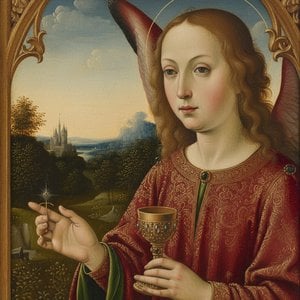
The Annunciation

Hans Memling’s ‘The Annunciation,’ a masterpiece of Early Netherlandish painting from 1465, showcases breathtaking detail and luminosity through masterful glazing. Admire this iconic scene featuring Rogier van der Weyden's influence and discover the beauty to own.

Ontdek de prachtige schilderijen van Hans Memling uit Brugge! Bewonder zijn gedetailleerde religieuze scènes en portretten, een meesterwerk van de Vlaamse Primitieven. Bezoek het Memling Museum en ervaar de schoonheid van deze vroege Renaissance kunstenaar.

De kunstwerken die op deze pagina worden weergegeven, zijn beschermd door de auteursrechtwetgeving, wat betekent dat het ons wettelijk niet is toegestaan om identieke reproducties te maken of te verkopen. Deze bescherming wordt gehandhaafd onder internationale overeenkomsten zoals de Conventie van Bern en door nationale wetgeving, waaronder de bepalingen van de Amerikaanse auteurswet - Titel 17. Alle rechten voorbehouden. Reproduceren of distribueren van afbeeldingen is niet toegestaan zonder uitdrukkelijke schriftelijke toestemming van WahooArt.com en de rechthebbenden.

Deze methode voldoet volledig aan de auteursrechtwetgeving, omdat het niet gaat om het kopiëren of dupliceren van het beschermde kunstwerk. In plaats daarvan is er sprake van een creatieve herinterpretatie — een nieuw schilderij dat door het origineel wordt geïnspireerd, maar er niet identiek aan is.

Giclée / Kunstafdrukken

Giclée- of canvasafdruk van museumkwaliteit met een snelle productie en flexibele afwerkingsmogelijkheden. ( Bestel handgeschilderde reproductie Schakel over naar digitale afbeeldingen)

Corner sample of the P118B picture frame: gegoten polystyreen, 5 cm wide and 3 cm thick
P118B €10
Corner sample of the P118H picture frame: gegoten polystyreen, 5 cm wide and 3 cm thick
P118H €10
Corner sample of the P118W picture frame: gegoten polystyreen, 5 cm wide and 3 cm thick
P118W €10
Corner sample of the P438Z picture frame: gegoten polystyreen, 5.5 cm wide and 3.5 cm thick
P438Z €10
Corner sample of the P508JH picture frame: gegoten polystyreen, 7 cm wide and 3.5 cm thick
P508JH €12
Corner sample of the P508YH picture frame: gegoten polystyreen, 7 cm wide and 3.5 cm thick
P508YH €12
Corner sample of the P805H picture frame: gegoten polystyreen, 5 cm wide and 3.5 cm thick
P805H €10
Corner sample of the P805Z picture frame: gegoten polystyreen, 5 cm wide and 3.5 cm thick
P805Z €10
Corner sample of the P919BZ picture frame: gegoten polystyreen, 7 cm wide and 3.5 cm thick
P919BZ €10
Corner sample of the P919G picture frame: gegoten polystyreen, 7 cm wide and 3.5 cm thick
P919G €10
Corner sample of the P919XJ picture frame: gegoten polystyreen, 7 cm wide and 3.5 cm thick
P919XJ €10
Corner sample of the P959ZH picture frame: gegoten polystyreen, 5 cm wide and 3 cm thick
P959ZH €10
Corner sample of the P968JZ picture frame: gegoten polystyreen, 6 cm wide and 4 cm thick
P968JZ €12
Corner sample of the W106C picture frame: massief hout, 5 cm wide and 3 cm thick
W106C €8
Corner sample of the W218G picture frame: massief hout, 5 cm wide and 3 cm thick
W218G €10
Corner sample of the W218JH picture frame: massief hout, 5 cm wide and 3 cm thick
W218JH €8
Corner sample of the W218Y picture frame: massief hout, 5 cm wide and 3 cm thick
W218Y €10
Corner sample of the W307PJ picture frame: massief hout, 6 cm wide and 3 cm thick
W307PJ €10
Corner sample of the W316G picture frame: massief hout, 6 cm wide and 3 cm thick
W316G €10
Corner sample of the W316PJ picture frame: massief hout, 6 cm wide and 3 cm thick
W316PJ €8
Corner sample of the W316Y picture frame: massief hout, 6 cm wide and 3 cm thick
W316Y €10
Corner sample of the W398PJ picture frame: massief hout, 5 cm wide and 3 cm thick
W398PJ €8
Corner sample of the W4111J picture frame: massief hout, 6.5 cm wide and 3.5 cm thick
W4111J €10
Corner sample of the W500HY picture frame: massief hout, 7 cm wide and 5 cm thick
W500HY €15
Corner sample of the W500JH picture frame: massief hout, 7 cm wide and 5 cm thick
W500JH €15
Corner sample of the W692G picture frame: massief hout, 8 cm wide and 4 cm thick
W692G €12
Corner sample of the W849H picture frame: massief hout, 5 cm wide and 3 cm thick
W849H €8
Corner sample of the W940BG picture frame: massief hout, 7.5 cm wide and 4.5 cm thick
W940BG €15
Corner sample of the W953PJ picture frame: massief hout, 6 cm wide and 3.5 cm thick
W953PJ €8

Standaardformaat
op maat gemaakt
CM
INCH

Kies uit onze vooraf ingestelde maten die overeenkomen met de originele verhoudingen van het kunstwerk.

breedte
hoogte

Voer de gewenste breedte en hoogte in, passend bij uw lijst of muur. Een afdruk kan alleen worden ingekort en nooit groter worden gemaakt dan het origineel; een formaat met andere verhoudingen zal daarom een deel van de afbeelding verliezen. Wij sturen u een digitaal mockup ter goedkeuring voordat we tot drukwerk overgaan. De afbeelding op deze pagina toont niet de werkelijke uitsnede — dit is alleen te zien op het mockup.

Wereldwijde levering () binnen 2 weken in plaats van de standaard 4/5 weken. (26 oktober)

Gratis wereldwijde expressverzending
Hoogwaardig linnen canvas
Volledige verzendverzekering
Garantie op terugbetaling van invoerrechten
Garantie op exacte kleurweergave
Retourbeleid van 100 dagen (alleen bij defecten)
100% Geld-terug-garantie
Korting bij meerdere afnames

Totaalprijs

€ 61

The Annunciation

Giclée / Kunstafdrukken

Afmetingen reproductie

-

Eindtotaal

€ 61

Snelle feiten

  • Subject or theme: Religious Narrative
  • Location: Saint Lazare Cathedral, Autun
  • Notable elements or techniques: Detailed realism; Rogier van der Weyden design
  • Medium: Oil paint on panel
  • Dimensions: 186 x 115 cm
  • Artistic style: Medieval Art

Kunstquiz

Er is slechts één goed antwoord op elke vraag.

Vraag 1:
What is the primary subject matter of Hans Memling’s ‘The Annunciation’?
Vraag 2:
Who is credited with designing the original composition for ‘The Annunciation’?
Vraag 3:
In what city was Hans Memling primarily active as an artist?
Vraag 4:
What architectural element is prominently featured in the painting’s background, symbolizing Mary's honor?
Vraag 5:
What is Memling’s artistic connection to Rogier van der Weyden?

A Divine Encounter Captured in Oil

In the quiet, luminous atmosphere of Hans Memling’s The Annunciation, time seems to suspend itself, inviting the viewer into a sacred moment of profound spiritual significance. This masterpiece, dating from approximately 1465, captures the pivotal instant when the Archangel Gabriel delivers the divine message to the Virgin Mary. The scene is not merely a depiction of a biblical event but a breathtaking window into the soul of the Early Netherlandish movement. Through his masterful command of light and shadow, Memling transforms a religious narrative into an intimate, palpable encounter that resonates with both reverence and human tenderness.

The composition draws the eye through a meticulously rendered landscape where the earthly and the divine converge. As the angel approaches, the viewer is struck by the incredible depth achieved through Memling’s signature technique of glazing. By layering thin, translucent coats of oil paint, the artist creates a sense of inner radiance, making the fabrics of the robes appear heavy with texture and the skin of the figures glow with a lifelike vitality. This luminosity serves a higher purpose, symbolizing the divine light descending upon the world, turning a simple architectural setting into a vessel for the miraculous.

The Legacy of Mastery and Detail

To understand the brilliance of this work, one must look to Memling’s formative years in the workshop of Rogier van der Weyden. As an apprentice to one of the greatest titans of Flemish painting, Memling inherited a devotion to sculptural modeling and an almost scientific precision in observing the natural world. In The Annunciation, this lineage is evident in every minute detail—from the delicate feathers of a bird perched in the periphery to the intricate patterns of the architectural elements. Every brushstroke serves to ground the supernatural event in a reality so vivid that it feels within reach.

For the discerning collector or interior designer, this painting offers more than just aesthetic beauty; it provides a focal point of profound intellectual and emotional depth. The interplay between the vibrant reds of the doorway and the serene, naturalistic background creates a balanced palette that can anchor a sophisticated space, whether in a classical gallery setting or a contemporary study. It is a piece that demands contemplation, offering a sense of peace and historical grandeur that transcends the centuries.

Symbolism and Emotional Resonance

Beyond its technical perfection, the painting is a tapestry of symbolic meaning. The architectural threshold acts as a metaphor for the boundary between the celestial realm and our mortal existence. As Mary kneels in humble acceptance, her posture reflects the profound piety that defined the era, while the surrounding figures and subtle environmental details whisper stories of faith and devotion. Memling’s ability to blend these complex theological themes with such accessible, breathtaking realism ensures that the artwork remains as emotionally stirring today as it was in the fifteenth century.

Owning a reproduction of such a monumental work allows one to bring the quiet majesty of the Bruges masters into the modern home. It is an invitation to experience the meticulous craftsmanship of the Northern Renaissance—a testament to a time when art was the ultimate bridge between the human spirit and the divine.

Veelgestelde vragen

Wat stelt "The Annunciation" voor?

De thema's die aanwezig zijn in "The Annunciation" door Hans Memling omvatten religious iconography, virgin mary, gabriel angel, annunciation scene, flemish painting, byzantine influence, detail art, medieval art. Samen vatten zij de onderwerpen van het kunstwerk samen.

Waar komen de bezoekers van "The Annunciation" door Hans Memling vandaan?

De Statistieken-pagina van "The Annunciation" door Hans Memling toont statistieken over de publieksbezoeken: het aantal maandelijkse bezoeken aan dit kunstwerk, een vergelijking met de meest bekeken werken van de kunstenaar en de herkomst van de bezoekers.

Waar is "The Annunciation" door Hans Memling tegenwoordig te zien?

"The Annunciation" door Hans Memling is te zien in Metropolitan Museum of Art, New York, United States of America. De vermelding van het museum heeft betrekking op het originele werk, niet op reproducties.


Biografie kunstenaar

Hans Memling: De Brugse Meester van Detail en Patronage

Hans Memling (ca. 1430 – 11 augustus 1494), geboren in Seligenstadt, Duitsland, staat als een sleutelfiguur in de vroege Nederlandstalige schilderkunst—een beweging gekenmerkt door verfijnd realisme, nauwgezette observatie van de natuur en diepe spirituele contemplatie. Hoewel zijn vormende jaren voornamelijk werden doorgebracht in de artistieke omgeving van het Rijnland, leidde Memlings traject hem uiteindelijk naar Brugge, België, waar hij zich vestigde als een van de belangrijkste kunstenaars van zijn tijd en een productieve werkplaats cultiveerde die zijn kenmerkende stijl over Europa verspreidde. Zijn leven is gehuld in mysterie, maar zijn werken spreken boekdelen over een meesterlijke techniek en een ongeëvenaarde aandacht voor detail.

Vroege Leven & Leerjaren

Preciese biografische details rond Memlings geboorte blijven schaars, maar wetenschappelijke consensus suggereert dat hij rond 1430 in Mainz opgroeide. Zijn artistieke opleiding begon onder de hoede van Rogier van der Weyden, een titan van de Vlaamse schilderkunst wiens beheersing van olieverf en sculpturaal modelleren Memlings techniek diepgaand vormde. Deze leertijd bracht hem een onwrikbare toewijding aan detail bij—een kenmerk dat zijn gehele oeuvre zou definiëren. Van der Weyden leerde hem niet alleen de technische aspecten van het schilderen, maar ook hoe emotie en spiritualiteit in een beeld te vangen. Deze lessen zouden later doorschemeren in Memlings eigen werk, zij het met een meer serene en contemplatieve benadering.

Brugge & De Werkplaats

Rond 1465 verwierf Memling het burgerrecht van Brugge, een bloeiend commercieel centrum en artistiek epicentrum. Hij erkende al snel het potentieel voor creatieve samenwerking en stichtte een werkplaats met talrijke assistenten, waardoor een omgeving van innovatie en stilistische consistentie ontstond. Deze werkplaats verwierf bekendheid om het produceren van prachtige reproducties van meesterwerken—een bewijs van Memlings vaardigheid als zowel kunstenaar als pedagoog. De werkplaats was niet louter een productief centrum; het was een plek waar kennis werd doorgegeven en stijlen werden verfijnd, waardoor de invloed van Memling zich verder verspreidde.

Een Stijl Gekarakteriseerd Door Precisie & Patronage

Memlings artistieke stijl is onmiddellijk herkenbaar: gekenmerkt door heldere kleurenpaletten, delicaat gerenderde draperievouwen en een verbazingwekkend niveau van anatomische nauwkeurigheid. Hij bestudeerde menselijke anatomie minutieus—inspiratie puttend uit klassieke sculptuur—om ongeëvenaard realisme te bereiken in zijn portretten en religieuze scènes. In tegenstelling tot veel tijdgenoten die expressieve penseelstreken prefereerden, gaf Memling prioriteit aan nauwgezette observatie en vlijtige uitvoering, wat resulteerde in beelden doordrenkt van serene schoonheid en diepe spirituele diepte. Zijn werken ademen een rustige waardigheid, vaak met een subtiele melancholie die de beschouwer uitnodigt tot contemplatie.

Religieuze Opdrachten & Portretkunst

Memlings reputatie steeg dankzij lucratieve opdrachten van welgestelde opdrachtgevers—voornamelijk geestelijken en aristocratische families—die afbeeldingen van heiligen en bijbelse verhalen zochten die resoneerden met vroomheid en prestige. Opmerkelijke voorbeelden zijn “Het Laatste Oordeel” in het Sint-Janshospitaal in Brugge, een monumentaal fresco dat Memlings meesterlijke compositievaardigheden en dramatisch kleurgebruik laat zien. Zijn portretten—zoals “Portret van een Man met een Pijl”—demonstreren zijn vermogen om karakter over te brengen door subtiele gebaren en gezichtsuitdrukkingen, een vaardigheid die zijn plaats onder de grootste kunstenaars van zijn tijd bevestigde. Hij schilderde niet alleen uiterlijk portret, maar probeerde ook de innerlijke wereld van zijn modellen vast te leggen.

Invloed & Nalatenschap

Memlings artistieke nalatenschap strekt zich ver uit voorbij zijn eigen levenstijd. Zijn werkplaats produceerde een enorme hoeveelheid schilderijen—veel met stilistische overeenkomsten met zijn originele werken—die Memlings kenmerkende esthetiek over Vlaanderen en daarbuiten verspreidden. Bovendien diende Memlings minutieuze techniek als inspiratie voor latere generaties kunstenaars—met name Quentin Massys, die de Antwerpse School stichtte—waardoor Memlings positie als hoeksteen van de Vlaamse Renaissancekunst werd versterkt. Zijn invloed is nog steeds zichtbaar in het werk van talloze schilders die na hem kwamen.

Herontdekking & Blijvende Populariteit

Memlings artistieke prestaties raakten grotendeels vergeten tot de 19e eeuw, toen geleerden zijn schilderijen herontdekten en zijn genialiteit aanprijzen. Vandaag de dag blijven Memlings werken—met name “Het Laatste Oordeel”—wereldwijd publiek boeien, als blijvende symbolen van artistieke excellentie en spirituele contemplatie. Zijn minutieuze aandacht voor detail en diepgaand begrip van menselijke psychologie zijn opmerkelijk relevant in onze hedendaagse waardering van kunstgeschiedenis. Zijn werk is een getuigenis van de kracht van observatie, toewijding en de zoektocht naar schoonheid.
Hans Memling

Hans Memling

Duitsland

Belangrijkste feiten

  • Artistieke Stroming: Vroege Nederlandse schilderkunst
  • Bekende Werken:
    • St Janshospitaal
    • Het Laatste Oordeel
  • Beïnvloed Door: ['Rogier van der Weyden']
  • Beïnvloedde: ['Vlaamse Primitieven']
  • Geboortedatum: ca. 1430
  • Geboorteplaats: Seligenstadt, Duitsland
  • Nationaliteit: Duits-Vlaams
  • Sterfdatum: 11 augustus 1494
  • Volledige Naam: Hans Memling
Ontdek kunstwerken georganiseerd op thema, stijl en kenmerk.