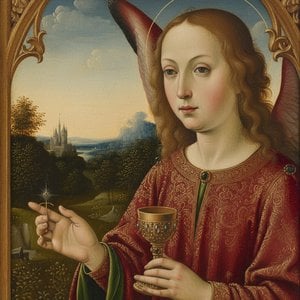
Hans Memling's Last Judgment Triptych: A Window into Medieval Spirituality
The "Last Judgment Triptych" by Hans Memling, completed in 1467-71, stands as a monumental achievement of Early Netherlandish painting – a testament to the era’s profound spiritual concerns and unparalleled technical skill. This detailed depiction of the pivotal biblical event is more than just a religious scene; it's a meticulously crafted tableau that invites contemplation on mortality, judgment, and the promise of salvation. The triptych format itself, a common practice in medieval art, dramatically enhances the impact, allowing for a gradual unfolding of the narrative and intensifying the viewer’s engagement.
Painted during Memling's most prolific period in Bruges, a thriving center of artistic patronage and trade, the work reflects the city’s wealth and influence. Memling’s workshop was renowned for its precision and attention to detail, hallmarks that are immediately apparent in the remarkably lifelike figures depicted within. The use of oil paint, a relatively new medium at the time, allowed Memling to achieve an unprecedented level of realism – from the delicate folds of fabric to the subtle expressions on the faces of the mourners and damned.
A Symphony of Detail: Technique and Materials
The painting’s technical brilliance lies in Memling's masterful manipulation of oil paint. He employed a layering technique, known as glazing, building up translucent layers of color to create depth, luminosity, and an almost ethereal quality. The use of gold leaf – particularly prominent in the depiction of halos and architectural elements – further enhances this effect, imbuing the scene with a sense of divine splendor. The wood panel support, meticulously prepared and treated, provided the ideal surface for these delicate techniques. Note the careful attention to texture; the rough linen garments contrast beautifully with the smooth skin tones, adding to the overall realism.
- Oil Paint: Enabled realistic textures and luminous colors.
- Gold Leaf: Symbolized divine light and holiness.
- Wood Panel Support: Provided a stable and receptive surface for intricate detail.
Symbolism and Narrative
The composition of the "Last Judgment" is laden with symbolic meaning. The central figure, believed to be Jesus Christ, dominates the scene, presiding over the judgment of humanity. Surrounding him are a multitude of souls – some ascending to heaven, others descending into hell – each representing a different fate. The inclusion of biblical figures like St. John the Baptist and Mary Magdalene underscores the narrative’s theological significance. The presence of individuals engaged in various activities—reading, praying, lamenting—reflects the diverse experiences of human life before divine judgment. The books held by some figures are likely symbolic representations of the Bible or other religious texts, emphasizing the importance of faith and scripture.
Emotional Impact and Historical Context
The triptych’s emotional impact is profound, evoking a sense of awe, fear, and ultimately, hope. Memling's ability to capture human emotion – grief, despair, reverence – elevates this work beyond a mere depiction of a biblical event; it becomes a deeply moving meditation on the human condition. Completed during a period of intense religious fervor in Europe, the "Last Judgment" reflects the widespread belief in the imminent return of Christ and the importance of preparing for final judgment. It’s a powerful reminder of our mortality and the eternal consequences of our actions.



 Bekijk op ware grootte
 Koop handgeschilderd kunstwerk
 Verstuur
 Delen
Delen
 Details bekijken
 Guide
Guide

 Download
 Vergelijkbare items
 Röntgenonderzoek
 Diavoorstelling
 Statistieken


 Lees meer






































 De optie voor glas is alleen beschikbaar bij een formaat kleiner dan 110 cm.