Bekijk op ware grootte Bekijk in AR Schakel over naar print Schakel over naar digitale afbeeldingen Verstuur
Details bekijken Gids voor studentenkunstwerken Toevoegen aan favorieten Download Vergelijkbare items Röntgenonderzoek Diavoorstelling Statistieken

Dadá-Gaugin

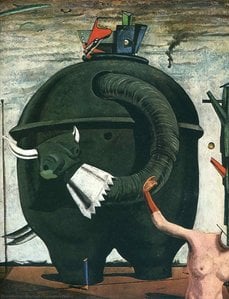
Max Ernst’s surreal "Dadá-Gaugin" depicts enigmatic figures within a complex, dreamlike scene reflecting the artist's intellectual and psychological explorations of the early 20th century. Discover this captivating artwork and bring its unique vision home.

Max Ernst (1891-1976): Een baanbrekende Duitse surrealist! Bekend om frottage, collages & droomachtige schilderijen met vogels, landschappen en psychologische thema's. #MaxErnst #Surrealisme

De kunstwerken die op deze pagina worden weergegeven, zijn beschermd door de auteursrechtwetgeving, wat betekent dat het ons wettelijk niet is toegestaan om identieke reproducties te maken of te verkopen. Deze bescherming wordt gehandhaafd onder internationale overeenkomsten zoals de Conventie van Bern en door nationale wetgeving, waaronder de bepalingen van de Amerikaanse auteurswet - Titel 17. Alle rechten voorbehouden. Reproduceren of distribueren van afbeeldingen is niet toegestaan zonder uitdrukkelijke schriftelijke toestemming van WahooArt.com en de rechthebbenden.

Als een respectvol en legaal alternatief bieden wij op maat gemaakte, handgeschilderde kunstwerken aan die geïnspireerd zijn op het origineel. Onze bekwame en professionele kunstenaars bestuderen zorgvuldig de stijl, sfeer en artistieke essentie van het origineel om een nieuw, uniek werk te creëren dat dezelfde emotie oproept – terwijl het een op zichzelf staande, originele creatie blijft.

Deze methode voldoet volledig aan de auteursrechtwetgeving, omdat het niet gaat om het kopiëren of dupliceren van het beschermde kunstwerk. In plaats daarvan is er sprake van een creatieve herinterpretatie — een nieuw schilderij dat door het origineel wordt geïnspireerd, maar er niet identiek aan is.

Handgemaakte olieverfreproductie

Met de hand geschilderd in olieverf op canvas in uw gewenste maat en lijst, op bestelling gemaakt door onze kunstenaars. ( Schakel over naar print Schakel over naar digitale afbeeldingen)

Corner sample of the P118B picture frame: moulded polystyrene, 5 cm wide and 3 cm thick
P118B 10
Corner sample of the P118H picture frame: moulded polystyrene, 5 cm wide and 3 cm thick
P118H 10
Corner sample of the P118W picture frame: moulded polystyrene, 5 cm wide and 3 cm thick
P118W 10
Corner sample of the P438Z picture frame: moulded polystyrene, 5.5 cm wide and 3.5 cm thick
P438Z 10
Corner sample of the P508JH picture frame: moulded polystyrene, 7 cm wide and 3.5 cm thick
P508JH 12
Corner sample of the P508YH picture frame: moulded polystyrene, 7 cm wide and 3.5 cm thick
P508YH 12
Corner sample of the P805H picture frame: moulded polystyrene, 5 cm wide and 3.5 cm thick
P805H 10
Corner sample of the P805Z picture frame: moulded polystyrene, 5 cm wide and 3.5 cm thick
P805Z 10
Corner sample of the P919BZ picture frame: moulded polystyrene, 7 cm wide and 3.5 cm thick
P919BZ 10
Corner sample of the P919G picture frame: moulded polystyrene, 7 cm wide and 3.5 cm thick
P919G 10
Corner sample of the P919XJ picture frame: moulded polystyrene, 7 cm wide and 3.5 cm thick
P919XJ 10
Corner sample of the P959ZH picture frame: moulded polystyrene, 5 cm wide and 3 cm thick
P959ZH 10
Corner sample of the P968JZ picture frame: moulded polystyrene, 6 cm wide and 4 cm thick
P968JZ 12
Corner sample of the W106C picture frame: solid wood, 5 cm wide and 3 cm thick
W106C 8
Corner sample of the W218G picture frame: solid wood, 5 cm wide and 3 cm thick
W218G 10
Corner sample of the W218JH picture frame: solid wood, 5 cm wide and 3 cm thick
W218JH 8
Corner sample of the W218Y picture frame: solid wood, 5 cm wide and 3 cm thick
W218Y 10
Corner sample of the W307PJ picture frame: solid wood, 6 cm wide and 3 cm thick
W307PJ 10
Corner sample of the W316G picture frame: solid wood, 6 cm wide and 3 cm thick
W316G 10
Corner sample of the W316PJ picture frame: solid wood, 6 cm wide and 3 cm thick
W316PJ 8
Corner sample of the W316Y picture frame: solid wood, 6 cm wide and 3 cm thick
W316Y 10
Corner sample of the W398PJ picture frame: solid wood, 5 cm wide and 3 cm thick
W398PJ 8
Corner sample of the W4111J picture frame: solid wood, 6.5 cm wide and 3.5 cm thick
W4111J 10
Corner sample of the W500HY picture frame: solid wood, 7 cm wide and 5 cm thick
W500HY 15
Corner sample of the W500JH picture frame: solid wood, 7 cm wide and 5 cm thick
W500JH 15
Corner sample of the W692G picture frame: solid wood, 8 cm wide and 4 cm thick
W692G 12
Corner sample of the W849H picture frame: solid wood, 5 cm wide and 3 cm thick
W849H 8
Corner sample of the W940BG picture frame: solid wood, 7.5 cm wide and 4.5 cm thick
W940BG 15
Corner sample of the W953PJ picture frame: solid wood, 6 cm wide and 3.5 cm thick
W953PJ 8

Standaardformaat
op maat gemaakt
CM
INCH

Kies uit onze vooraf ingestelde maten die overeenkomen met de originele verhoudingen van het kunstwerk.

breedte
hoogte

U kunt uw eigen afmetingen invoeren om in een specifieke lijst of ruimte te passen. Als de door u gekozen maat niet overeenkomt met de verhoudingen van het originele beeld, zullen we het kunstwerk bijsnijden of het schilderij uitbreiden met extra handgeschilderde elementen. Een digitale mockup wordt ter goedkeuring naar u verzonden voordat de productie begint.
Houd er rekening mee dat de preview op het scherm niet de werkelijke uitsnede of uitbreiding weergeeft. Alleen de mockup toont de uiteindelijke compositie nauwkeurig.
Hoewel aangepaste afmetingen mogelijk zijn, raden we aan een maat uit de vooraf gedefinieerde lijst te selecteren om de originele verhoudingen te behouden.

Voorbeelden van wat aangepast kan worden: Vervang het gezicht met een eigen foto; Voeg een huisdier toe (bijv. vervang de kat door een hond); Verwerk een verborgen boodschap in de achtergrond; Wijzig het landschap of andere elementen in de achtergrond.
Na de bestelling zal het team van WahooArt.com per e-mail contact opnemen met de klant voor instructies en een mockup-voorbeeld sturen.

Wereldwijde levering () binnen 3 tot 4 weken in plaats van de standaard 5 weken. (10 oktober). Zonder concessies aan de kwaliteit.

Gratis wereldwijde expressverzending
Hoogwaardig linnen canvas
Volledige verzendverzekering
Garantie op terugbetaling van invoerrechten
Garantie op exacte kleurweergave
Retourbeleid van 100 dagen (alleen bij defecten)
100% Geld-terug-garantie
Korting bij meerdere afnames

Totaalprijs

€ 234

Dadá-Gaugin

Reproductiemethode

Formaat reproductie

-

Totaalprijs

€ 234

Belangrijkste kenmerken

  • Movement: Surrealism
  • Artist: Max Ernst
  • Subject or theme: Intrigue, mystery
  • Title: Dadá-Gaugin
  • Artistic style: Complex composition

Unveiling "Dadá-Gaugin": A Surrealist Labyrinth by Max Ernst

Max Ernst’s “Dadá-Gaugin” is not merely a painting; it's an immersion into the fractured psyche of the early 20th century. Executed in a style that seamlessly blends the dreamlike logic of Dada with the evocative symbolism of Gauguin, this work presents a disorienting tableau of figures within a deliberately ambiguous space. The scene unfolds as two men stand poised before a monumental doorway, one drawn into an unseen inner room while the other remains rooted in the present. This initial pairing immediately establishes a tension – a struggle between observation and engagement, perhaps even a confrontation with the unknown.

  • Subject Matter: The painting’s subject matter is deliberately obscure, resisting easy interpretation. It's not a narrative scene in the traditional sense but rather a collection of fragmented experiences rendered visible. The figures themselves are secondary to the overall atmosphere and the unsettling feeling they evoke.
  • Style & Technique: Ernst employs his signature techniques – frottage (rubbing) and decalcomania – to create textures and patterns that contribute to the painting’s dreamlike quality. These processes, often involving chance encounters with materials, introduce an element of spontaneity and unpredictability, mirroring the chaotic nature of the subconscious.
  • Historical Context: “Dadá-Gaugin” was created during a period of profound social and political upheaval following World War I. The Dada movement, born from this disillusionment, rejected logic and reason in favor of irrationality and absurdity. Ernst’s work reflects this spirit, challenging conventional notions of representation and inviting viewers to question their own perceptions.

Decoding the Symbolism: A Journey into the Unconscious

The painting's power lies not just in its visual impact but also in its rich symbolic content. The doorway itself is a potent symbol, representing transition, passage, and perhaps even death – a threshold between conscious awareness and the realm of dreams or the unconscious. The two men before it can be interpreted as archetypes: one representing reason and observation, the other, intuition and imagination. The scattered figures in the background further contribute to this sense of disorientation, suggesting a multitude of perspectives and experiences.

  • The Potted Plant & Decorative Elements: The inclusion of a potted plant and a vase adds an element of domesticity to the scene, yet their presence feels strangely out of place, contributing to the overall sense of unease. These objects could symbolize fertility, life, or perhaps even the artificiality of modern society.
  • Color Palette: Ernst’s use of muted earth tones – browns, greens, and ochres – creates a somber and contemplative mood. The limited color palette enhances the painting's sense of mystery and reinforces its connection to the subconscious.

Max Ernst: A Life Immersed in the Surreal

Born Maximilian Maria Ernst in 1891, Max Ernst’s artistic trajectory was marked by a relentless pursuit of innovation and experimentation. His early years were shaped by his father's influence – a teacher of the deaf who instilled in him both sensitivity and a rebellious spirit. This duality would become a cornerstone of Ernst’s artistic vision, informing his exploration of psychological themes and challenging established aesthetic conventions.

Ernst’s academic background—spanning philosophy, art history, literature, psychology, and psychiatry—provided him with a unique intellectual framework for his work. He wasn't simply interested in replicating reality; he sought to uncover the hidden truths of the human psyche through artistic means. His embrace of techniques like frottage and decalcomania allowed him to tap into this subconscious realm, creating images that are both unsettling and profoundly evocative.

Emotional Impact & Artistic Value

"Dadá-Gaugin" possesses a haunting beauty that continues to captivate viewers today. Its ambiguous nature invites contemplation and encourages multiple interpretations. This painting is more than just a reproduction; it’s an opportunity to own a piece of art history, a testament to Max Ernst's genius and his pioneering role in the development of Surrealism. A hand-painted reproduction offers a tangible connection to this seminal work, allowing you to bring its enigmatic power into your home or office.

Vragen & Antwoorden

Wat is het formaat van "Dadá-Gaugin"?

Het formaat van "Dadá-Gaugin" is Landscape. Dit is handig bij het plannen van de plek waar een reproductie zal worden geplaatst.

Hoe verhoudt de stijl van "Dadá-Gaugin" zich tot het tijdperk van de maker?

In "Dadá-Gaugin" door Max Ernst ontmoet de Surrealist Movement-stroming de Moderne tijd-periode.

Is "Dadá-Gaugin" beschikbaar als een fine art print?

"Dadá-Gaugin" is verkrijgbaar als een fine art print op katoenen canvas of archiefwaardig canvaspapier. Bestellingen kunnen worden geplaatst via deze pagina, in de door u gewenste afmeting.

Hoe komen contrast en harmonie samen in "Dadá-Gaugin"?

De kleuranalyse van "Dadá-Gaugin" door Max Ernst legt een Bold contrast en een Discordant Palette harmonie vast.

Wat is de dominante kleur van "Dadá-Gaugin" door Max Ernst?

Een Golden Yellow Range tint loopt door "Dadá-Gaugin" door Max Ernst.

Waar kan ik een handgeschilderde reproductie van "Dadá-Gaugin" door Max Ernst kopen?

Met de handgeschilderde reproducties van "Dadá-Gaugin" door Max Ernst kunt u terecht op deze website: een met de hand geschilderde olieverfreproductie op linnen canvas, te bestellen via deze pagina.

Wie is de kunstenaar achter "Dadá-Gaugin"?

"Dadá-Gaugin" is gemaakt door Max Ernst. De informatie op deze pagina beschrijft het originele werk van Max Ernst.


Biografie van de kunstenaar

A Life Immersed in the Surreal

Max Ernst, geboren Maximilian Maria Ernst op 1 april 1891 in Brühl, Duitsland, was een onrustige geest die tot een van de meest invloedrijke figuren van de 20e-eeuwse kunst werd. Zijn reis was geen van conventionele artistieke opleiding; eerder een zelfgeleide verkenning aangedreven door filosofische reflectie, psychologische fascinatie en een diepe teleurstelling met maatschappelijke normen. Ernst’s vader, leraar van de doven en amateur schilder, instilledde hem zowel gevoeligheid voor de wereld als een rebellie tegen gevestigde autoriteit. Deze vroege dualiteit zou een kenmerkende eigenschap worden van zijn artistieke visie.

Ernst’s academische inspanningen aan de Universiteit van Bonn – omvatten filosofie, kunstgeschiedenis, literatuur, psychologie en psychiatrie – waren niet alleen afleidingen maar fundamentele elementen die zijn latere werk diepgaand beïnvloedden. Hij was niet simpelweg geïnteresseerd in *hoe* te schilderen; hij worstelde met *waarom*. Deze intellectuele nieuwsgierigheid leidde hem tot het ontmoeten van baanbrekende werken van Picasso, Van Gogh en Gauguin op de Sonderbund tentoonstelling in Keulen in 1912, een moment dat zijn artistieke traject onherstelbaar veranderde. De zaden van modernisme waren gezaaid.

Dada’s Disruptie en de Geboorte van Surrealistische Visies

De catastrofe van de Eerste Wereldoorlog bleek een keerpunt te zijn voor Ernst. Zijn ervaringen als soldaat aan zowel het Oost- als Westfront lieten hem diepgaand gekwetst achter, wat leidde tot een diepe scepsis ten opzichte van gevestigde orde en een verlangen naar nieuwe vormen van expressie. Deze teleurstelling vond vruchtbare grond in de opkomende Dada beweging, waar hij vol overtuiging aanleunde na zijn terugkeer naar Keulen in 1918. Samen met Hans Arp – een levenslange vriend en collaborateur – werd Ernst een centrale figuur in de Keulse Dada groep, die traditionele artistieke conventies verwerkte en absurditeit, kans en anti-rationaliteit omarmde.

Dada was echter slechts een tussenstap. In het begin van de jaren 1920 migreerde Ernst naar Parijs en voegde hij zich bij de Surrealistische kring, geleid door André Breton. Dit markeerde een verschuiving richting het verkennen van het rijk van dromen, het onbewuste en de irrationele. Invloedrijk waren de psychoanalytische theorieën van Sigmund Freud, waarnaar Ernst op zoek ging om de verborgen dieptes van de menselijke ervaring te ontgrendelen door zijn kunst. Hij was niet geïnteresseerd in het weergeven van de werkelijkheid zoals deze voorkwam, maar eerder in het onthullen van de onderliggende psychologische krachten die deze vormden.

Pioniers Technieken: Frottage, Grattage en Collage

Ernst’s artistieke innovatie strekte zich uit voor de onderwerpkeuze; hij was een meesterlijke experimentator met techniek. Hij nam niet simpelweg bestaande methoden aan—hij verzinsde nieuwe. Misschien zijn meest bekende bijdragen is frottage, een proces van wrijven met potlood of houtskoor over getextureerde oppervlakken om onverwachte en evocatieve beelden te creëren. Deze techniek, geboren uit een moment van verveling terwijl hij naar houtnerf keek, stelde Ernst in staat om in de diepten van het onderbewustzijn te duiken en vormen te genereren die zich verzetten tegen bewuste controle. Dicht gerelateerd was grattage, waarbij verf over een doek wordt geschraapt om onderliggende lagen te onthullen.

Hij gebruikte ook meesterlijk collage, het samenstellen van uiteenlopende elementen – beelden uit tijdschriften, wetenschappelijke illustraties, foto’s – in surrealistische composities die conventionele ideeën over representatie uitdaagden. Deze technieken waren niet simpelweg stijlicheden—ze waren integraal aan zijn verkenning van het onbewuste en zijn wens om traditionele artistieke grenzen te verstoren. Zijn schilderijen bevatten vaak terugkerende symbolische beelden: vogels (vooral zijn alter ego Loplop), desolate landschappen, verontrustende juxtaposities en een doordringende mystiek.

Een Erfgoed van Innovatie en Invloed

De uitbraak van de Tweede Wereldoorlog dwong Ernst tot vlucht uit Europa, waar hij onderdak vond in de Verenigde Staten. Hij bleef schilderen en experimenteren met nieuwe technieken gedurende zijn ballingschap, uiteindelijk terugkeerend naar Frankrijk na de oorlog, waar hij actief bleef tot zijn dood op 1 april 1976, een dag voor zijn 85e verjaardag.

Ernst’s bijdragen aan Dada en Surrealisme waren niets minder dan baanbrekend. Hij daagde artistieke normen uit, duikelde in de diepten van het onbewuste en verzinsde innovatieve technieken die nog steeds kunstenaars inspireren. Hij was niet simpelweg een schilder—hij was een ontdekkingsreiziger, een provocateur en een visionair die de grenzen van de kunst zelf uitbreidde.

  • Belangrijke Werken: The Entire City, Euclides, Ofrenda funeraria, The Equivocal Woman, L’Ange du foyer
  • Invloeden: Pablo Picasso, Vincent van Gogh, Paul Gauguin, Sigmund Freud, Giorgio de Chirico
  • Bewegingen: Dada, Surrealisme
Max Ernst

Max Ernst

1891 - 1976 , Duitsland

Snelle feiten

  • Artistic Movement Or Style: Dada, Surrealisme
  • Artists Or Movements Influenced By This Artist:
    • Surrealisme
    • Dada
  • Artists Who Influenced This Artist:
    • Picasso
    • Van Gogh
    • Gauguin
  • Date Of Birth: 1 apr 1891
  • Date Of Death: 1 apr 1976
  • Full Name: Max Ernst
  • Nationality: Duits/Amerikaans, Frans
  • Notable Artworks:
    • The Entire City
    • Euclides
  • Place Of Birth: Brühl, Duitsland
Ontdek kunstwerken georganiseerd op thema, stijl en kenmerk.