

Ontvang een bestand dat klaar is voor drukwerk en de kwaliteit van het online voorbeeld ver overstijgt. Elke digitale afbeelding die wij verkopen, is afkomstig van een high-resolution master uit onze database — meestal tussen de 5.000 en 15.000 pixels breed — zodat u met vertrouwen groot kunt afdrukken, nauwkeurig kunt bijsnijden of fijne details kunt reproduceren.
Geen enkel bestand verlaat ons atelier onbewerkt. Een digitaal expert controleert de kleuren aan de hand van het originele schilderij en corrigeert deze indien nodig, om vervolgens de helderheid en details te verbeteren met professionele retoucheertechnieken — waarbij de penseelstreek en stijl van de kunstenaar altijd strikt worden gerespecteerd. Het resultaat is een afbeelding die oogt als het schilderij zelf, en niet als een gescande foto met een filter.
U keurt de afbeelding goed voordat de bestelling wordt afgerond: onze expert stuurt u binnen 72 uur een e-mail ter beoordeling. Niet tevreden? Vraag om aanpassingen of correcties, of vraag een terugbetaling aan als de kwaliteit niet aan de verwachtingen voldoet.
Dit is de kwaliteit waarop uitgevers, designstudio's, galeries en drukkerijen vertrouwen.
Download een bestand met hoge resolutie voor persoonlijke weergave, afdrukken en creatieve projecten. ( Schakel over naar print Bestel handgeschilderde reproductie)
Wanneer u kiest voor WahooArt.com, ontvangt u niet alleen een afbeelding – u krijgt een professioneel verbeterd digitaal kunstwerk, met precisie vervaardigd en voorzien van een tevredenheidsgarantie. Dit is alles wat automatisch bij uw bestelling is inbegrepen:
Uw hoogwaardige digitale afbeeldingsbestand wordt binnen 72 uur na bestelling naar u gemaild – klaar voor direct gebruik.
Uw kunstwerk wordt professioneel geoptimaliseerd met behulp van geavanceerde AI-tools en handmatige bewerkingen, waardoor maximale details, helderheid en kleurnauwkeurigheid worden gegarandeerd.
Je bestand per ongeluk verwijderd of kwijtgeraakt? Geen zorgen – we sturen het u op elk gewenst moment gratis opnieuw toe.
Geniet direct van uw kunstwerk zonder invoerrechten, belastingen of verzendkosten – digitale downloads zijn altijd belastingvrij.
Met behulp van professionele hulpmiddelen en kleurbeheer zorgen wij ervoor dat uw digitale afbeelding de originele kleuren zo nauwkeurig mogelijk weergeeft.
Mocht u niet tevreden zijn met uw digitale afbeelding, dan passen wij deze aan of storten wij 100% terug binnen 100 dagen – zonder vragen te stellen.
Niet tevreden? Ontvang een volledige terugbetaling binnen 100 dagen na ontvangst van uw digitale bestand – zonder vragen te stellen.
Koop 3 afbeeldingen, bespaar 10% - Koop 5, bespaar 15% - Koop 10+, bespaar 20%. Ideaal voor creatieve projecten, galerieën en bureaus.

In de levendige, zonovergoten straten van het zeventiende-eeuwse Napels, een periode waarin de stad uitgroeide tot een van de belangrijkste stedelijke centra van Europa, verscheen een schilder die de visuele taal van de Italiaanse Barok zou herdefiniwtioneren. Massimo Stanzione, geboren in Frattamaggiore in 1585, was niet louter een deelnemer aan de artistieke bedrijvigheid van zijn tijd; hij was een transformerende kracht. Terwijl veel van zijn tijdgenoten tevreden waren om één enkele stilistische weg te volgen, bezat Stanzione een zeldzame, dualistische visie. Hij bereikte wat velen onmogelijk achtten: de naadloze versmelting van de rauwe, visceraal voelbare schaduwen van Caravaggio met de verfijnde, lyrische gratie van de Bolognese school. Deze unieke synthese leverde hem de prestigieuze bijnaam de Napolitaanse Guido Reni op, wat hem markeerde als een kunstenaar van ongekende elegantie en dramatische kracht.
De fundamenten van Stanziones kunstenaarschap werden gelegd in de vruchtbare bodem van Napels, waarschijnlijk onder de begeleiding van meesters zoals Fabrizio Santafede en Battistello Caracciolo. De ware katalysator voor zijn stilistische evolutie was echter de diepgaande impact van het tenebrisme van Caravaggio. Van deze revolutionaire benadering nam Stanzione een meesterschap in licht en schaduw over, dat zijn figuren een verbazingwewtigende, tastbare aanwezigheid gaf. Toch was het tijdens zijn vormende reizen naar Rome—met name tussen 1617 en 1630—dat zijn palet begon te bloeien met een nieuwe, klassieke verfijning. Ondergedompeld in de Eeuwige Stad absorbeerde hij de gebalanceerde composities van Annibale Carracci en het lumineuze, vernieuwde Caravaggisme van Simon Vouet. Deze periode van Romeinse blootstelling stelde hem in staat om het brute realisme van zijn jeugd te temperen met een geïdealiseerd naturalisme, waardoor werken ontstonden die evenzeer over poëtische schoonheid als over dramatische spanning gingen.
Stanziones opmars binnen de sociale en artistieke hiërarchieën van Europa was niets minder dan meteoorachtig. Zijn talent werd niet alleen erkend door de geestelijkheid, maar ook door de hoogste echelons van de adel en de pauselijke macht zelf. Het jaar 1621 markeerde een belangrijk mijlpaal toen paus Gregorius XV hem de prestigieuze titel van Ridder van de Gouden Spoor verleende. Zijn eerbewijzen bleven zich opstapelen, en onder het bewind van Urbanus VIII werd hij benoemd tot de Orde van Christus, een prestatie die hem de gewaardeerde titel van Caballero Massimo in Spanje opleverde. Dergelijke onderscheidingen weerspiegelen een carrière die de grenzen van lokaal vakmanschap oversteeg en hem positioneerde als een figuur van internationale betekenis.
Zijn oeuvre wordt gekenmerkt door een opmerkelijke veelzijdigheid, variërend van intieme, psychologisch doordringende portretten tot monumentale altaarstukken en weidse fresco's. Enkele van zijn meest blijvende bijdragen aan de kunstwereld omvatten:
Naarmate het midden van de zeventiende eeuw naderde, stond Stanzione naast Jusepe de Ribera als de titanen van de Napolitaanse schilderkunst. Samen domineerden zij het artistieke landschap en creëerden zij een periode van intense competitie en creatieve bloei. Waar Ribera neigde naar het rauwe, aardse realisme van de Spaanse traditie, bood Stanzione een meer gepolijst, kleurrijk alternatief dat aansloot bij de esthetische gevoeligheden van de elite uit die tijd. Zijn invloed was diepgaand en verreikend; zijn methode om dramatisch chiaroscuro te vermengen met klassieke gratie werd een blauwdruk voor opeenvolgende generaties lokale kunstenaars, met name de grote Francesco Solimena.
Tragisch genoeg bracht het tijdperk van voorspoed dat zijn kunst liet bloeien, ook de verwoesting van de pest mee. In 1656 trof een catastrofale uitbraak Napels, waarbij vele levens werden veriteit en een groot deel van de levendige cultuur van de stad tot stilstand kwam. Men gelooft dat Stanzione zelf slachtoffer werd van deze epidemie en overleed op het hoogtepunt van zijn invloed. Hoewel zijn leven voortijdig werd beëindigd, bleef zijn nalatenschap gegraveerd in de steen en het canvas van Napels. Door zijn vermogen om het ruwe met het verfijnde te harmoniseren, heeft Massimo Stanzione ervoor gezorgd dat de Napolitaanse Barok voor altijd herinnerd zal worden als een periode van diepe emotionele gelaagdheid en voortreffelijke klassieke schoonheid.
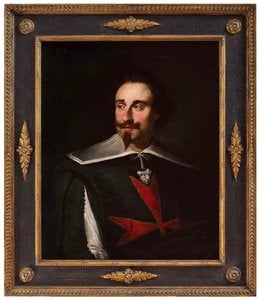
1585 - 1656 , Italië
 Voorvertoning
 Verstuur
 Delen
Delen
 Details bekijken
 Gids
Gids

 Download
 Vergelijkbare items
 Röntgenonderzoek
 Diavoorstelling
 Vraag & antwoord
 Statistieken
 Lees meer


