

De kunstwerken die op deze pagina worden weergegeven, zijn beschermd door de auteursrechtwetgeving, wat betekent dat het ons wettelijk niet is toegestaan om identieke reproducties te maken of te verkopen. Deze bescherming wordt gehandhaafd onder internationale overeenkomsten zoals de Conventie van Bern en door nationale wetgeving, waaronder de bepalingen van de Amerikaanse auteurswet - Titel 17. Alle rechten voorbehouden. Reproduceren of distribueren van afbeeldingen is niet toegestaan zonder uitdrukkelijke schriftelijke toestemming van WahooArt.com en de rechthebbenden.
Deze methode voldoet volledig aan de auteursrechtwetgeving, omdat het niet gaat om het kopiëren of dupliceren van het beschermde kunstwerk. In plaats daarvan is er sprake van een creatieve herinterpretatie — een nieuw schilderij dat door het origineel wordt geïnspireerd, maar er niet identiek aan is.
Giclée- of canvasafdruk van museumkwaliteit met een snelle productie en flexibele afwerkingsmogelijkheden. ( Bestel handgeschilderde reproductie Schakel over naar digitale afbeeldingen)





























Kies uit onze vooraf ingestelde maten die overeenkomen met de originele verhoudingen van het kunstwerk.

Voer de gewenste breedte en hoogte in, passend bij uw lijst of muur. Een afdruk kan alleen worden ingekort en nooit groter worden gemaakt dan het origineel; een formaat met andere verhoudingen zal daarom een deel van de afbeelding verliezen. Wij sturen u een digitaal mockup ter goedkeuring voordat we tot drukwerk overgaan. De afbeelding op deze pagina toont niet de werkelijke uitsnede — dit is alleen te zien op het mockup.
Wereldwijde levering () binnen 2 weken in plaats van de standaard 4/5 weken. (8 november)
Untitled (8)
Afmetingen reproductie
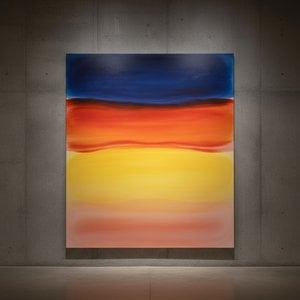
Mark Rothko’s “Untitled (8)” isn't merely a painting; it’s an invitation to a profound, almost meditative experience. Born into a world shadowed by displacement – his childhood in Latvia marked by the anxieties of a Jewish family amidst political unrest – Rothko carried within him a deep sensitivity to human suffering, a theme that would become a cornerstone of his artistic vision. This early exposure shaped his approach to color, transforming it from simple representation into a vehicle for conveying complex emotions and existential questions. “Untitled (8)” embodies this philosophy perfectly, presenting a landscape not of form or detail, but of pure, resonant hue.
Created in 1949, “Untitled (8)” is a quintessential example of Rothko’s Color Field painting style. Rejecting traditional representation, he employed large, rectangular blocks of color – predominantly red, blue, and punctuated by subtle yellow tones – that seem to float within the canvas. This technique, radical for its time, moved away from illusionistic depth and perspective, instead focusing on the direct impact of color itself. Rothko wasn’t interested in depicting a scene; he sought to evoke an atmosphere, a feeling. The absence of brushstrokes or discernible texture further emphasizes this effect, creating a sense of luminous flatness that draws the viewer into the painting's emotional core.
The deliberate use of these primary colors – red, blue, and yellow – is not arbitrary. Rothko believed that color possessed an inherent power to communicate directly with the subconscious. Red, often associated with passion, energy, and even danger, dominates the left side of the canvas, creating a sense of intensity. The cool blues on the right offer a contrasting counterpoint, suggesting tranquility, introspection, or perhaps melancholy. The subtle yellow in the center acts as a bridge between these opposing forces, hinting at moments of harmony and balance.
Rothko's work emerged during a period of significant artistic upheaval following World War II. Abstract Expressionism, with its emphasis on individual emotion and spontaneous gesture, was gaining prominence in the United States. However, Rothko pushed this movement further, stripping away all traces of personal style and focusing solely on the elemental qualities of color. His paintings weren’t about self-expression; they were about creating a shared experience for the viewer – an encounter with something beyond the rational mind.
Considered alongside works like “Untitled 142” (a monumental Color Field painting embodying somber hues and existential contemplation) or “Untitled” (1953), Rothko’s approach to color became increasingly profound. The influence of his early life, marked by loss and displacement, is palpable in the paintings' quiet intensity and their exploration of themes like mortality and the search for meaning. His later work, particularly the murals created for the Rothko Chapel in Houston, solidified this vision, creating a space dedicated to contemplation and spiritual reflection.
“Untitled (8)” remains one of Mark Rothko’s most iconic works, captivating viewers with its simple yet profound beauty. Its enduring appeal lies not in its representational qualities but in its ability to evoke a wide range of emotions – from serenity and contemplation to sadness and longing. Reproductions by WahooArt offer an exceptional opportunity to experience this powerful artwork firsthand, bringing Rothko’s vision into your home or office space. The careful attention to color fidelity and the masterful rendering of texture ensure that these reproductions capture the essence of the original painting, allowing you to engage with its emotional depth in a meaningful way.
"Untitled (8)" staat geregistreerd als Iconic onder de werken uit de Color Field Painting in de catalogus.
Voor een Living Room wordt voor "Untitled (8)" een afdruk van Large aanbevolen.
Voor een afdruk van "Untitled (8)" door Mark Rothko wordt een formaat van Large aanbevolen in Portrait oriëntatie.

1903 - 1970 , Letland

Explore the profound emotional depth of Color Field painting. Discover the history of mid-century abstraction, from Rothko to Newman, and learn how pure color transforms the viewer's experience through our expert art history guide.

Ontdek de top 25 meesterwerken van Mark Rothko! Duik diep in zijn emotionele kleurveldschilderijen en abstract expressionisme. Vind museumkwaliteit Rothko reproducties & interieurinspiratie op WahooArt.com.

Ontdek de 25 meest iconische werken van Wassily Kandinsky! Duik in zijn abstracte wereld vol kleur, expressionisme & spirituele diepgang. Vind museumkwaliteit reproducties en interieurinspiratie op WahooArt.com.

Ontdek de 10 meest invloedrijke werken van Abstract Expressionisme! Leer over Jackson Pollock, Mark Rothko & meer. Museumkwaliteit kunst reproducties voor uw interieur. Bekijk de collectie op WahooArt.com.
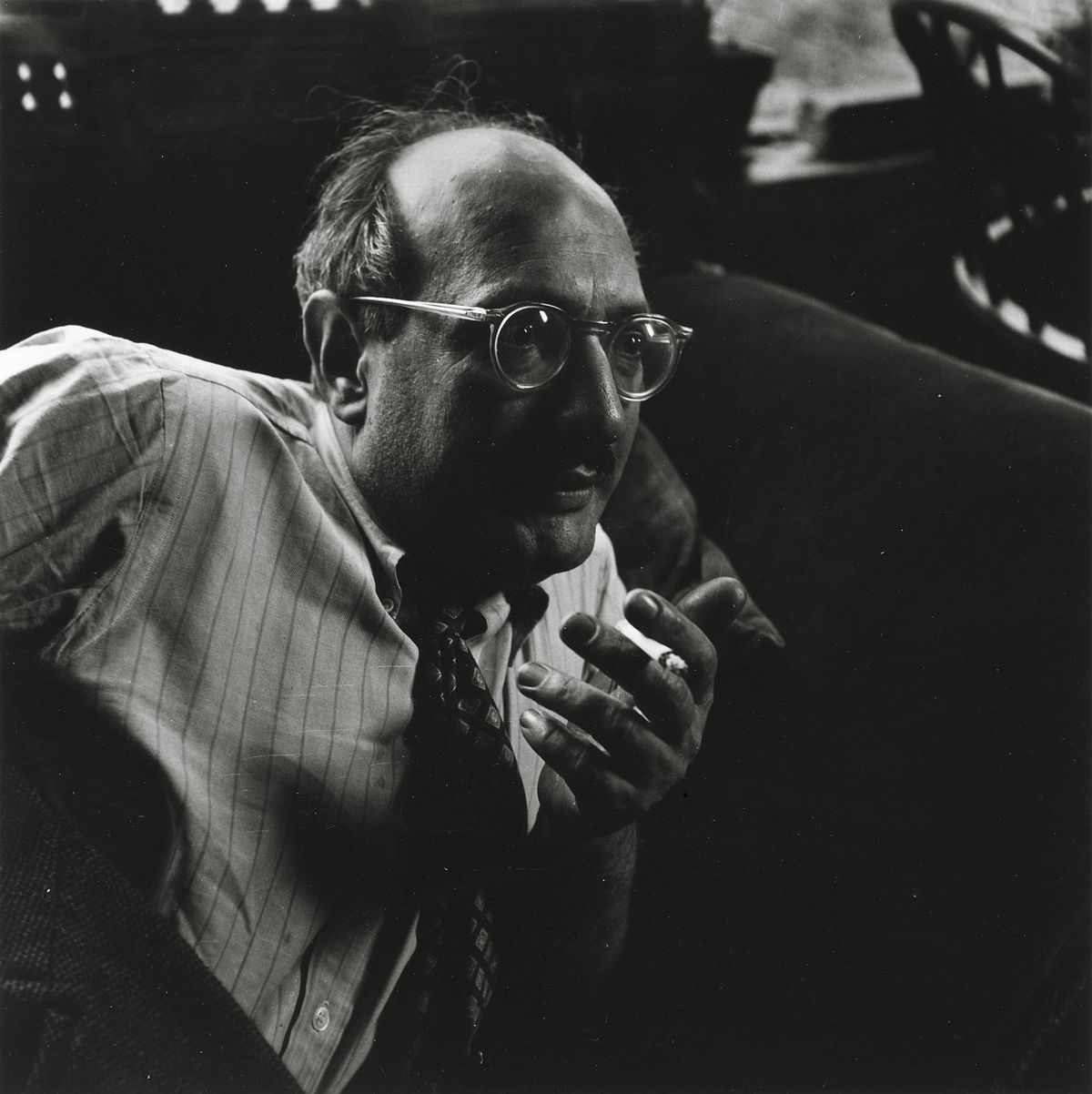
Explore the profound emotional depth of Mark Rothko's abstract expressionism. Discover the history, techniques & lasting impact of this pivotal Color Field painter. Expert insights for collectors and art enthusiasts.
 Voorvertoning
 Verstuur
 Delen
Delen
 Details bekijken
 Gids
Gids

 Download
 Vergelijkbare items
 Röntgenonderzoek
 Diavoorstelling
 Vraag & antwoord
 Statistieken
 Lees meer









 De optie voor glas is alleen beschikbaar bij een formaat kleiner dan 110 cm.


